Lenovo Center renovations begin during Canes playoffs — under cover of darkness
The Carolina Hurricanes finished off Game 2 against the New Jersey Devils at 8:39 p.m. on Tuesday in front of the usual frenzied, loud Lenovo Center crowd. A few hours later, the real noise started.
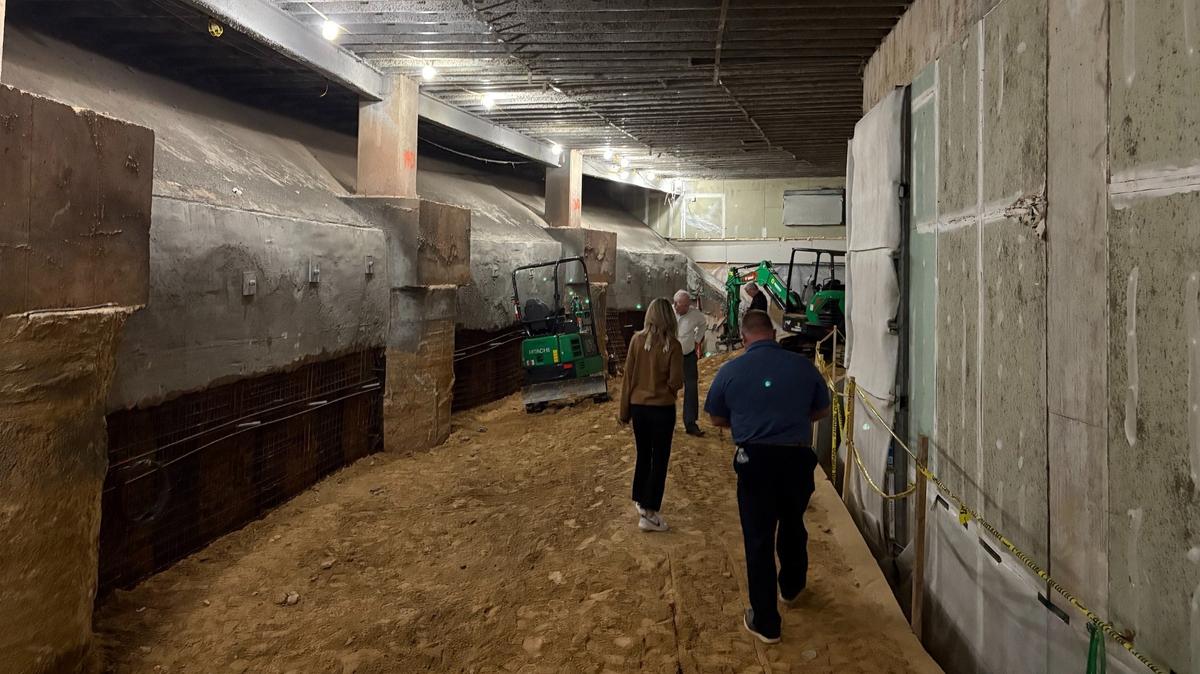
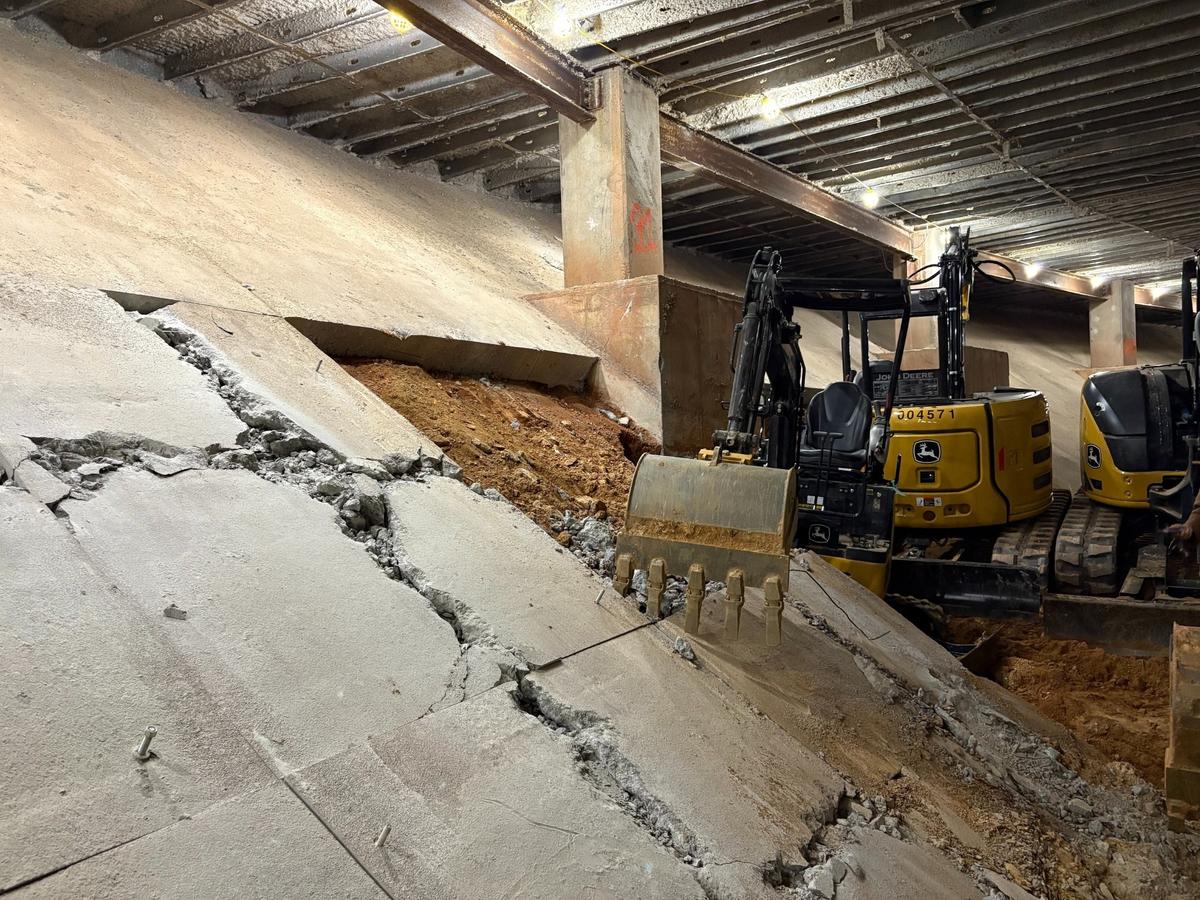
Deep under the same stands that only hours earlier had held more than 18,000 people, along the outside rim of the arena level, construction workers went to work destroying the concrete that helps hold the arena together. The work chipping apart what’s known as the “rat slab,” a ring of sloping concrete that rises some 45 feet from the arena floor to ground level and keeps the bottom of the building protected from outside intruders — ergo the name — is so loud it can only be conducted when the building is empty.
After more than a decade of talk, planning, uncertainty and negotiating, it’s the first, hidden, dusty, dirty step in what will be three years of $300 million in overdue renovations to the 26-year-old arena. When construction first started last month, Jeff Merritt, the executive director of the Centennial Authority, which oversees the building, walked out into the parking lot just so he could say he was there.
“I showed up at 8:30 in the morning and it was just a handful of pickup trucks and a bunch of guys, but they had started doing stuff, after 10 years,” Merritt said. “It was like they broke a bottle of Champagne on the Queen Mary. It was thrilling. It was invigorating.”
Handling air at Lenovo Center
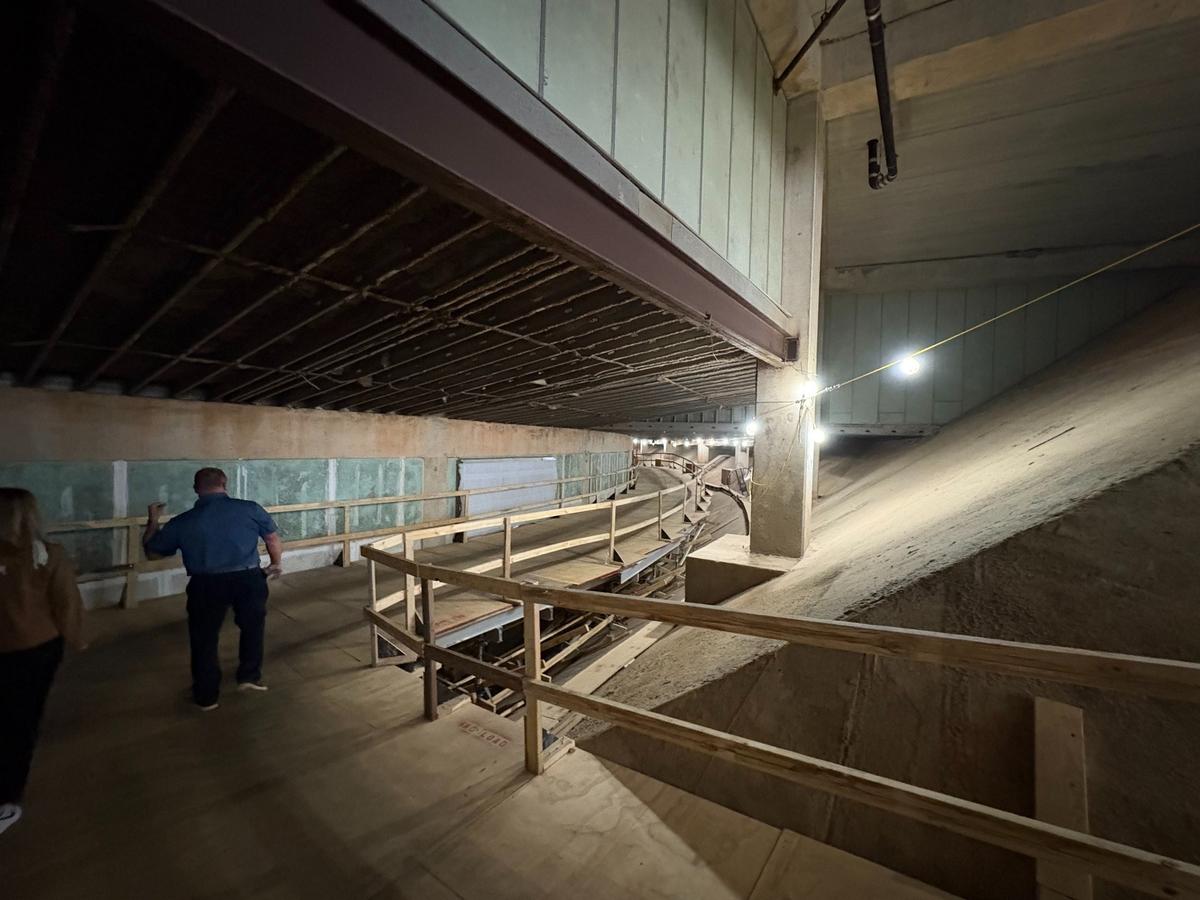
So far, it’s all behind the scenes, in places even some building employees will never see. Carving away the bottom half of the slab at the southeast and southwest corners of the building to turn a 45 degree angle into a cut-off 90-degree angle will create new space for the giant air-handling equipment that moves millions of cubic feet of fresh air through the building at all times.
The four air-handlers were due for replacement anyway; the space they currently occupy on the arena level will become usable storage and work space, one of the more clever ideas the Centennial Authority’s architects concocted as part of the final set of renovation plans. But it means working in a dark tunnel and hauling thousands of cubic yards of dirt and concrete out over hundreds of feet of temporary ramps, all under cover of night, inside and out.
Merely creating a space to work on the slab meant pouring a 10-foot concrete retaining wall that will eventually be removed, along with a complicated scaffolding system to support the ramps that took weeks to design. After the slab has been cut back, helical augurs are drilled 21 feet into the exposed dirt to stabilize it, and then new concrete is pumped in and sprayed to make a vertical wall, in 4-foot slices called “lifts,” like layers of a cake.
But all of that is less complicated than the alternative, said Jim Baker, who joined the authority in February as its full-time, in-house construction manager, after the authority parted ways with its previous representative, consultancy CAA ICON.
“If we had the existing units, and we had to take them offline, rebuild new ones, and then get them online before we could go to another location, we would have to put in all kinds of temporary measures — ductwork, units, generators, all kinds of other means and methods,” Baker said. “It led to the a-ha moment of, what if we carve out this back area? Then we can drop the units in and get them mostly set up and switch over one at a time.”
It takes two shifts: One working from 11 p.m. to 7 a.m. to cut, chip and chunk the existing concrete and carve away the dirt underneath, work that exceeds 100 decibels, as loud as the crowd above at its loudest, and another from 5 a.m. to 3 p.m. to haul it all out. Two little buggies that look like refugees from a coal mine shuttle back and forth, out temporary doors at the north end of the arena and to a ramp in the west parking lot where they can dump their loads directly into the back of waiting trucks. Everything runs on clean diesel, keeping exhaust fumes to a minimum.
When the work is complete, the new air handlers — each bigger than a city bus, at $4 million a pop — will be built in place in the new space. Next summer, they’ll do it all over again in the northeast and northwest corners until all four air-handling units have not only been replaced, but relocated into spaces that didn’t previously exist.
What else is coming
It’s the first phase of the first phase of renovations, $100 million worth of work to kick off three years of construction, and the only part that can be done while the Hurricanes are still playing. After the season, the area under the south stands that’s now a storage area and the media room will be converted into suites and the premium Lenovo Legend Club, a high-end space for high-dollar fans. According to the Hurricanes’ marketing materials, one of the six new suites has already been sold and another three are pending.
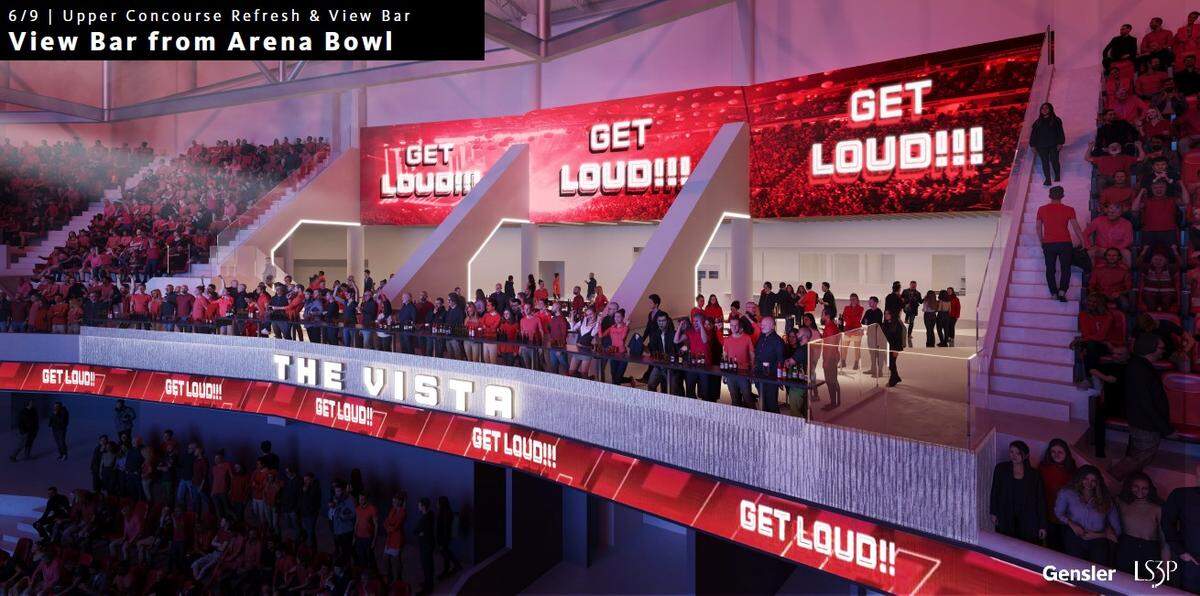
Neither the work to move the air handlers nor the new premium spaces under the stands will ever be seen by most fans, but the rest of the first phase of renovations will be very visible, focused on the 300 level where three sections of seats will be removed to create a bar area overlooking the ice, and extra stairwells will be removed to create more bathroom and concession space.
That work begins in July, when the ice is guaranteed to be gone. A giant crane will be assembled on the arena floor to remove concrete and steel from sections 317, 318 and 319 to make room for the new bar. That, too, will be tricky work, with the crane pressed close to the arena ceiling and lifting heavy chunks of material while cantilevered over the upper level.
Those results will at least be immediately visible, both in progress and when complete. The work so far remains hidden, out of sight, if not out of earshot, but finally under way.
Never miss a Luke DeCock column. Sign up at www.newsobserver.com/newsletters to have them delivered directly to your email inbox as soon as they post.
Luke DeCock’s Latest: Never miss a column on the Canes, ACC or other Triangle sports
This story was originally published April 24, 2025 at 6:00 AM with the headline "Lenovo Center renovations begin during Canes playoffs — under cover of darkness."