The high cost of football: Former Panther with health problems faces it every day
Not long ago, in a grocery store parking lot in Texas, former Carolina Panther Winslow Oliver realized someone had stolen his pickup truck.
Oliver, who played three seasons for the Panthers in the late 1990s, had only gone inside for a couple of minutes to buy a few things.
But then Oliver walked back out into the Kroger parking lot. He paced up and down, crossing the white lines, trying to remember exactly where he had parked.
For 45 minutes, Oliver looked in vain at every car in the lot. His truck just wasn’t there. Someone had to have swiped it.
“So I’m about to call the police,” Oliver said, narrating this story at the home in Richmond, Texas, that he shares with Julie, his wife of 25 years. “I dig in my pocket.”
Before he found his cellphone, though, his hand hit another piece of metal.
“My wife’s keys,” Oliver said.
It turned out Oliver hadn’t driven his truck to Kroger at all. He had been looking for the wrong vehicle the whole time. He then found his wife’s car — he had walked right past it several times — and drove back home, feeling a mixture of relief and embarrassment.
Something like that has probably happened to you, right? We all know that memory is a funny thing.
But “funny” is the wrong word when you’re talking about Oliver. He’s a college graduate, he’s 46 years old and he’s been on work disability in the state of Texas since 2011, diagnosed with “pre-dementia.”
.JPG "482952 (1).JPG")
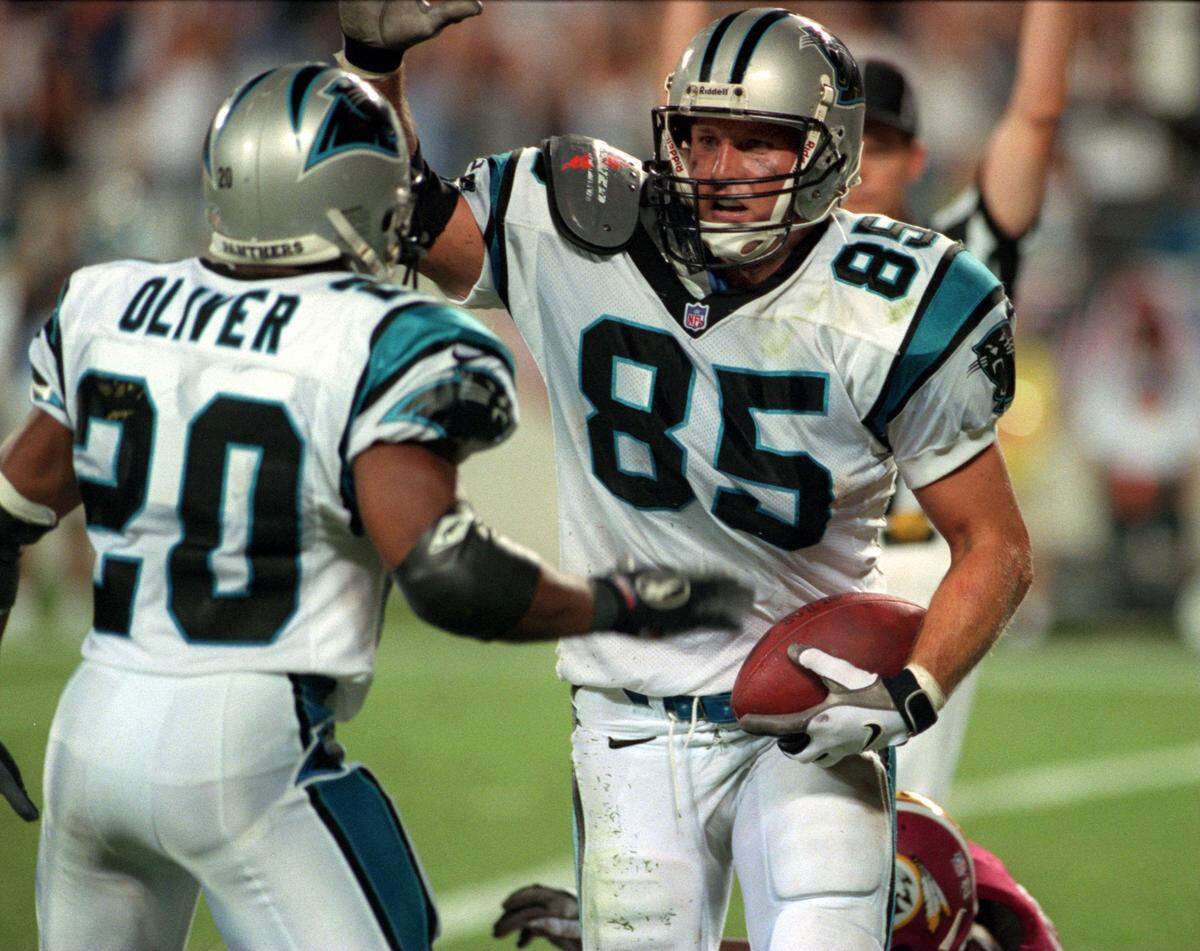
A former running back and return man, Oliver was the Panthers’ third-round draft choice out of New Mexico in 1996. Statistically, he remains the best punt returner in Panthers history — better than Steve Smith, better than Ted Ginn — at 10.7 yards per return.
But his brain doesn’t work as well as it used to.
After sustaining at least 10 concussions during his football career — “those are the ones I know about,” he said — he now sometimes has a hard time remembering which drawer in the bedroom contains his socks.
“And I see those drawers every single day,” he said.
Oliver worked in construction as a project manager once his football career ended. He loved that job. His family has been involved in building things in Texas for four generations. But then, after a few years, he could no longer be the guy in charge anymore.
“I had a decline, basically,” Oliver said. “I worked for a few custom builders. ... And I just couldn’t remember the day-to-day. (They’d say) ‘You’re supposed to put that column there.’ Well, it ain’t there. That sort of thing.”
Eventually, he had to quit working.
Yet Oliver remains funny and charismatic, just as he was when he played for the Panthers. At that time, Oliver weighed 190 pounds but could bench-press 405. I covered him back then. He was well-known for striking up a conversation with anyone — fans, teammates, whomever.
.JPG "CLT_Winslow_Oliver_307 (1).JPG")
“Winslow would talk to the wall,” Julie Oliver, said. “He’s always been that way.”
I went searching for Oliver a few months ago, originally just wanting to talk to him for a story I was writing about former Panthers who had scored exactly one touchdown in their Carolina careers.
Oliver had never forgotten his TD play — a dazzling, 84-yard punt return in 1996.
The problem was the other things he couldn’t remember.
‘All that wear and tear’
I hadn’t seen Oliver in 20 years when I showed up at his door in Texas for our interview. But I quickly found out his sense of humor remained intact. He opened the door with a flourish, greeting me while wearing a snazzy hat and a colorful scarf tied around his chin. It was his joking tribute to one of quarterback Cam Newton’s postgame outfits.
Oliver doesn’t want you to feel sorry for him. He just wants you to know what’s going on in his life, because he prides himself on staying optimistic and being honest.
“I’ve always been that dude where I’m going to share everything, because it may help you,” Oliver said. “Even if you’re dealing with something very serious or bad, I feel like honesty is going to get you through it.”
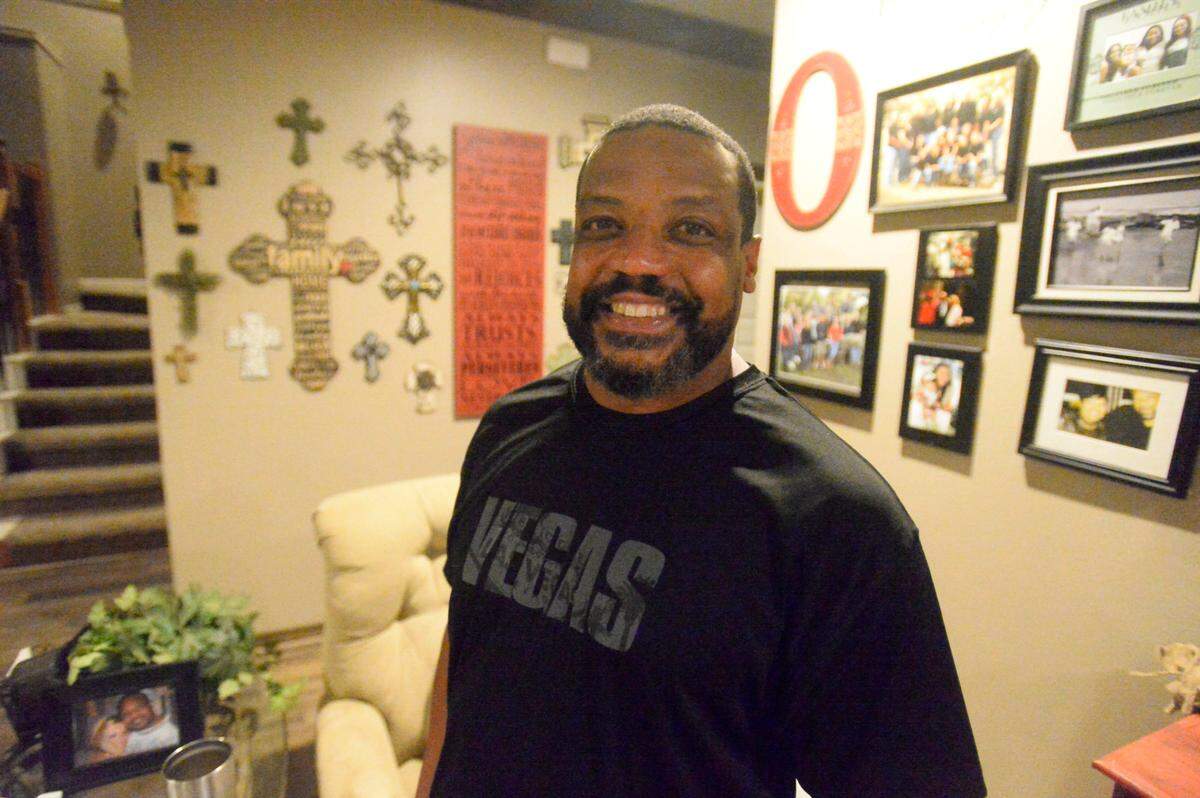
With a strong Christian faith and a large family that loves him, Oliver is luckier than many former NFL players dealing with the high cost of football. He and Julie have four children and recently became grandparents for the first time.
Oliver remains active. He does what he calls the “old-man workout,” which for him translates into pull-ups, pushups and walking the family dogs. He can still drive. He babysits his grandchild every Friday and always keeps at least one home-improvement project going around the house.
But Oliver does get frustrated sometimes when he can’t remember something. Thoughts flit out of his head before he can voice them. His wallet, his keys, his phone — they all are prone to go missing.
“He’s always been a happy-go-lucky guy,” said Lamar Lathon, a former teammate of Oliver’s with the Panthers and still one of Oliver’s closest friends. “But he can get temperamental now, every once in a while, and that’s completely outside the box for Winnie. All that wear and tear we put on our bodies — all that contact, for so many years? I think it’s having an effect on all of us.”
‘Can you go back in?’
Oliver’s long-term memory mostly works just fine, despite the trauma his brain endured while playing football.
For instance, he remembers in vivid detail the Panthers’ playoff game on Jan. 12, 1997, that he played at Green Bay. The temperature at kickoff was 3 degrees. The wind-chill was minus-17.
“I remember walking out there,” Oliver said. “I spit — and it bounced. I took a longer drink of water, spit again, and this time there were a bunch of ice cubes.”
Oliver can recall a lot about that 1996 season, when he was a rookie and the Panthers earned a spot in the NFC Championship Game in just their second year of existence. He scored his lone NFL touchdown for the Panthers that season, on that 84-yard punt return in New Orleans in a game that two dozen of his family members attended.
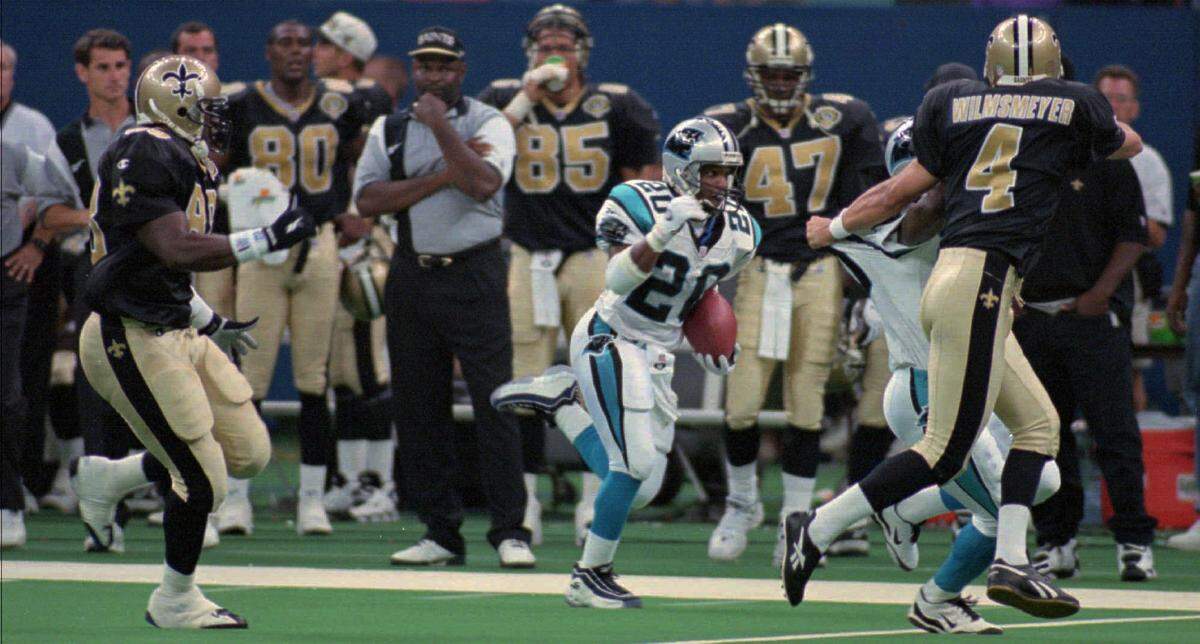
Oliver remembers the play like it happened yesterday — how his teammates blocked it perfectly, how he faked one way and went the other, how the potential Saints tacklers in front of him looked like “a flock of birds” as they tried in vain to keep up.
Oliver stuck around the NFL for five years. He was never a star, but he played in 64 games. He lasted almost two years longer than the average NFL player lasts -- darn good for a guy who was 5-foot-7. He was a reserve running back and a special-teamer with the Panthers from 1996 to 1998 and then played for Atlanta from 1999-2000. He wanted to play some more, but the game got done with him before he got done with the game.
Back then, it was routine for NFL teams to have numerous full-contact practices during the season.
“You were in pads on Wednesday,” Oliver said, “and it was up to the coach if you were in pads on Thursday. And I can recall some days when those two days weren’t good, and you were in pads on Friday. Full-speed blocking, too. And they would put me on Kevin Greene (the former Panthers linebacker who is now in the Pro Football Hall of Fame).”
Oliver doesn’t hold a grudge about this. It’s just the way things were done. Concussions weren’t taken nearly as seriously. The NFL’s concussion protocol didn’t exist.
“Concussions were just a ‘get your bell rung’ type thing,” Oliver said. “They’d ask you, ‘Can you go back in?’ And you don’t want to say no.”
Oliver tried hard to never say “No” to his coaches.
The NFL was his dream and he was often on the edge of the roster bubble. An injury-prone reputation could have ended it all. The money was very good, too. He and Julie had gotten married halfway through his college career at New Mexico and had lived on the cheap until they got to Charlotte.
“We had two kids while we were in college,” Julie Oliver said. “We were so poor. When we got to Charlotte, we were just so happy to be able to get our own furniture.”
Oliver made the Panthers his first season, and then for the two years after that. His young family lived in the Lake Norman area.
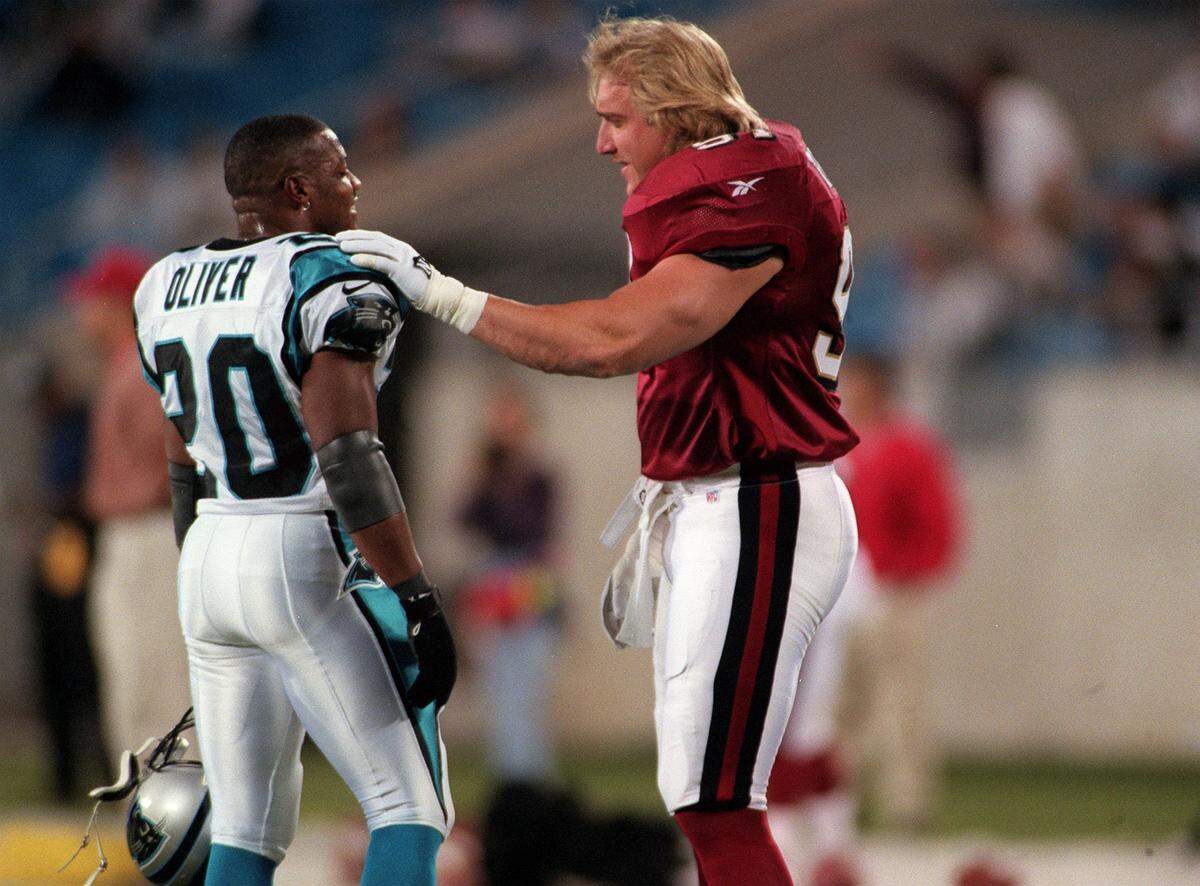
“It was a magical time,” Oliver said. He still remembers the feeling of figuring out he was good enough to play in the NFL, when he kept faking out linebackers like Greene who tried to keep up with him in pass-catching drills.
“You finally realize you belong, you know?” Oliver said. “You’re proving something all this time. But there’s a point in time when you say, ‘I belong here. That fool could never cover me.’ ”
Football and CTE
Dr. Robert Cantu is based in Massachusetts. Cantu has never met Oliver, but the doctor is considered one of the world’s foremost concussion experts. Cantu is the co-founder and medical director of the Concussion Legacy Foundation in Boston, as well as the medical director for the National Center for Catastrophic Sports Injury Research, located in Chapel Hill.
Cantu recently co-authored an academic paper that came to the conclusion that for every single year of playing football, a person’s risk of developing chronic traumatic encephalopathy (CTE), the devastating neuro-degenerative disease that causes brain damage, increases by 30 percent. The study’s basis was based on an analysis of the brains of 266 deceased former amateur and pro football players.
CTE can’t be definitively detected in the living — although researchers are working hard toward that goal, Cantu said. But — while noting he could offer no opinion on Oliver’s specific case — Cantu described the symptoms of many former football players he has studied who ended up having CTE due to the thousands of hits to the head they absorbed over the years.
“The classical case is that you finish your career fine, and then 10-20 years down the road, you start getting cognitive problems,” Cantu said. “And then you start getting some impulsivity problems. Difficulty with a short fuse, difficulty with tolerating unpleasant situations without acting out. Mood issues. Apathy. Depression. Sometimes anxiety. ... There’s no way of knowing for sure if someone has CTE (unless there is a brain exam after death). But if a guy played 13-14 years of ball, he has about 10 times the risk of CTE as somebody who only played five years or less.”
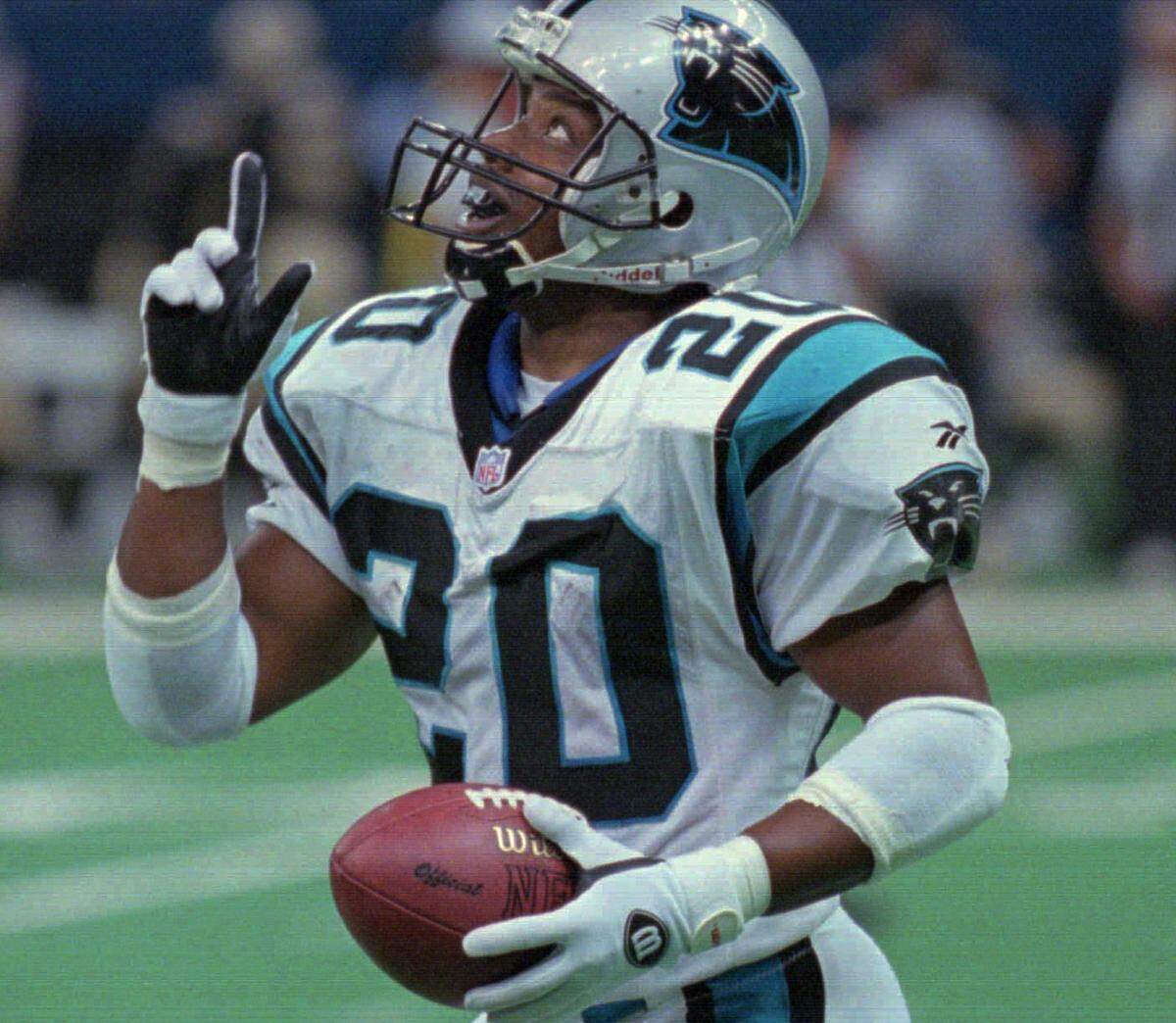
Oliver started playing tackle football in the fourth grade.
He kept playing for 18 years.
He also saw the movie “Concussion.” It scared him, and his wife.
Cantu said, though, that not everyone who plays that long gets the disease. And he also stressed that while CTE — which can be the underlying disease for conditions like dementia or pre-dementia — can’t be cured, its symptoms can be treated.
“That’s not a message a lot of people understand,” Cantu said. “Because you can’t cure the disease, there are many people, including doctors, who are not enlightened enough to know there are therapies that can improve the symptoms and improve the quality of daily life. And therefore they say they can’t do anything for you. Can’t cure you. So — goodbye.”
That’s the incorrect approach, the doctor said. Patients at risk for CTE can be treated with many types of therapy and medication. Sometimes the short-term improvement can be dramatic, Cantu said — although as the disease progresses, treatments become less effective.
Oliver goes to a psychiatrist once a month and said he will soon start seeing her every two weeks. He keeps his brain active with various mental exercises. He takes a medicine called Vyvanse to help with his ADD.
“Some days,” he said, “I really do feel like I’m getting a little better.”
Would he play again?
For Oliver, and the thousands of other former NFL players like him, the high cost of football becomes more apparent over time.
“It doesn’t discriminate on how important something is,” Oliver said, referring to his memory problem. “So when it started, I would miss picking up my kid. And, of course, my wife would flip out. She’s the one who really started noticing. She’d say: ‘You don’t act different, but your memory is really getting bad.’ ”
Oliver said he has received some disability benefits from the NFL. He was also one of the more than 20,000 former NFL players involved in a class-action concussion lawsuit that was originally settled in 2013, but which he said has yet to provide him with any actual money. Like a number of former players, he has been frustrated with a “tedious” legal process for payouts to former players, one that he believes to be “biased” in favor of the league.
“Disability is one thing,” Oliver said. “But when you’re not the same person, that’s different. And you’ve done all you can for them. ... It’s baffling to me that it’s come to where it is. Greed. Lawyers. A legal mess.”
Winslow and Julie Oliver both grew up in Texas, the product of families where football was played by nearly every male in a state that treats the sport as a religion.
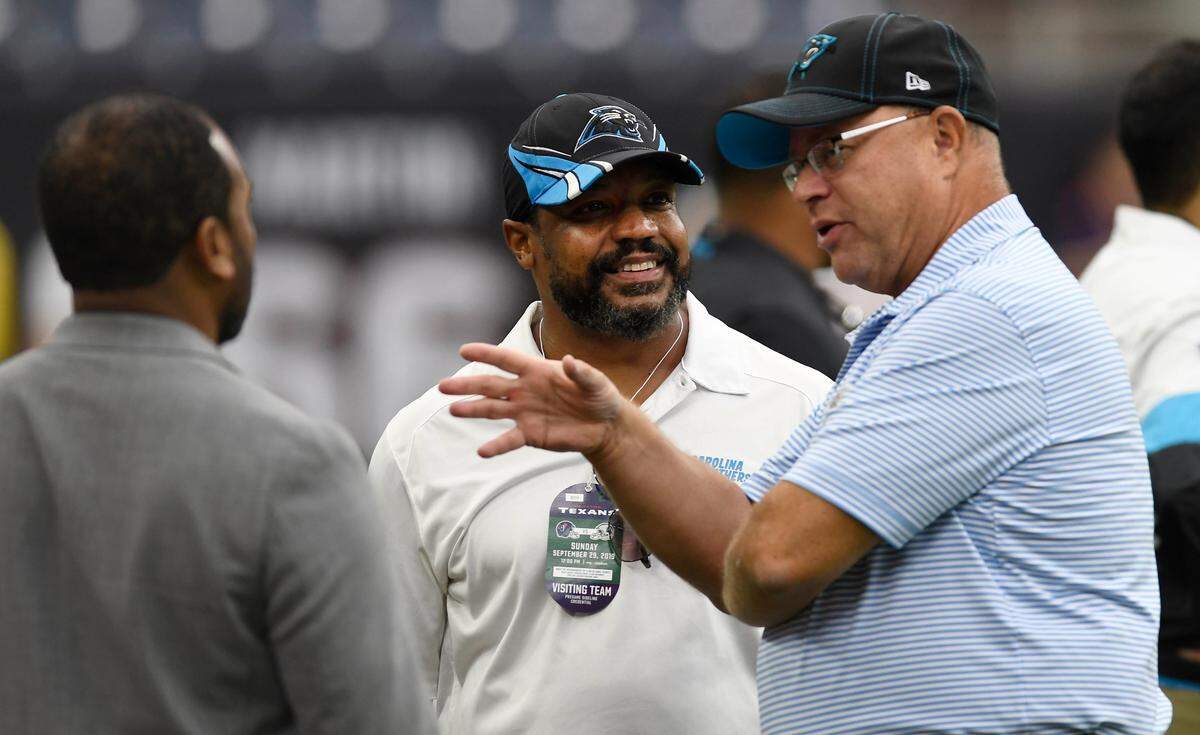
Oliver still likes to watch football, and he cheers for the Panthers. He got sideline passes from the Panthers before Carolina’s game with Houston in late September, mingling with some of the current and former players as well as Panthers owner David Tepper.
And when Winslow and Julie Oliver’s three sons wanted to play football in high school, they decided to allow it. “I told them to always follow your passion,” Oliver said.
At his best, Oliver was dynamic and quick with the ball in his hands, one of those guys who could twist potential tacklers into pretzels.
What did he love most about the sport?
“I just felt like it was art,” Oliver said.
It is, of course. But it is art threaded with violence.
I asked Oliver one more time about his own career. About what the sport of football gave him, and what it took away.
Would he go back and play for 18 more years if he had the chance to relive his entire life, understanding the uncertain future that awaited him if he did?
“I’d do it again,” he said, “and I’d try to play it harder. ... You don’t go through life timid or scared. You could end up this way from a car accident, you know?”