Panthers need to decide Cam Newton’s fate. Jordan Gross knows how it can be a win-win
Jordan Gross is many things to the Panthers: A new member of the team’s Hall of Honor; a three-time Pro Bowl offensive tackle; an 11-year veteran who played his entire career with Carolina from 2003-2013; and a perceptive broadcaster and podcaster who was the team’s radio analyst for six games in 2019.
As a team captain for most of his NFL playing career, Gross was never afraid to tackle a tough subject inside the locker room. He does the same thing now on-air, with intelligence and a sense of humor.
I called Gross recently to ask him some questions about the Panthers, including his thoughts on his former Carolina teammates Cam Newton and Luke Kuechly and what specifically made Gross decide himself when it was time to retire. This one-on-one conversation with The Observer has been lightly edited for clarity and brevity.
Fowler: What are your thoughts on whether the Panthers should part ways with quarterback Cam Newton, who has one year left on contract?
Gross: I’ve used Steve (Smith) as an example. I felt like when Steve went to Baltimore (after the Panthers released Smith in March 2014 in a controversial move), it rejuvenated his career. Not that he was trailing off with us, but it gave him a bit of a chip on his shoulder, a change of scenery … and new teammates and a new team who really appreciated him. And I think one of the reasons, with Steve leaving, was they wanted Cam to really be the premier guy on offense.
When Steve left, as hard as it was, it was the best thing for Steve and for the team. And I can see this relationship (between Newton and the Panthers) being the same. It’s a bit of different circumstances. But I think … it would be good for both sides.
Fowler: Why would Newton’s release be good for the Panthers as a team?
Gross: There’s so much newness to the staff now, right? (Head coach) Matt Rhule … (Offensive coordinator) Joe Brady … They want what those guys say — and Matt Rhule in particular — to be the gospel truth. If you’re really going to do things a whole new way — which is what he should do, as a new coach — I think that having younger (players), and especially your quarterback being your hand-picked guy that knows no other way — I think that would be easier for a coach coming in.
Not that Cam would meet him (Rhule) with resistance head-on. But when you’re a 10-year veteran, there’s only so much change you can do. And coming off another surgery (Newton missed 14 of Carolina’s 16 games in 2019 with a Lisfranc foot injury that required surgery in December), there’s just a lot of variables to it.
This regime is going to be looking for a consistent winner as a football team — down the road. They’d like to win (in 2020). But I don’t think anybody in-house would be surprised if we were picking in the top 10 again next year.
If they are really going to put in Joe Brady’s offense, they need the quarterback to execute the offense the way Joe Brady wants it done. And that might be hard for somebody who’s been league MVP, to not have his own ideas about it all.
Fowler: How would Cam Newton’s trade or release positively benefit the quarterback?
Gross: Cam could go somewhere else where they need a spark — for their fan base, for their offense, whatever — and that (offensive) coordinator would cater to Cam’s abilities.
Because they would know what they were buying. They’d say, ‘All right, we’re going to run almost everything out of the (shotgun formation Newton prefers). We’re going to run some read-option.’ … They’d be creating a (Newton-centric) package because they’d be buying Cam, and that’s what they would want.
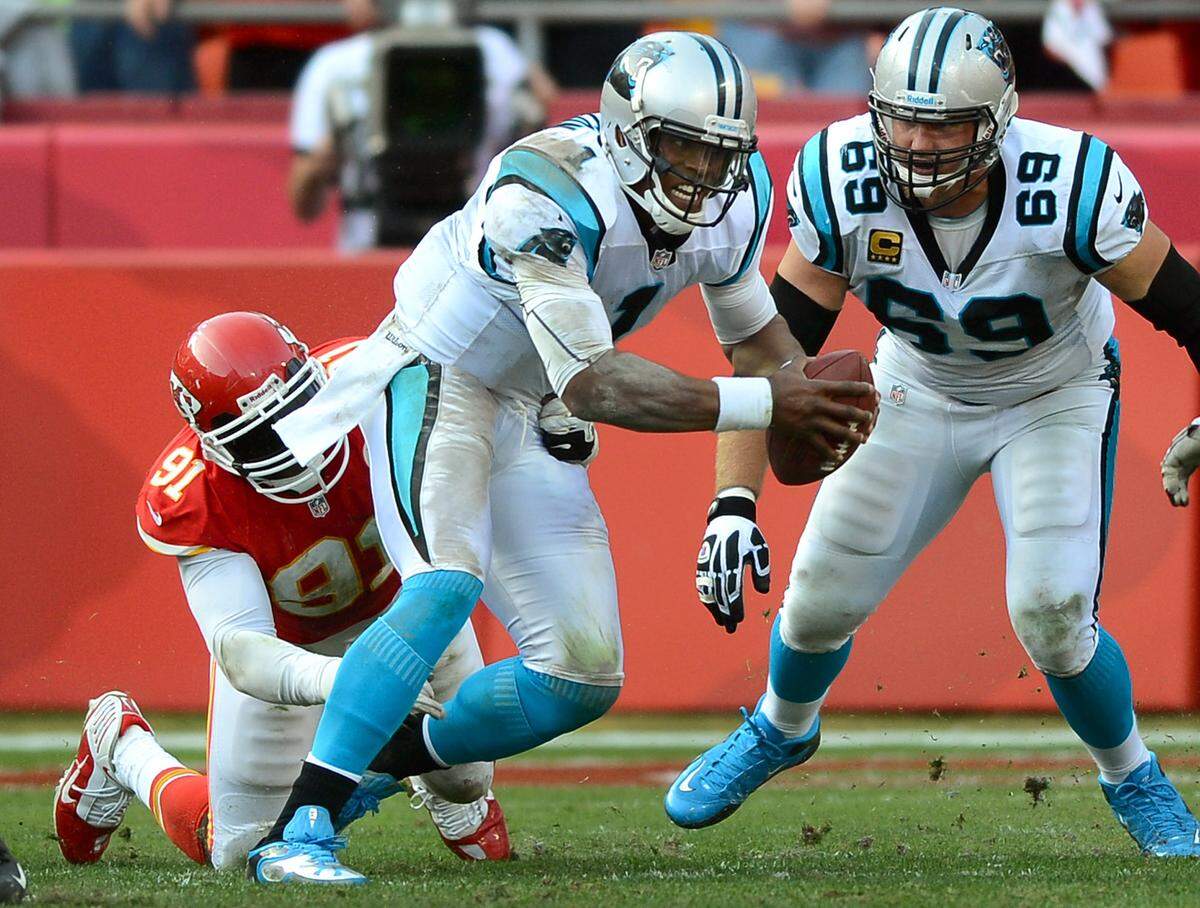
Whereas a new (Panthers) staff, coming in ... I’m not saying they don’t care about Cam. But they’re not concerned with, ‘What can we do with Cam Newton to be a winner next year?’ ... It (Newton and the Panthers parting) could be great for both sides.
With a trade situation, the receiving team would be getting a product that they’d really want, at a great price for his talent … I think if you kept Ron (Rivera, who was fired in December after nearly nine years as Carolina’s head coach), you keep Cam. They’re one and the same, you know?
But since they (the Panthers) cleaned house — and I don’t know what the answer is. It’s easy for me to say, ‘Move on.’ But we’re obviously rebuilding. … It seems like $19 million off the cap (the amount of cap room the Panthers gain if they release or trade Newton), that’s helpful. … Maybe you get a third-round pick for Cam, I don’t know. … But you’ve got to trade him to the AFC (laughs). (Editor’s note: Although the situation remains in flux, Newton told CBS Sports Network Friday that he “absolutely” thought he was going to still play for Carolina in 2020. Gross’s interview was conducted several days before Newton’s comments).
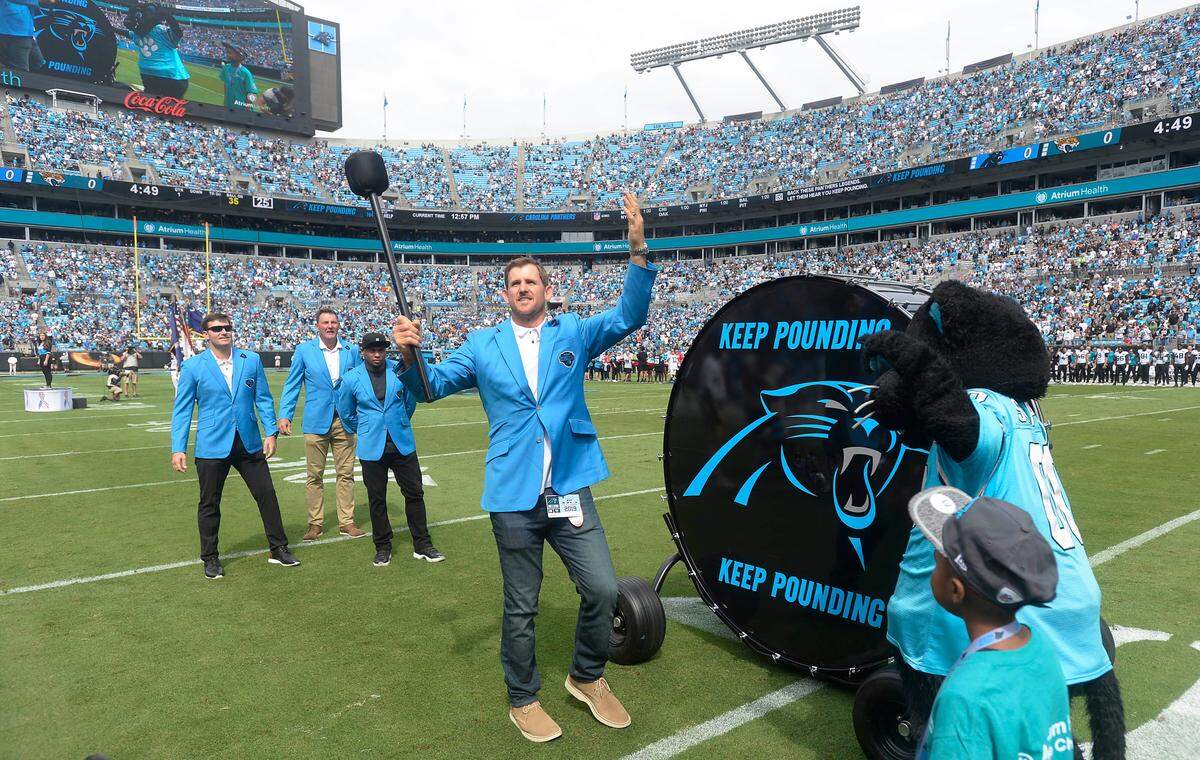
Fowler: You mentioned on your podcast with Jake Delhomme that sometimes a retirement like Luke Kuechly’s feels like a death in the family. Why is that?
Gross: I think I said that at my own retirement presser (in 2014). It feels like a funeral. Specifically about Luke, he’s so dynamic, and such a wonderful man, as well. I think it’s sad, particularly for the fan base and for teammates. It (retirement) really humanizes the players. ...
I don’t know anyone who has ever retired for any reason other than health reasons. It’s an admission of your mortality. ... The prime of your physical life is over. For most people in a normal career, maybe you slowly realize that by the time you hit 40.
But when you announce you’re done being a professional athlete, it makes you think, ‘Well, why did I do that? Because I can’t do it anymore.’ That’s super-hard for a lot of people to swallow.
And it’s sad for people around it who are close to the player, but also fans from a distance, because that means that Luke can’t do it anymore. And that’s just not something that you’re overly comfortable taking in.
Fowler: It seems weird to even hear a phrase like ‘Luke can’t do it anymore.’
Gross: It is weird. Especially Luke. He’s someone people have on a pedestal, and for good reason.
But no one is ever going to outlast the game of football. You just can’t do it.
Fowler: You’ve joked that Kuechly could be the next mayor of Charlotte if he wanted to be. What do you think he will do?
Gross: Luke has the blessing and the curse of his age. He played an eight-year career, but he’s 28. If he’s a normal working guy, he’s barely got a first job with benefits, you know what I mean? He’s not married. … No kids. … He’s literally been football 24/7 for eight years.
I think he would be smart just to take a year (off) — and it’s an awkward year, man, when you first stop playing. It’s not bad. It’s just so weird. I remember coming to training camp (for the first time after being retired). … Even though I knew all the guys, you still feel a bit of a distance.
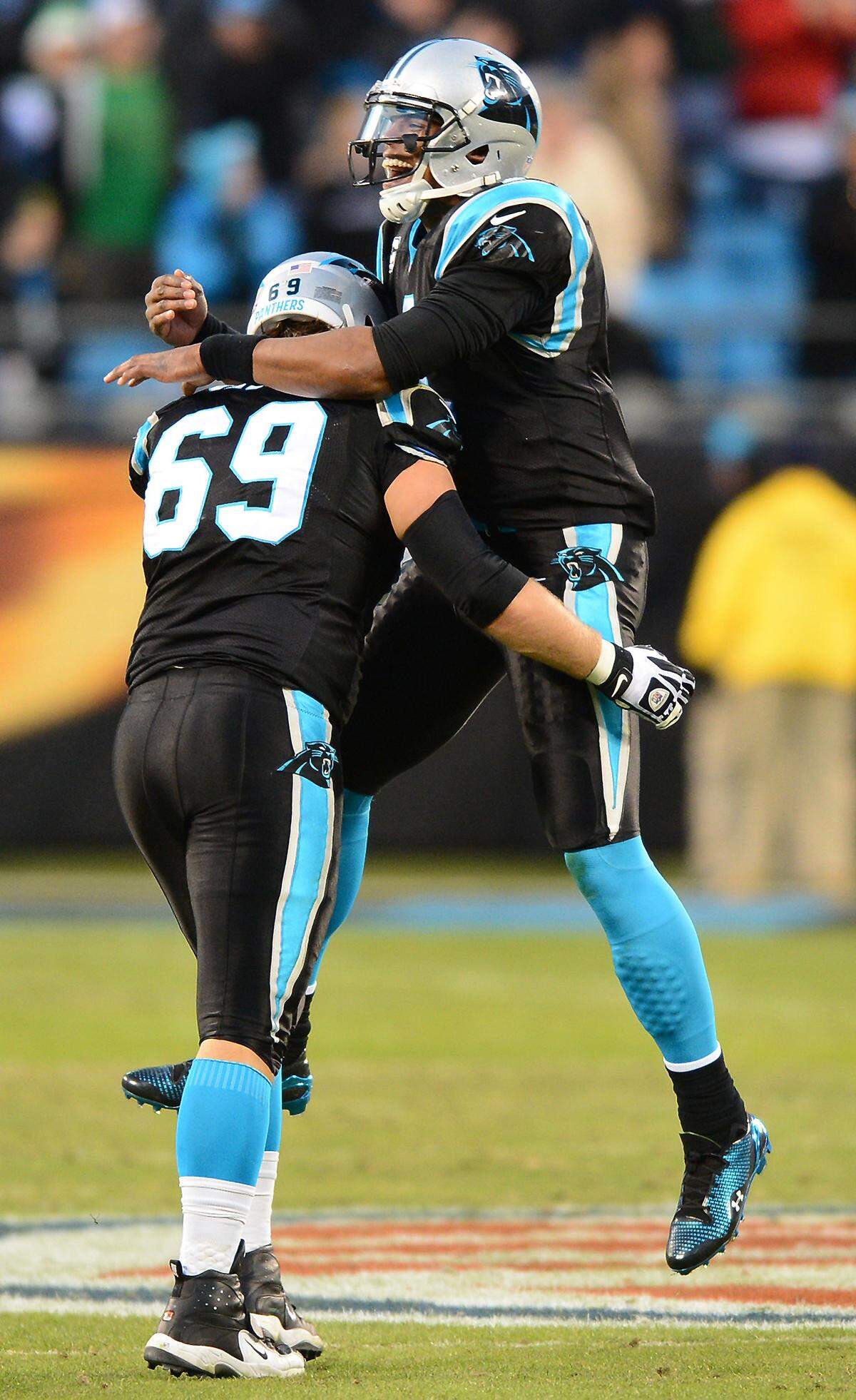
Fowler: You protected Newton on the offensive line for his first three years in the NFL, then retired after a very productive 2013. Was there something specific that made you want to leave?
Gross: So with pass protection, there’s a lot of ways to do it. … What we did with Cam — he was in the (shotgun formation), and then a full drop out of that. He was supposed to set up around 7 yards, but a lot of times, especially his first couple of years, he would go 10 yards deep. ...
One of the favorite things for defensive ends to do out of that is to collapse the pocket with a bull rush. They’ve got 5 yards of acceleration — and then right into you. … You have to absorb it. ... You don’t have very much room between you and the quarterback. You’ve got about a yard and a half to stop that momentum. So you still have your head up, you’re trying to hit the screws of your helmet into his chin strap.
... Think about if you were to prop a door closed with a 2x4, at an angle. I’m the 2x4.
It’s impactful on your spine. It wasn’t an everyday occurrence to get stingers (painful pinched nerves), but you’d get stingers from that at times ...
I wasn’t as strong in my 30s as I was in my 20s, so I started lowering my head more (as compensation). ... Once I knew there was some hesitation and thought to doing that (blocking a bull rush), that was a precursor.
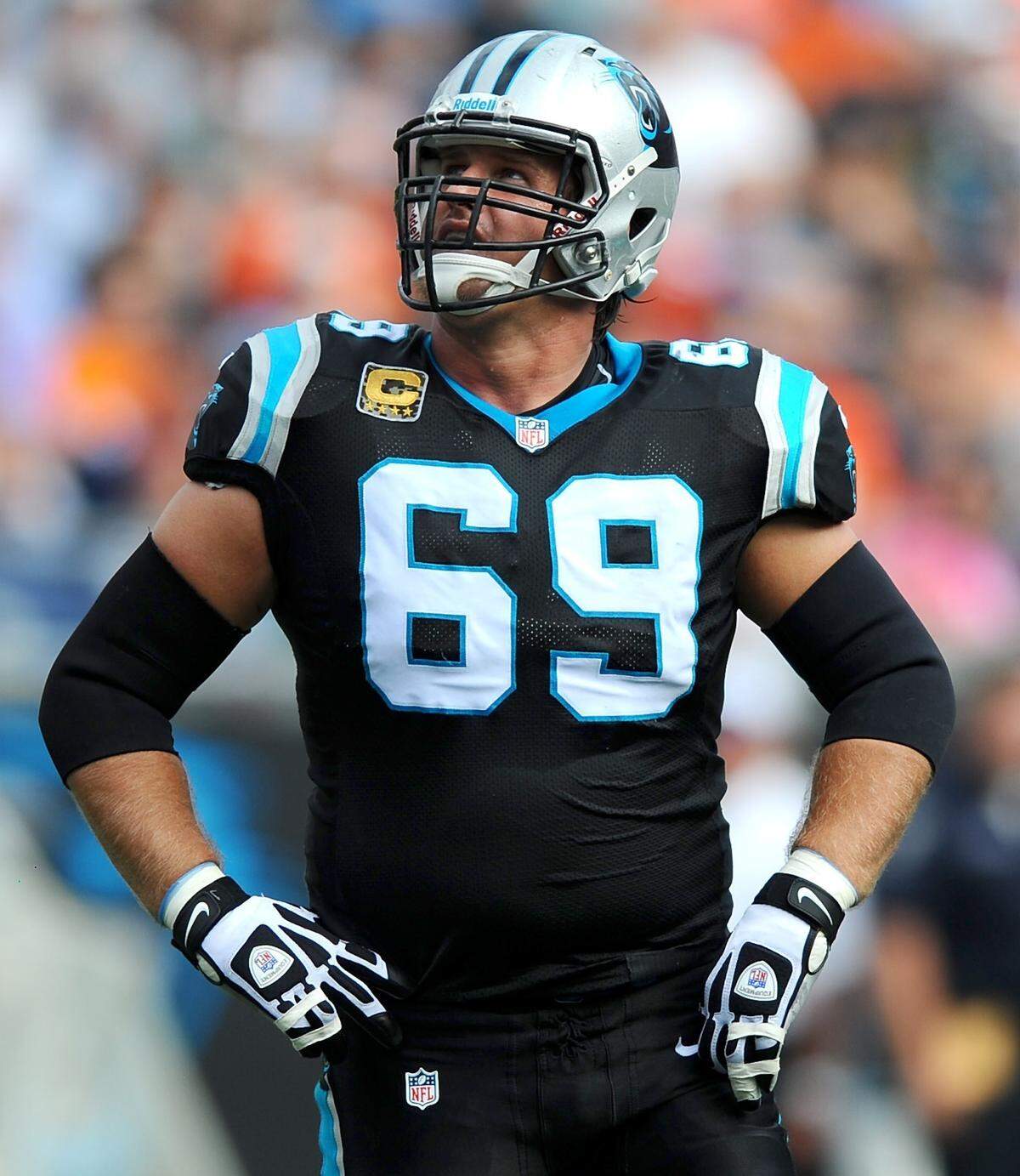
Fowler: Run-blocking is another thing entirely, though, right? You could have done that for several years longer?
Gross: Yes, because you’re going forward and you’re moving into a target, at least. You’re not being such a nail. ... Honestly, man, I could tell, I didn’t have that (desire to block a bull rush) in me anymore. And I didn’t want the rest of my game to feel that way as well.
Fowler: That sounds a lot like what Kuechly said in his retirement video, when he said something about he couldn’t play as fast or as strongly as he once could.
Gross: And maybe it’s not ‘couldn’t.’ I probably could have made myself do it another year or two. But when you start having the ‘business-decision’ thing? It wasn’t worth it.
And I’m sure that’s where it’s at with Luke. Like if Luke played next year, he’d be an All-Pro. But there might be a lot of stuff happening at home or after games that we don’t know about.
And if Luke wants to be fly-fishing on the Yellowstone River in 25 years and tying his flies with good logic and agile fingers, you might want to be done (with football).
Fowler: I was surprised he left. I would have been less surprised if it had been Cam who called it quits, because of his recent injuries.
Gross: But think about that. If you’re looking at both of those players, which one do you feel like — I don’t know if needs is the right word — but which one wants the NFL and all that comes with it more, Luke or Cam?
Fowler: I’d say Cam.
Gross: Right. So who’s probably going to give up more of themselves to stay in that world?
This story was originally published January 24, 2020 at 6:00 AM.