
Bank of America gets OK to repurchase stock but must address ‘deficiencies’
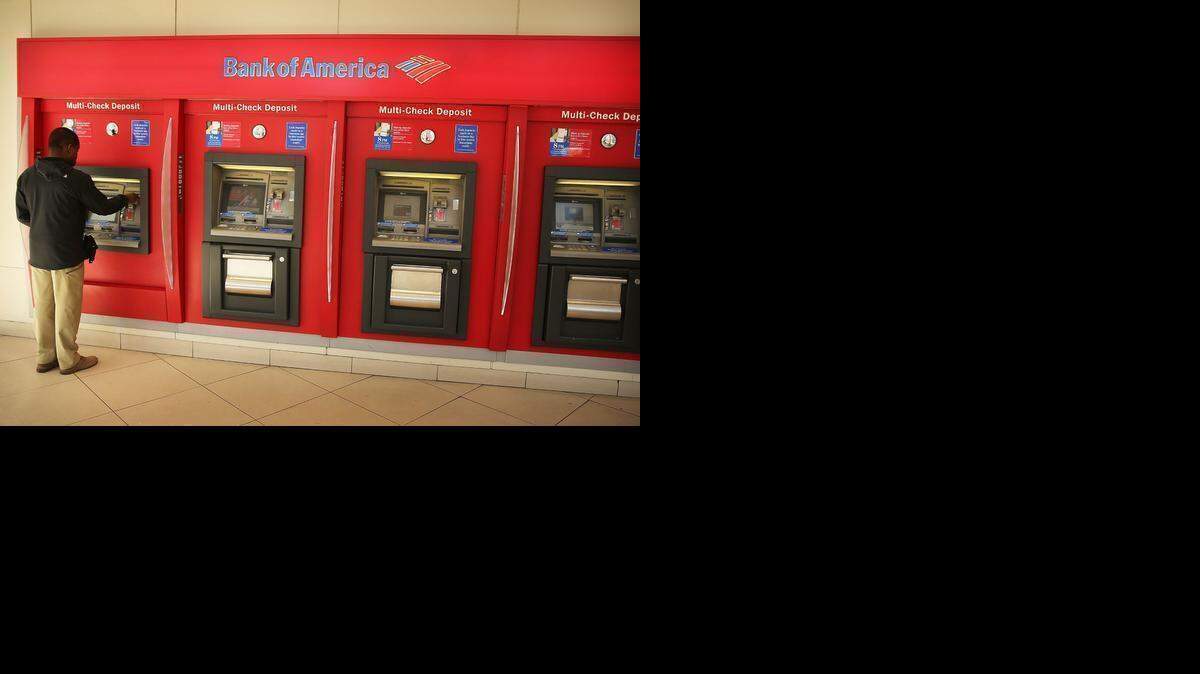
Bank of America has permission to repurchase $4 billion in common stock, a federal regulator said Wednesday, but the Charlotte bank must also address “deficiencies” and “weaknesses” in its capital planning process.
The Federal Reserve granted Bank of America conditional approval for the stock repurchases while giving the bank about six months to fix the issues. The regulator uncovered the problems as part of its annual examination of whether the nation’s largest banks have enough capital to withstand another major economic downturn.
It’s yet another setback for the second-largest U.S. bank as it continues its comeback from the financial crisis. If Bank of America does not satisfactorily address the issues identified by the Fed, the regulator said it “would expect to object” to the capital plan and may restrict buybacks.
Since the crisis, the largest banks must receive approval each year from the Fed to return capital to shareholders – through buying back stock or raising dividends. On Wednesday, the Fed announced its decision on whether to object to the latest capital plans of 31 U.S.-based bank holding companies.
Bank of America was the only bank that received a conditional nonobjection. Two others, Deutsche Bank Trust Corp. and Santander Holdings USA, received objections. The Fed did not object to the capital plans of the remaining 28 lenders, which include Wells Fargo and BB&T Corp., Charlotte’s two other largest banks by deposits.
Wells Fargo announced Wednesday that it received approval to hike its quarterly common dividend from 35 cents to 37 cents. BB&T said it won approval to raise its dividend to 27 cents, an increase of 3 cents, and buy back $820 million in shares.
Bank of America’s capital plan did not include a request for a dividend increase, which means common shareholders will continue to receive 5 cents per quarter.
In a share repurchase, such as the one approved Wednesday, the bank doesn’t buy back shares directly from individual shareholders. Instead, it repurchases shares from institutional and other large investors through stock exchanges.
Share repurchases reduce the number of outstanding shares on the market. Investors and analysts have varying opinions on whether they are better than a dividend increase. Repurchases can make the price of a stock go up by boosting earnings per share. Dividends are popular with individual investors, but they can be taxable.
Though it must satisfy the Fed’s concerns, Bank of America won’t have to wait to enact its buyback plan. The Fed will allow the bank to begin repurchasing shares starting in the second quarter of this year until the second quarter of 2016.
The Fed said it found weaknesses in certain aspects of Bank of America’s modeling practices for losses and revenue, as well as in some aspects of the company’s internal controls. The Fed said the bank must fix the deficiencies and resubmit its capital plan by Sept. 30.
Bank of America CEO Brian Moynihan said in a statement that the lender is “committed to meeting the requirements in the time frame the Fed has established.”
Tests began in 2009
The Fed’s announcement on banks’ capital plans is part of its annual, post-financial crisis “stress testing” of the largest U.S.-based bank holding companies. Federal stress testing began in 2009 in order to get an idea of the losses major banks might suffer in another economic crisis.
Last week, in one part of the testing process, the Fed released the results of exams showing that all 31 companies would meet a range of minimum capital ratios under two differing hypothetical recessions.
The results of a second component of the testing process are what the Fed disclosed Wednesday. In those tests, the Fed determines whether banks would still meet minimum capital requirements in an economic downturn if they carried out their proposed capital plans, such as increasing dividends or buying back shares. If banks fall below minimums, the Fed will not allow them to act on the capital plans.
Mixed news
Wednesday’s announcement is a mixed one for Bank of America and Moynihan.
On the one hand, it allows the bank once again to increase the amount of capital it is returning to shareholders. On the other, the finding of deficiencies is another blow to a bank whose reputation has taken a hit since the financial crisis, as it has struggled to free itself from costly litigation, much of it resulting from its purchases of Countrywide Financial Corp. and Merrill Lynch.
“I think Brian’s got issues he’s got to deal with,” independent bank analyst Nancy Bush said. “I don’t know how the board will deal with this, but clearly this is not something they needed in a year when they’re trying to put all their issues behind them.”
Senior Fed officials, in a conference call with reporters Wednesday, declined to go into specifics regarding the deficiencies at Bank of America. When the Fed issues conditional approvals, the expectation is for a company to immediately address deficiencies before the next stress testing process begins, the officials said.
Bank of America spokesman Jerry Dubrowski declined to comment.
Bank of America’s capital plan has been rejected by the Fed before.
The Fed nixed a plan in 2011 that called for raising Bank of America’s then-penny-per-share quarterly common stock dividend. The move was a blow to Moynihan, who had told investors earlier in 2011 that Bank of America would likely increase dividends later that year.
The Fed in March of last year said it would allow the bank to raise the dividend to 5 cents a quarter and buy back $4 billion in common stock.
The plan for the stock buybacks was later scrapped after the bank in April disclosed that it had been miscalculating its capital ratios. That error caused the bank to stall its plan to raise the dividend to 5 cents until the Fed in August approved a resubmitted capital plan.
Last year’s dividend increase marked the first time Bank of America raised the dividend since slashing it in 2009 to 1 cent from 32 cents.
Wednesday’s announcement comes at a time when investors are looking to Moynihan to increase the bank’s profitability. Last year, the bank’s earnings fell by 58 percent to $4.8 billion as a nearly $17 billion settlement with the federal government weighed on its profitability.
Hoping for dividend increase
Some longtime Bank of America shareholders whose ownership of the stock in some cases goes back to Charlotte-based NationsBank and other predecessor companies had been hoping for a dividend increase from the bank.
“For a typical stockholder that’s been holding the stock and wondering whether the dividend will go up to some higher yield in the near future ... I’m sure it’s a disappointment,” said Alan Goozner, a retired federal contractor in Charlotte who says he has owned shares in Bank of America for about two decades.
As recently as 2008, the bank’s quarterly common stock dividend was as high as 64 cents. In the wake of the financial crisis, the bank had to slash the dividend to retain capital.
At 5 cents, the dividend remains far below that of some of its big bank competitors.
The dive in the bank’s dividend has meant a decline in retirement income for some shareholders, many of whom live in the Charlotte area.
Goozner said he would like to see the dividend raised to at least 10 cents. He said he owns 1,000 common shares of the bank. Since the crisis, he said, the bank has increased the dividend by “token amounts.”
“Legacy holders of the stock are still suffering,” he said.
“They’re overdue for a dividend increase. That would be very welcome by all shareholders.”
The Fed announced its decision on banks’ capital plans after the stock markets closed. In after-hours trading, Bank of America’s shares fell to $15.88, a drop of 1.4 percent.
Roberts: 704-358-5248;
This story was originally published March 11, 2015 at 4:30 PM with the headline "Bank of America gets OK to repurchase stock but must address ‘deficiencies’."