
Longtime shareholders question NewDominion’s plan to fund growth
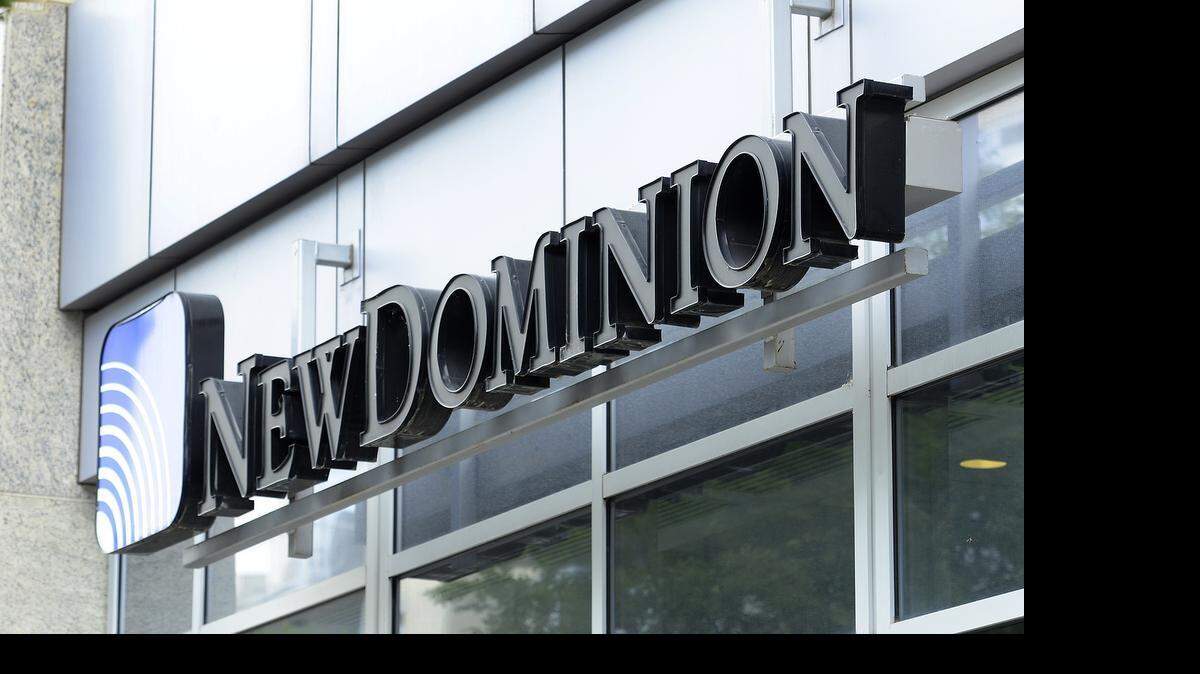
A dispute is brewing at one of Charlotte’s few remaining community banks over its leaders’ plans to raise capital and finally get out from under a restrictive regulatory order.
Some common shareholders who invested thousands of dollars or more in NewDominion Bank when it launched a decade ago are now outraged by its proposal to raise capital by issuing millions of preferred shares to big investors.
The shareholders say their large stakes in the company they helped build would be exposed to greater risk. That’s because preferred shareholders enjoy protections such as being paid first if a company goes bust.
One prominent Charlotte shareholder, Mark Erwin, resigned from the bank’s board in March in protest. Erwin, a former U.S. ambassador who served on other bank boards, has since been sharing his concerns with other shareholders.
It’s the latest challenge for a bank founded in 2005 after raising $40 million in capital – which at the time was a North Carolina record for a startup bank. But six years after the recession ended, NewDominion continues to struggle to be profitable, and critics charge executives haven’t done enough to keep expenses under control. Shares that went for $10 in the bank’s early days are now valued at around 50 cents.
NewDominion, whose name reflected its founders’ Christian beliefs, is one of just three community banks based in Charlotte. Before the recession, the city was home to as many as seven. Community banks are those with less than $10 billion in assets, under a widely accepted definition.
Facing rising costs associated with regulation, cybersecurity and other issues, community banks have been consolidating through acquisitions.
NewDominion, headquartered in the prominent Metropolitan development in Charlotte’s midtown area, has a lot riding on its plan, which shareholders will vote on at an annual investor meeting Tuesday in Charlotte.
As long as the lender remains under an order that state and federal regulators imposed on it in 2010, it is limited to how much it can increase its assets, such as loans. That restricts the bank’s revenue growth as it tries to stem ongoing losses linked to real estate loans that went bad during the recession.
The order also prevents it from awarding bonuses to executives without prior approval. The privately held bank does not disclose executive pay.
CEO Blaine Jackson told the Observer the lender intends to raise about $10 million to satisfy the order’s capital requirements and about $10 million more to fund its growth beyond its two branches.
To raise that $20 million, the lender is seeking shareholder approval to increase the number of preferred shares it can issue to 30 million, from the current cap of 5 million. Plans call for raising the capital through a mix of preferred and common shares.
Jackson said using capital to fund growth in Charlotte will eventually help raise the bank’s share price, which will benefit all of the lender’s shareholders.
Some shareholders are unconvinced that increasing the number of preferred shares is in their best interest.
Erwin, one of NewDominion’s original shareholders and board members, said he resigned from the board to protest the proposal. “I went from a large shareholder and director to a large shareholder and activist shareholder,” he said.
Jackson said Erwin resigned after not being nominated this year for re-election to the bank’s board.
Erwin says that is not accurate. According to Erwin, when the bank asked him last year whether he wanted to be nominated in 2015 for another term on the board, he “emphatically” said no. Erwin said he did not want to serve another term out of concerns about the bank’s leadership and decisions he felt were not in the best interests of shareholders.
Erwin, whose $1 million investment makes him one of the bank’s largest shareholders, said common shareholders like him would be put at a greater disadvantage if the bank sells more preferred shares. If the bank is sold or taken over, “the common shareholders, the ones that have been with the bank the longest, … could potentially get diluted or wiped out,” he said.
Erwin said he is also concerned that institutional investors who buy preferred shares could have an outsized influence on the Charlotte bank because of their big investment.
Jackson, the CEO, said issuing preferred shares would eventually let the bank make a tax maneuver that would give it an additional $15.1 million in capital after it becomes consistently profitable. If the bank raised the $20 million only through common shares, tax rules would require it to forfeit about $7 million of the $15.1 million, he said.
“We are in no position whatsoever to just give up $7 million of future capital for the company,” he said.
Erwin said the bank has at least two other options it is not presenting to shareholders: Sell the bank now so shareholders who invested at 50 cents a share in 2013 can recoup their investment, or reduce expenses and wait to sell more shares after it’s profitable.
“They’re trying to sell shares in a wounded bank with very high expenses,” he said.
Jackson said a sale of the bank is not in the company’s strategic plans.
NewDominion expects to have enough votes to pass the measure, which needs approval by two-thirds of common shareholders, he said.
‘Like it’s a country club’
Jackson said the bank’s operating expenses are rising as it invests in new lines of business to grow the company. Last year, the company expanded into mortgage lending and had to hire employees to staff that operation, he said. As the company pushes into new businesses, revenues in those areas are offsetting additional expenses, he said.
In the first three months of this year, the bank’s non-interest expenses, which include salaries and other items, totaled $2.6 million, up about 5 percent from a year ago. The bank posted a loss of $132,957 in the period.
Some shareholders say the bank could be doing more to rein in expenses.
“I sold 20,000 shares at the end of December because of the way they’re operating,” said 84-year-old investor Sam McMahon. “They’re spending money like it’s a country club.”
McMahon opposes the idea of issuing more preferred shares. He believes the bank wouldn’t need to take that step if it lowered its expenses.
The Charlotte resident said he has only 500 shares of NewDominion left from his original investment of 22,500 shares, which he bought for $10 each in the company’s early days. He sold the 20,000 shares in December at 50 cents apiece.
“At least I got a tax write-off.”
Battling losses
NewDominion has not posted an annual profit since 2008, although its losses have been shrinking for the past three years.
“The bank is lagging behind the other North Carolina community banks in experiencing a business recovery in the wake of the recession,” said Tony Plath, finance professor at UNC Charlotte. “To gain profitability, first you have to rebuild the balance sheet, and it’s simply taken them longer to accomplish this task than the other banks in the region.”
Jackson said the bank made large strides to put itself on stronger financial footing, such as raising $10.5 million in capital through a sale of common stock in 2013.
Launched with a heavy focus on Internet banking, NewDominion began bidding heavily on commercial real estate loans during the real estate market’s boom years. When those loans soured, the Federal Deposit Insurance Corp. and the N.C. Commissioner of Banks put the struggling lender under the consent order.
The bank is still dealing with some of those original loans.
Jackson said NewDominion’s pitch to large investors will focus on how it got rid of many troubled loans.
“We’ve cleaned up 85 to 90 percent of the problems,” he said. “We grew our loan portfolio 16 percent last year, which is phenomenal.
“The pitch this time is, ‘Hey. Look at what we’ve done. We just need to continue doing what we’ve been doing.’”
Roberts: 704-358-5248;
This story was originally published May 18, 2015 at 2:00 AM.