
Erica Parsons’ parents to be sentenced Friday
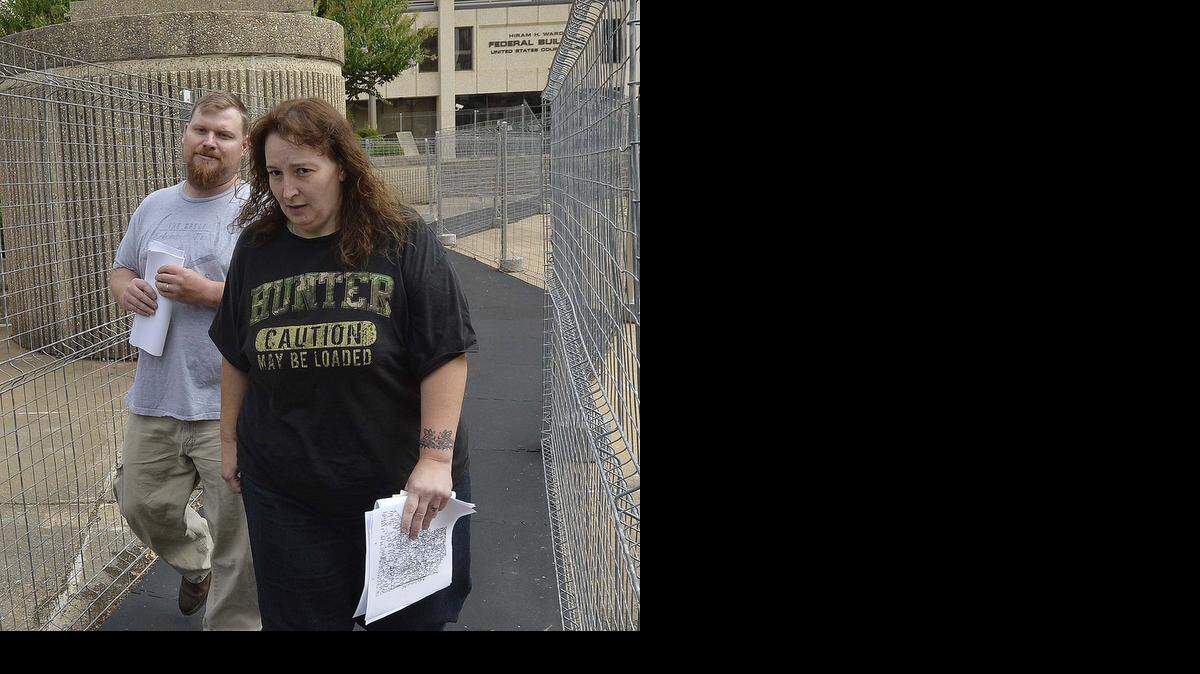
A mystery in the form of little Erica Parsons is casting a shadow over a fraud case involving her adoptive parents.
Casey and Sandy Parsons are to be sentenced Friday for financial crimes – tax fraud and cashing benefit checks after the girl disappeared from their Rowan County home in 2011. But neither has been charged in the disappearance of the girl, who they say they gave to a woman who claimed to be Erica’s biological grandmother.
But at a sentencing hearing last month before U.S. District Judge Thomas Schroeder in Winston-Salem, evidence was introduced about the Parsons and their behavior toward the girl.
Other members of the Parsons family testified about a pattern of cruel physical and emotional abuse aimed at Erica, who came to the household when she was an infant and was 13 when she vanished.
Erica was fed dog food as punishment for stealing food or sweets, was often locked in a closet and was made to stand in a corner rather than being allowed to play with other children, they testified. Only a small portion of the testimony during the day-long hearing concerned federal fraud charges against the couple.
In introducing the testimony, Assistant U.S. Attorney Anand Ramaswamy was giving the court reasons to penalize the couple more harshly, even though they had not been charged with or convicted of abuse.
Penalties in the extreme
Casey Parsons, Erica’s adoptive mother, pleaded guilty in October to one count of conspiracy to defraud the government, five counts of mail fraud, four counts of aiding in the preparation of a false tax return, four counts of wire fraud and one count of aggravated identity theft. She faces a maximum of 199 years in prison and fines totaling $3.75 million.
Her husband, Sandy Parsons, refused a plea bargain and was found guilty in October of one count of conspiracy to defraud the government, one count of aggravated identity theft, one count of false statement to a government agency, 20 counts of theft of government funds and 20 counts of mail fraud. He faces a maximum of 509 years in prison and fines totaling $6 million.
Federal sentencing guidelines, enacted to prevent wide disparities in punishments handed down in different regions or by different judges in similar cases, take into account a number of factors.
Crimes involving violence, or committed with a firearm, or showing a disregard for the safety of the public tend to earn harsher sentences. Conversely, criminals who express genuine remorse or cooperate with authorities tend to get lighter sentences.
Guidelines also allow judges to consider factors that may not have come to light in the trial phase, including prior offenses or other acts by the defendants.
“If reliable information indicates that the defendant’s criminal history category substantially under-represents the seriousness of the defendant’s criminal history or the likelihood that the defendant will commit other crimes, an upward departure may be warranted,” the guidelines say.
Prior adult criminal conduct not resulting in a conviction can also be considered by the judge, the rules say.
Judge has discretion
Claire Rauscher, who has no connection to the Parsons case, is a white-collar criminal defense attorney at Womble Carlyle in Charlotte familiar with federal sentencing.
She says it will be up to the judge to decide what information he will accept from the February testimony and whether to use it to stray from the guidelines.
“He’s going to weigh all of it,” says Rauscher, former executive director of the Federal Defenders of Western North Carolina. “He will make a decision on what he thinks is a fair overall sentence.”
One of the prime factors in tax or fraud cases is the amount of money involved, which is relatively low in the Parsons case versus many other federal prosecutions.
“I’d be surprised if they’re looking at more than three to five years,” says Rauscher. “My guess is that the government is trying to increase the sentence by introducing evidence of abuse and other bad acts.”
Erica’s strange disappearance
Authorities have been vexed by the case of Erica Parsons since she was reported missing July 30, 2013, by her adoptive brother who went to authorities after a fight with his parents and said no one had seen Erica for 20 months.
A year later, the FBI and Internal Revenue Service agents arrested the Parsons on fraud and tax charges. Casey Parsons admitted she continued to collect government benefits after the girl disappeared, including monthly checks of $634 for adoption assistance, and pleaded guilty. Sandy Parsons fought the charges and was found guilty.
Their two youngest children have been taken away by the Department of Social Services and placed with relatives.
Despite an intense investigation that has included the Internal Revenue Service, the FBI, the Rowan County Sheriff’s Department, the Social Security Administration and other agencies, no trace of Erica – nor the biological grandmother she was said to be living with – has ever been found.
Pattern of domination
During February’s hearing, attorney John Bryson of High Point, who represents Sandy Parsons, questioned whether the fraud cases that did not result in any charges should be presented prior to sentencing. Bryson also got witnesses to admit that the dominant spouse in the couple was Casey Parsons.
“Sandy will do whatever Casey tells him to do,” said their son, James Parsons, under cross-examination by Bryson.
James Parsons admitted that he routinely bullied Erica Parsons when they were growing up and once broke her arm.
He also testified about his parents hitting the girl, keeping her in a closet and withholding food to punish her.
Alec Carpenter, Casey Parson’s Greensboro attorney, argued that much of what James Parsons said should be discounted because he was unreliable and had a history of emotional problems.
Also testifying in February was Robin Ashley, Casey Parsons’ older sister. She said Casey Parsons did her tax returns and one year called the IRS to report her for cheating. “She got me investigated for tax fraud. ... She’d brag about it when she was angry.”
Ashley said Erica came to live with her twice because Casey Parsons was worried about killing the girl. She said Erica had bruises on her backside that Casey Parsons said were from a belt buckle. Erica’s fingers were also deformed, she said, apparently the result of Casey Parsons bending them backward during punishment.
“She was basically treated like a little slave,” Ashley said.
Diane Hench, a forensic accountant with the FBI, testified that she tracked a number of phony transactions for concert tickets, iPods and school textbooks to accounts controlled by the Parsons.
Washburn: 704-358-5007;
Twitter: @WashburnChObs.
This story was originally published March 26, 2015 at 5:03 PM with the headline "Erica Parsons’ parents to be sentenced Friday."