
Cycling advocates unhappy with proposed bike lane limits
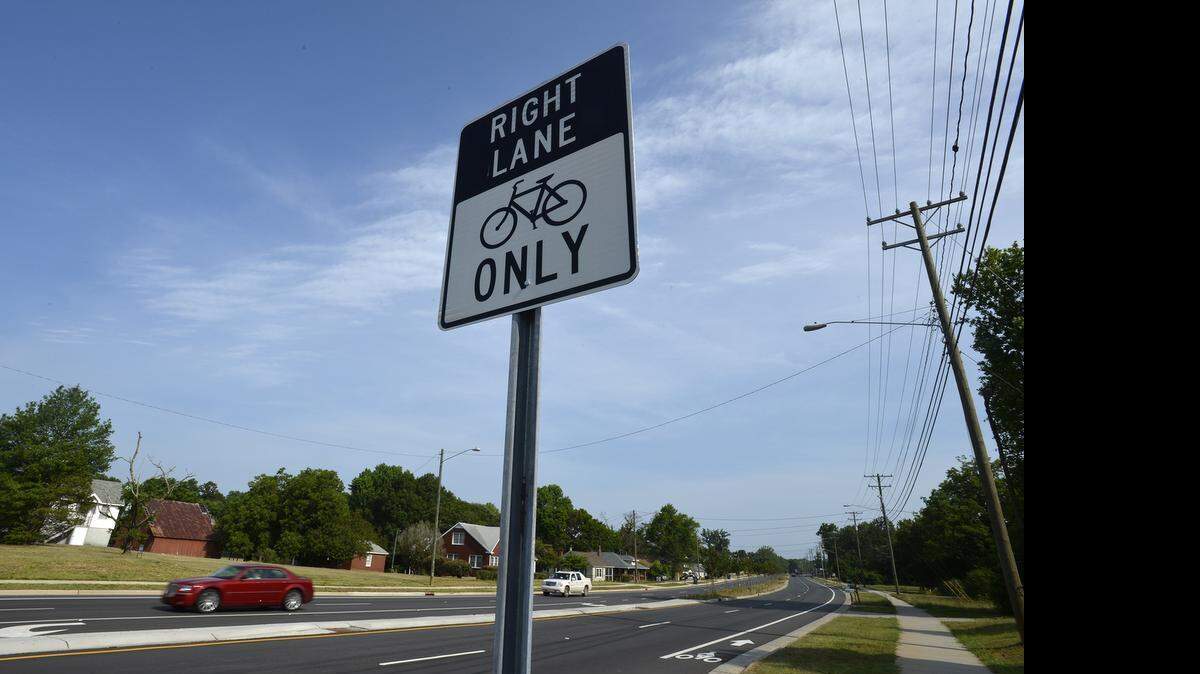
A bill in the N.C. legislature would restrict the state from eliminating a lane of traffic to add bike lanes, sparking criticism from cycling advocates.
Road diets, as the practice is often known, have become increasingly popular nationwide in the last few decades, with Charlotte among the cities focused on making space for alternative forms of transportation – most notably, bicyclists.
“The main reasons are to make it safer and more convenient for folks to use other modes of transportation,” said David Morley, senior research associate at the National Planning Association.
House Bill 44, which was originally aimed at vegetation ordinances, contains a section that would prohibit such narrowing on state-operated roads if daily traffic counts exceed 20,000 vehicles or if the narrowing would reduce traffic flow over 20 years. The House and Senate are working to reconcile differences in the bill.
Meg Fencil, coordinator of the Transportation Choices Alliance at Sustain Charlotte, said if the bill passes with its current wording, it could severely limit the city and state’s ability to determine where bike lanes are put.
“The decisions about where bike lanes should go should be made at the local level,” she said. “Not politicians in Raleigh who don’t know about the on-the-ground situation in Charlotte.”
But Mike Holder, DOT’s chief state engineer, said the Senate language “is good and is compliant with our current policies.” He said he wouldn’t want to reduce car lanes if doing so would cause traffic congestion in the future “and we would need that capacity back in 20 years.”
The city of Charlotte has eliminated lanes to add bike lanes in about 20 projects, but only two on state roads. The Charlotte DOT’s aim to reduce the city’s dependency on cars has paved the way for such projects.
Dan Gallagher, transportation planning manager for Charlotte DOT, said the majority of such projects in Charlotte have occurred on city-maintained streets. Those wouldn’t be affected by the bill.
State-maintained roads make up about 25 percent of the nearly 4,000 miles of roads in Mecklenburg County, according to the N.C. DOT.
In 2010, Charlotte DOT finished work on the East Boulevard project, where a lane was removed to make space for bike lanes and refuge islands for pedestrians.
Lauren Blackburn, director of the Division of Bicycle and Pedestrian Transportation for N.C. DOT, said the East Boulevard project is an example of why road diets are done.
“They don’t fit every situation, but they can improve quality of life along the corridor,” she said.
According to the city’s Bicycle Plan, approved by Charlotte City Council in 2008, several road diets were planned for the city by 2015, including one on state-operated Rea Road. But Gallagher said the city has no formal plans to proceed.
Besides removing lanes, the city has also narrowed lanes to make space for bikers. Gallagher said the department will be updating the plan this fall.
The two projects that have been completed on state roads were on West Morehead Street and a portion of Statesville Road.
“Each one is done on a case-by-case basis,” Gallagher said. “We have to make sure it works for all users, including motorists.”
He said Charlotte has come a long way since 2001, when the city had only one mile of bike lane. He said the city today has 150 miles of bike lanes.
“The bicycle network in Charlotte is maturing every day,” he said. The (Raleigh) News & Observer contributed.
Fowler: 704-358-5294
This story was originally published June 29, 2015 at 2:00 AM with the headline "Cycling advocates unhappy with proposed bike lane limits."