
Charlotte charities no longer quiet about helping immigrants, legal or not
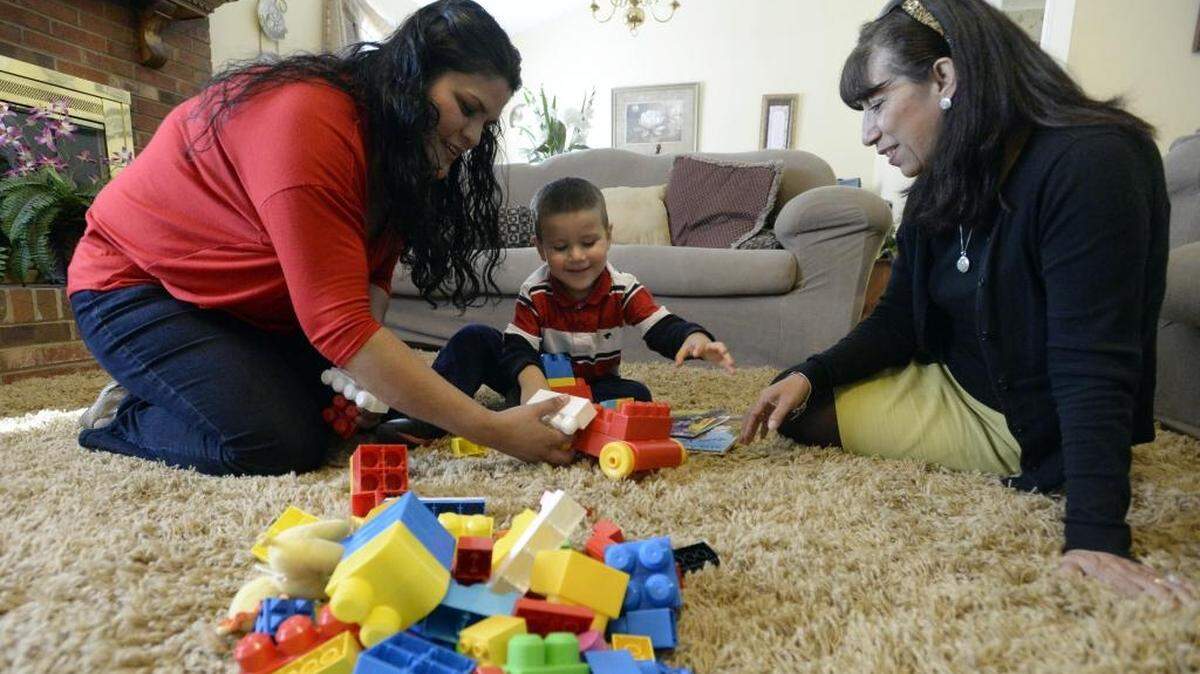
Mexican immigrant Olga Castañeda is a prime example of a largely invisible group of women in the community who have lived as virtual prisoners in their own homes.
Most are not in the country legally. And they spend days, even weeks, stranded in houses or apartments with their children, as husbands take the family vehicle and head to jobs in other counties or nearby states.
Castañeda, a wife and mother of three children, says she lived that way for years.
“You feel isolated from the world, under house arrest,” says Castañeda, 36, speaking through an interpreter. “You have no one. I had no family here. No friends. Only fear of everything in a country where you can’t speak the language and don’t understand the culture.”
In the past, help from local charities has been hard to find for such immigrant families because many agencies feared donor backlash during the recession and brutal job market. Federal rules involving aid to people not in the country legally also complicated matters. Those charities that did offer help kept it low key.
That has begun to change, however, as community leaders have embraced the city’s booming immigrant population and look for ways to use that work force to Charlotte’s economic advantage. Hispanics are now 12.7 percent of the Mecklenburg County population, having grown in number by nearly 15 percent from 2010 to 2014.
Hispanic buying power in North Carolina is credited with creating an economic impact of $10.3 billion, a 2010 study showed. Meanwhile, consumer spending by all immigrants in the state generated 171,000 spin-off jobs, $6.4 billion in labor income and $1.4 billion in state and local taxes, the study showed.
Castañeda and her Peruvian husband, Herman, are among the beneficiaries of this new openness, having enrolled a year ago in a YMCA program called Parents as Teachers.
It’s a program open to everyone, but is unique in the community for sending bilingual counselors into the homes of low income Hispanic parents who may be socially isolated due to a lack of language and cultural knowledge. Its mission is to teach parents skills to prepare children for school. However, counselors also look for signs of developmental delays, abuse and neglect. They connect the families to critical needs as well, like health care charities.
Two of Castañeda’s three children are getting speech-language therapy, thanks to referrals from the Parents as Teachers program. And she’s taking YMCA monthly classes on health and nutrition alongside other immigrant Hispanic women. She is now in the country legally, too, as a result of deferred action status.
“It has changed my life,” says Castañeda, who earned a college degree in anthropology in her native Mexico. “The YMCA has shown me that there is a world outside of my house and I have the right to ask for help for me and my children. I’m not afraid anymore.”
The YMCA joins Loaves & Fishes, Goodwill, the Salvation Army, A Child’s Place, Ada Jenkins Center and a handful of other charities in making clear that lack of documents does not disqualify needy people from getting help. That means they do not require a Social Security number, only proof of residency in Mecklenburg County.
All immigrants are also welcomed in the city’s men’s and women’s shelters, soup kitchens, and holiday programs that offer Christmas toys for needy children.
In cases where charities are not as welcoming, it’s a matter of federal funding restrictions that call for Social Security numbers.
Michael DeVaul of the YMCA of Greater Charlotte says the agency’s efforts to help immigrants evolved over the past seven years as more began to show up at programs. This includes not only Parents as Teachers, but a free water safety program for kids launched this summer at apartment communities populated by Hispanic families.
Legal immigration advocate Ron Woodward of NC LISTEN is among those who believes providing services to people here illegally extends their stay in the country. However, he understands the quandary charities faces when the hungry or ill show up at their door.
“As a Christian, I believe we do need to help those in need. Of course we are also a nation of laws and (of) fairness for those waiting their turn to come here legally,” Woodward said.
“It is not the intent of NC LISTEN to go after charities. However, in our opinion they need to weigh their help for illegals against understanding they are helping people illegally remain here who are taking non-farm jobs and services which belong to poor citizens who often see their wages lowered, if they can get a job, due to illegals.”
The YMCA has made it a point not to ask about the legal status, which could explain why participation in the Parents as Teachers program has doubled in the past two years to nearly 160 children age 5 and under. More than 80 percent of those who’ve graduated from the program are performing at grade level in school, and now 100 families are on the waiting list to enroll.
Among those families are parents who can neither read nor write in their native language, DeVaul said.
“We have 175 languages now being spoken in the CMS and many of our newcomer (immigrant) families have moved into the deepest darkest pockets of poverty here,” said DeVaul, adding that it is critical to help non-English speaking parents connect with the world outside their homes.
“Our responsibility as a community is to show our new neighbors... a way to get out of poverty, to increase social mobility. Even the most conservative funders want to serve (and) focus on this population...If we don’t get them early, we’re going to end up taking care of them in ways long term that are inefficient.”
Critics remains, however. Loaves & Fishes said it has heard from people who are angry that it is feeding immigrants not here legally. The agency began tracking the ethnicity of its clients in 2013 and was surprised to find some of its pantries are mostly serving immigrants, and not just those in Charlotte. A pantry in Huntersville has a clientele that is 25 percent Hispanic.
Beverly Howard, head of Loaves & Fishes, says the overall make up of the agency’s clients is 50 percent African-American, 25 percent Hispanic and 25 percent white.
“Our commitment is to feed everyone who is referred to us, regardless of status, sex, race or religion, because it’s the right thing to do. I think we have been proven right in our decision and it’s no longer that much of an issue,” said Howard.
“We did get some blow back from folks who were not donors, but felt we shouldn’t be feeding people who weren’t American citizens. They it would encourage them to ‘flock to Charlotte and take food away from Americans’.”
Mark Price: 704-358-5245, @markprice_obs
This story was originally published November 24, 2015 at 2:30 PM with the headline "Charlotte charities no longer quiet about helping immigrants, legal or not."