
Kennedy: Leaders say it’s a new school that needs time to thrive
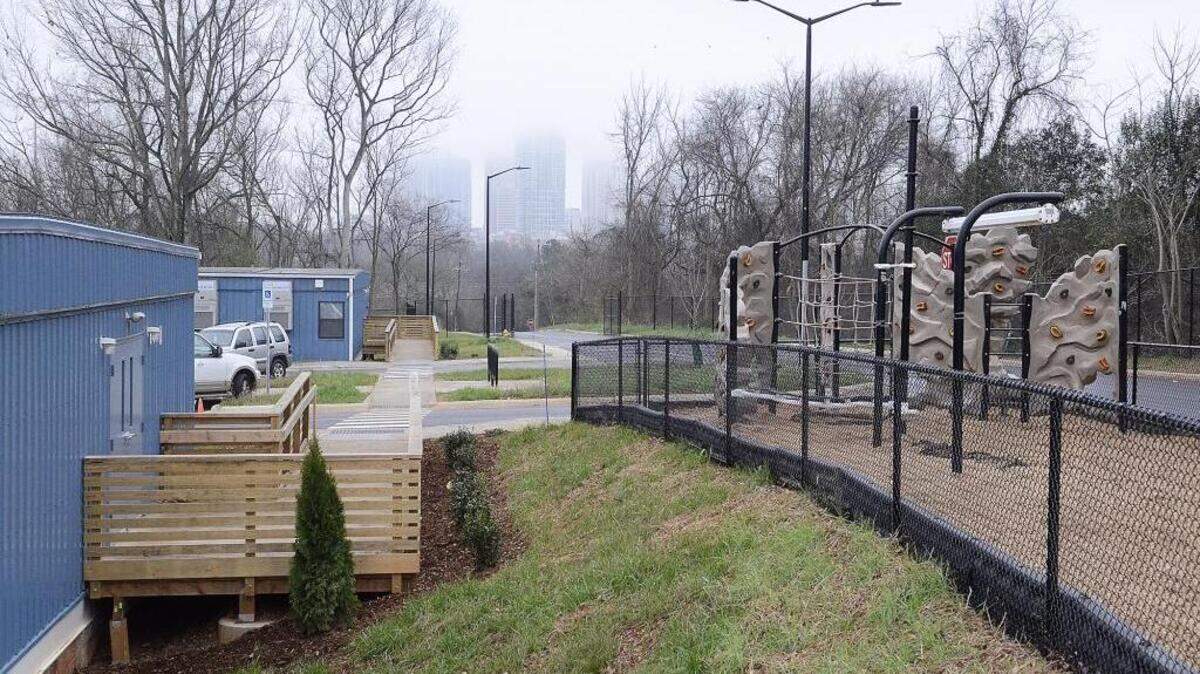
One could argue that Kennedy is not only one of Charlotte’s oldest charter schools, but one of its newest.
It opened in 1998 on the south Charlotte campus of Elon Homes and Schools for Children, as a high school serving teens who had been removed from abusive or neglectful families.
In the ensuing 18 years, it has constantly evolved, adding grade levels, changing locations and serving different groups of students as regulations and conditions changed. But the focus has always been on students facing major challenges, including foster children and others served by Elon Homes.
Performance on state exams has consistently reflected the struggles of those students, landing Kennedy among the lowest in the county and state.
The latest transition for Kennedy began in 2012, when it became a K-12 school and planned a move from south Charlotte to Johnson C. Smith University. The plan is to attract students to a college-based school that becomes part of a reinvigorated west Charlotte neighborhood.
“Part of my vision for the West Charlotte corridor has been to add a K-12 school of choice for our community and also to bring the county’s largest foster care provider to this neighborhood,” JCSU President Ronald Carter wrote to State Board of Education members in a Dec. 18 letter offering his “heartfelt recommendation” to keep Kennedy alive.
The state gave Kennedy a 2015 deadline to improve academic performance and complete the move. Kennedy’s high school moved to the university in August 2014, with K-8 students joining them in August 2015. The charter board was optimistic enough to apply to open a second school in Mecklenburg County in 2016-17.
Operating from two campuses last year posed challenges, and test scores released this fall were grim. The overall pass rate was 19 percent, and the school fell short of growth goals. Kennedy got an F from the state – as did 10 Charlotte-Mecklenburg elementary and middle schools. Like Kennedy, those schools have extremely high poverty levels and serve mostly African-American students.
Declining enrollment – Kennedy leaders blame the transition – led to a deficit of about $30,000 in the $4.6 million public budget, though financial support from Elon Homes kept the school on sound footing.
Elon Homes President Fred Grosse and Kennedy board President Brad Gilliam say they went into the December Charter School Advisory Board meeting confident of renewal.
Instead they were peppered with questions about test scores, curriculum, finances and why the board would embark on a new school while Kennedy was struggling. The 2015 financial audit, due at the end of October, was late, raising further questions.
The advisory board, made up of charter school representatives from around the state, voted to recommend letting Kennedy’s charter expire this summer.
Since then, Grosse and Gilliam have been making their case to Board of Education members.
They’ve highlighted the support of JCSU, which provides summer programs, expertise and access to a university environment. They’ve presented detailed analyses of test scores, showing that Kennedy met or exceeded growth in 2013 and 2014, falling short in 2015 only because of weak math performance.
“Our goal all along is to get to a point of stability,” Grosse said recently. “It’s very much a new day for us.”
At the Jan. 6 Board of Education meeting, some members seemed receptive.
Kevin Howell, an administrator at N.C. State University, said the state should support schools serving the most disadvantaged students. “For those of us who are from that area,” he said, “west Charlotte is tough.”
But Becky Taylor, the Board of Education member who serves on the charter advisory board, and Alex Quigley, a Durham charter school operator who chairs the advisory board, said charter schools should be able to deliver better results, even with students of poverty.
“We haven’t seen any consistency and stability in their academic performance,” Quigley told the Board of Education. “This is something we don’t take lightly. If we’re going to hold a high bar, we’re going to make nonrenewal recommendations.”
Kelle Pressley-Perkins, whose 11th-grade daughter attended Kennedy last year, contacted the Observer to support the recommendation to close the school. She said she was attracted by the JCSU location, but encountered teacher shortages, difficulty getting her daughter into required classes and poor classroom management from inexperienced teachers.
“They don’t have a consistent method of operation,” Pressley-Perkins said. “It was just all over the place.”
By February, Kennedy’s leaders hope to persuade the education board that their school’s efforts will pay off in academic gains.
“We have our strongest faculty ever in 18 years,” Grosse said. “We’re proud as anything of our school.”
Ann Doss Helms: 704-358-5033, @anndosshelms
About Kennedy
Basics: K-12 charter school that opened in 1998.
Enrollment: 343 students; 92 percent are black and 82 percent are from low-income homes. Enrollment declined slightly this year.
Academics: 19 percent pass rate on last year’s state exams, with 10 percent rated college/career ready. Graded F and did not meet growth target. Graduation rate 67 percent.
Financial: Received $4.6 million in public money in 2014 and ran a deficit of almost $30,000. State raised concerns about a low cash balance and late reporting.
Status: Received a three-year renewal in 2013, contingent on showing academic progress and moving to JCSU. Advisory board recommended not renewing in 2016.
More information: www.kennedycharter.org
This story was originally published January 19, 2016 at 6:28 PM with the headline "Kennedy: Leaders say it’s a new school that needs time to thrive."