
New arguments emerge in debate over I-77 toll lanes
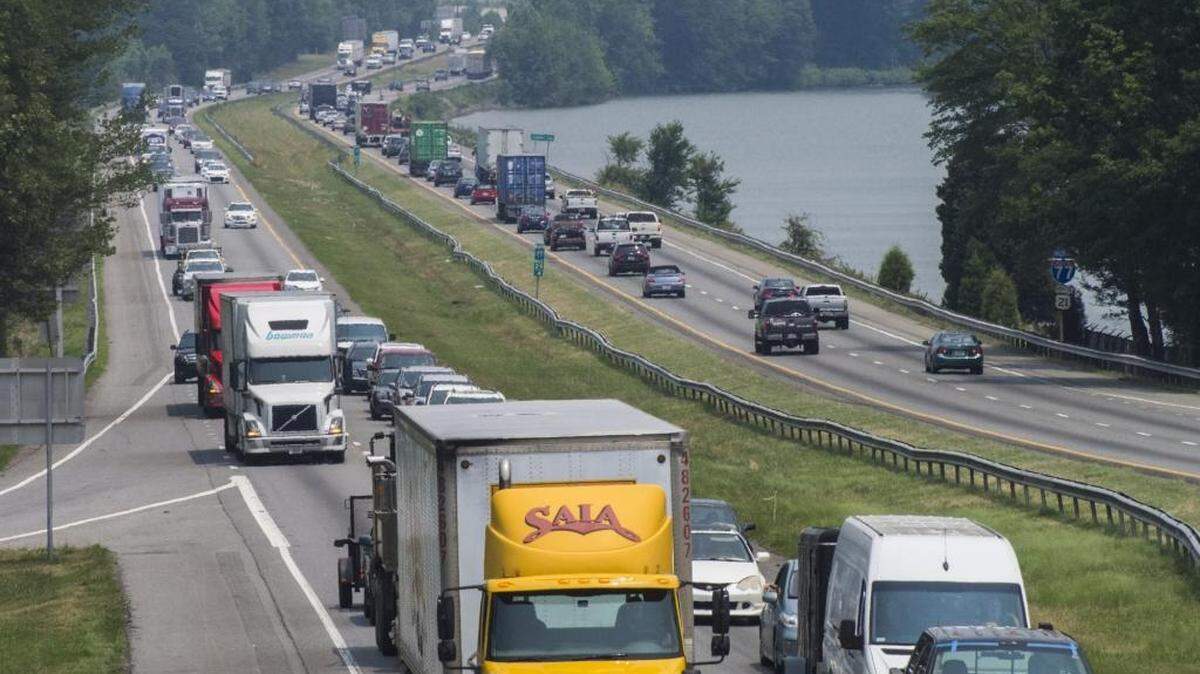
As the N.C. Department of Transportation defends the Interstate 77 toll lanes, the state is making new arguments about why the controversial project should move forward, including that it would be a boon to transit.
The full Charlotte City Council will vote Monday on whether the city should support a long-range transportation plan that includes the I-77 project.
The city’s transportation committee met Jan. 4 and voted 3-2 to support the state’s plans to build toll lanes in the region on I-77, Interstate 485 and U.S. 74.
Council members expect Monday’s vote to be close, possibly 6-5, either for or against the I-77 toll lanes.
At the meeting earlier this week, the DOT and city staff members made some new arguments in favor of the toll lanes. Opponents weren’t allowed to speak at the meeting, though they have been bombarding council members with emails urging them to reject the toll lanes.
Here are some of the new arguments being made in preparation for Monday’s vote and some background on what would really happen:
▪ The City Council can’t cancel the I-77 contract with Cintra; only the N.C. Board of Transportation can.
This argument has been made by toll lane supporters, including council member John Autry, and was tweeted by Mayor Jennifer Roberts. During the mayoral campaign, Roberts said she opposed I-77 toll lanes because of restrictions placed in the 50-year contract. She hasn’t spoken in favor of voting to stop the toll road, however.
The statement that council members can’t cancel the contract is factually correct but doesn’t tell the whole story.
The main driver of local transportation policy is the Charlotte Regional Transportation Planning Organization. The city of Charlotte controls 46 percent of the votes on CRTPO.
CRTPO can’t cancel the contract with Cintra, but it can remove the I-77 toll lanes project from its long-term plan.
In fact, CRTPO changes its long-term plan frequently, deleting some projects and prioritizing others.
But with I-77 toll lanes, a strange loop has emerged.
Gov. Pat McCrory said he won’t cancel the contract because local governments, including Charlotte, voted for it as part of CRTPO; some city council members say their hands are tied because only McCrory’s administration can cancel the contract.
CRTPO can vote to delete the toll lanes from its plan, a move that could stop the project from moving forward.
There would be repercussions, but it could be done.
▪ The toll lanes will give public transit a boost.
At Monday’s meeting, Ned Curran, chair of the board of transportation, said the toll lanes are important to mass transit. His message appeared to be tailored to most council members, who adamantly back transit.
In the I-77 corridor, Curran noted that plans for a commuter rail line are stalled. When the toll lanes are finished, Curran said buses could provide a useful alternative.
The reason: Buses will be able to use the toll lanes for free.
That’s correct, though a smaller express lane exists today.
There is a carpool lane on I-77 today from uptown to I-485 that’s available for buses. The I-77 project would extend that carpool lane about 13 miles to Mooresville, which would shorten the commuting time for bus riders going to Huntersville and beyond.
The Charlotte Area Transit System has two express bus routes that use I-77 in north Mecklenburg. Those two express routes – one to Huntersville and one to Davidson – carry about 600 round trips a day. Both routes would benefit from the toll lanes.
The other planned toll lanes are for I-485 in south Charlotte and U.S. 74.
There are no CATS buses that use I-485 in south Charlotte today. As for U.S. 74, several buses use that route, though they travel in a dedicated busway that already exists.
It’s possible bus ridership would increase with the toll lanes. But it’s also possible fewer people would carpool.
Today, cars with two or more people are allowed to use the I-77 carpool lane. The contract with Cintra will only let vehicles with three or more passengers use the carpool lanes for free.
▪ There would be political consequences if Charlotte voted against the I-77 toll lanes.
Charlotte’s agenda calls for an up or down vote Monday on all toll lanes.
Some council members have said they would like to vote on supporting toll lanes, but not the I-77 project.
If Charlotte voted to stop the I-77 toll lanes while keeping other toll lanes, Curran said that would send the wrong message to Raleigh. At Monday’s meeting, he said his colleagues on the board of transportation would likely vote to pull funding for the two other Charlotte toll lane projects on I-485 and U.S. 74.
That’s certainly possible.
Curran was appointed by McCrory. McCrory has pledged that his administration will “take the politics out of road building.”
The I-485 and U.S. 74 toll lane projects were among the highest scoring projects in the state under a new formula that has been championed by McCrory.
On the flip side, the state could argue that Charlotte and other local governments interjected politics into the issue by canceling toll lanes after voting for them numerous times.
▪ Canceling the contract could cost $300 million.
The N.C. DOT has previously said canceling the contract could cost $100 million.
The State Auditor released a report Dec. 30 that said it could cost taxpayers between $82 million and the “fair market value” of the project, which a consultant said was $302 million.
Kurt Naas is a spokesperson for the anti-toll lane group, Widen I-77. He said the consultant’s estimate of $300 million is based on Cintra’s own estimates of toll revenue, which he said is inflated.
“It would be the highest-grossing toll road ever,” he said.
The total cost of the toll lane project is about $650 million. Naas said it’s stunning the DOT negotiated a contract that would require payment of $300 million after Cintra has only spent a few weeks on construction.
Regardless of how much the cancellation penalty is, Charlotte council members are fearful the General Assembly would pass legislation to make Charlotte or the Charlotte region pay.
The Charlotte region would also lose $145 million in so-called “bonus” money that’s slated for north Mecklenburg to improve the roads and interchanges leading to the toll lanes. If the toll lanes are canceled, that money would be spread out across the state.
In response to a complaint about Cintra, the DOT’s Office of Inspector General released a report Jan. 4 saying the process by which Cintra received the contract was fair and open.
▪ There is a Jan. 20 deadline to vote on the toll lanes.
McCrory asked CRTPO to reaffirm or deny the long-range transportation plan by Jan. 20.
At Monday’s meeting, Roberts and other council members struggled with whether they need to have a decision by then.
They don’t.
The toll lanes are moving forward, even if the CRTPO doesn’t vote on Jan. 20.
If the vote took place in February or March, the cancellation penalty would likely be higher. But CRTPO still has the ability to vote when it would like.
Naas said he believes the council members may ultimately vote against the toll lanes.
At the very least, he said he would like CRTPO to vote for the DOT to study what he said is a sensible alternative: The feasibility of adding a free lane from Exit 23 to Cornelius or to Mooresville.
Steve Harrison: 704-358-5160, @Sharrison_Obs
The cost and penalties
The I-77 toll lanes will cost $647 million.
Much of that money will come from the private developer, I-77 Mobility Partners, a subsidiary of Cintra. The DOT will contribute $88 million. The state could also pay another $75 million if toll revenues don’t match projections. The state is also planning to spend $145 million of so-called “bonus” dollars to improve roads and interchanges in and around I-77.
If the DOT cancels the contract for convenience, it’s unclear how much taxpayers would have to pay.
The DOT initially said the penalty could be $100 million. A consultant’s report recently said the penalty could be has high as $300 million.
Critics have said the $300 million is vastly inflated, and they question why the state would enter into a contract in which it would pay I-77 Mobility Partners for nearly half of the project’s total value. Construction on the project started in November.
This story was originally published January 8, 2016 at 1:00 AM with the headline "New arguments emerge in debate over I-77 toll lanes."