Sherri Stoltzfus says she learned that her Rowan County nursing home had its first confirmed case of COVID-19 the first week of April.
Less than a week later, the head administrator of The Citadel Salisbury took part in a conference call to hear the results from the first round of comprehensive testing for the disease at her 160-bed facility.
The results were stunning: The Citadel now had an epidemic within its walls. The number of confirmed cases among the home’s residents and employees had jumped from 1 to 96.
Stoltzfus said she excused herself from the call.
“I went and found a place to hide and cry,” she recalled. “And then you put the gear back on and you come back in here and fight.”
In the weeks since, The Citadel Salisbury has been rocked by North Carolina’s worst nursing home outbreak of COVID-19. As of Wednesday, its total number of cases stood at 154. The state says 110 of the elderly residents have been sickened. According to the nursing home, 19 have died.
Looking back, Stoltzfus said, the first confirmed case in early April had been bad enough because “we had all worked so hard. We had done everything we were supposed to do. We had followed all the guidelines.”
However, members of Stoltzfus’s staff give a starkly different assessment.
In sworn statements tied to a lawsuit against The Citadel and its corporate owner, six current and former nurses of the facility describe an operation enveloped by panic, chaos and disease.
The Citadel’s managers, according to the nurses’ affidavits, failed for weeks to respond effectively to signs of the emerging pandemic. As the virus spread, managers ordered nurses not to wear masks while failing to provide protective clothing or test the workers on site. When nurses and other employees got sick, they were pressured to come to work anyway, the affidavits say.
Those who could work frequently found themselves placed in impossible positions of being forced to treat dozens of elderly and sometimes dangerously ill patients by themselves. As more staff got sick or stayed home last month, one nurse left to handle an entire residence hall by herself threatened to call 911 if her bosses didn’t get her help, her affidavit says.
The nurses say they also witnessed nursing home managers lying to residents and their families about the results of tests.
Dr. John Bream, who treated the first Citadel cases of COVID-19 at the Novant Health-owned Rowan Medical Center in early April, says he called families from the emergency room who he learned did not know their loved ones were sick from the coronavirus, much less near death.
In an unusually candid April 20 column for the Salisbury Post, Bream singled out local health department officials and Accordius Health for failing to aggressively deal with the outbreak or to be clear to families and the public about the dimensions of the crisis.
“What we have seen relating to The Citadel situation … is a blueprint for exactly what not to do in a crisis,” he wrote.
“We now know families were denied knowledge that a COVID-19 outbreak existed at The Citadel for at least six days prior to being informed of (a) quarantine. Two days elapsed between COVID-19 positive test results and communication with families. Patients died at The Citadel without family members being notified. … Employees were wrongly denied personal protective equipment. There has been no transparency.”
Bream referred an Observer interview request to the Novant media relations department, which did not respond to Observer emails and phone calls this week.
One of the biggest remaining questions is why The Citadel Salisbury, one of 37 N.C. nursing homes owned by Accordius Health, did not test for COVID-19 earlier to identify how widely the disease had spread. The nurses’ affidavits say symptoms of the disease had become obvious in March.
By the time testing did occur, on April 10, sickened residents of the home had already begun turning up and dying at the emergency room, Bream wrote.
Moreover, Accordius — which bills itself as a “regional leader in the Southeast for quality, satisfaction and clinical competency in skilled nursing care” — never paid for any of the tests, Stoltzfus confirmed. The kits were donated by Rowan Novant Hospital and the Rowan County Health Department.
Stoltzfus says she helped find locations where her employees could be tested for free. As for in-house testing, Stoltzfus said the staff was following an algorithm “put out by the clinical team at corporate” that based testing on a series of symptoms.
Contradicting several of the nurses’ affidavits, Stoltzfus said 80 percent of those who would eventually test positive at The Citadel had shown no symptoms at all.
She said no one at the facility had asked to be tested before the first case surfaced. Asked why Accordius had not chosen a more aggressive testing approach, Stoltzfus said, “I can’t say why. … My facility is my world and my home.”
Dr. Yuthapong Sukkasem, the on-site medical director of The Citadel, did not return an Observer phone call seeking an interview.
Accordius CEO Kim Morrow, who like Stoltzfus has been named as a defendant in the families’ lawsuit, did not respond to an Observer email seeking information on testing and other policies related to The Citadel’s handling of the outbreak.
Earlier in the month, she described the families’ lawsuit as an attack by a Salisbury law firm on the nursing home staff.
“It is unfortunate that this unavoidable and unprecedented pandemic is being used to question the integrity and professionalism of the Citadel Salisbury staff,” Morrow said at the time.
Now, members of that same staff are firing back — at The Citadel and Accordius.
The names of six nurses who submitted affidavits have been redacted, they say, to either protect their careers or to avoid retaliation.
Some of them have worked at the nursing home on Julian Road in Salisbury for decades, and several say conditions at the facility fell after Accordius took over management in February. According to their affidavits, five have tested positive for COVID-19.
Weeks before the April 10 testing, conditions at the home had already begun deteriorating, said one nurse who worked at The Citadel for 25 years before quitting April 14 over what she said was her dissatisfaction with how her managers handled the outbreak.
“The condition of the facility had become dire,” she says in her affidavit. “Residents were ill with the virus, the staff members were sick and not reporting to work, and we had no meetings whatsoever advising us what was occurring and how to deal with the epidemic.”
During that same period, while no testing was taking place, nurses were told to self-report their temperatures and any COVID-19 symptoms. According to another affidavit, when nurses started getting ill and logging in symptoms, “to my knowledge management follow-up did not occur.”
“Many of the nurses asked for personal protective equipment, but none was provided,” said a nursing assistant who has worked at the Citadel for two years. “According to some of the nurses (a manager) stated that there was no need for protective equipment. We were told not to wear masks because it would scare the residents.”
On March 20, one nurse said, she awoke with a sore throat. When she got to work, she said, she went to a supply cabinet for a surgical mask “to protect those with whom I would be in contact.”
Two hours later, according to her affidavit, she was approached by a manager. “She told me that The Citadel facility was asking that I remove the mask. … She told me that the facility told her that they did not want to create ‘mask fear’ for the residents.”
In mid-March, the nursing home went on lockdown, ending visitations but continuing to admit new residents even as they posted a sign that remained in place well into April that “There are no cases of Coronavirus in this building.” At that point, according to the affidavits, none of the residents had been tested.
“Another employee and I cornered our supervisor and asked her why on earth they were accepting new admissions during the coronavirus outbreak,” one nurse wrote in her statement. “My hall received two new patients and both are dead now.”
Another nurse wrote: “One of the hardest parts of watching and experiencing all of this is knowing and loving the patients the way I do, and then watching as they died, and died alone.
“I used my personal phone to help dying patients call their loved ones for the last time,” she said in her affidavit. “We were not directed to call loved ones of the patients. I felt that was the right thing to do.”
Meanwhile, the nurses were becoming ill, too.
An 11-year veteran of The Citadel called in sick on April 7 after working while ill the day before. She came back to work 12-hour shifts on April 8 and 9 as her condition worsened, her affidavit says.
By Good Friday, April 10, her condition continued to deteriorate. “It’s a difficult feeling to describe,” she wrote. “I did not have the energy to move. … I lost 20 pounds in five days. I really was not able to eat at all.”
When she called The Citadel that day she was told by a supervisor that she needed a doctor’s note to stay home “and that I was expected to report to work,” her affidavit says.
She called back to tell her boss “that I have been a team player all week, coming into work physically sick. … I told her that if I was sick, I was sick. I told her to do what she needed to do, but I was not coming in.”
Three days later she tested positive for COVID-19.
The first case becomes public
On April 4, the public silence surrounding The Citadel was about to break.
That day, Bream says he treated his first case of COVID-19 from The Citadel at the hospital emergency room. More infected patients from the nursing home would appear over the next three days.
“It became clear an outbreak had occurred,” he wrote in the Salisbury Post.
On the night of April 7, the emergency department leadership team — “with no communication from the Rowan Health Department or Citadel of which I am aware” — decided to make an “immediate intervention” calling on the hospital and health department to launch a more aggressive response.
The Citadel residents were tested on April 10. That same day — “six days after the first suspected case was seen in the emergency department and at least five COVID-19 positive patients had been identified at the hospital” — The Citadel alerted some families “of the possibility of exposure,” Bream wrote.
Bream said he saw his first Citadel employee in the ER on April 13. He wrote that she told him that the staff had repeatedly asked for masks and protective clothing but had been told no by the nursing home leaders.
Only after the residents had gotten sick from the virus did the policies on protective clothing change. “By then,” the employee told Bream, “it was too late.”
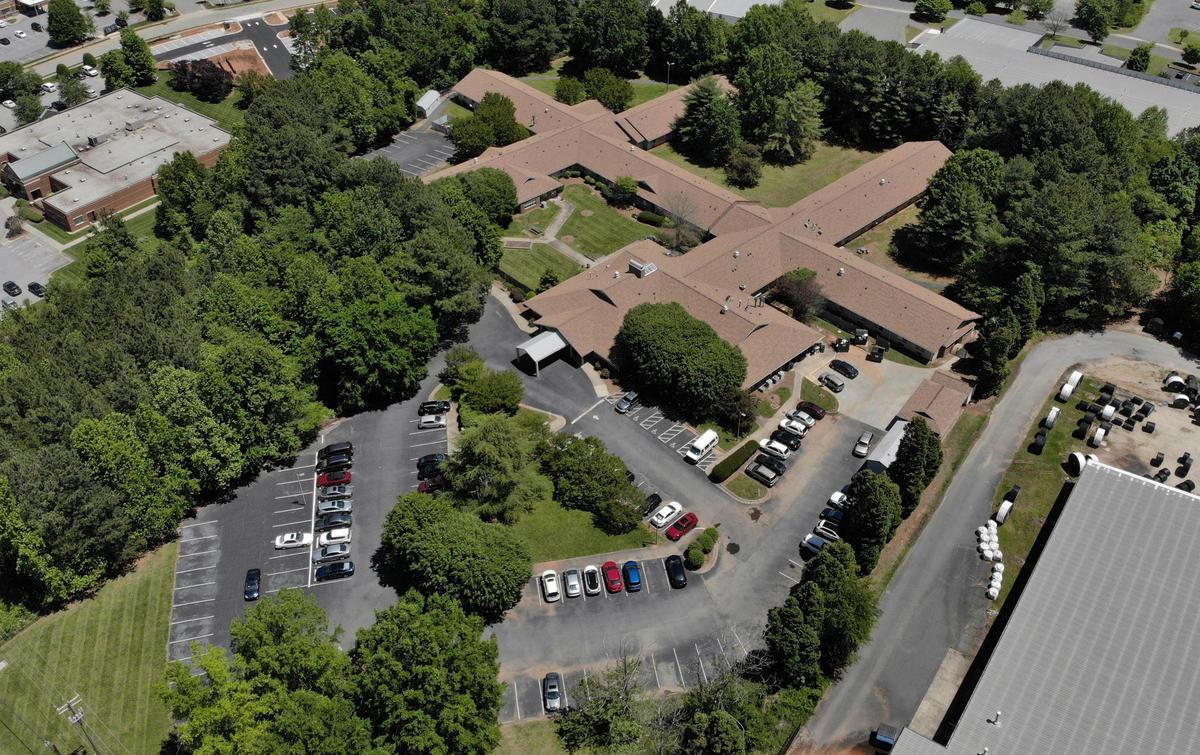
The Citadel Salisbury, home to the stateÕs worst nursing home cluster of the coronavirus disease. On Thursday, May 7, 2020 David T. Foster III dtfoster@charlotteobserver.com
‘This is our home’
In her interview with The Observer, Stoltzfus said The Citadel has not had a new case of COVID-19 since April 24.
While her nurses said the staff worked for weeks without specialized guidance on how to deal with the spreading virus, Stoltzfus said The Citadel issued a COVID-19 emergency plan at least a month before the first confirmed case of the disease. It has adjusted the plan to meet the evolving directives of the Centers for Disease Control and other experts, she said.
Again contradicting the nurses’ statements, Stoltzfus said no employees were pressured to work sick. “I don’t want anyone working in here who is sick,” she said. “I would have sent them home in a heartbeat.”
She also said no employees had been told to not wear masks. She then rephrased her comment by adding, “I did not hear anybody say that.” Currently, all staff and residents are wearing masks as well as protective gowns, shoe coverings and gloves as needed, Stoltzfus said.
“We’ve been lucky. We have no issues with PPE. … Everybody has been absolutely wonderful with getting PPE in here,” she said.
Asked if there’s anything she would have liked to have done differently and better, she said, “Finding a better way to communicate with families.”
Meanwhile, several of the six nurses either remain in recovery or are not going back to the Citadel.
“Most of the staff that I have spoken to do not plan to return ... due to the mismanagement and sadness we feel in being at the Citadel,” the 11-year employee wrote.
“I want people to understand that the facility is our home. We love the residents there.
Michael Gordon has been the Observer’s legal affairs writer since 2013. He has been an editor and reporter at the paper since 1992, occasionally writing about schools, religion, politics and sports. He spent two summers as “Bikin Mike,” filing stories as he pedaled across the Carolinas.