Saddled with debt, ‘overwhelmed’ NC borrowers hope for Biden student loan forgiveness
Princess Harris-Alford came to college to break a cycle.
She grew up in a public housing community in Durham, where life was punctuated by violence. Her mother worked in a podiatrist’s office. Her grandmother was a seamstress. No one in her family had ever gotten their degree.
“I wanted to get out of where I lived,” said Harris-Alford, now 33. “I wanted to be the first to get my education.”
A favorite teacher suggested UNC Charlotte. Harris-Alford started classes in fall 2007.
But putting herself through college proved harder than expected. A job at the campus convenience store didn’t cover her bills. Neither did another part-time job at Aldi. Harris-Alford took out loans to get by.
She took fewer classes to pick up more shifts, throwing her off track to graduate in four years.
In 2012, she had her son. By then, she was saddled with tens of thousands of dollars of private and federal student debt. She took a break from school and moved back to Durham.
“I was overwhelmed,” she said. “Financially, I was drowning outside of school.”
Harris-Alford is among the more than 1 million North Carolinians carrying part of the country’s $1.75 trillion in student debt, an ever-growing burden that is shaping a generation’s worth of livelihoods.
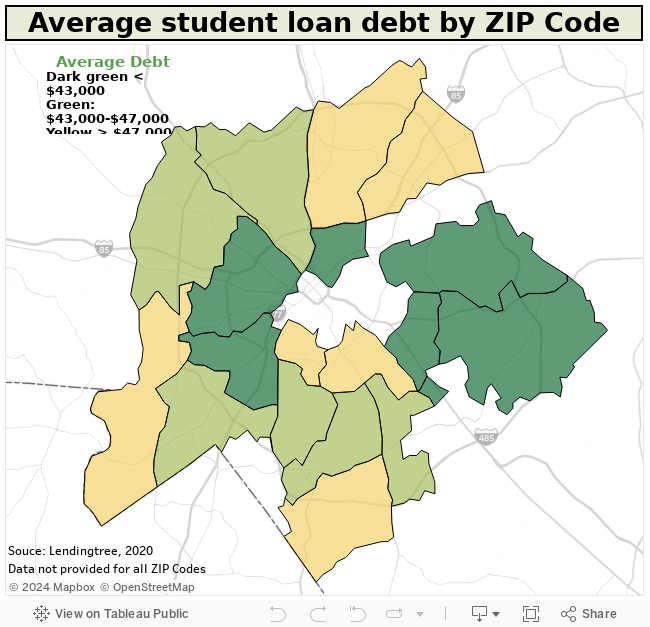
North Carolina ranks seventh among states for total student loan balances, above states like California and New York, according to a 2021 report from loan comparison website Student Loan Hero citing federal data.
There’s a chance much of it could be wiped away.
After extending a pandemic-era pause on federal student loan payments, President Joe Biden is considering eliminating $10,000 dollars worth of loan balances for some or all borrowers, multiple news outlets have reported. The policy would make good on the president’s campaign trail promise to relieve some student debt.
In North Carolina, the decision would relieve about 1.3 million borrowers of some or all of their debts.
“It would be a game changer,” said Rochelle Sparko, director of NC policy at the Durham-based Center for Responsible Lending, which has advocated for extensive debt cancellation. “We’re leaving a lot of people behind.”
What’s the status of paused student loan payments?
Across the country, student debt has been steadily increasing for more than a decade. In North Carolina, it’s more than tripled since 2008.
Fourteen years ago, total outstanding student debt for borrowers in North Carolina was $15.4 billion, according to a 2019 report from the Center for Responsible Lending. Now, that number is about $48 billion, Sparko said.
In the first quarter of 2022, total U.S. student loans came to $1.75 trillion, according to the Federal Reserve Bank of St. Louis, a number second only to the amount Americans have borrowed to purchase their homes. That student debt total is up from $619 billion in 2008.
Most borrowers haven’t been required to make payment since March 2020, when lawmakers granted forbearance for federal student loans alongside other measures to jump-start an economy halted by COVID. The pause has long outlasted other pandemic-era aid programs, and was extended six times by the Trump and Biden administrations.
Now, getting millions of loans turned back on simultaneously without any hiccups poses huge logistical hurdles, Sparko said.
For example, major loan servicers Navient and Granite State announced in the last year they’d end contracts with the federal government. That means the Education Department will need to transition million of borrowers to new servicers.
Barring another extension, federal officials will have to iron out those kinks by the time forbearance expires on Aug. 31. Lawmakers and advocacy groups have called on Biden to cancel a share of student debt by executive order by that date.
“It’s a very difficult thing to turn student loan payments back on,” Sparko said, “when the federal government has demonstrated — so compellingly — that it can put them on pause and continue to function.”
Racial disparities in student debt
But student debt doesn’t affect every group equally.
Black households carry more student debt than white households, regardless of the incomes they make after graduation, a 2021 report from the Brookings Institution found.
Black women, in particular, often bear the largest burden, stated a June report from the Center for Responsible Lending. It showed Black female borrowers are more than twice as likely as white men to owe more than $50,000 in undergraduate student loan debt.
The trend has been aided by the pandemic, the researchers said. COVID-19 exacerbated existing disparities for women of color by impacting childcare responsibilities and threatening low-wage, high contact work.
This debt gap between groups leads Sparko at the Center for Responsible Lending and others to consider student debt to be a racial equity issue.
“The cancellation of debt, particularly $50,000 of cancellation, serves as a large piece of the puzzle of addressing the racial wealth gap,” Sparko said.
Canceling $10,000 per borrower wouldn’t be enough to do that, Sparko said.
But forgiving that amount would retire only 22% of debt for Black borrowers, Sparko said.
“It’s painful to think about — after all this time, all this conversation, all this research,” she said. “It doesn’t do what we think student debt cancellation should do.”
Student debt complicates dreams
Amber Wike graduated from N.C. Central University in 2013 after transferring from Bennett College in Greensboro her sophomore year. Her family took out loans to pay for her first year of school.
Wike loved the sisterhood she found at Bennett — one of only two historically Black women’s colleges in the U.S. — but knew the $17,000 in annual tuition and other costs would drown her and her parents in debt.
“I would have stayed (at Bennett),” said Wike, 33, who now works for a health care company in Fayetteville. “I just felt like we really couldn’t do four years.”
Wike was lucky enough to get her loans for her first year of school forgiven. In June, advocacy group The Debt Collective wiped away $1.7 million in debt for 462 women who attended Bennett.
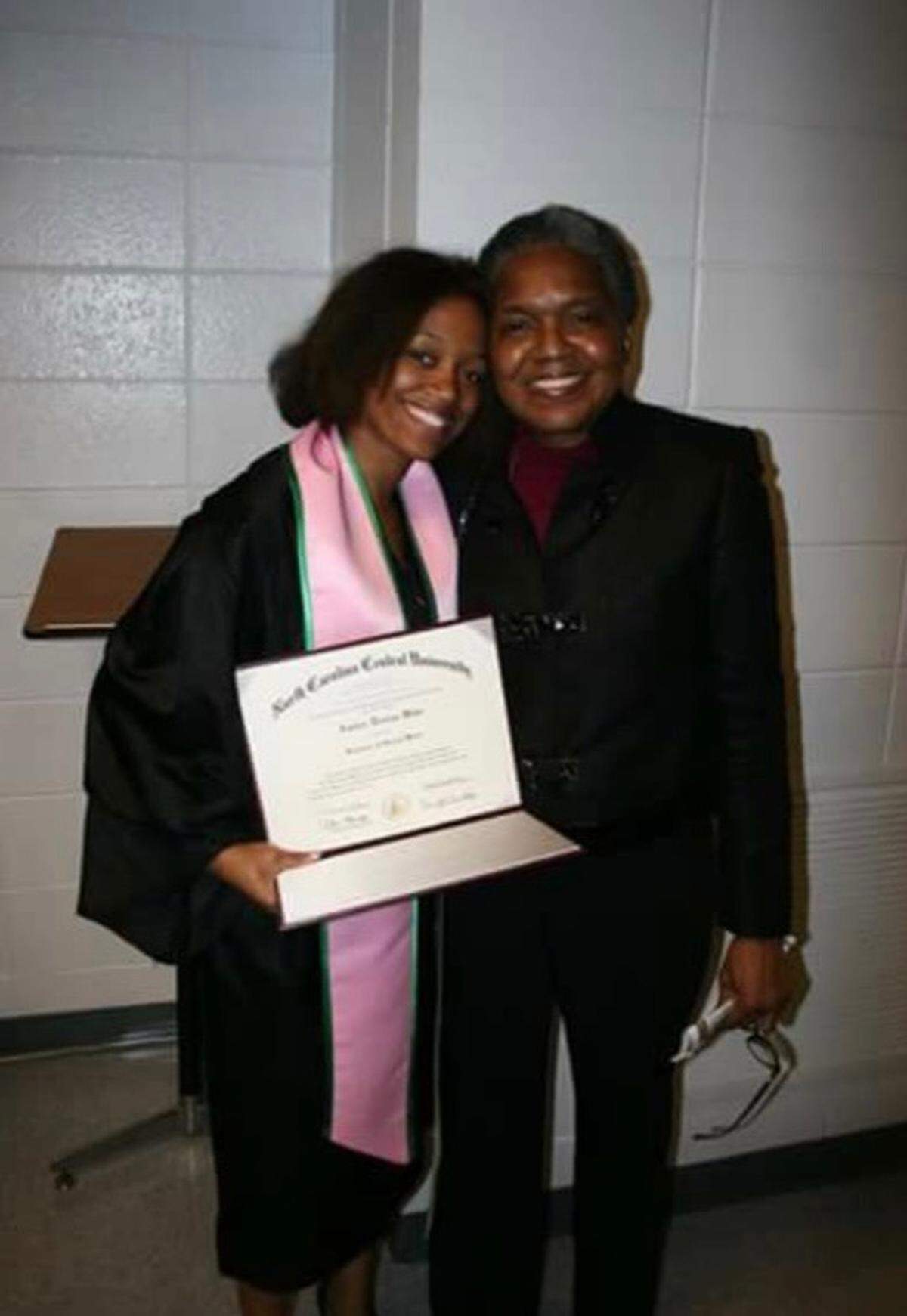
But Wike didn’t graduate debt-free. Even with less expensive tuition, she borrowed to finish her degree in social work at N.C. Central. She graduated with more than $40,000 in debt she’s still paying off.
Wike has thought about getting her master’s degree in social work, which would help her advance more quickly in her career. But she’s wary of adding to her debts. Whether it’s buying a house, leasing a car or “just trying to survive,” her student loans still complicate her finances.
“Some of the things that you want to do have to be deferred,” she said.
‘A little more breathing room’
Some borrowers could struggle when payments resume.
Charlotte resident Caroline Cave, 47, isn’t sure how she’ll restart her monthly loan payments. She owes more than $60,000 in federal loans from a post-graduate certificate program in nonprofit management at UNC Charlotte.
“I wanted to do something more with the talents and access I’d been given,” said Cave. She spent the first half of her career working in corporate administrative role before using her certificate to move into the nonprofit space. “I wanted to make a difference.”
Before the pandemic, her salary at an arts and culture organization was just enough to cover necessities such as groceries or gas, and make a $150 to $200 monthly payment on her loans through an income-driven repayment plan.
But when forbearance began, Cave halted those monthly payments. This year, she was diagnosed with a medical condition, and now the amount she once used to pay her debts goes toward new prescription medication. Her budget is already stretched “down to the last cent.
“It’s scary to look at what my options are if they asked me to pay (again),” Cave said. “What inevitably is going to have to go?”
Cave hopes to eventually get her loans eliminated through the federal Public Service Loan Forgiveness program, which forgives loans for borrowers who work in government, nonprofits or similar jobs.
“I chose debt. This is my personal responsibility,” she said. “But maybe — if my work is necessary — some ease of that burden might be necessary, too.”
And if part of her loans were wiped away in August, it’d be a relief.
“It’d be just a little more breathing room,” she said. “I think everyone should get a shot at some sort of reduction or elimination.
What issues would debt forgiveness solve?
But critics say cancellation could hurt the economy and create more problems than it solves.
“It doesn’t make college more affordable,” said Marc Goldwein, senior policy director at the Committee for a Responsible Federal Budget, a bipartisan public policy group based in Washington, D.C. “It’s an expensive policy that ultimately benefits people better off and increases inflation.”
Goldwein said debt cancellation makes sense in cases of predatory student lending such as the January Navient settlement or cases of for-profit colleges scamming hopeful applicants into costly degrees.
“But blanket cancellation is fundamentally unfair,” he said. “These people voluntarily took out debt.”
Forgiving billions in loans could also spur a new surge in spending, Goldwein said, that would worsen inflation that’s already reached its worst level in decades.
And it would slow the growth of student debt, he said, not stop it. If the president opted to forgive $10,000 in loans for all federal borrowers, a solution Biden campaigned on, the country’s student debt burden would reach $1.7 trillion again in just a few years, Goldwein said.
And the policy is regressive, he added, benefiting borrowers who are now among the country’s top earners.
“We’d be offering no help to somebody that didn’t go to college, and $10,000 for every doctor, lawyer and MBA,” Goldwein said.
The government would be better off funneling dollars directly to needier Americans, he said. “Most people that are really hurting don’t have student debt. They never went to college in the first place.”
A better solution, Goldwein said, would be to reduce education costs and make college more affordable.
‘All the way back over’
A year after she moved home, Harris-Alford left Durham for the second time.
The Sunday before the fall term started, something stirred in her. Harris-Alford asked her mother to watch her son and drove two hours down Interstate 85 toward UNC Charlotte’s campus with no real plan and no place to stay.
“I was like, ‘What are you doing, Princess? You went to Charlotte to get your degree. You are going to finish, no matter what.’ ” she said. “So I packed up my stuff.”
She stayed in her car until she could find a room to rent while she got back on her feet.
In 2018, more than a decade after she started classes, Harris-Alford graduated with a bachelor’s degree in psychology and a minor in urban youth and communities.
Harris-Alford now works as an educator, coaching adults in rehab facilities, women’s shelters and other locations on how to care for their mental and emotional well-being. In her training, she reminds attendees their financial situation can shape their mental health.
It’s something she knows firsthand. Harris-Alford graduated with about $54,000 in debt, an amount she has since consolidated with a private lender and is still working to pay off. Her payments haven’t paused during the pandemic. Her loans won’t be affected by any federal loan cancellation policy.
That debt dragged down her credit score, making it all but impossible to find housing in Charlotte.
“I never saw the good side of credit because of my student loans,” she said.
Getting rid of her debt, she said, could provide a kind of financial freedom she has yet to experience. She could stop looking over her shoulder. Plan to buy a house. Maybe start saving for her own sons, now in kindergarten and fifth grade, to go to college one day.
“I could actually feel like it’s working, like whatever I’m putting into my life is coming back,” she said. “I could live a life that’s not necessarily lavish, but at least comfortable. ... I feel like I’m living the same lifestyle as I was before college, and the whole point was to make my life better.”
She came to college to break a cycle, she said. Now she’s finding her way out of a new one.
“In my neighborhood … they taught me that if you do something different, you get something different. If you invest in your future, you can change the world,” Harris-Alford said. “But when you have debt, you cycle it all the way back over.”
This story was originally published July 8, 2022 at 6:00 AM with the headline "Saddled with debt, ‘overwhelmed’ NC borrowers hope for Biden student loan forgiveness."