‘People are just struggling.’ In Charlotte, inflation hits low-income families the hardest
Since his disability benefits expired last November, a 44-year-old University-area man has tried a number of things to support his two daughters and pay the bills on his house.
Chris has applied to dozens of jobs and freelanced as a music producer. He asked that his last name not be used because he’s still applying for work.
Chris recently started driving for Doordash to make some extra cash, until he realized he wasn’t making any money off it. All that driving quickly emptied the tank of his Volkswagen Passat, which used to cost about $45 to fill up at a gas station around Charlotte. Now, it’s at least $65 or more.
The price of day-to-day staples like food and gas have been rising across the U.S. and in Charlotte for several months now: the annual inflation rate climbed to 8.5% in March, a four-decade high. Consumer prices, driven by gains in the cost of energy and food, are the highest they’ve been since the 1980s.
GO DEEPER: Rent below $1,000 a month is a needle in a haystack in Charlotte
Nobody enjoys paying more at the grocery store or the gas pump. But rising prices disproportionately impact low-income people, say economists and nonprofit groups that work with people in need of food or financial aid.
In Charlotte, it’s lifting the cost of day-to-day, essential expenses in a city that is already pricing out its poorest residents.
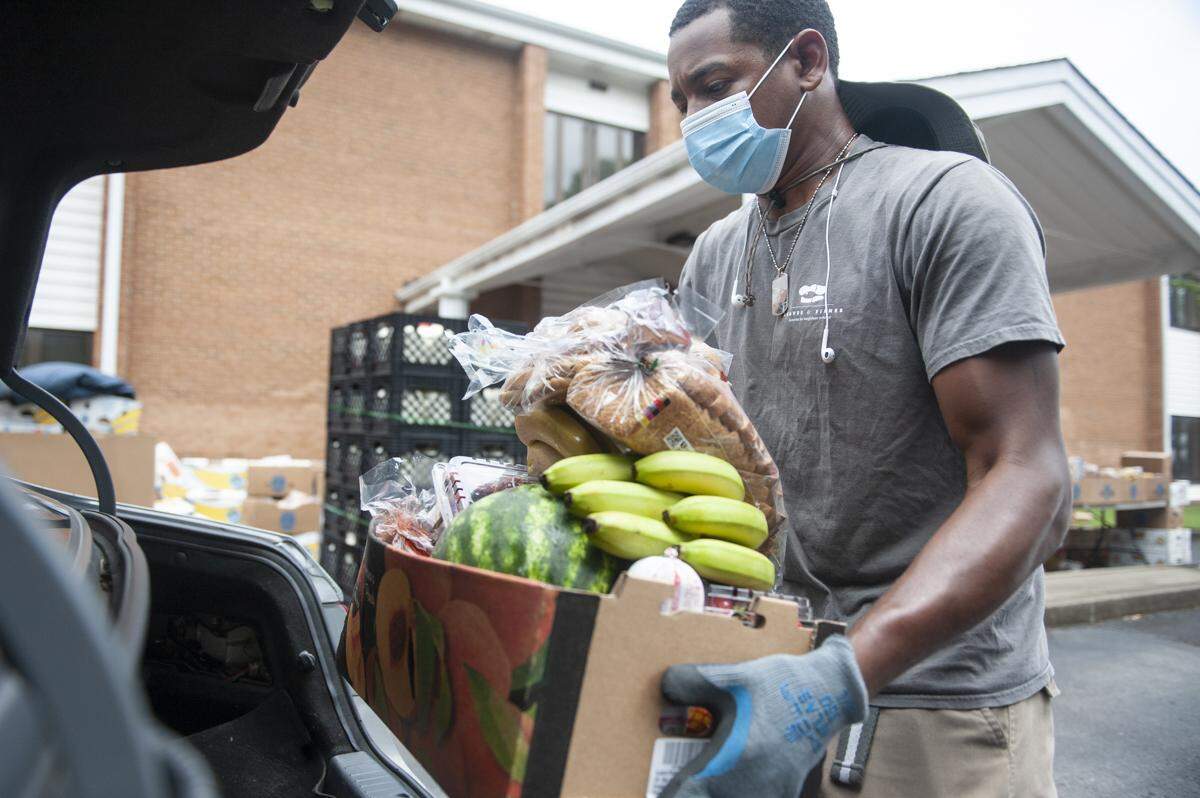
“We are feeling the pinch,” said Tina Postel, CEO of local nonprofit Loaves & Fishes/Friendship Trays, which provides groceries to individuals and families experiencing short-term crises in Charlotte. “Every day people are just struggling to make ends meet.”
Rising prices ‘really miserable news’
Economists have warned of inflation risks since the first stimulus checks hit American bank accounts in 2020. In recent months, however, prices have increased sharply.
The most glaring example has been last month’s jump in gas prices. But that’s far from the only increase, said Connel Fullenkamp, an economics professor at Duke University.
RELATED: Charlotte drivers cringe at record gas prices, but see little they can do
“It’s hard to think that there will be anything that will really be unaffected by (inflation),” he said. “It’s just a matter of degree.”
As costs increase, consumers’ paychecks won’t go as far as they used to, Fullenkamp said.
“In some respects, inflation does really affect everyone,” said Jacob Channel, senior economic analyst at LendingTree. “(But) if you have less money to begin with and suddenly that money becomes less valuable — which is what inflation is — you’re going to be harder hit.”
That can be painful for low- or even middle-income families living paycheck to paycheck with little wiggle room in making ends meet, Fullenkamp said. It’s made more severe by the fact that the most affected goods — gas, grains, apparel — are those that can really impact families’ bottom line.
“It’s really miserable news for all the things we depend on on a day-to-day basis,” he said.
Inflation will not only persist, he said, but hit exactly those things that affect low-income families the most. “That’s really the worst news,” Fullenkamp added.
Working hard but struggling amid inflation
Postel and her team see the impact of those higher costs firsthand in their work distributing free groceries in Mecklenburg County.
“We hear it on the daily from our clients,” she said. “All of these inflated prices from rent, groceries, particularly gas… People are working hard, but they are just struggling.”
From January through March, the organization saw the number of families it served through its food pantry service increase from 6,900 to 8,300.
Through its food share program, local residents can pick up fresh produce and other products without financial documentation or a referral. In that program, participants grew from nearly 3,000 to 4,500 over the same period, and jumped 44% in just the last month.
“That’s a pretty big bump month over month,” Postel said. “There’s still a strong minority of folks that this storm seems to be never ending.”
It’s not just the group’s clients who are getting hit by higher prices. Loaves & Fishes purchases some of the food it donates and is getting slammed by increased costs there too.
Take for example the price of a pound of ground turkey, which the group used to purchase last year for $1.65 a pound. Now, the same amount of meat costs them $2.84 — a 72% price year-over-year increase.
The cost of ground beef has leaped 52% and canned chicken 23%. Even the price of a jar of peanut butter has jumped nearly 20%.
“We’re wedged in the middle of a tight space,” Postel said. “We’re getting it from both ends.”
How does inflation happen? Big impact from small price increases
At Crisis Assistance Ministry in north Charlotte, a steady stream of clients flow into the lobby each morning. They’re there to meet with case workers and request aid or assistance in dealing with financial crises like a missed electric bill or past due rent payment.
On a recent Friday, CEO Carol Hardison walked briskly through the hallways of the agency’s building, which includes offices, a “free store” for clients and enormous storage rooms for donated clothes, couches and refrigerators.
As she thumbed through some of the most recently donated goods, she lists the financial concerns her staff hears most often.
“It’s mostly the gas that we hear,” Hardison said, which has recently become a close second to the housing costs and rising rents that always top the list. Case workers help clients break down their expenses month to month, to focus on where their money was spent.
“Small things have a big impact,” Hardison said.
Most of the clients the agency works with have often exhausted every other alternative before walking through the Ministry’s doors. “People will go a long way to figure out how to help their own situation before they’ll show up here,” she said.
But rising prices — and expiring pandemic-era aid programs — are piling on to the structural problems driving poverty in Charlotte, Hardison said.
“There’s less support available than there has been over the past two years or so,” she said.
‘No magical switch’
Higher prices aren’t likely to disappear anytime soon, Fullenkamp said. Price hikes will probably persist through 2022, despite the Federal Reserve’s move to curb inflation with higher interest rates.
READ: How (and where) higher interest rates will take hold in Charlotte
“Some of these issues will resolve themselves when given enough time,” he said. “ But unfortunately, we’re talking about a scale of a year and a half, two years. I think we’re really in for a rough period of high inflation.”
Fullenkamp himself grew up in a household that “struggled to make ends meet” when high inflation struck in the 1970s.
He remembers his parents changing little things, like how much meat they ate and how much they went out to eat. They bought foods at a discount and put them in the freezer and joined member-only retailers to buy in bulk.
“It turns out the little things like that, even though they’re time consuming and kind of a hassle, they can add up,” he said. “Times like this really make you go back and try to really be careful about your own personal budgeting.”
One of the most effective ways to address the impact of inflation is asking your employer for a raise, Channel, at LendingTree, suggested — something many companies already opted to do in last year’s tight labor market.
But unfortunately, “inflation is so pervasive that there’s no magical switch you can make” to escape it, Fullenkamp said.
Hardison has worked at Crisis Assistance for more than 20 years: through the housing market crisis, the economic boom that followed and most recently, the recession and recovery from the COVID pandemic.
Unfortunately, she said, there’s one thing they all have in common. “It turns out that low income people get hurt in whatever kind of economy you have,” Hardison said. “The only difference is that it’s harder to explain in a good economy why people need help.”
As for Chris, the University-area dad has scratched Doordash from his list of ways to make some extra cash.
“I was spending more money than I was making,” he said, due to the higher gas prices. He’s once again on the hunt for other work — hopefully something he can do remotely, he said, to save on transportation costs.
Resources for people in need
Crisis Assistance Ministry provides short-term emergency financial assistance for rent and utilities in person at its main office. You can also make an appointment to shop at its free store for clothing, shoes and household goods.
Loaves & Fishes provides a week’s worth of groceries to families in short-term crisis in Mecklenburg County through its food pantries program. To participate, you’ll need a referral: here’s how to get one.
The nonprofit also offers pop-up food shares to distribute fresh produce and other foods. You don’t need an ID, a referral or any financial documents to participate in the program, but the organization asks that you pre-register so they know how much food to bring.
North Carolina’s Division of Workforce Solutions has listed a number of other resources in its Community Resource Assistance Guide for Mecklenburg County.
This story was originally published April 12, 2022 at 6:00 AM.