How would you like to eat, walk or play — not drive — on some Charlotte streets?
“What is a city, but its people — that’s what our future should be about,” Assistant Charlotte City Manager Taiwo Jaiyeoba said.
Jaiyeoba’s future is one where people can walk, bike and play on streets now being used for cars. That’s the vision the director of planning explained to more than 100 people on a recent Zoom call sponsored by Sustain Charlotte. The Grow Smart CLT series explores multiple challenges the city faces due to rapid growth in population.
The conversation about re-envisioning streets as equitable places came just hours after the city decided to keep a portion of South Tryon Street that has the Black Lives Matter street mural closed to vehicular traffic through the end of September.
“We think it’s a perfect time to have this conversation,” Jaiyeoba said.
New push for pedestrian plaza
Urban development has focused primarily on cars and the infrastructure that comes with it.
“(Streets) are more than a way to just move cars,” said Sustain Charlotte Program Manager Meg Fencil. “This is an issue we’ve been working on since Sustain Charlotte started 10 years ago. We pretty much all live near a street so these are all places we can improve. A place is a space that has elements of human interaction.”
A survey from the city of Charlotte shows 76.6% of Charlotteans drive to work alone.
“We need to have a transportation network that dramatically brings that number down,” Jaiyeoba said. “We envision Tryon Street to be active with pedestrians 365 days a year. We don’t want a place where people feel like they have to run for their lives to cross the street.”
Jaiyeoba presented three examples of where cities took a busy street and turned it into a pedestrian promenade:
Lincoln Road, Miami
Total Length: 8 blocks
Distance between facades: 90 feet
Year opened: 1960
Third Street Promenade, Santa Monica
Total length: 3 blocks
Distance between facades: 80 feet
Year opened: 1965
Times Square
Total length: 5 blocks
Distance between facades: 90 feet
Year opened: 2014
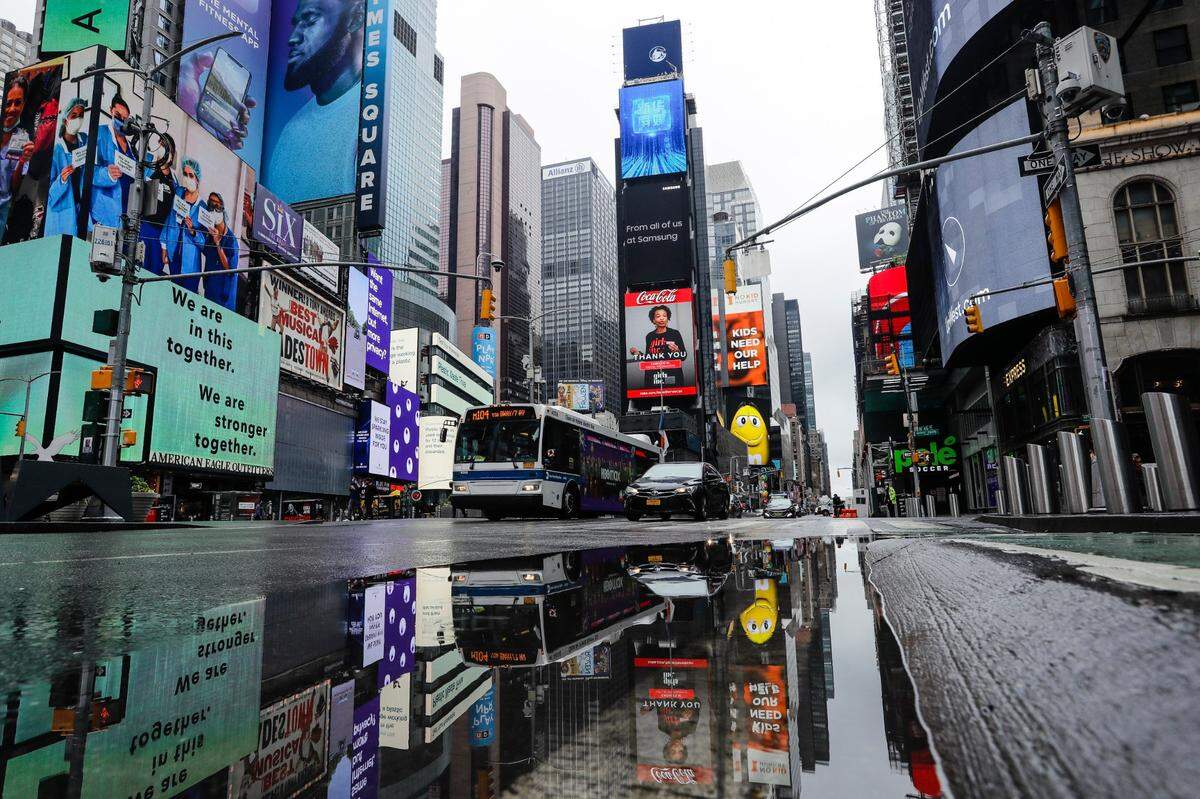
“This is the type of community we should envision for Charlotte,” Jaiyeoba said.
Transforming a city street into a pedestrian promenade is not a new concept, even in Charlotte. Last year, when David Tepper announced the city won the bid for a new Major League Soccer team, he wanted a new uptown entertainment district to go along with it.
“We’re talking Broadway in Charlotte with another music venue,” Tepper said.
The COVID-19 experiment
While city leaders say the global coronavirus pandemic is a horrible thing, it has provided an opportunity to experiment with many of these equitable street concepts.
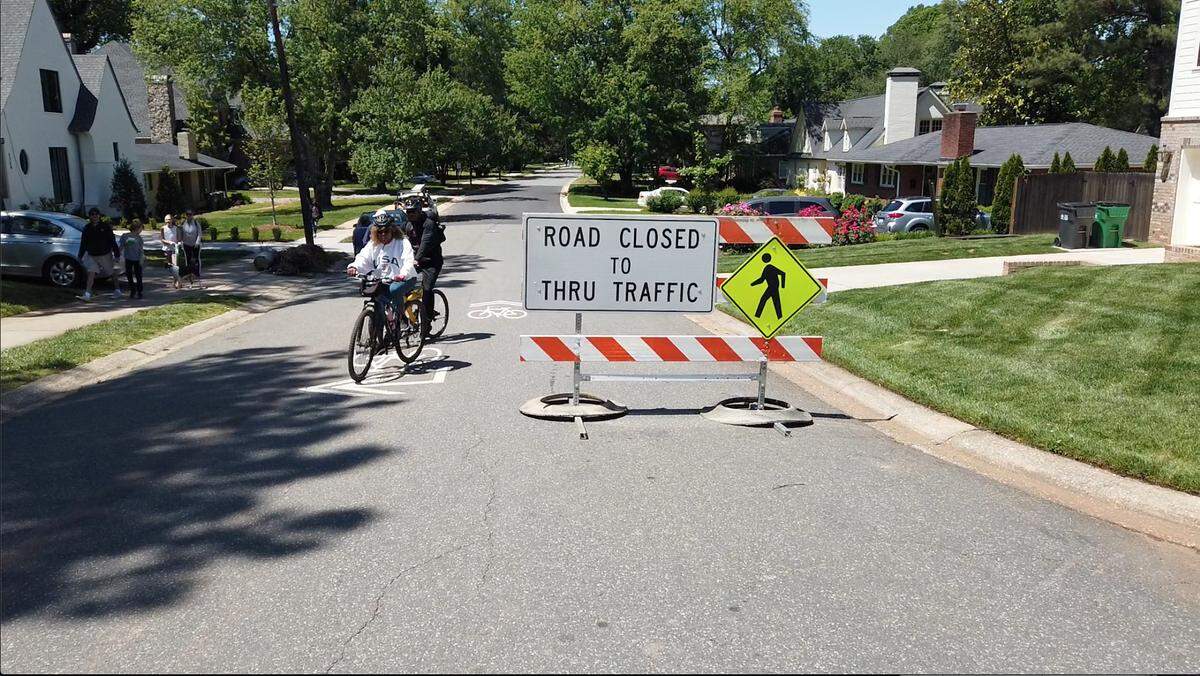
In May, the city initiated its shared streets project. These are streets that are temporarily designated and signed as streets for walking, wheelchair rolling, biking, skateboarding and more. Thru traffic is not permitted on these, however, emergency and delivery vehicles along with residents who live on these streets can still drive on them.
The city’s outdoor dining program launched in June. At least 16 restaurants are taking advantage of the program, which allows them to use parking spaces, sidewalks and even some streets for expanded dining and social distancing requirements.
Then, there’s the shared streets murals. Local artists installed 15 concepts in June to capture the impact of COVID-19 and Charlotte’s resiliency and sustainability. The total project cost was $15,000.
The most high-profile mural is of course the Black Lives Matter mural on South Tryon Street. While not officially a part of the shared streets mural project, the city did pay $500 a letter to artists for supplies and design. The city is conducting bi-weekly meetings with people who live and work in that area.
“One of the things we’ll be doing over the next couple of months while Tryon is closed is do some analysis,” Jaiyeoba said. “There has to be a lot of stakeholder involvement with people who live on the streets and the businesses. It’s not something we can do overnight.”
Change is hard
While the city has initiated several changes since the coronavirus pandemic started, most of these are considered temporary. City leaders say now comes the hard part.
“Change is really hard,” Mayor Pro Tem Julie Eiselt said on the group Zoom call. “It’s easy to say I want equitable streets. That means everybody feels an uptown or South End or Ballantyne is a place they can go. It means there is something for them there.”
The at-large city council member joked with the group about the importance of safer shared streets, as well.
“Especially since I broke my elbow on a scooter last month. I’m very concerned about the quality of our infrastructure,” Eiselt said.
Still, she told the group community voices matter.
“You all have a lot of power by using your voices,” Eiselt said. “We’ve got to be willing to not just paint stripes on a road and say we have a bike lane. What’s critical is follow up to make sure we do what we say we’re going to do. Follow up to make sure we put those barriers and signs up.”
Jaiyeoba agreed. He says community input is critical, especially when it comes to funding for these projects.
“It is possible. We can reimagine the streets so we focus on the people. We have to embrace change. We need to start talking about how we make this shift,” Jaiyeoba said.
Editor’s note: The amount the city spent on shared streets murals was incorrectly stated in a previous version of this article.
This story was originally published July 13, 2020 at 2:27 PM.