When there exists 105 acres of undeveloped land all together in the Charlotte area, you know what some must be thinking: Apartments? Beige, of course. Maybe some mixed-use commercial, retail on the bottom? This is gonna be great.
Not Morgan Rafael.
When Rafael saw 105 acres of undeveloped land and heard it was to be developed, the wildlife rehabilitator could only think of all of the animals that would lose their homes on that land. To her, the land value is in preserving a space for these animals, not forcing them away from their habitats.
So she did what any self-respecting animal lover would do if they could: She bought it.
That was two years ago, and the property is now the home of the Carolina Wildlife Conservation Center. It’s a small organization with big goals: The nonprofit has a handful of volunteers and a full-time animal rehabber and is 100 percent donation-based.
She and wildlife biologist Ruby Davis have spent the time creating spaces to help rescued animals get big enough or strong enough to be let into the wild. They save possums, bunnies, turtles, beavers, skunks, raccoons, fox, turtles and more.
But over the past year, Rafael and Davis have been busier than ever.
Baby possums at Carolina Wildlife Conservation Center. Alex Cason CharlotteFive
COVID-19, spring storm season and our dying trees
The arrival of COVID-19 has meant an increase in calls on behalf of distressed animals. We are all at home, simply, and spending more time in nature. We’re seeing more animals that need help, and we’re turning to places like Rafael’s to get them that help.
The Charlotte area is in a direct path of potential storms on Thursday, March 18, that may bring large hail, damaging winds and possible tornadoes. Carolina Wildlife Conservation Center’s team is on standby. “The storms are still a problem for wildlife, especially baby squirrels like the storm tomorrow,” Rafael told CharlotteFive on Wednesday afternoon. High winds, storm surge and rainfall can blow baby animals out of trees, defoliate forest canopies and lead to changes in our wooded ecosystems, according to the University of Rhode Island Graduate School of Oceanography.
Additionally, we have an aging tree canopy in Charlotte. Not only does that affect the quality of life for humans, but it also means thousands of wild animals are becoming homeless. “When I look at a single tree, I see so many things,” Rafael said. “A home for mothers to raise their young, shelter from the rain and cold, shade from the blistering heat, and food for so many creatures. Each tree is its own diverse ecosystem — I like to think of them as tiny villages.”
Sleepy baby squirrels nap after being rescued at Carolina Wildlife Conservation Center. Alex Cason CharlotteFive
When trees are cleared, several things happen, Rafael said. “Animals are often left to fall in the tree and get crushed, leaving us with injured animals and/or orphaned babies. Second, wildlife is losing places to den and have their babies so they are ending up in people homes, yards or underneath sheds.
“Many times, the animal is removed for being a ‘nuisance’ and then we get a call about orphaned babies found days later. Trust me, they do not want to be with us just the same,” she said. “They would prefer the trees and forest, but sadly, they are running out of places to go.”
Biologist Ruby Davis holds a turtle whose shell was ruptured at Carolina Wildlife Conservation Center. Alex Cason CharlotteFive
With our changing landscape, animals are forced to cross roads to connect one patch of forest to the next, increasing their chance of getting hit, she said. “We have gotten hundreds of animals from them crossing the road when their land was cleared, trying to find a safe place to live.”
Since January, about 1,400 animals have been rescued at Carolina Wildlife Conservation Center.
Beavers can recover and develop their skills at the Carolina Wildlife Conservation Center. Alex Cason CharlotteFive
CharlotteFive was invited to glimpse this world for a moment last month. Rafael invited us to meet some of the rescued animals. This was absolutely a privilege: The center is not open to visitors, as the animals who are being rescued are often injured or stressed, so having too many people come through could be bad for their health.
It was, hands down, one of the best days of my life.
There’s no doubt about it, these animals are downright adorable. If you’re an animal lover like I am, your first thought when you see these babies is, “I want to adopt this one, and this one, oh, and this one.”
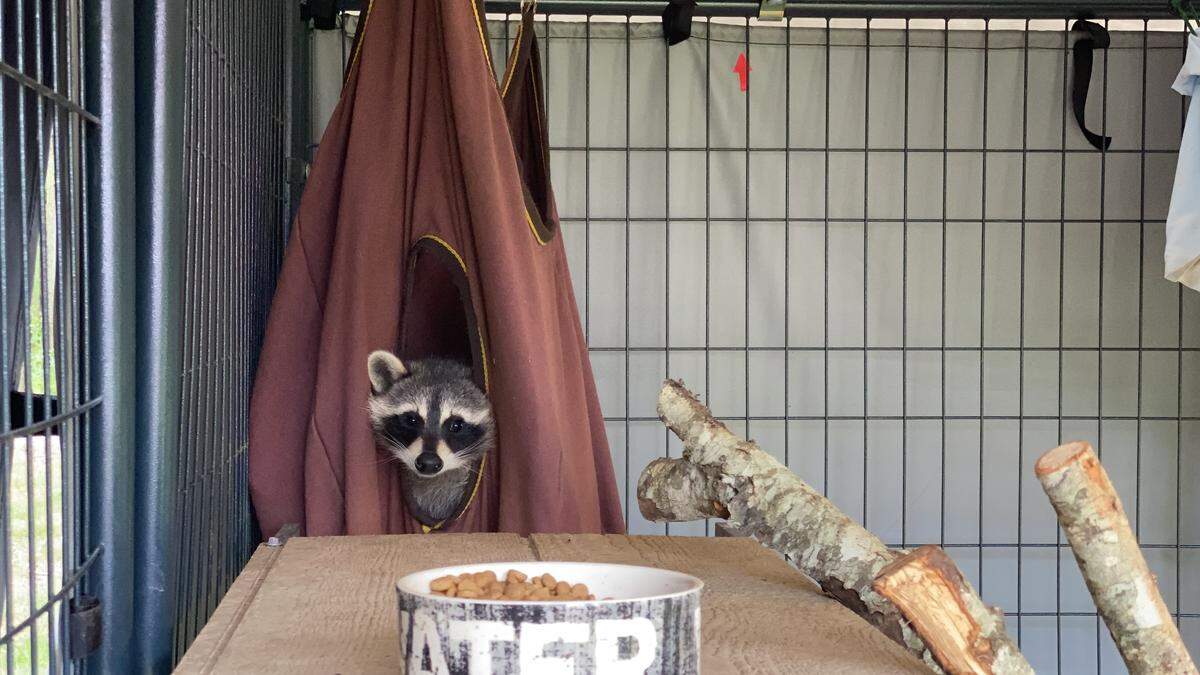
Carolina Wildlife Conservation Center takes care of raccoons and other animals before releasing them into the wild. Melissa Oyler CharlotteFive
Wildlife animals are not pets — as much as we may want them to be
But here’s the catch: Rafael and Davis are careful not to let the animals get too attached to them.
“It’s better for them if they don’t like us,” Rafael told me.
What an ultimate sacrifice, to love the animals so much that she knows when to keep her distance.
When a rehabbed fox cautiously approached Rafael during our photo shoot, she clapped her hands and lunged at the animal to scare her from getting used to humans. The fox was part of a “soft release,” which means she was rehabilitated and free to go, but she just didn’t quite know that yet. At this point in her care, human interaction was not a good idea.
There are all sorts of animals at Carolina Wildlife Conservation Center, including this red fox. Alex Cason CharlotteFive
But for the squirrels who have not yet opened their eyes, or the baby possums, the raccoon who was orphaned when her mother was killed by a trap or the beavers who will be with the center for two years before being released into the wild, there was time for us to get to know them without risking too much attachment on their part.
As for attachment on my part, that’s a different story.
Morgan Rafael is the Executive Director of the Carolina Wildlife Conservation Center. Alex Cason CharlotteFive
What to do if you find injured wildlife
OK, so we are at home more these days, maybe starting to think about going back to the elliptical at the gym in Phase 2.5 of North Carolina’s stay-at-home order — or maybe not. Getting fresh air outside is a must. This message is to all the greenway walkers, the marathon trainers, the mountain bikers, the car campers, anyone who is keeping their eyes open a little more these days in nature. The Carolina Wildlife Conservation Center receives over 30 calls a day to help animals, and that number is continuously increasing.
Turtles often wander onto roads so their shells need some major repairs. This box turtle is getting help from Carolina Wildlife Conservation Center. Alex Cason CharlotteFive
So, what do we need to know? Rafael sent 5 tips to help our local wildlife:
(1) Look for flies
An animal covered in flies always needs to come into care. Fly strike is when flies lay eggs on a weak animal. These turn into maggots within as short as 2 hours.
(2) Look before mowing
To help prevent wildlife injury, take a quick stroll of your yard before mowing to check for rabbit nests, turtles and other critters.
(3) Skip the chemicals
Spraying pesticides, weed killer and mosquito spray hurts an entire backyard ecosystem. These harmful chemicals kill bees, bugs, turtles, bats, opossums and so much more. Rafael said she has seen an opossum without eyes due to pesticides and turtles with ear abscesses the size of golf balls. Keep it natural.
(4) We can’t keep them
It is illegal in North Carolina to keep any wildlife as a pet. If an animal is found and you believe it needs help, secure it in a box, keep it warm and stress free, do not feed it and call the Carolina Wildlife Conservation Center immediately.
(5) Roll out the possum welcome mat
Opossums eat up to 5,000 ticks a year. Welcome them into your yard as they help prevent you and your pets from getting tick borne illnesses. They are also fantastic at eating copperheads, and their blood was used to create the antivenin for if a human gets bit.
Baby possums will interact with people only for a short period of time so they do not acclimate to the temporary shelter of Carolina Wildlife Conservation Center. Alex Cason CharlotteFive
Found injured wildlife? For the fastest response, text a photo of the animal at (980) 389-1133. If you call, it’s a voicemail-only system, so you’ll want to leave a message with details about the animal, its size, the location found, how long you’ve had it and how you can be reached.
Here are more tips on how to get help from Carolina Wildlife Conservation Center or other local organizations.
For birds, raptors and waterfowl, contact the following local groups for help:
Melissa Oyler is the editor of CharlotteFive. When she’s not writing or editing, you’ll find her running, practicing hot yoga, weightlifting or snuggling with her rescue dogs, X and Charlie. Find her on Instagram or X: @melissaoyler.Support my work with a digital subscription