What are Charlotte’s colors? Here’s why the Queen City is blue, white and green
AI-generated summary reviewed by our newsroom.
- Charlotte's official city flag uses blue and white to honor its Scottish roots.
- Green branding emerged in 1985 and now defines Charlotte's civic identity.
- City signage, vehicles and marketing materials prominently feature 'Charlotte green.'
From the illuminating uptown skyline to the roar of professional sports venues, Charlotteans see a signature palette that tells a complex story of branding, history and civic pride.
But what exactly are the “colors of Charlotte?”
North Carolina college sports fans know “Carolina blue” for the Tar Heels and Duke blue for its archrivals in Durham. The Carolina Panthers, Hornets and Charlotte FC all incorporate their own versions of blue in their logos and uniforms. Uptown banners and streetcars splash vibrant shades citywide, while many Charlotteans know the city flag with a white crown on a green background — or see green and gold for the Charlotte 49ers.
The ‘official’ colors: Blue and white
Ask City Hall and officials will tell you Charlotte’s colors are blue and white.
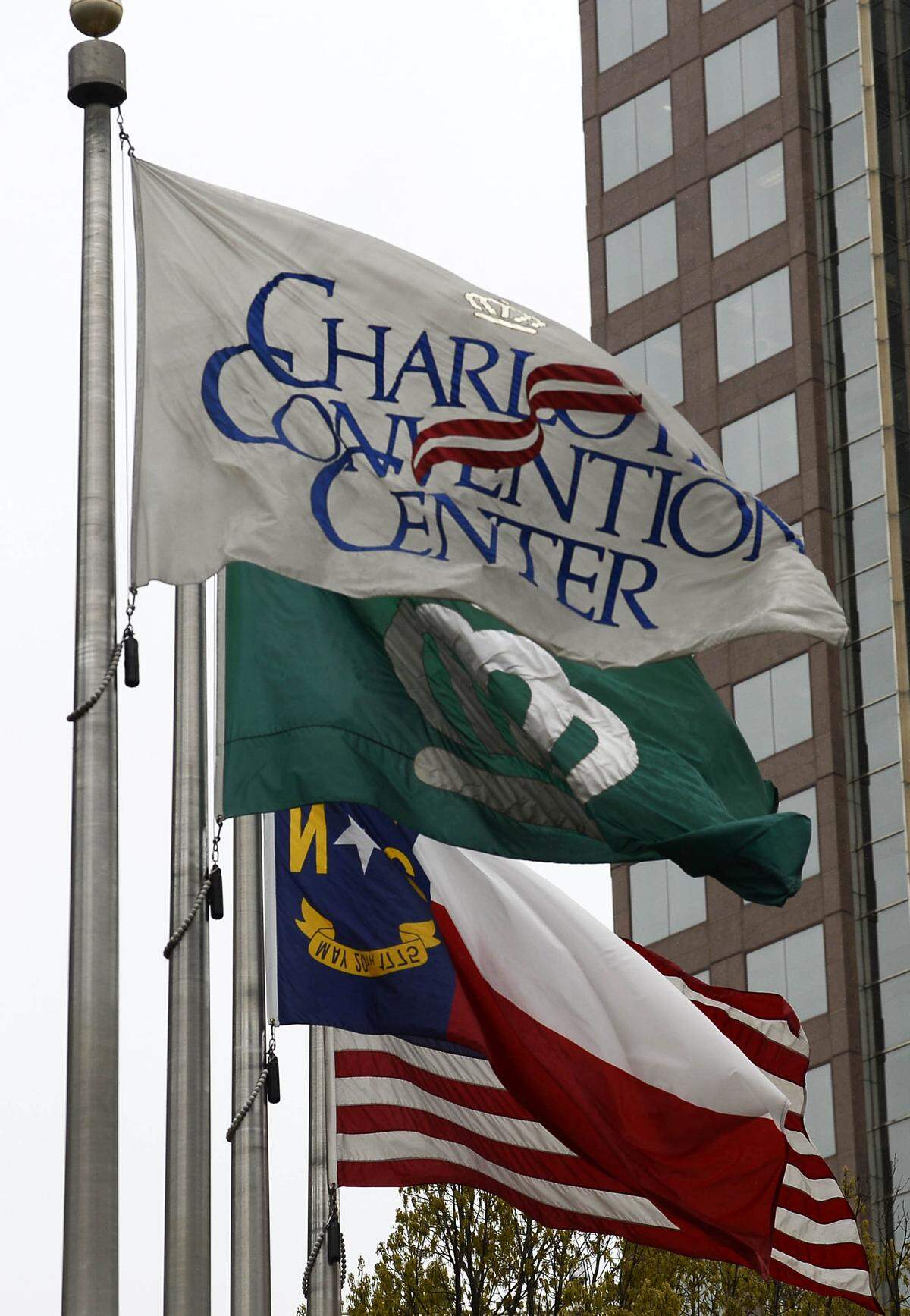
That’s not just a branding decision — it’s sewn into the city’s history. The main city flag, waving from government buildings since 1929, is a blue field crossed with a white saltire (“X” shape), bearing the city seal. That saltire honors Charlotte’s Scottish roots, while blue and white are symbols of tradition, trust and unity.
There’s also a tree symbolizing growth, along with a Hornet’s Nest, a nod to Charlotte’s feisty Revolutionary War spirit.
So why do many city communications, wayfinding signs and government vehicles seem covered in green?
The rise of ‘Charlotte Green’
While blue and white fly on the official banners, deep green has become — by popular acclaim and city marketing — the Queen City’s most recognizable branding color.
It’s been Charlotte’s main branding color, associated with the city’s environmental assets, commitment to job creation, reputation as a financial center and prosperity. The city’s design guide is explicit: the government palette includes “dark Charlotte green,” “light Charlotte green,” plus “paper white,” “text black” and accent shades of yellow, orange and blues.
Why green?
City spokespeople and designers say it represents Charlotte’s commitment to growth, environmental stewardship, parks, trees and long-term sustainability. It’s a color meant to signify the city’s cleanliness, vibrancy and what Charlotte is working toward — a modern metropolis in a fiercely competitive Southeast.
The second flag — and Mecklenburg’s colors
In 1985, Charlotte introduced a secondary flag: a green field, crowned with a simple white crown.
The crown nods to the city’s namesake, Queen Charlotte, and the lush green background cements “Charlotte green” as part of the public landscape. This flag is often flown for both Charlotte and Mecklenburg County and is now part of the area’s visual identity.
South-central North Carolina has had deep Scottish roots since the 1700s, including Scotland County, and Charlotte’s blue-and-white flag closely resembles that of the country in the United Kingdom. Charlotte has been branding itself in green for 40 years now, and both flags — and their color schemes — are seen all over the Queen City.
A city of many colors, united in one identity
Today’s Charlotte is visually defined by a harmony of blue, white and most distinctively green.
From the Panthers’ new “Process Blue” (a darker, bolder shade since 2023) to the teal of the Hornets, from the baby blue of nearby Chapel Hill to the Charlotte 49ers’ signature green and gold, the influence of color is everywhere.

But green is making its mark across the Queen City.
While official documents enshrine blue and white, and the city’s Scotland-inspired flag has been flying from government buildings since the 1920s, “Charlotte green” has claimed its place as a signature color. With alternative flags, revamped signage and a growing brand presence, the green made famous by UNC Charlotte is now unmistakably Queen City.
So next time you’re painting Charlotte — on canvas, in words or across the skyline — make room for blue, white, and, above all, a vibrant shade of green.
Uniquely Charlotte: Uniquely Charlotte is an Observer subscriber collection of moments, landmarks and personalities that define the uniqueness (and pride) of why we live in the Charlotte region.