Protests. Anger. Even dancing. Emotions flare as city reopens streets over BLM mural.
People danced in the rain in uptown Charlotte on Wednesday night.
Though the sounds of everything from “Sweet Caroline” to “WAP” could be heard through the streets, it wasn’t a dance party — it was a protest.
Activists were taking a stand against the city council’s recent decision to reopen the section of Tryon Street where Charlotte’s Black Lives Matter mural has coated the pavement since June. Though the closure was always intended to be temporary, community members say they fear opening the streets back up to traffic will spell the end of what has become a safe haven for Black Charlotteans in the city.
For the past five months, the mural was a destination spot in Charlotte. Friends made plans for dinner near it so they could walk to the mural after. Families posed for portraits on their favorite letters. Last weekend, people celebrated Joe Biden winning the presidential election there.
The reopening coincided with several days of heavy rain.
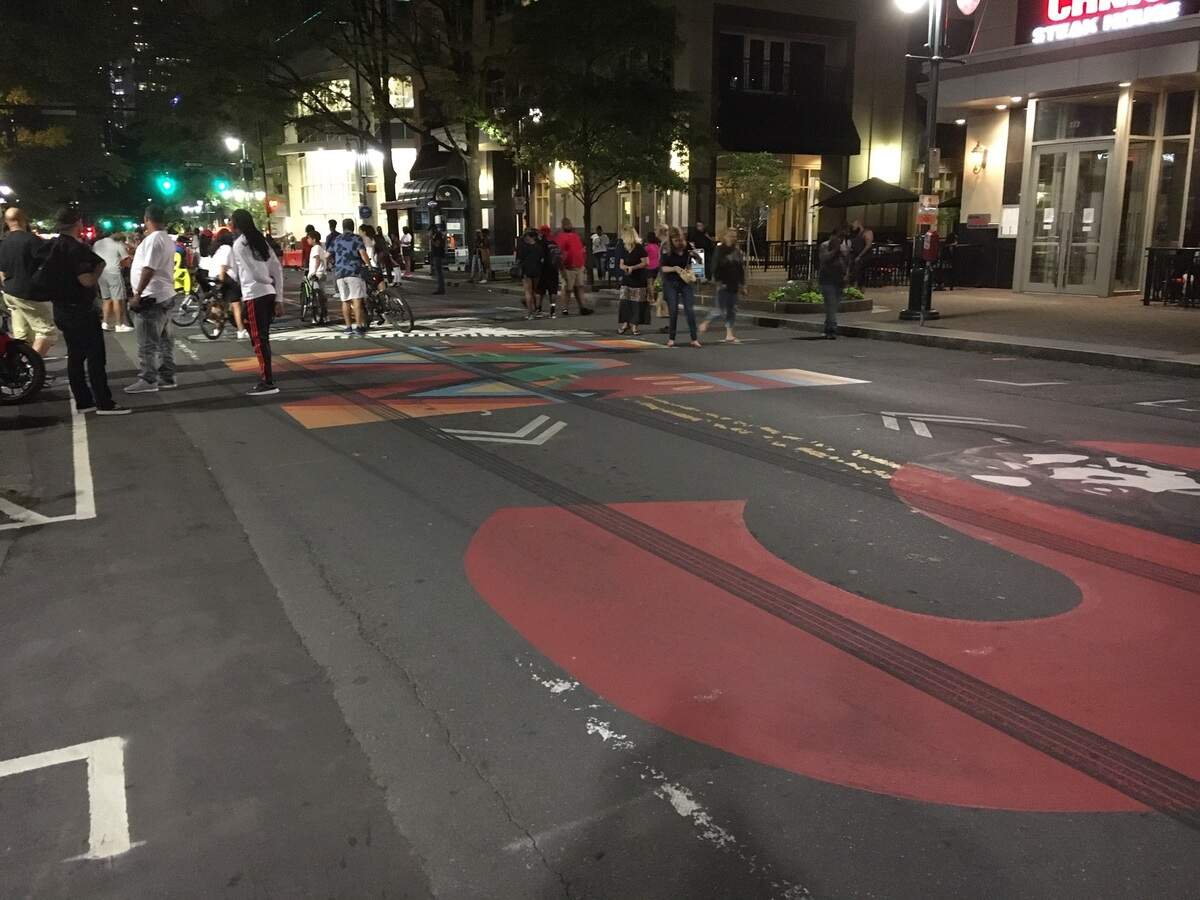
On Wednesday night, the paint on the mural was already chipping. Tire tracks and dirt sat atop the broken art, glowing against the street lights and the rain. A member of activist organization CAATS Collective who goes by Brady Diaz said it “already looks horrible.”
Yet on top of the cracked and dirty paint that could be the most meaningful piece of art the city has seen all year, the activists danced.
“It’s not even been six months,” Brady said. “You’re saying our lives didn’t even matter for six months?”
Six months ago
In late May, the news of Minneapolis police killing George Floyd, an unarmed Black man, sparked protests across the nation and a resurgence of the Black Lives Matter movement. From social media hashtags to newspaper headlines, it was nearly the only thing being talked about.
Although Floyd was not the first Black person killed publicly by police, something about his death tugged at the emotions of so many. Protests erupted not only in Minneapolis, but all across the nation. A viral resurgence of the Black Lives Matter movement seemed to unite millions, despite racial differences.
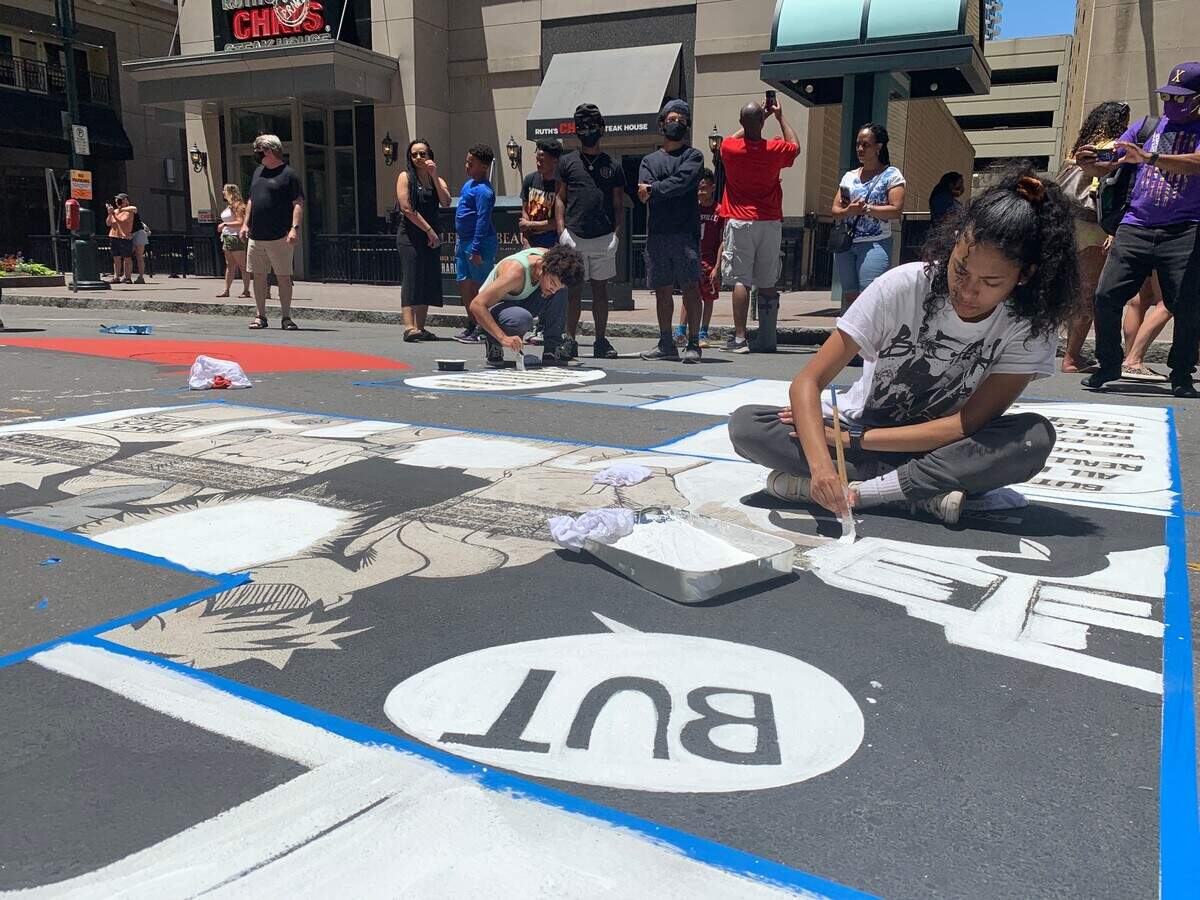
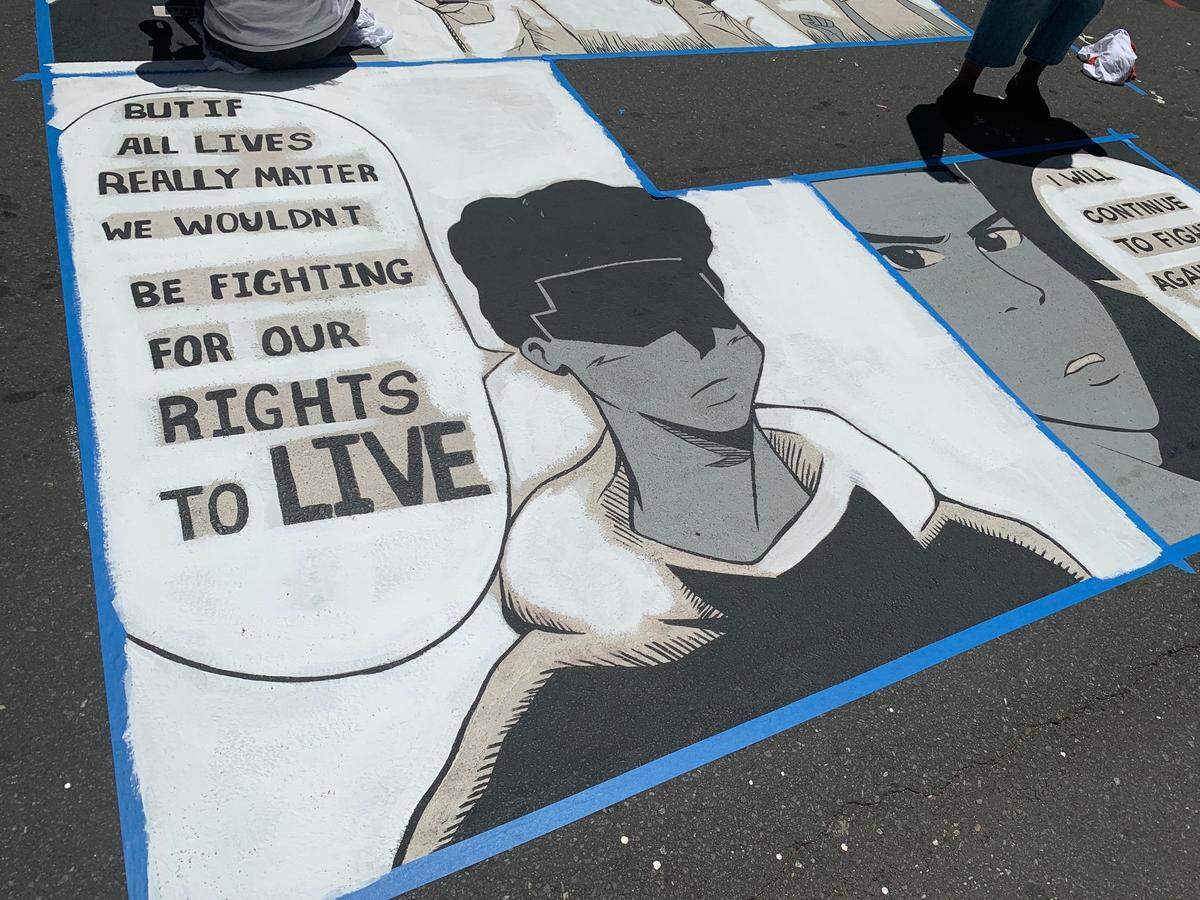
In Charlotte, artist and muralist Dammit Wesley quickly sprang into action to turn his pain as a Black man into something for all to see. On June 9, Wesley joined with 16 other artists to create a Black Lives Matter mural in the middle of South Tryon between 3rd and 4th streets.
“The BLM mural was hands down the greatest and most successful community arts project I’ve ever participated in,” Wesley told CharlotteFive this week. ”It was an honor to not only curate, but to paint side by side with individuals who selflessly put the needs of others before their own.”
While the artists painted, residents flocked to the site to take photos and sit with their thoughts on the state of racial injustices across the nation.
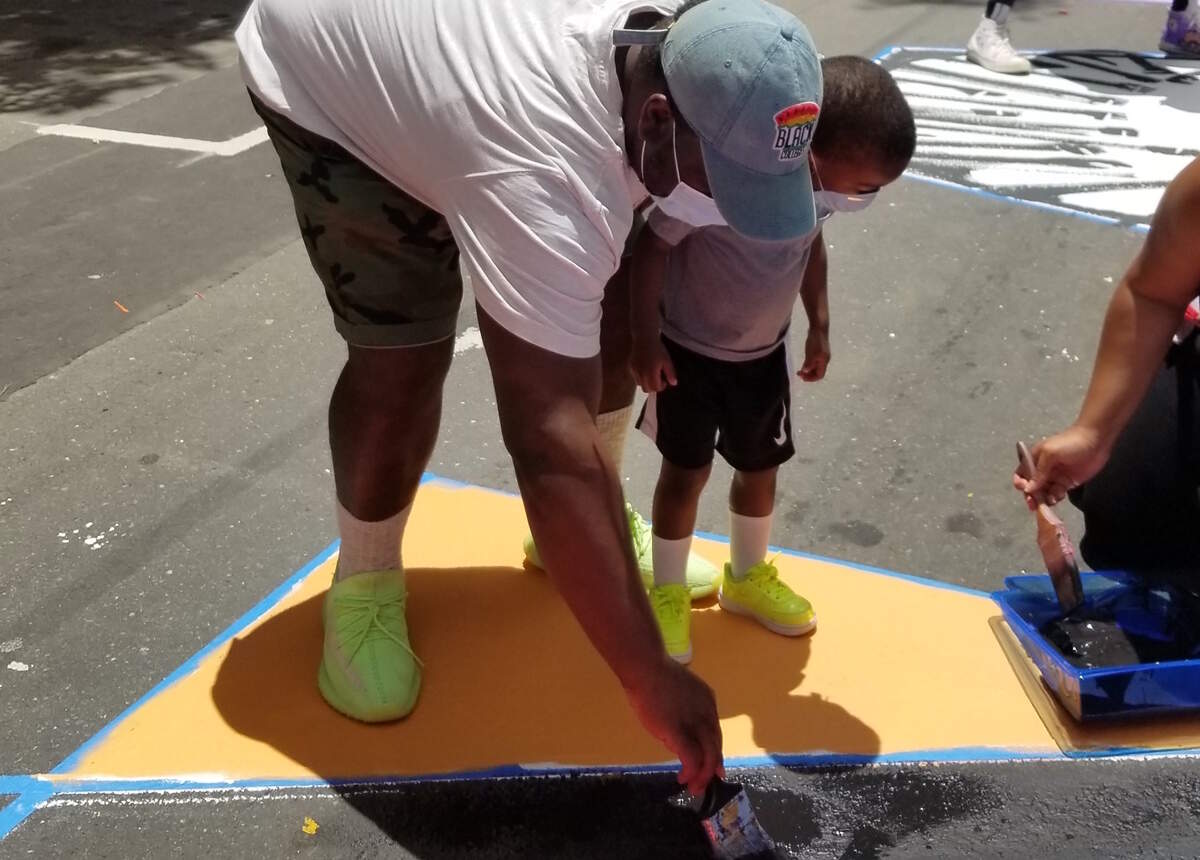
“My 3-year-old son Blake and I were fortunate enough to be able to assist artist Georgie Nakima in painting the M in the Black Lives Matter mural,” Charlotte native Winston Robinson said. “Attempting to explain the significance of that moment to a toddler is an impossible task ...
“In that moment, my job was to capture the impressions of Blake enjoying himself painting. I know that day is coming, especially as a Black father. However, for now our conversation is about that really fun day when we were able to paint the street.”
Why the street was closed
Less than 48 hours after the mural was completed, black tire marks appeared across several of the letters, prompting Charlotte-Mecklenburg police to get involved. The culprit was never found, but it sparked public interest in having the artwork protected.
Three days later, the city voted to temporarily close the street and make it a pedestrian walkway, so more people could enjoy the mural — and additional artwork that sprang up in the area — without the threat of vehicle traffic or damage.
Much of Charlotte’s creative community and residents were happy with the news.
“For 30 seconds, as performative as it may have felt to some, it felt like we had an opportunity to belong in the city,” photographer and image activist Alvin C. Jacobs Jr. told CharlotteFive.
A destination spot
The mural may have helped bring some traffic to uptown businesses struggling during the pandemic.
“I think to a certain degree on weekends it probably brought in more people than we would have seen now with COVID,” Hazelnuts Creperie owner Asi Agajan said. “But we’re just hopeful things will get back to normal in regards to the business.”
The South Tryon Street creperie is one of three in Charlotte. He said business is quiet during the week at the uptown location, and he expects it to stay that way until more workers return to offices.
“We’re really struggling up there just trying to get through the next couple months and hoping for the best,” Agajan said.
Reaction to reopening the street
On Nov. 10, Charlotte’s City Council voted 10-1 to reopen the stretch of Tryon Street that included the mural. Council member Braxton Winston case the lone vote against the reopening.
At Monday’s meeting, Winston said more uptown businesses reported seeing revenue improve or stabilize than those that lost money. Winston did not respond to requests for comment by Thursday.
Charles Nelson Jr., owner of Salon of Evidence on that stretch of the road, said Thursday his business benefited from the road being closed. It helped bring in walk-in traffic on weekdays from mural visitors.
However, he said he understands how opening the street back up to traffic could help as businesses like his have struggled with the pandemic. Nelson’s 8-year-old salon was closed for about three months because of the shutdown.
Nelson said he doesn’t want the Black Lives Matter movement or what the mural represents to lose its purpose. He’d like to see the message continue in the city, perhaps with police involvement, with a week of events uptown, similar to Charlotte Pride Week.
In its decision, the council cited nearby businesses complaints about losing revenue by not having the traffic flowing through the area. Several businesses near the mural either wouldn’t comment or did not respond to requests for comment.
At Monday’s meeting, a McCormick & Schmick’s representative said the restaurant at 200 S. Tryon St. has seen revenue losses since the street closed, and that opening the road was necessary for recovering from the coronavirus pandemic.
“McCormick & Schmick’s wholly supports and believes in equal justice for everyone, yet we also support our employees as they try to maintain their financial needs,” the company’s chief operating officer, Howard Cole, said in an emailed statement to The Charlotte Observer. “Our team members ... have been adversely affected by the closure. We look forward to the area fully reopening and welcoming more employees back to work soon.”
‘It was never about the mural’
Local artists and creatives had their own opinions.
“Painting, sculpture, music, literature and other arts are often considered to be the repository of a society’s collective memory,” Jacobs said. “It was never about the mural — instead it was a reminder to us all that the perception of power is no substitute for actual power.”
Before the coronavirus, uptown restaurants benefited from the foot traffic that comes along with people working and living uptown, Wesley said. “Hundreds of people flocked to McCormick & Schmick’s out of convenience and proximity. But now that COVID-19 has everyone working from home indefinitely, that foot traffic is gone. Instead of pivoting and adapting to the new circumstances of Trump’s wonderful management skills, they choose to point fingers at the artists — the only people driving traffic to their restaurant for five months.”
Some people were not upset about the council’s actions.
“I simply cannot be upset nor can I be bothered by the recent vote to reopen South Tryon Street where the Black Lives Matter mural lives,” Charlottean Davita Galloway told CharlotteFive. “Was it supposed to remain closed forever? Was that the expectation? Ultimately, it is paint. And while it is iconic, innovative and a hella dope body of work and statement, I am more concerned with actual Black lives.”
Galloway, who is a co-founder of Hue House, a creative agency aimed at bridging the gap between Charlotte’s Black creative community and local businesses, also feels the mural missed the mark in allowing creatives to freely express themselves— if that was the goal.
“We have so much more work to do. The end result felt very edited and whitewashed,” she said. “If it will help people feel better, place the image on a billboard. That way it’ll never fade away, unlike the Black lives that do on a daily basis at the hands of those who promise to protect and serve.”
Uptown is where the community comes together for entertainment, celebration, commerce, protest and debate and public expression, Michael Smith, president and CEO of Charlotte Center City Partners, said in a statement to The Observer.
“This piece of public art is a powerful example of how uptown is our commons. This area quickly became a sacred space for many in our community,” Smith said.
He said CCCP plans to work with other city officials and local artists to find “more ways to create high-visibility, long-lasting expressions of equity, justice and that Black Lives Matter.”
Dancing in the streets
Meanwhile, they danced.
Every night since the council’s decision, the activists have come out to dance in the rain, to protest the cars, to protect the mural. On Thursday, though, the rain was heavier, so the activists said they would likely take a break.
New Black and queer-led activist organization CAATS Collective, along with Wheels for Equality and Feed the Movement, helped organize the event. A local community organizer with CAATS, which stands for community abolitionist and transformative spaces, told WBTV that she wanted to start a conversation about closing the road again.
Brady said the organization wants to help people in the community get along better with each other.
She said since the amount of people coming to see the mural has died down, it’s no longer a priority for the city.
“It’s all about money,” she said in an interview with The Observer. “They don’t actually care about our lives here. If they did, it would be about more than if money is being made.”
Brady said the mural was so important because it was a sign that Charlotte officials cared about its Black residents. She said there are more events planned to advocate for the protection of the mural, including a 24-hour protest on Saturday afternoon. Just after 3 p.m. on Saturday, protesters could be seen blocking South Tryon Street with orange cones. Saturday evening, people danced and socialized on the mural.
“This mural means a lot to a lot of folks in the city. We’ve never had something like that, and you have to see it every time you drive by,” she said. “To have it opened up is a smack in the face.”
This story was originally published November 13, 2020 at 3:38 PM.