Charlotte beer trend: It’s the ‘Summer of Lager’ — here’s what COVID has to do with it
COVID-19 dealt a major blow to Charlotte’s brewers, which couldn’t get beer out to their retail accounts and could only sell to-go out of their taprooms during the shelter-in-place order.
As difficult as it has been for brewers, there have been silver linings for consumers. Online ordering and curbside pickup have made it easier than ever to pick up beers; core beers that were never available in cans now are; and some breweries even sold kegs to consumers at steep discounts.
And now, COVID-19 seems to have ushered in the summer of lager.
While some breweries had no trouble moving IPAs, which must be consumed fresh for optimum flavor, others worried that the character of these beers would fade quickly with no means to move all of that product.
Shortly after Gov. Roy Cooper’s shelter-in-place order in March, Town Brewing Co. made the decision to start filling its tanks with lagers. Though lagers require more time in the tanks than ales, time was something Town Brewing Co. suddenly had plenty of.
“It didn’t really make much sense to brew a bunch of IPAs that were going to be aging out during this pandemic,” said Brian Quinn, head brewer at Town Brewing Co. “We pivoted to fill up the tanks with some lagers and ultimately brewed a pretty wide range of lager styles.”
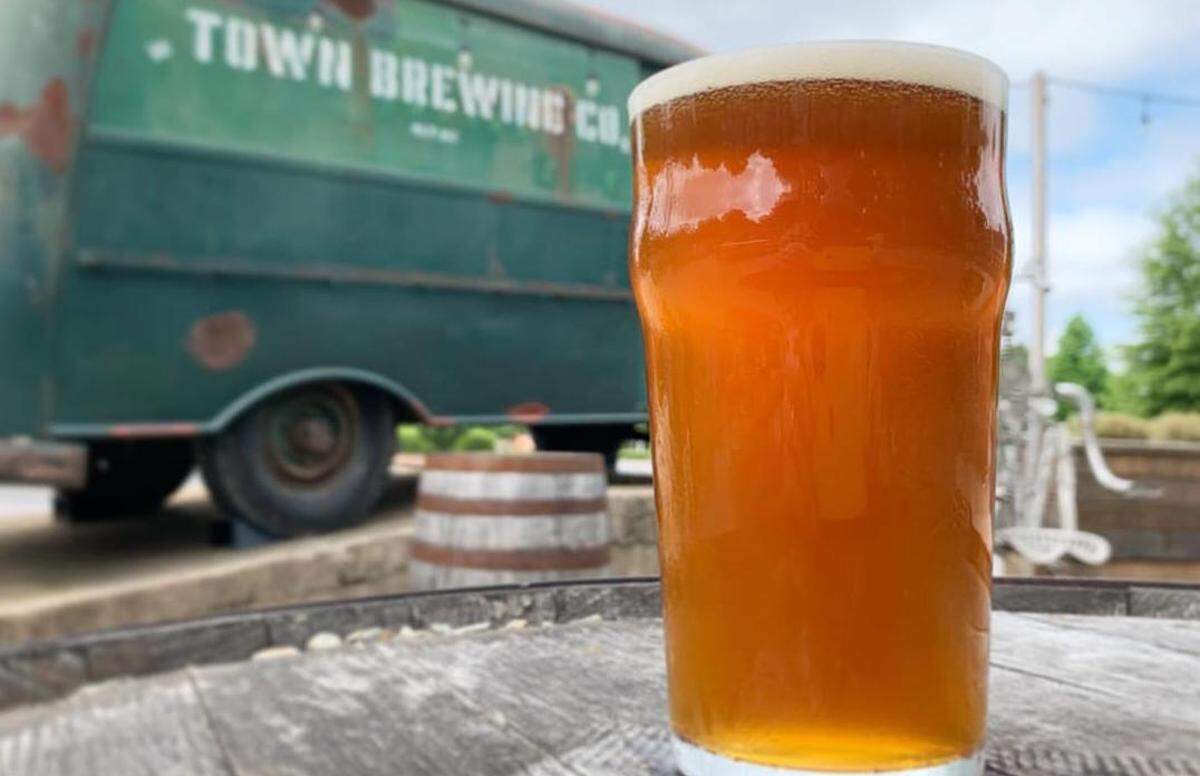
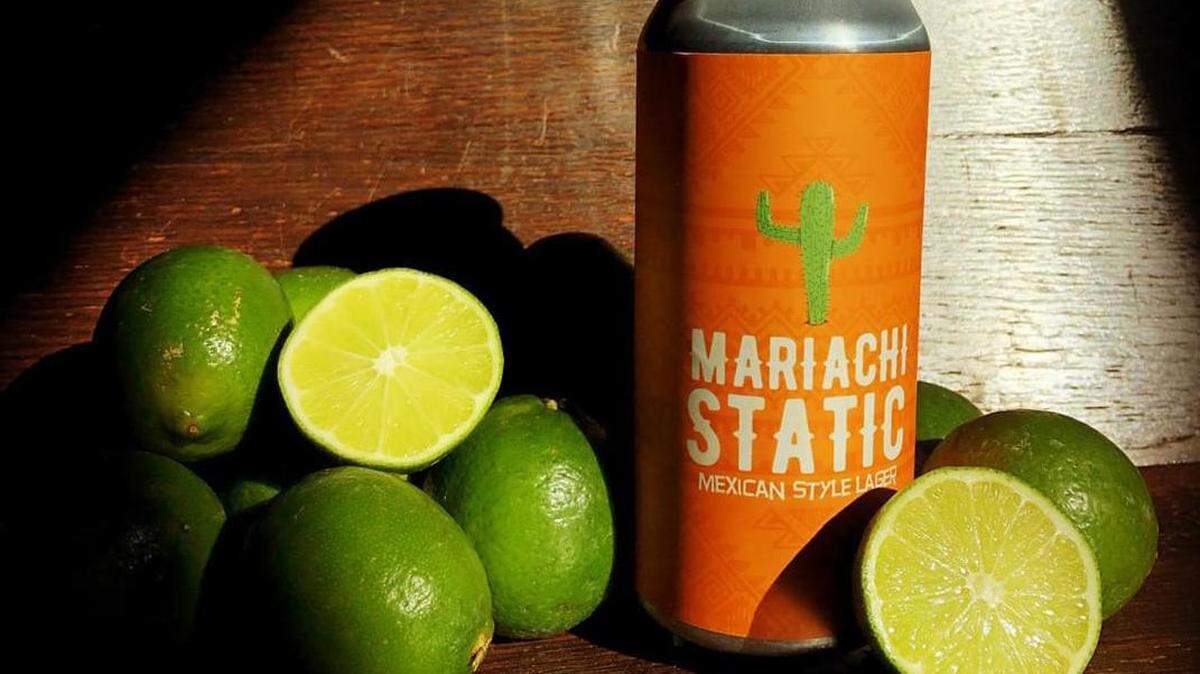
Recent lagers at Town Brewing Co. include Mariachi Static, a Mexican-style lager; Summer Sultana, a “modern craft pilsner” hopped with Sultana and Mandarina Bavaria; Holographic Dreamscape, a Vienna lager; Shadow Puppets, a dark lager; and Breksta, a Baltic porter brewed with coffee from Enderly Coffee Co.
A festbier brewed with Ursprung Fest Malt from Durham’s Epiphany Craft Malt is up next, and Quinn would also like to try his hand at brewing rice lagers or pre-Prohibition lagers.
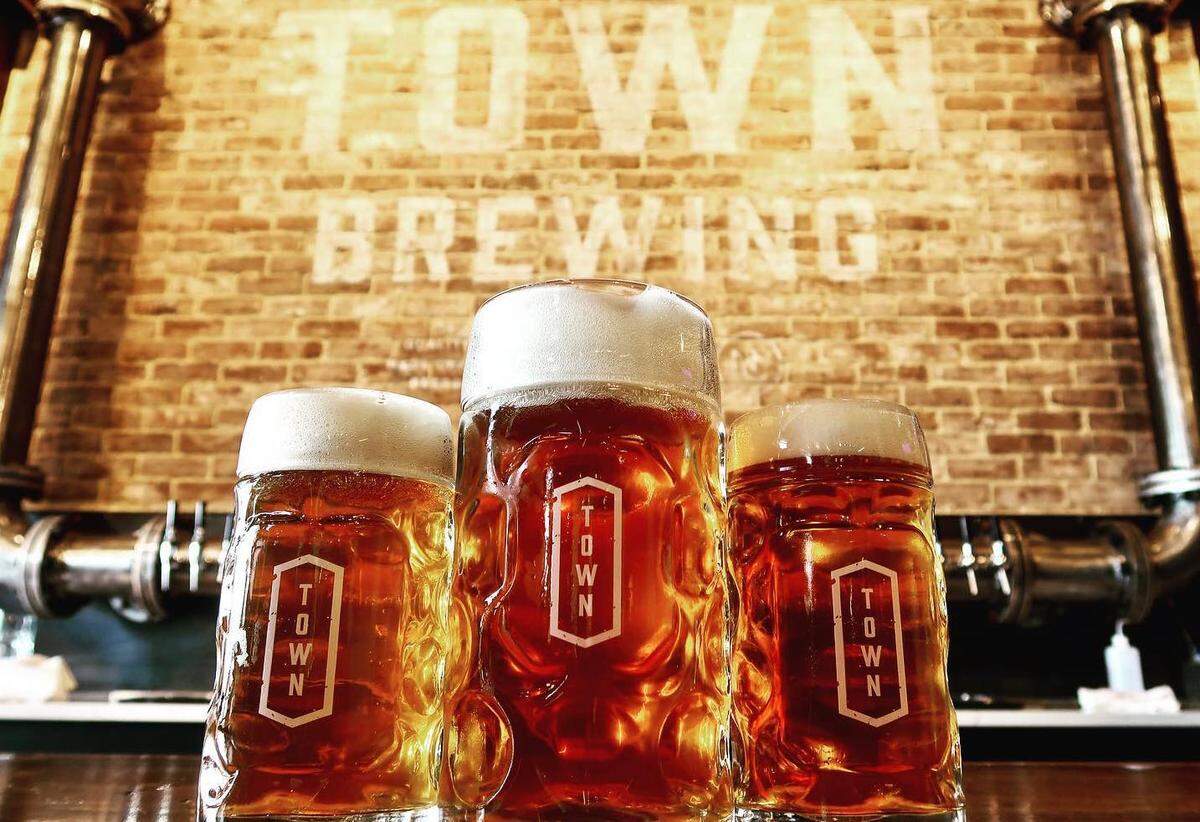
“Lagers have always been a real passion of mine,” said Quinn, who credits much of his love for lagers to the time he spent studying brewing in Germany. “We always try to have one or two on tap, but the real issue is capacity constraints because they’re sitting in the tanks for six to eight weeks.”
The Breksta Baltic porter, which uses a Czech lager yeast, was lagered for three months.
By fermenting and conditioning at colder temperatures and for a longer period of time, brewers can achieve the clean and crisp quality found in a number of lager styles. Even when the end result is a light lager that some might drink without much thought, there’s a lot of skill involved on the brewer’s side. “It can be extremely refreshing and approachable to the consumer, but at the same time, it’s a big challenge to the brewers because it demands a lot of skill,” Quinn said. “Lagers do not hide flaws very well at all.”
Fortunately, like Town Brewing Co., many other local breweries are also rising to the challenge. Here are just a handful of other new lagers to look for this summer.
(1) Divine Barrel Brewing - The Limest Thing We Have
“What’s the lightest thing you have?” It’s a question bartenders get quite often, and the crew at Divine Barrel Brewing have answered by brewing The Lightest Thing We Have. And, like Triple C, it also released a lime version called The Limest Thing We Have. Both beers are available at the taproom.
(2) NoDa Brewing Co. - 1010 Pearl Lager
Of the many styles under the lager umbrella, Dortmunder lagers are one of the most seldom seen. Great Lakes Brewing Co.’s Dortmunder Gold is a well-known example, but outside of that you’re not apt to see many on grocery store shelves or at your local bottle shop. NoDa Brewing Co. is working to change that. The brewery’s 1010 Pearl Lager comes in at 4.8% ABV, and it’s a bit of a geographical mashup: It’s a German style, named after a German village in Ohio and brewed with Carolina Vienna malt.
(3) The Olde Mecklenburg Brewery - Mecklenburger
You can’t discuss local lagers without mentioning The Olde Mecklenburg Brewery, which lagers all of its beers (even its flagship Copper, though fermented with an ale yeast, undergoes a lagering period). Last year, the brewery brought back Mecklenburger, a Helles lager that was one its earliest seasonals. It fell out of rotation for a few years but was brought back last year, and it can now also be found in the brewery’s new cans.
(4) Resident Culture Brewing Co. - Radical Empathy
Resident Culture has championed lagers since it opened, and last year even held a Lager Fest that brought some of the best lagers in the country to the Queen City. If you’re looking for lager, you’re apt to find two or three different options on tap at the brewery at any given time. The brewery recently released cans of Radical Empathy, a German pilsner hopped with Hallertau Mittelfrüh, Hallertau Blanc and Tettnang, all sourced from Hallertau, Germany.
(5) Salud Cervecería - Una Fría Italian-Style Pilsner
Salud Cervecería dropped three cans this past weekend: Dairelynerweisse, a fruit punch sour berliner weisse; Coco Rico, a lactose IPA with vanilla, lime and coconut; and Una Fría, an Italian-style pilsner. While Italian-style pilsners aren’t as popular as German and Czech pilsners, they’ve been having a moment lately. And it’s easy to see why: Most Italian pilsners are German-style pilsners at heart, but with an increased dose of European hops. In Salud’s case, the 5.2% ABV Una Fría was brewed with Saaz hops and then dry-hopped with Noble Loral.
(5) Triple C Brewing Co. - Neon Signs
Triple C Brewing Co. has released a few new lagers recently, including Neon Signs, a 5.7% ABV American lager. The beer was brewed with two-row and pilsner malt, as well as flaked corn, to lend the beer its characteristic crispness. Triple C also brewed a lime-infused variant dubbed Neon Limes, however cans of that one have sold out at the taproom. You can still find it there on draft and in Crowlers, though.
(7) Wooden Robot Brewery - I’m Not A Robot
Wooden Robot recently released cans of I’m Not A Robot, a wet-hopped Kellerbier brewed with Asheville’s DSSOLVR. Kellerbier, which is German for “cellar beer,” is an unfiltered lager which often has a slightly cloudy or hazy appearance. To brew the collaboration, the two breweries mixed their respective water profiles, then used pilsner malt, munich oats and wheat from Riverbend Malt House. Finally, it was hopped with Mt. Hood hops in the kettle, and then followed with an addition of wet, hydroponic Spalter Select hops.
This story was originally published July 16, 2020 at 10:15 AM.