Charlotte, here’s how making a farm-to-table dish really happens from seed to plate
It’s fall, and all the rooty, earthy vegetables are ready to show off. Supporting local food systems is all the dining rage. And seasonal farm-to-table dining is en vogue.
But in an industry where the term “farm-to-table” gets plastered on menus for show, what does a true farm-to-table meal look like?
Chef Sam Diminich at Restaurant Constance was an obvious person to ask. Diminich has 25 years of back-of-house restaurant experience, where he said even if the restaurant claimed it was farm-to-table, “It was 20% farm and 80% Sysco. And it’s still happening today.”
After shadowing local farmers through the pandemic, Diminich’s vision and understanding of food was reborn. “It was almost spiritual” watching the farmers work from dusk to dawn, he said.
After building relationships with farmers, he found himself “kind of starting from the beginning again,” looking at produce and recipe development with new eyes.
“Let’s rearrange the way we think about luxury ingredients,” he said.
With that in mind, he founded the restaurant group Your Farms Your Table, built on telling stories of local suppliers and sourcing religiously from nearby farms.
Over at Restaurant Constance in Wesley Heights, Diminich’s menu parallels the changing seasons. The evolving nature of the produce — and subsequently his dishes — excites him in a way that’s quite palpable when guests walk into the restaurant.
“We’ve done 45 different menus in less than two years,” he said.
The fall farm-to-table dish
At Restaurant Constance, Diminich is serving up his latest seasonal dish — a Wagyu flank and mushroom bourguignon. Do note that this dish is so seasonal that the specific mushrooms and veggie set may change each week, but the core flavor profile remains. It’s a dish that keeps the cozy, warming essence of grandma’s beef stew intact but flips tradition on its head.
The idea behind the dish was sparked by Diminich’s relationship to a farmer he regularly works with — Hiram Ramirez of Urban Gourmet Farms — who is ubiquitously known as “the mushroom guy” among Charlotte’s restaurant industry folks.
“Because of my buddy Hiram at Urban Gourmet, I wanted to kind of flip the switch” on the traditional beef bourguignon by “treating mushrooms like meat and making them the centerpiece,” Diminich said. “It’s the anti-steak, steak dish,” according to Restaurant Constance’s Instagram.
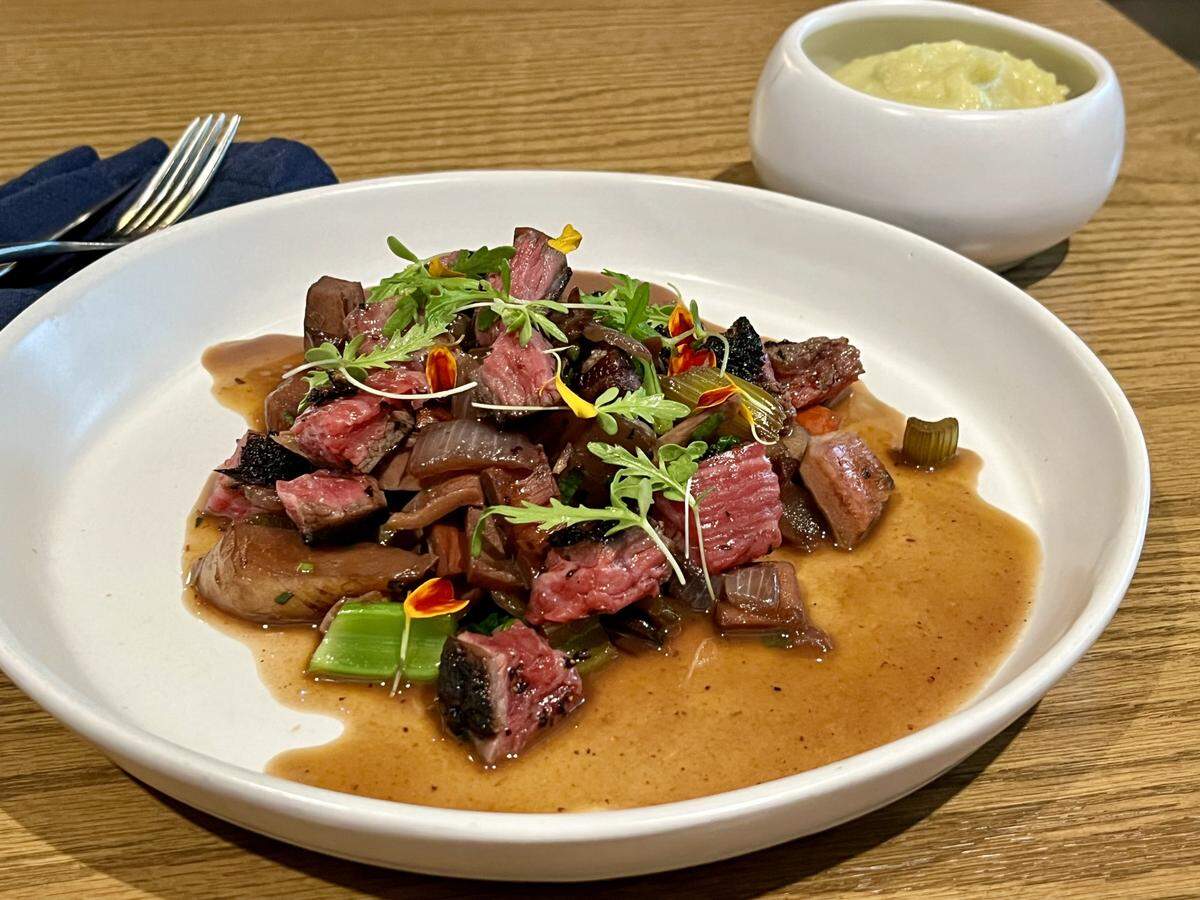
The mushrooms — a hearty, vegetal embrace —are also the stars of this story.
So, let’s go back to the start and work from seed to plate.
The mushroom bourguignon starts at Urban Gourmet Farms
Step 1: Ramirez and his crew start with the mushroom’s raw materials, what they call the “master’s mix” — pellets of soybean hulls and sawdust mixed with water.
“We can go from sawdust to mushrooms in about a month,” Ramirez said.
All the mushroom bags, called “blocks,” are bred right there in bags at Urban Gourmet Farms, with the exception of shiitake, which grow on a log with the help of Kennett Square Specialties.
Step 2: The water-logged bags go into the steamer, where they heat up to 205 degrees and are held for two hours. This clears out any unhealthy mold and bacteria. Thanks to pasteurization, “We now have a highway for mycelium to run,” Ramirez said.
Step 3: Every bag gets put in front of HEPA filters in a clean room, pushing out sterile air without any mold spores. Then mushroom culture is added to each bag to get sealed, shaken up and transferred into the colonization room.
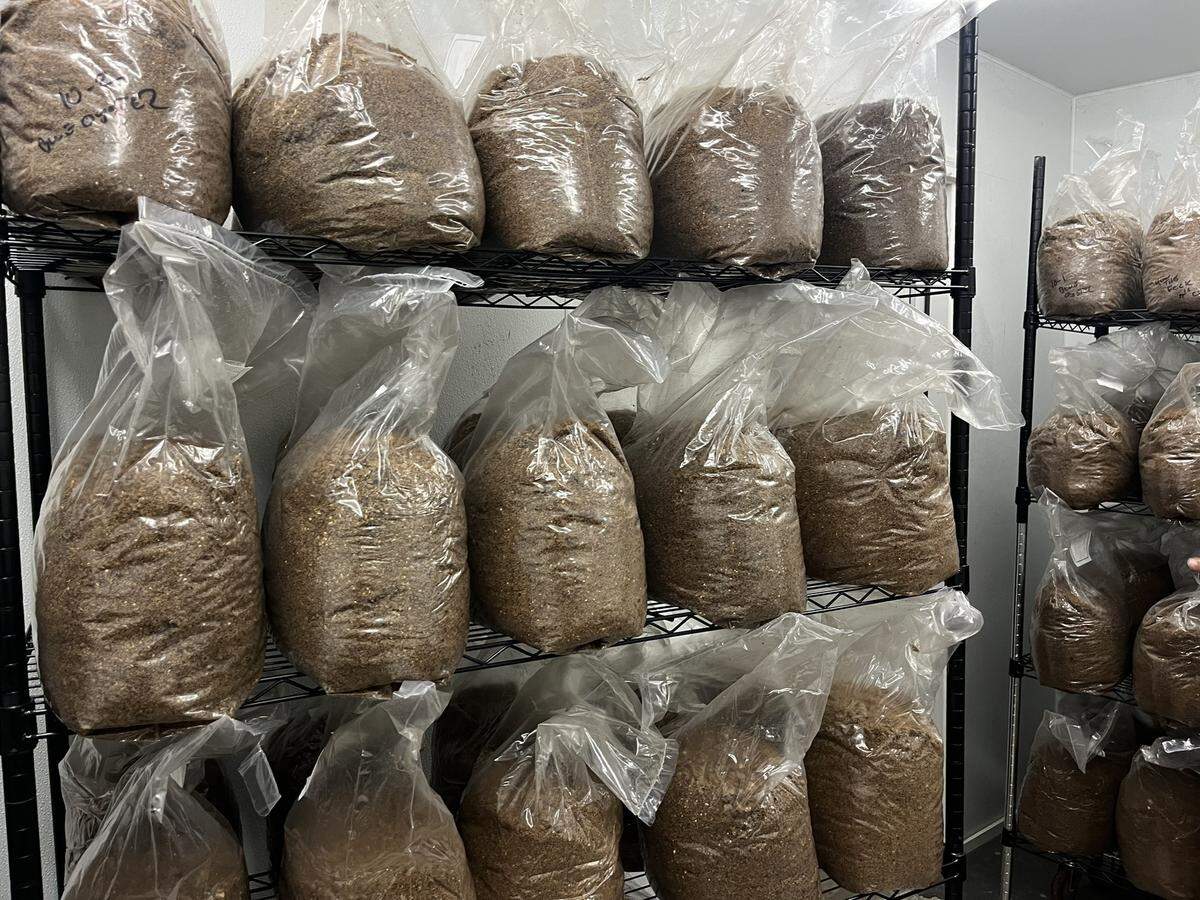
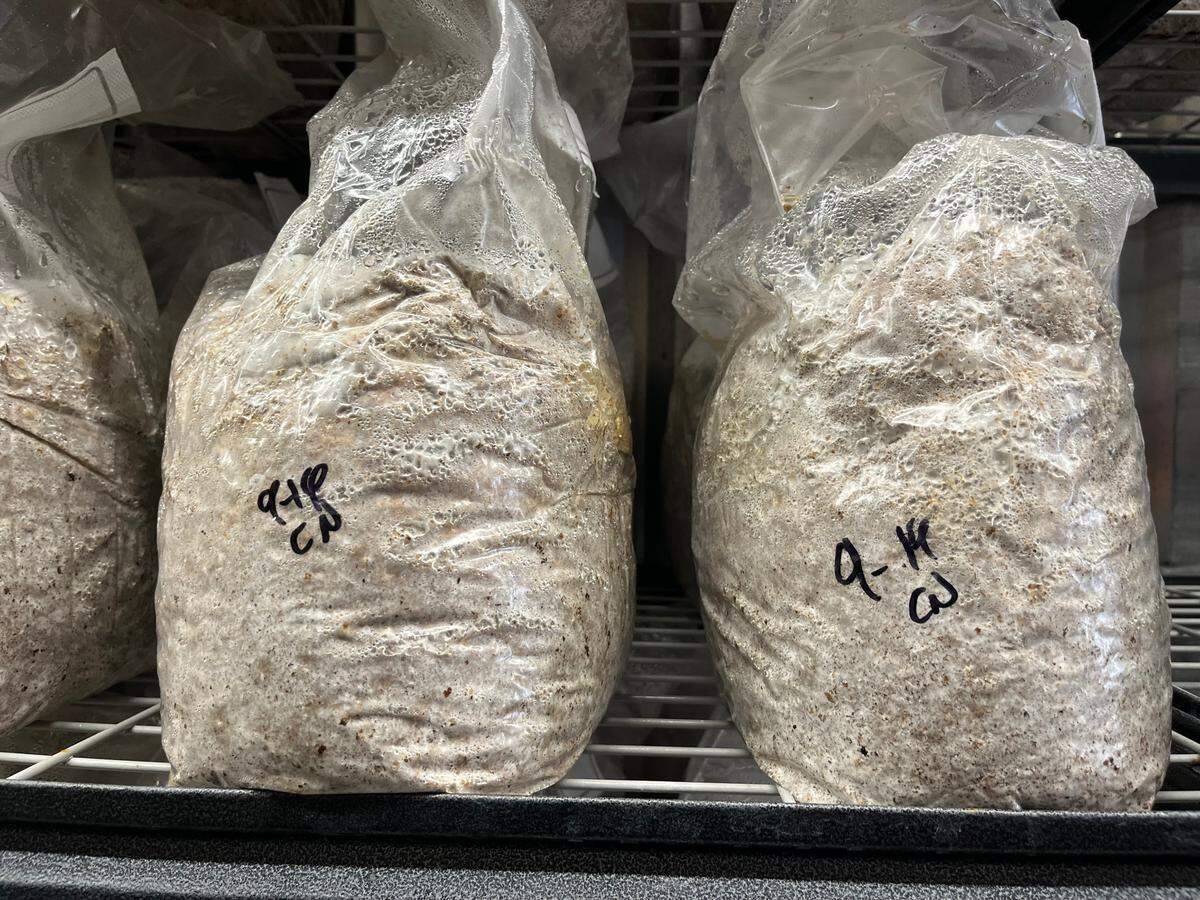
Step 4: The colonization room is an enclosed area and dry space with higher CO2 levels. When two spores touch, they start forming a weblike mycelium, which then starts to spread outward into finger-like hyphae. These hyphae start connecting.
This takes eight days up to eight weeks, depending on the species. The fully colonized block sort of looks like white fluff. When the little guys are colonized, off they go to the grow room.
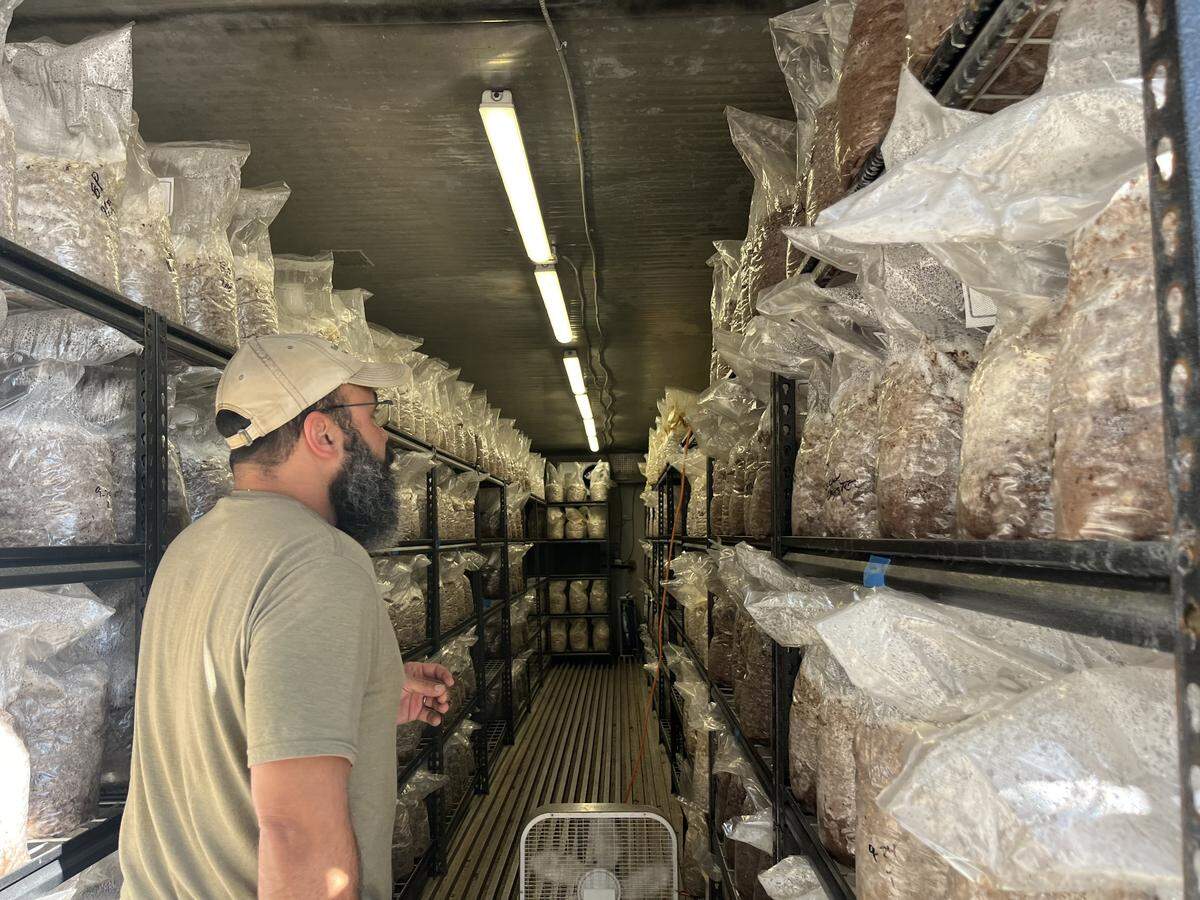
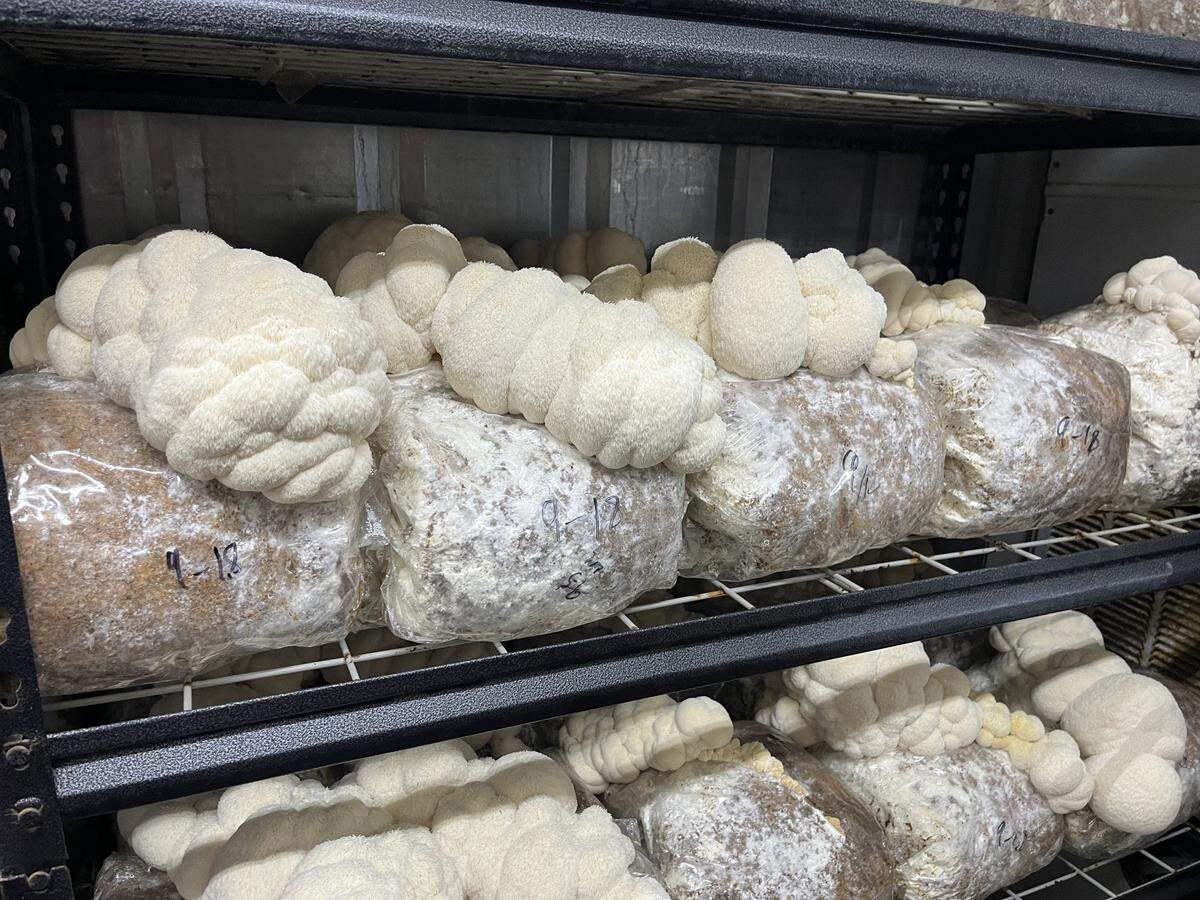
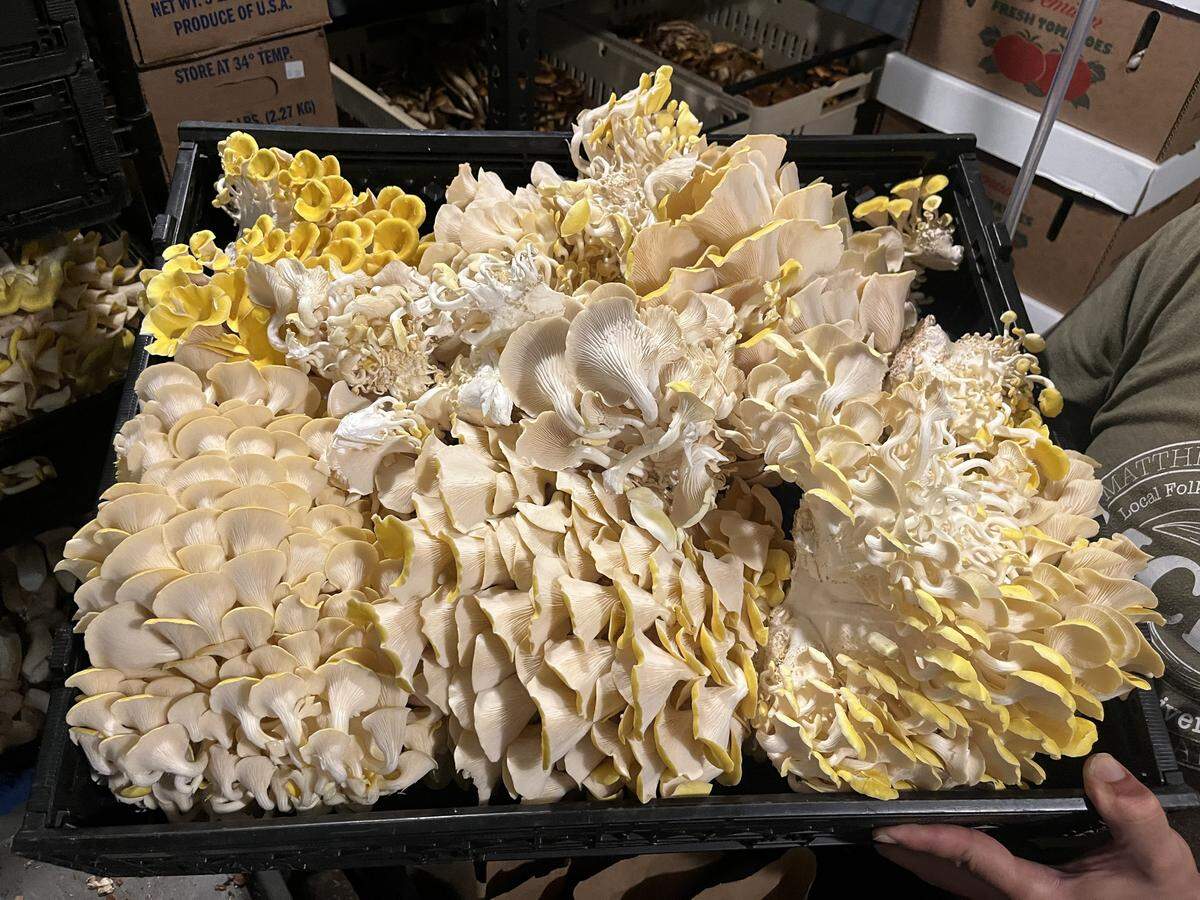
Step 5: Over at the grow room, in a cool, moist environment, we start to see mushrooms sprouting up — shitake, chestnuts, trumpets, oysters and lion’s mane peeking through — out of the slits cut into the bags.
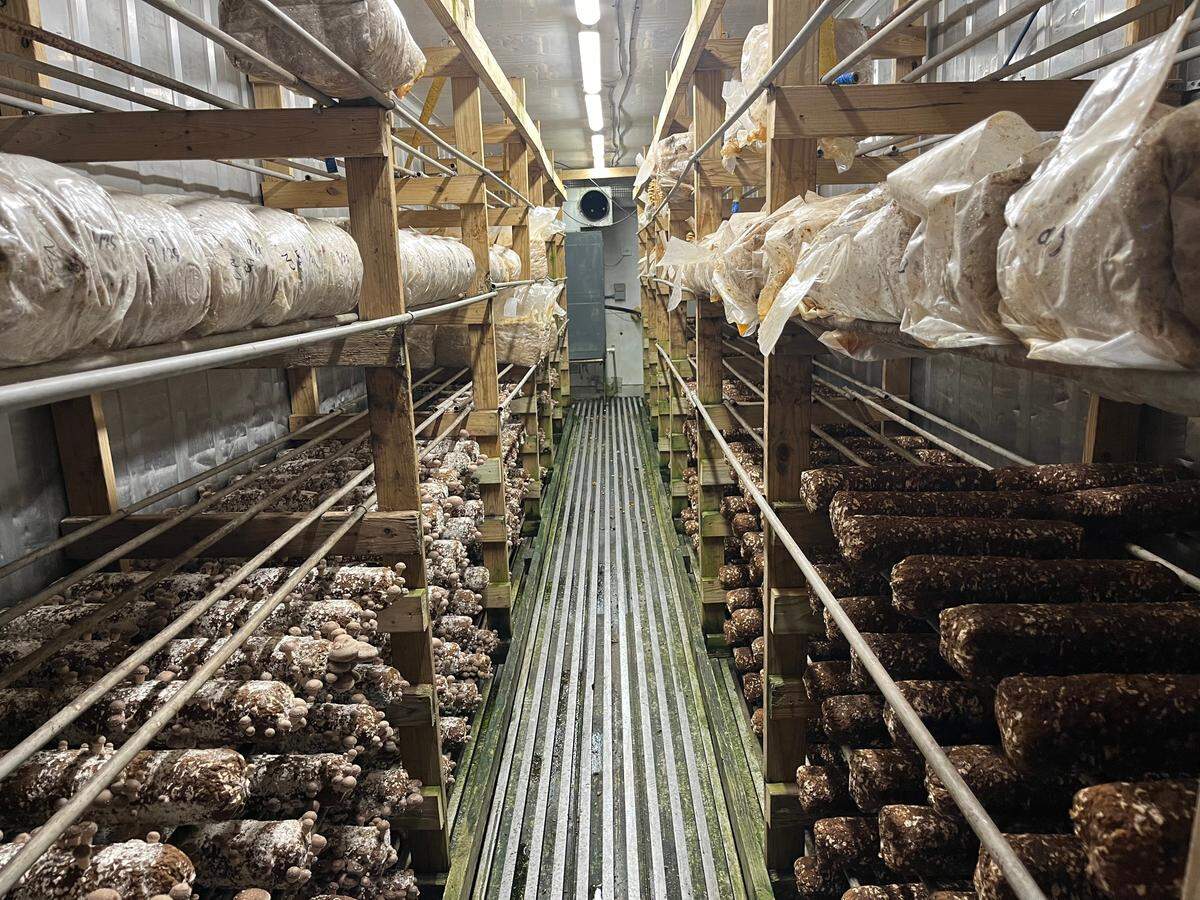
Each block starts fruiting in a matter of days. Most mushrooms grow in seven to 10 days after moving into the grow room. Some blocks can fruit twice and some only once before they are moved into compost.
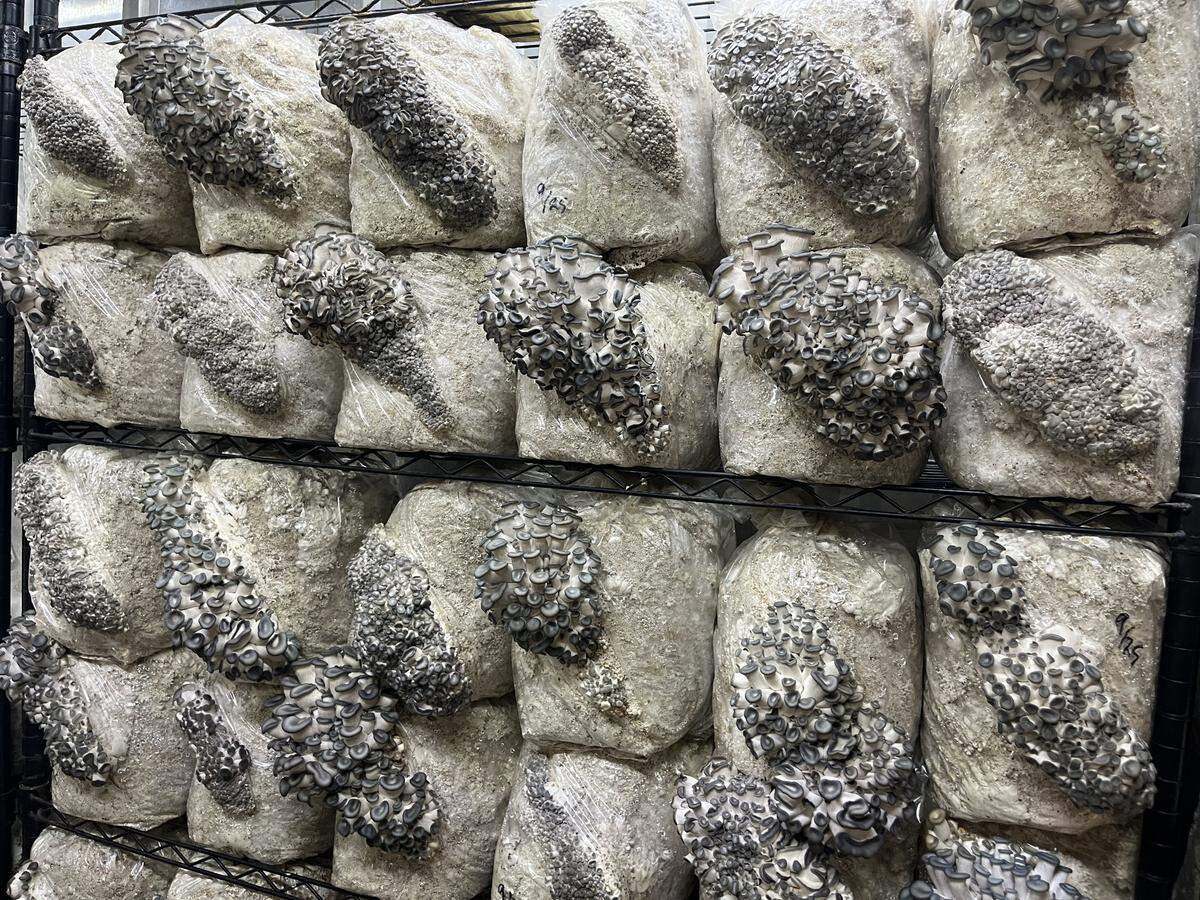
“Mushrooms do grow about 100% in size in a 24 hour period,” Ramirez said, pointing from a baby primordia mushroom to the velvety, final mushrooms, ready to harvest.
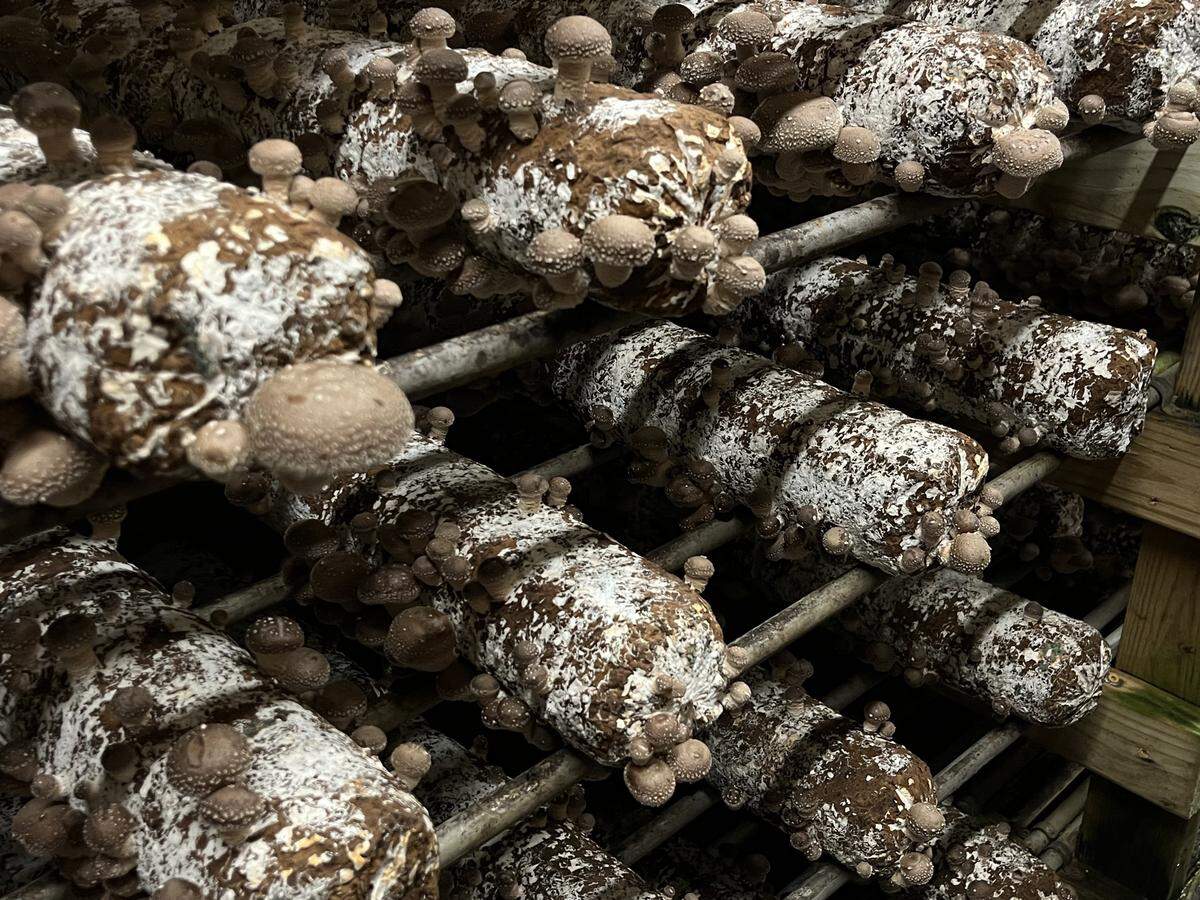
Step 6: The mushrooms are ready for harvesting. Ramirez has worked with these shrooms for years, so he knows when they’re in peak form. Here’s what he’s looking for when he picks the mushrooms that’ll be in Diminich’s dish:
The shiitake is ready when the caps are mature but before the cap fully opens.
The oyster is ready when its petals start to curl up.
The lion’s mane is ready when it has a healthy fruit body and little hairs start to grow.
Step 7: Pack ‘em up. Ramirez tucks the mushrooms in boxes to be transported across town. Mushrooms can last with proper storage for a week or so, sometimes even longer.
In the case of Ramirez’ mushrooms, they’re often picked and hand-delivered to restaurants on the same day, creating peak freshness for the sometimes meaty, sometimes nutty and often earthy flavor profiles of the mushrooms.
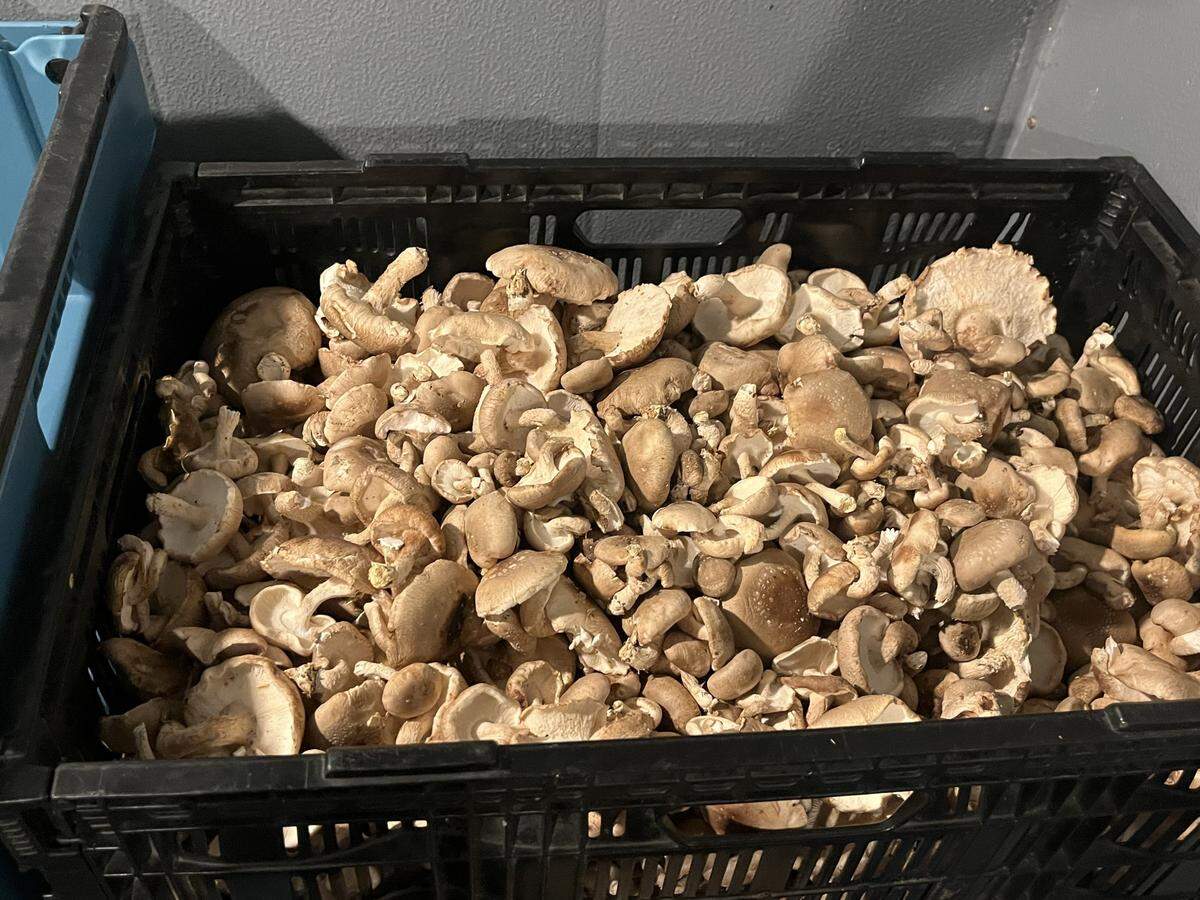
These flavor-packed mushrooms get delivered to restaurants and markets all over Charlotte — Restaurant Constance, Barrington’s, Pizza Baby, Soul Miner’s Garden, Bao and Broth, Foxcroft Wine and Rosemont. Ramirez often makes the deliveries himself, but sometimes he gets the help of local produce distribution nonprofit Freshlist.
“Freshlist is a big partner of ours. They’re a local food hub. They basically work with farmers to get food to chefs,” Ramirez said.
Step 8: The unused and surplus parts of mushroom blocks are then given to farmer and foodie neighbors in Charlotte who compost the remains, creating a circular food system. A circular food system is a huge part of sustainable farming and eating, akin to the ethos of farm-to-table dining.
At Restaurant Constance
Step 9: The mushrooms from Urban Gourmet Farms get dropped off to Diminich’s kitchen in Wesley Heights, along with other vegetables for the mirepoix — a celery, onion and carrot mix — and other key proteins, like bacon and Wagyu, for the mushroom bourguignon.
“We have a standing order relationship [with Urban Gourmet Farms], so not only is it beneficial for us to have this incredible product, but also … for him to be able to count on us financially,” Diminich said.
The other elements in the dish includes:
Carrots from Harmony Ridge Farms
Bacon from Belly Brothers Farm
Bok choy from Honey Tree Farms
Celery from the Charlotte Regional Farmers Market
Chicken of the woods mushrooms, harvested two days prior by Diminich’s friend biking through the woods. (Yes, this is true.)
Savoy potatoes for the accompanying leek-potato puree
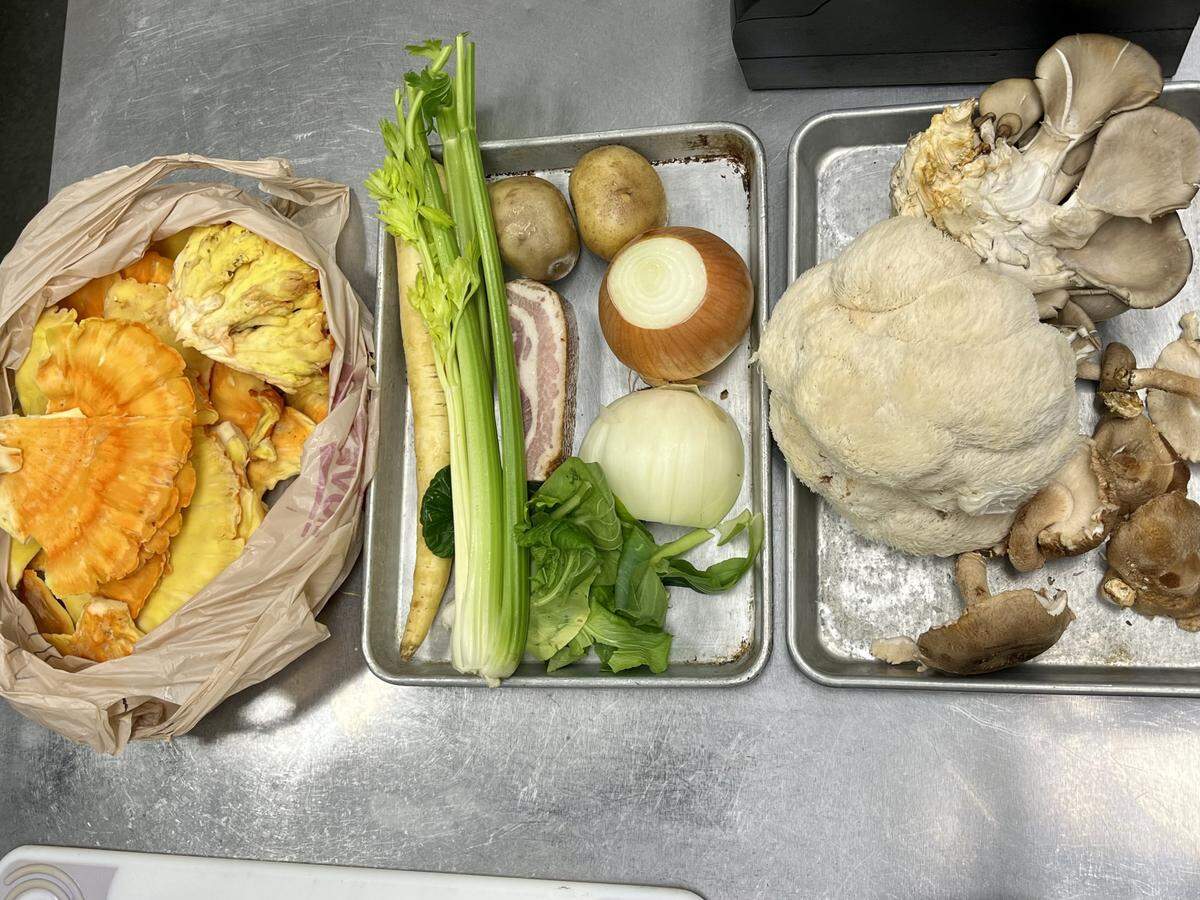
As for the carrots, “there is definitely a flavor difference” between big brand, imported carrots versus one of Harmony Ridge’s local carrots. To him, the local carrot “tastes like sugar-infused carrots” and the big-name brand tastes like “sadness.”
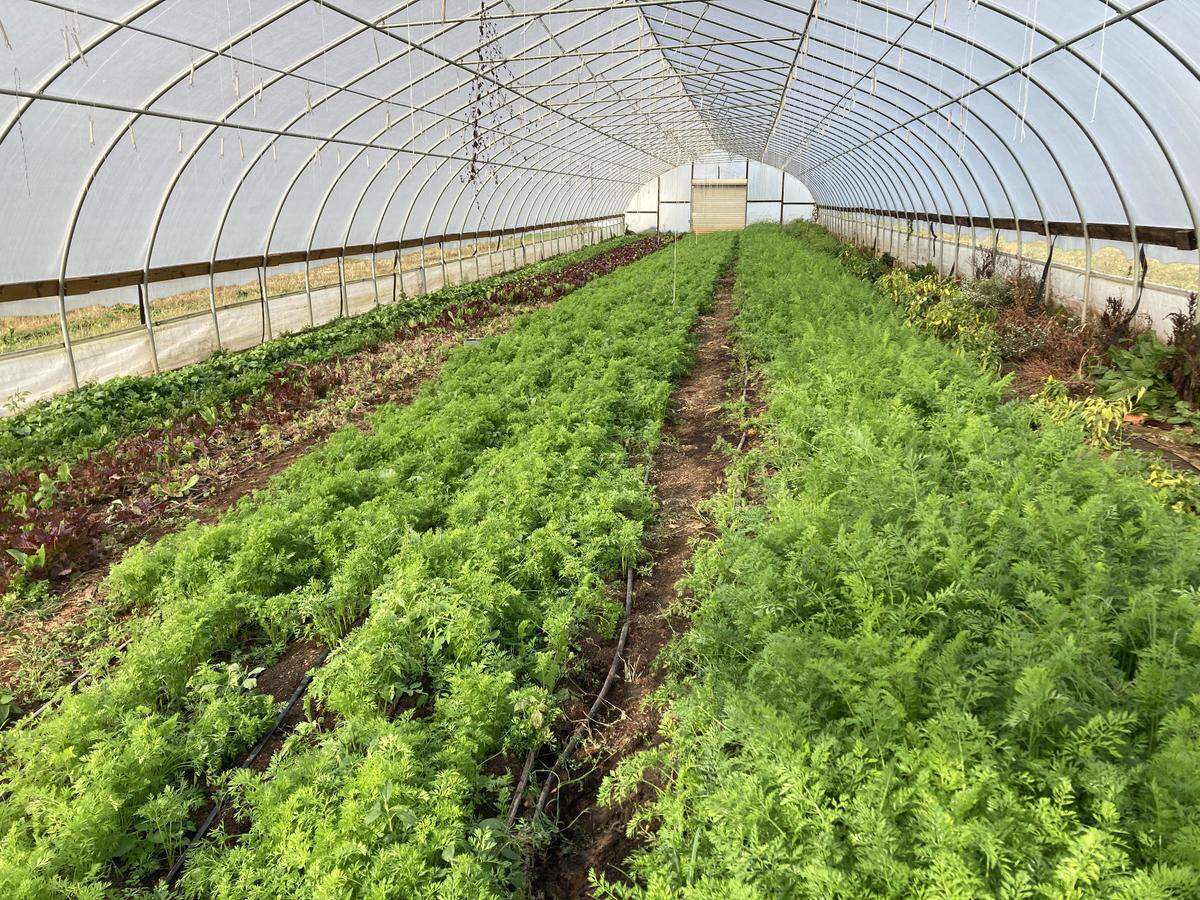
“Food is energy, right?” Diminich asked. “If the food doesn’t sit on a truck or in a cooler for months or weeks at a time, then it’s gonna be better.”
Step 10: Diminich cuts the bacon into hearty cubes and throws it into a hot pan, allowing the fat to render and creating a succulent base for the mushrooms and mirepoix.
Step 11: The medley of mushrooms get a rough chop and join the rendered bacon in the pan to cook down. For Diminich, the lion’s mane, the shitake mushrooms, the oyster mushrooms and his friend’s chicken of the woods mushrooms are this dish’s “luxury ingredients.”
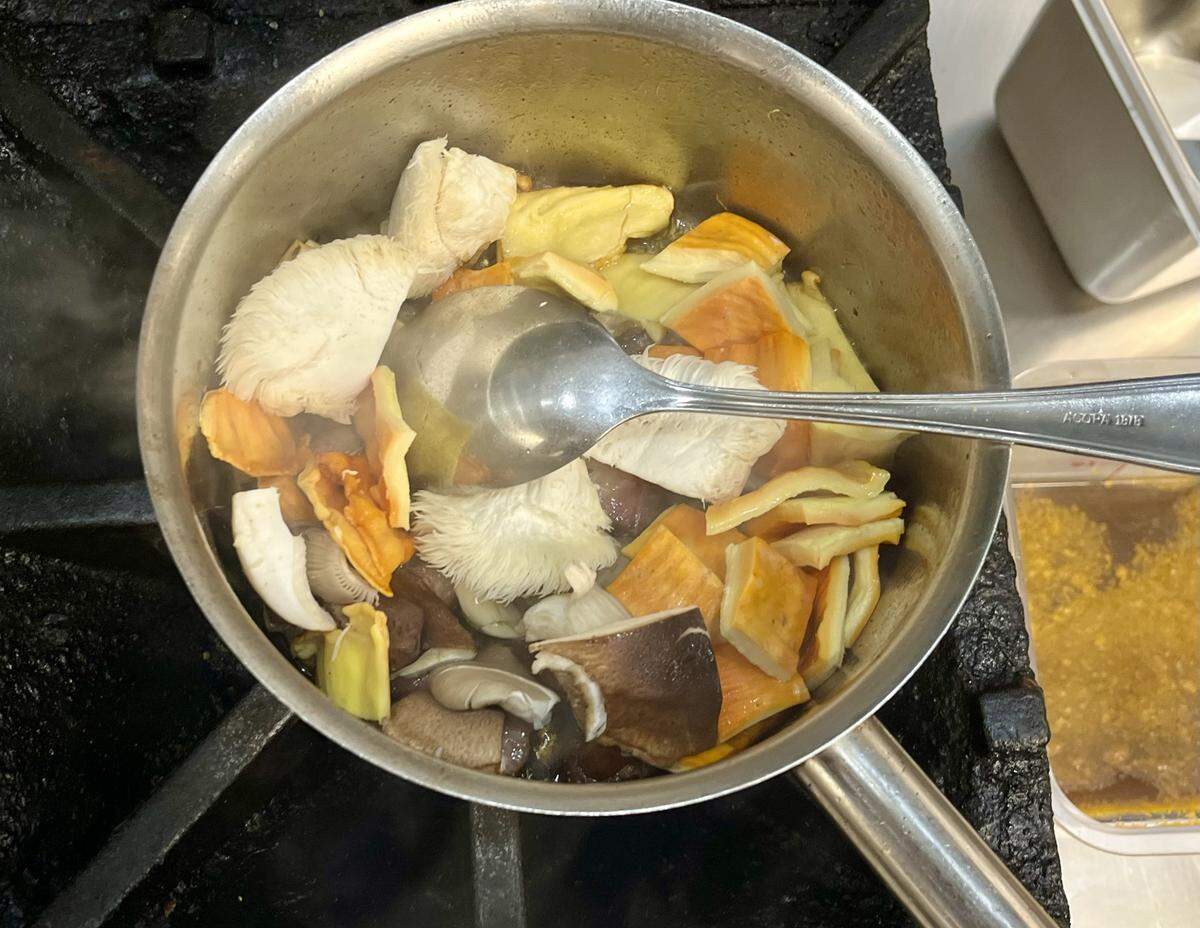
The mirepoix veg — the onions, celery and carrots — are diced into “rustic cuts” and will get thrown into the sizzly pan after the bacon and mushrooms have had time to mingle.
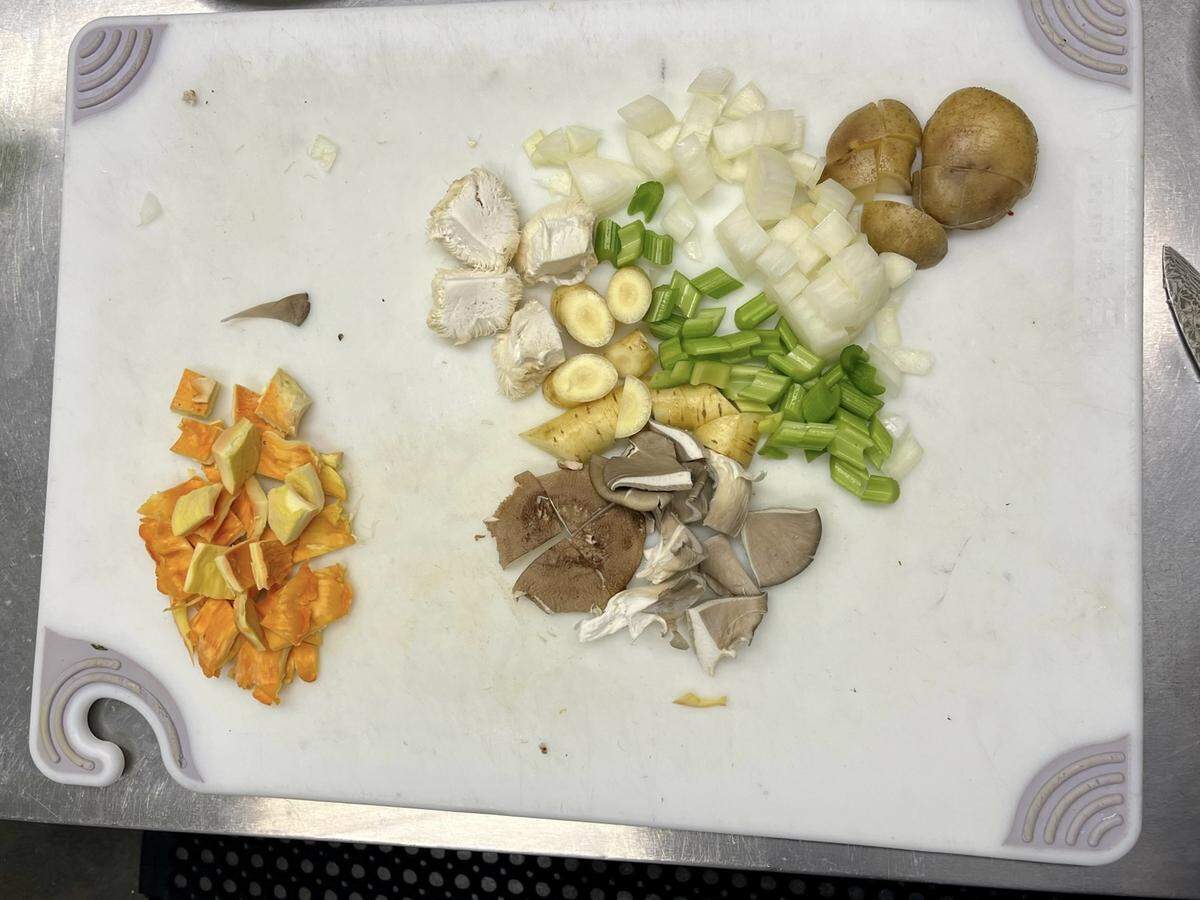
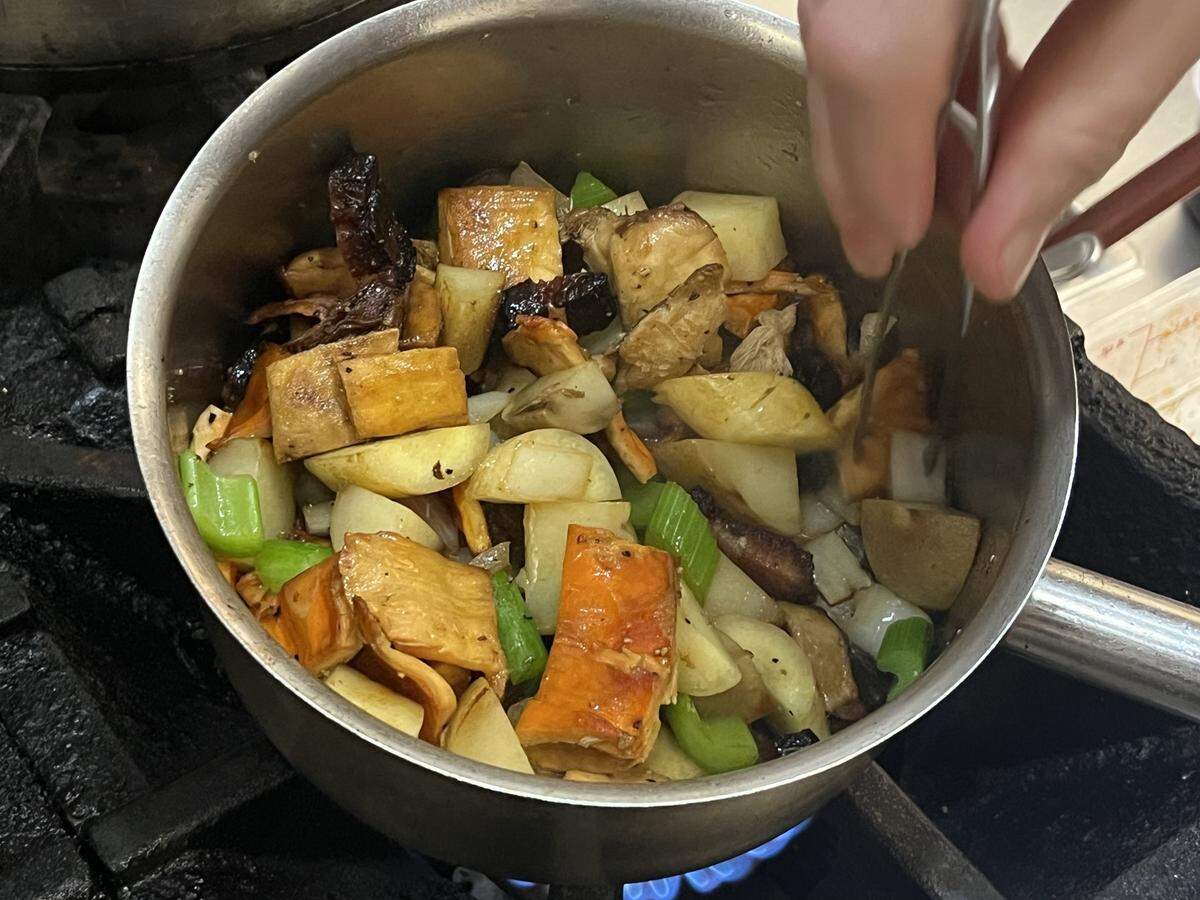
Step 12: While the stew simmers, the Wagyu beef is seasoned with salt and pepper, and placed on the cast iron until the crust is strikingly dark, but the interior is a blushy red. The Wagyu then rests.
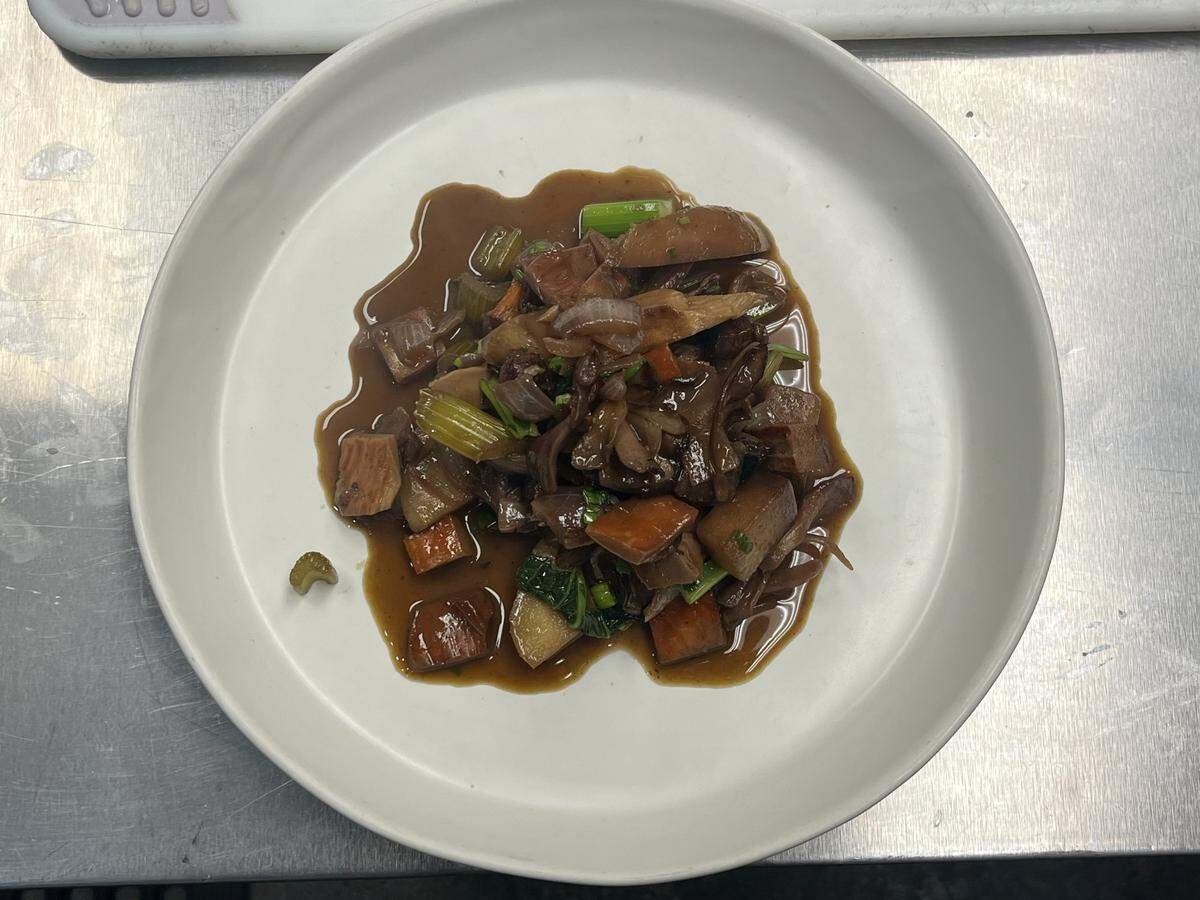
Step 13: After the vegetables have softened and gain a vibrant color, Diminich adds burgundy wine and reduces it down down, which helps emphasize the vegetables’ flavors.
.jpg "Untitled design (7).jpg")
Step 14: As the simmer comes to a close, a bit of butter and tender bok choy are mixed in to finish. Bok choy takes seconds to cook, so it’s added at the very end “so it still has life to it,” he said.
Step 15: It’s time to plate. The tender mushroom, bacon and veggie reduction is ladled onto a plate, then layered with cubes of eye-catching Wagyu to mimic the shape of beef you’d traditionally find in a bourguignon. “There has to be an element of nostalgia to the dish,” Diminich said.
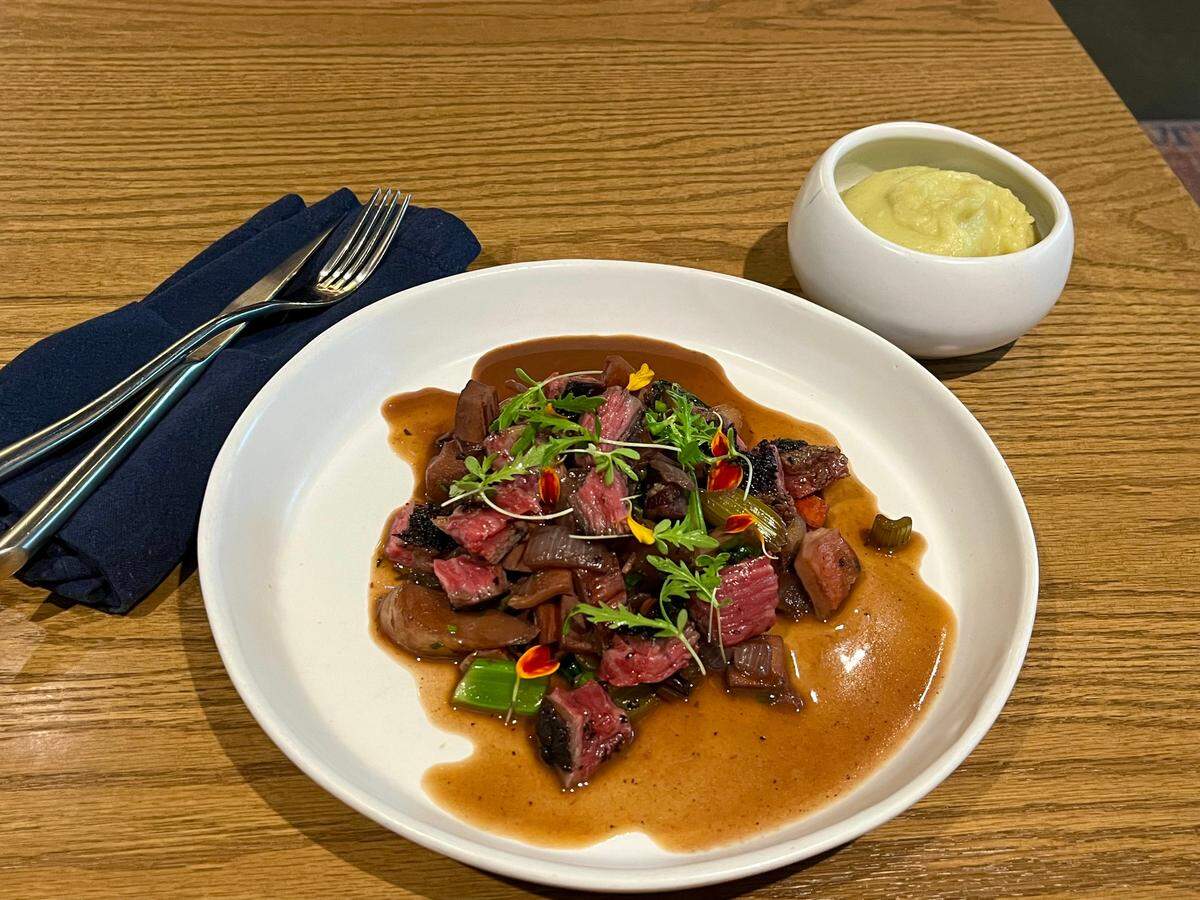
Step 15: Guests can now savor the mushroom bourguignon, paired with a silky potato leek puree.
Why farm-to-table?
Sourcing, buying and consuming fresh produce doesn’t just elevate flavor, like Diminich references. It also drastically impacts efforts toward sustainability, long-term health outcomes and equitable pay for farm workers.
Local purchasing inherently supports the local economy and improves economic mobility in rural areas. Thanks to reduced transportation time, the produce’s carbon footprint is lower.
“Living in North Carolina, we are at a wild advantage,” said Lisa Mathews, the interim executive director of local food nonprofit The Bulb. “Bringing things in from California, Texas, Mexico … that’s not sustainable eating, it’s not sustainable for the environment and honestly, in long term health outcomes, it’s healthier to eat food that is grown closer to home”
In 2022, North Carolina was ranked 8th in the country in terms of the value of its agricultural crops. At the same time, “it’s one that’s most endangered for losing its agriculture and farmland,” largely because of burgeoning developments, Ramirez said. Ballantyne, Waverly and SouthPark were at one point all farmland.
Another bonus the Piedmont offers is collaborative and grassroots farm culture, with organizations like Piedmont Culinary Guild leading the way.
Ramirez certainly feels those collaborative efforts. “I love being the mushroom guy, but there’s other mushroom guys in town,” he said, referring to Catawba Mushroom Partners and Charlotte Mushroom Works, with which he openly shares resources.
“I don’t look at it as competition, I look at it as friendship. … I make friends because I feel this city is big enough to support more than one mushroom grower.”
Uniquely Charlotte: Uniquely Charlotte is an Observer subscriber collection of moments, landmarks and personalities that define the uniqueness (and pride) of why we live in the Charlotte region.
This story was originally published November 7, 2024 at 5:00 AM.