What’s old is brew again: Charlotte’s beer-filled past is ever present in today’s scene
Quick, grab a glass from every brewery in Charlotte. Now, fill them all with beer, squeeze them together and take a nice family photo.
You could do it, but with dozens of breweries in the area, so many hoppy faces would be lost in the crowd.
It was easy, however, to get all of the city’s local craft breweries on the cover of “Charlotte Beer: A History of Brewing in the Queen City,” when it was published in 2013.
My last interview for that book was in 2012, when Jason and Jeff Alexander met me at Amélie’s in NoDa to tell me about their plans to open Free Range Brewing. In a bit of a full-circle moment, I’ll visit their brewery Thursday, Dec. 12 as part of the Levine Museum of the New South’s Southern Accents: Charlotte Loves Beer program.
We’ll be discussing Charlotte’s brewing history, so I grabbed a copy of the book to brush up. As you might expect, the book is woefully outdated as far as new breweries go. (Really, it was the moment it was printed.) But the historical information is sound. As I read through, I was struck by how many parallels there are between today’s brewers and those of the past.
Classic styles are classics for a reason
Before The Olde Mecklenburg Brewery released its flagship Copper, I’m betting most Charlotteans had never heard of an Altbier. Originating in Düsseldorf, Germany, the lagered ale is a hybrid style that put OMB on the map. And while it’s undoubtedly the most popular Altbier ever brewed in Charlotte, it wasn’t the first.
Almost two decades prior, The Mill Bakery, Eatery and Brewery served its Hornet Tail Ale alongside a menu of freshly baked breads, muffins and desserts (as well as lunch and dinner). The Altbier was one of the chain brewpub’s most popular: it won a bronze medal at the Great American Beer Festival in 1990 and a silver in 1995.
The best breweries offer more than beer
Today, breweries aren’t just about beer, though. Many of Charlotte’s breweries offer seltzers, cocktails, wines or even non-alcoholic beverages like coffee or hop waters.
Can you imagine a brewery being unable to produce beer, though? Mecklenburg Co. went dry in 1905, 15 years before national Prohibition — and the county stayed dry until 1945, despite Prohibition ending in 1933 with the passage of the 21st Amendment.
So how did Prohibition-era breweries survive?
Robert Portner Brewing Co. was the largest regional brewery in the South, but during Prohibition it closed many “depots” in Virginia, Georgia and the Carolinas. The Charlotte location lasted the longest, thanks to its production of “near beer,” malt extract and Mayfield’s Celery-Cola (which in 1910 was deemed to have “unhealthful amounts of cocaine and caffeine” by the Pure Food and Drug Administration).
The Brewing Experience, which opened in 1998, was a short-lived brew-on-premise establishment where people could brew their own beers on a small 12-gallon system. It was popular for private parties, corporate functions and weddings. Founder Scott Saffer also contract brewed; one of his most popular brews was the root beer he distributed to area restaurants, as well as the trolley system, which sold bottles. When I interviewed him for the book, Saffer joked: “If I had to do it all over again, I probably would’ve just focused on the root beer.”
Join the club: Community is critical
Today’s breweries have come up with creative ways to foster community. Run clubs are one of the most common ways to do this, with NoDa Brewing’s being the longest running (pun very much intended). Lenny Boy Brewing Co. welcomes the Charlotte Putting League in for disc golf on a weekly basis, and Mooresville’s King Canary Brewing Co. even has a Social Paddle Club. There are also bike clubs, yoga classes and trivia nights that bring people in on a regular basis.
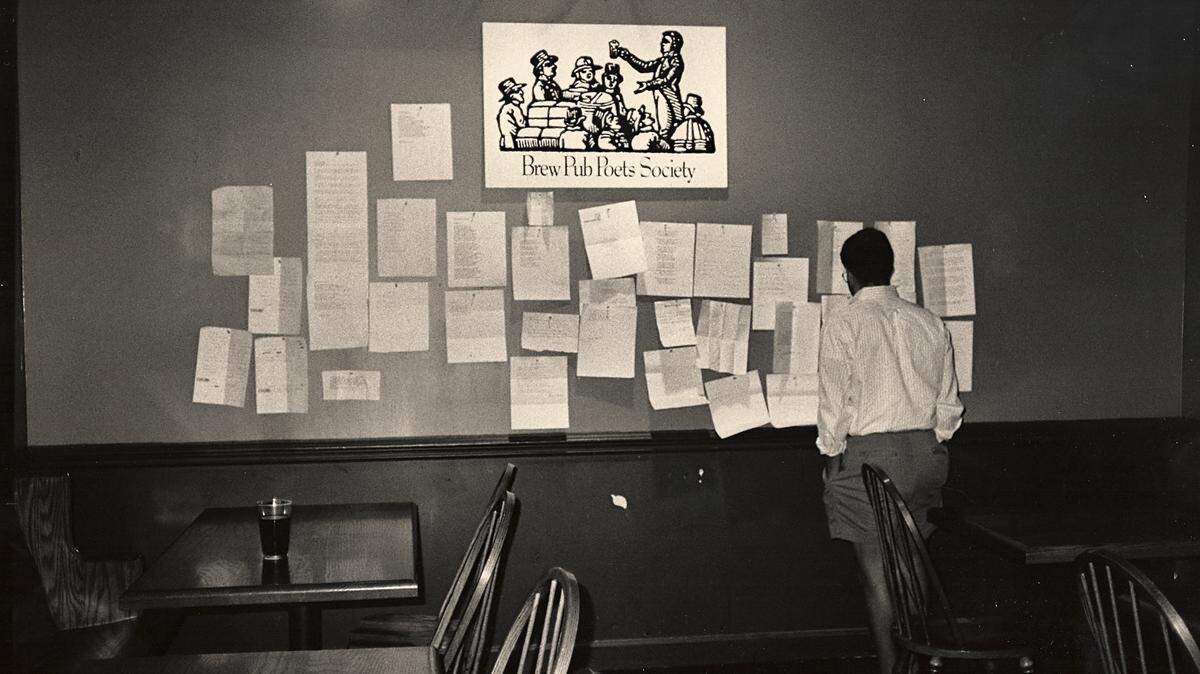
Dilworth Brewing, Charlotte’s first “microbrewery,” went a different direction. Founder Bob Binnion reached out to copywriter Jack Dillard about doing some marketing work for the brewpub, and Dillard in turn invited some of Charlotte’s most well known writers, actors and media personalities to become members of the Brew Pub Poets Society.
Many of them took him up on the invitation, showing up on the third Tuesday of every month to recite their verses and enjoy beers like the Albemarle Ale (which won a bronze medal at the Great American Beer Festival in 1992).
Dillard penned print and radio ads about the Brew Pub Poets Society, and in 1993 collected many of the group’s best works in “Once Upon A Frothy Brew: The Best of The Brew Pub Poets Society, Volume 1.” The close-knit group continued to meet long after the brewery closed (one of my proudest moments in beer was getting to join the group in 2013).
%20(1).jpg "20121129-Photo1 (1) (1).jpg")
Cans have always been cool
Cans are the preferred packaging of craft brewers today, but of course they’ve been around a long time. In the 1950s, the Charlotte Atlantic Brewing location was the only brewery in the Carolinas and boasted a canning line that could turn out three cans a second. It was a lot for the time and likely a large reason the Charlotte location was the last of the Atlantic breweries to close.
Before Charlotte’s current wave of craft breweries kicked off, a concept called Cans Bar and Canteen celebrated canned beers from 2006 to 2009. The three-story, ‘80s-themed bar not only served up popular domestic “tallboys,” but it actually brewed and canned its own beers, as well.
Want to learn more about Charlotte breweries past and present? Join Daniel Hartis at Free Range Brewing for Southern Accents: Charlotte Loves Beer on Thursday, Dec. 12.
Uniquely Charlotte: Uniquely Charlotte is an Observer subscriber collection of moments, landmarks and personalities that define the uniqueness (and pride) of why we live in the Charlotte region.
This story was originally published December 9, 2024 at 6:15 AM.