Why doesn’t University City have a better restaurant scene, given all its growth?
For more than a decade, Morgan Webb escorted visiting employees around Charlotte as part of a corporate relocation program for the financial services company Equitable.
She showed them where they might work, live — and go out to eat.
But she says that she quickly learned to avoid dining near Equitable’s offices in the University City area, opting instead for areas like Plaza Midwood or Birkdale Village.
The reason was simple.
“On one of our first tours, we tried a restaurant over there,” Webb recalls, referring to the lakefront development then known as The Shoppes at University Place.
“And everybody was like, ‘If this is what you’re showing me, I will never move to Charlotte.’”
It’s the kind of response that points to a long-standing paradox in University City.
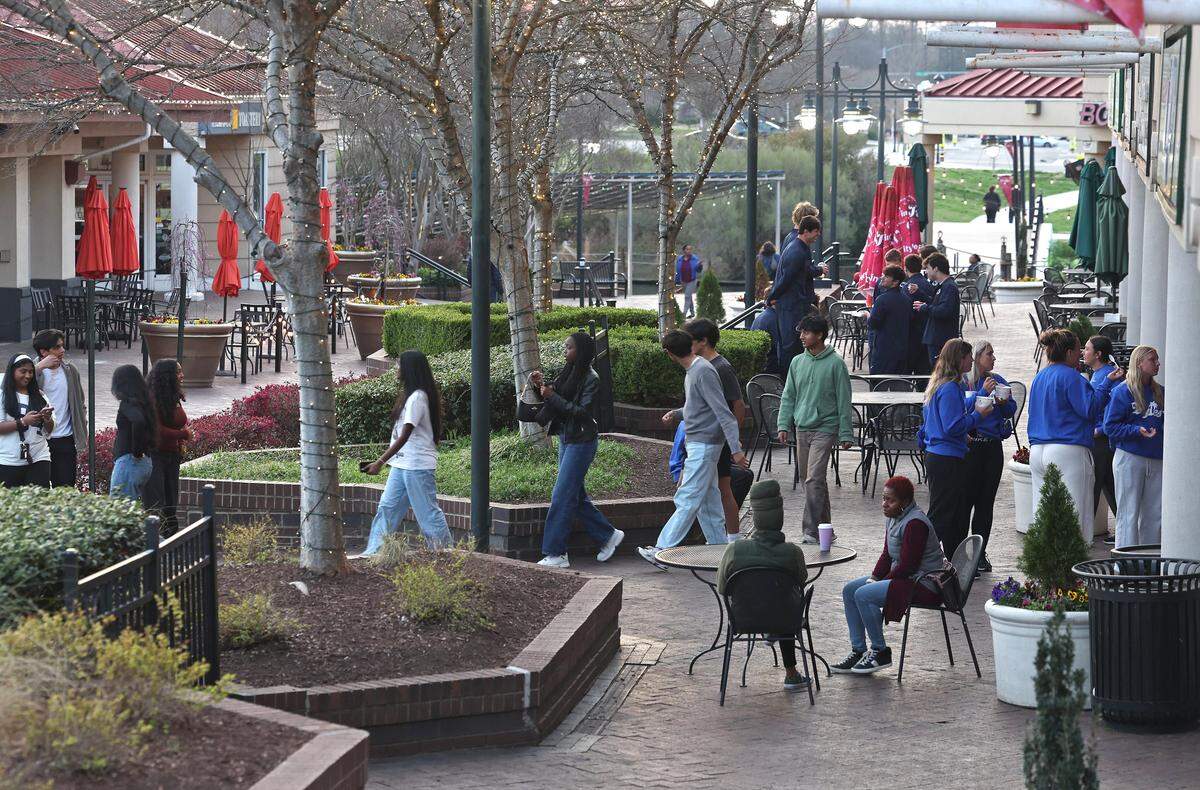
The district that dominates Charlotte’s northeast quadrant has nearly everything a thriving restaurant district should need: more than 160,000 residents — roughly the population of Cary; more than 100,000 employees on corporate campuses such as Wells Fargo’s CIC complex; tens of thousands of students at UNC Charlotte; thousands of new apartments rising each year; and among the busiest streets in North Carolina.
Yet University City has never developed the kind of independent dining culture that has flourished in other parts of Charlotte.
For many local diners looking for a unique dining experience, it remains one of the last places they think to go. The question is: Why?
And will that ever change?
‘We’re not a five-second city’
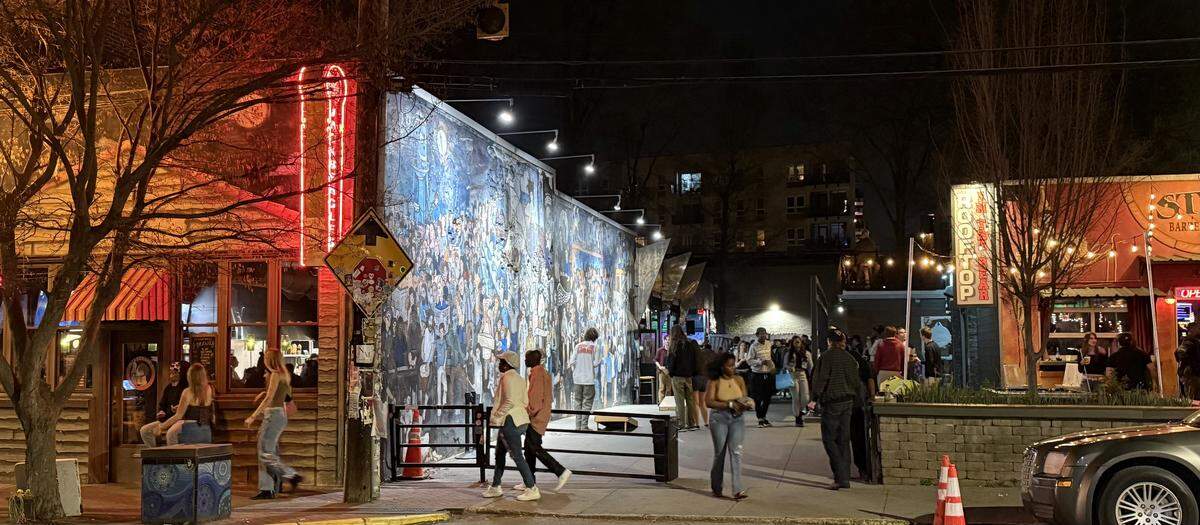
On a typical Friday night in South End, hundreds of diners spill onto sidewalks, moving from restaurant to bar to brewery without ever getting back into their cars.
In University City, dinner often works differently. People drive to a specific place, eat, then drive home.
One of the most common explanations for this (and for the University City restaurant scene’s shortcomings in general) has to do with how dining districts tend to develop in the first place.
While many of Charlotte’s most popular ones grew around dense, walkable clusters of restaurants and bars — places where visitors can park once and spend the evening moving from one establishment to another — University City evolved differently.
Much of it took shape in the 1980s and ’90s, when large parts of the area were still farmland, and development followed a suburban pattern: sprawling office campuses, shopping centers heavy on nail salons and fast-casual food options, and wide arterial roads designed primarily for cars. Independent sit-down restaurants that opened there often did so in isolated retail strips or standalone buildings rather than building toward a critical mass of similarly minded operators that can help draw diners to an area in the first place.
As Keith Stanley, president and CEO of University City Partners, explains it: “We’re not a ‘five-second city.’”
That is, it’s not the kind of place where someone can, within seconds, choose between cafés, restaurants, parks or live music without much planning.
Economics and demographics also play a role.
University City generally ranks as a below-average income area compared to the city as a whole — and a big reason for that is UNC Charlotte and its more than 30,000 students, who feed into a customer base that is both price sensitive and highly seasonal, since they often flee the area during winter and summer breaks.
As such, for developers and property owners, national chains and fast-casual operators often can represent the safer financial bet.
“Supply doesn’t create its own demand in restaurants,” says Matthew Metzgar, a managerial economics professor at UNC Charlotte. “It’s the other way (around). You have this certain population, and this income, and their preferences, and then things get built to service that population, and the supply follows the demand.”
In other words, restaurants tend to follow the market that already exists rather than trying to start one from scratch. And in a place like University City, that has historically made ambitious independent restaurants the riskier bet.
Over time, dynamics like that helped shape the area’s reputation among restaurateurs.
John Hadley, a Charlotte restaurant entrepreneur turned commercial broker with The Nichols Company, remembers being at the mercy of it in 2006, when he helped open a location of the Atlanta-based fast-casual concept Doc Green’s in the Grand Promenade development near UNC Charlotte.
It lasted only about a year.
“It used to have a stigma back when I was doing the Doc Green’s thing,” Hadley says now. “It’s where restaurants went to die.”
Today, he says, “I feel like the density’s there, and it’s a very good market. But I’ve looked there quite a few times — and for whatever reason, whatever restaurants I’m working with didn’t work out, or, they didn’t want the University area.”
Once a reputation like that takes hold, it can become a self-fulfilling cycle, shaping where independent chefs and restaurateurs decide to take their next gamble.
A reputation that lingers
The city’s best-known dining districts — neighborhoods such as Dilworth, South End, Plaza Midwood, and NoDa, or mixed-use developments like The Bowl at Ballantyne or Birkdale Village in Huntersville — have developed reputations that draw restaurateurs looking to tap into an established dining scene.
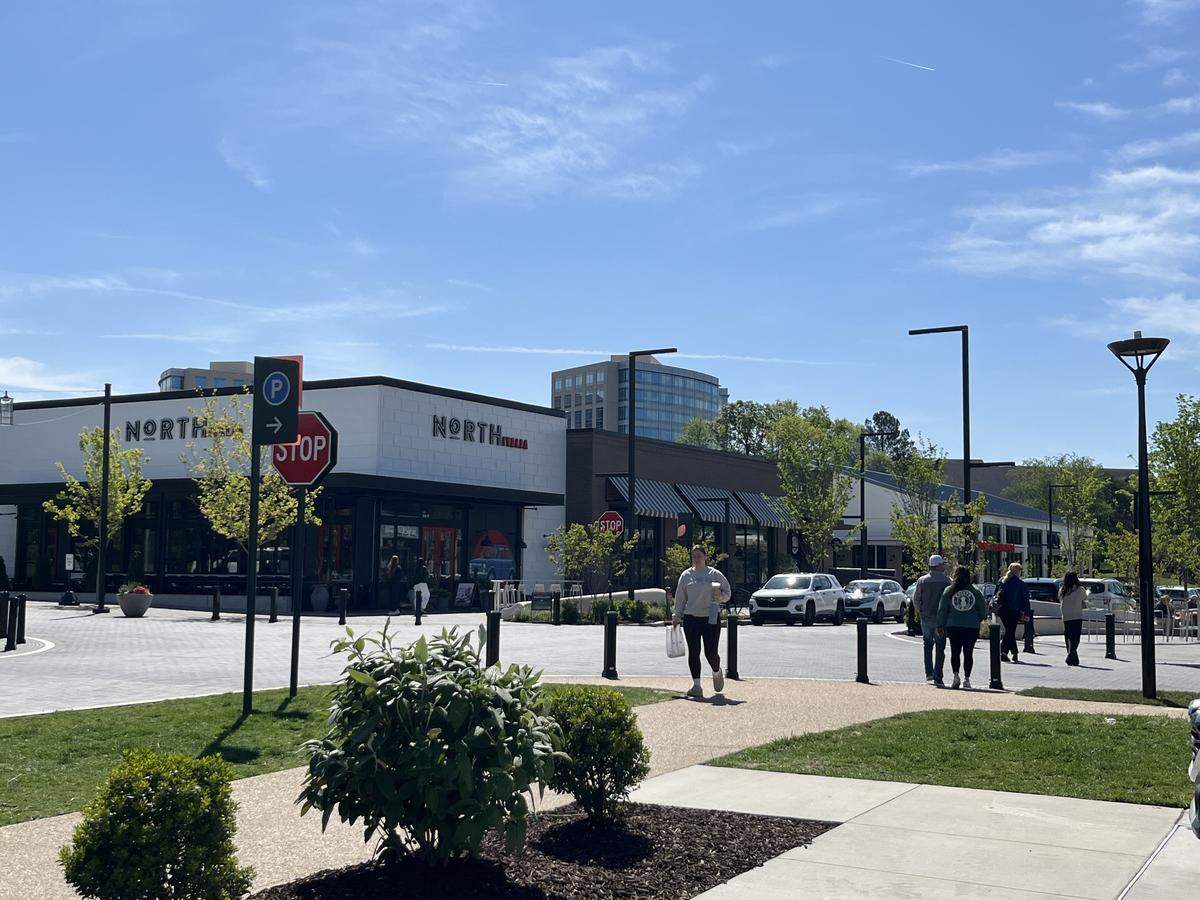
In those districts, a few early operators took a chance, opened and succeeded. Others followed, hoping to tap into the same built-in audience, creating a virtuous cycle.
“You can look throughout Charlotte at these little sub-markets, and there are places where it’s like, OK, well, that was the one that showed that this’ll work, or that’ll work,” says Charlotte restaurateur Patrick Whalen, CEO of the 5th Street Group, which operates Church and Union and La Belle Helene in uptown.
University City has a chance of truly tipping, he says, only if somebody steps up to be “the one.”
Few restaurateurs appear eager to be that pioneer; Whalen’s group isn’t looking to open anything there. However, he says, “if you wanted to make it work, you either go one of two ways. One is you find the middle-est of the middle-of-the-road-‘cool.’ Right in the middle of the fairway, something everybody’s gonna like. Or you get some wealthy benefactor to say, ‘I’m gonna buy an acre in the woods, I’m gonna build a f------ crazy house, it’s gonna be a dope-ass restaurant, and it’s gonna make this whole area famous.’”
Such a gamble doesn’t appear to be imminent. Of the several prominent and successful restaurant owners in the area who shared thoughts with the Observer for this story, none said they had plans to give consideration to University City.
“I haven’t heard a lot of people saying, ‘Hey, this is really a hot area. You should go look at it,’” says Frank Scibelli, whose Charlotte-based restaurant group includes area-favorites like Mama Ricotta’s and Midwood Smokehouse. “That’s not a negative, and I hope it’s not portrayed as a negative. It’s just — I haven’t.”
Katy Kindred — who with her husband Joe runs acclaimed restaurants like Kindred in Davidson and Albertine in uptown — offered a similar assessment.
“We haven’t looked at that part of Charlotte, no,” she says. “Not to say that we wouldn’t, it just hasn’t been on our radar.”
By and large, the consensus among operators seems to be that the perception of the area’s restaurant scene is not so much bad as it is non-existent — shaped over time by development patterns, reputation and broader perceptions about the area. But here’s the reality: University City does have plenty of well-regarded independent eateries.
They just seem to be scattered across a wide landscape that doesn’t register as a dining district.
And that invisibility has shaped how many Charlotte diners think about the area.
‘Obviously there are some chains’
Dustin Dubay, a 33-year-old management consultant who lives in the SouthPark area, treats dining almost like a sport. On Google Maps, he keeps a growing collection of starred restaurants and color-coded lists across the Charlotte region — places he’s tried or hopes to try someday.
But one part of the map stands out for a different reason. “That —” he says, pointing to the University City area — “was, like, a big blank for me.”
“I’ve been up there, and obviously there are some chains. But I don’t know that I could recognize an independent restaurant.”
He’s not alone in that sentiment. The Observer spoke with or received written thoughts from a diverse collection of dozens of Charlotte-area residents about their perceptions of University City’s food scene, and most described the same blind spot.
A woman who was based at Wells Fargo’s CIC campus in University City for decades named Longhorn Steakhouse and Red Robin — both national chain restaurants — when asked about places she remembers enjoying most when she worked in the area. A Huntersville man said the last two times he ate in the University area were 1) at one of the cafeterias on the UNC Charlotte campus, while his son was a student there; and 2) at Chipotle.
His overall assessment is simple: “Pickings are slim.”
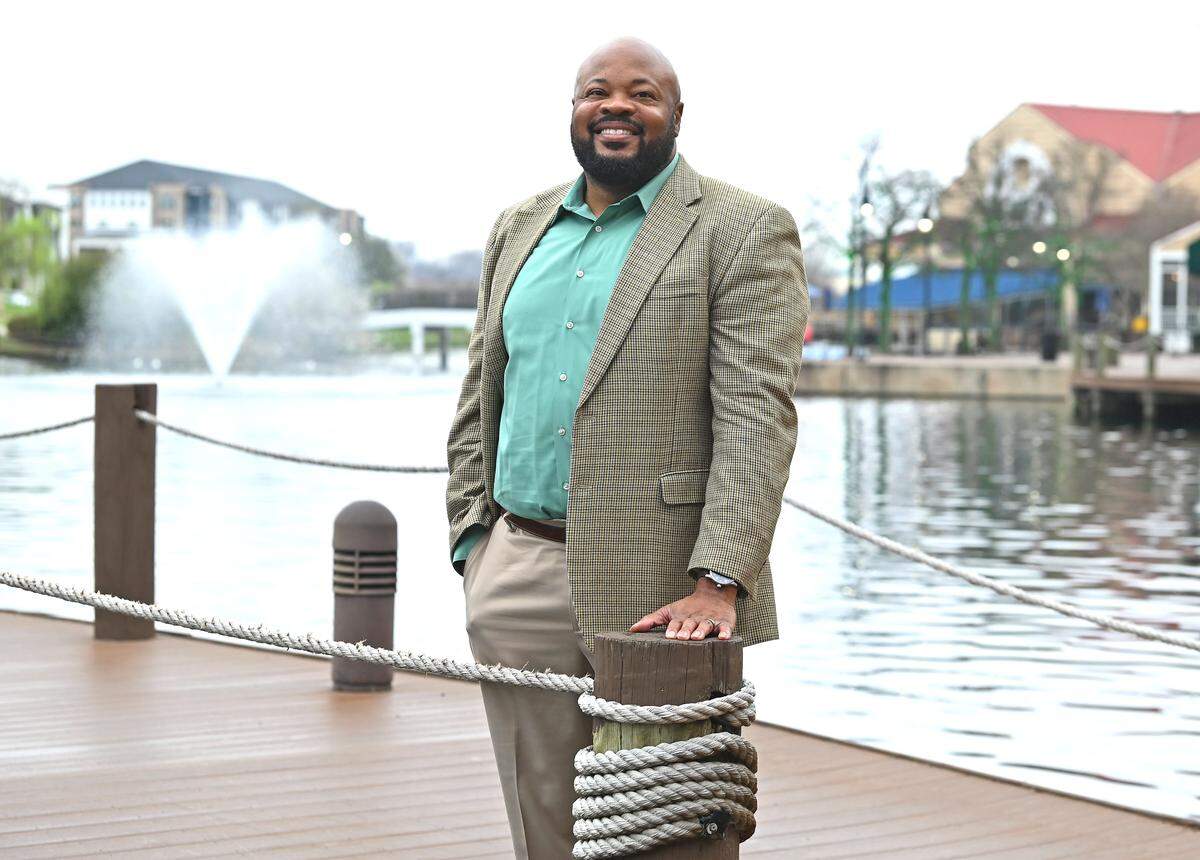
In a way, though, it’s more complicated than that. Keith Stanley, the University City Partners CEO, estimates that the area is home to more than 140 restaurants, which would represent roughly 12% of Charlotte’s restaurants. So, on paper, pickings actually aren’t that slim. They’re just chain-dominated.
At the same time, he points out that there are a fair number of independent restaurants people would probably seek out if they knew about them.
Yet unlike the hotter areas of town, many of the best-reviewed concepts are haphazardly arranged across University City’s strip centers, office park developments and standalone buildings tucked along busy thoroughfares.
Even people who live or work nearby often drive past some of the area’s best independent restaurants — places like Anatolia Cafe & Cuisine off West W.T. Harris Boulevard, Tora Izakaya on University City Boulevard, and Fumée on West Mallard Creek Church Road — without realizing they’re there.
In the city’s most popular neighborhoods, or even in suburbs with distinct downtowns (e.g. Belmont, Matthews, Davidson, Harrisburg), visitors often arrive without a specific destination in mind and simply see what catches their eye.
But in University City, which is largely devoid of places with meaningful spontaneous foot traffic, it’s much harder for restaurants to feed off one another’s success — the type of dynamic that helps turn clusters of eateries into full-fledged dining scenes.
Still, there is one place in University City where that kind of environment may finally be taking shape.
The Boardwalk’s second chance
The development, known for years as The Shoppes at University Place just off North Tryon Street, is what many longtime residents simply call “the Boardwalk.”
And just recently, courtesy of new owner Red Hill Ventures, it took that on as its official name.
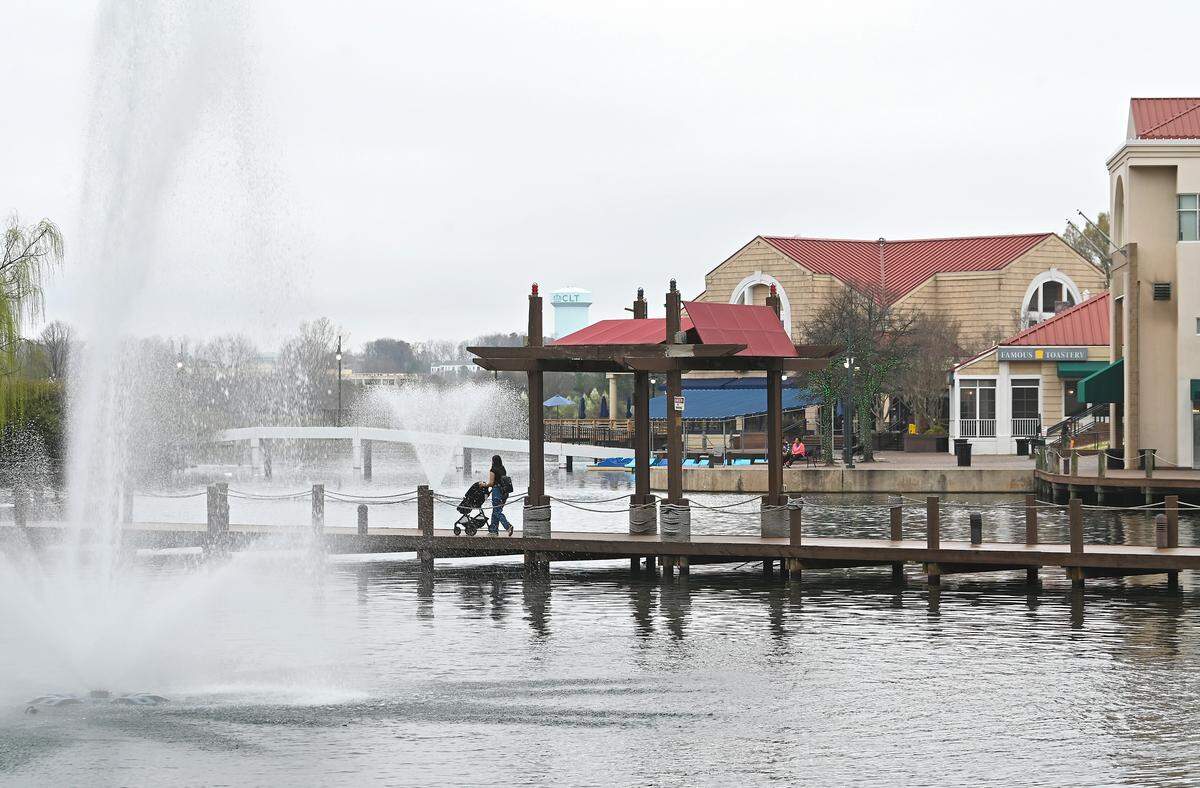
For decades, The Boardwalk has been one of the few places in University City where places to eat, drink and be merry sit close enough together that diners can park once and walk between them. Its defining feature, by far, is a 10-acre lake with a circumference of over a mile.
On a pleasant evening, it can feel like a different version of University City than most Charlotte diners picture.
People stroll along the footpath that wraps around the water. Office workers linger after happy hour. Families gather outside restaurants or play on the lake in rented paddleboats.
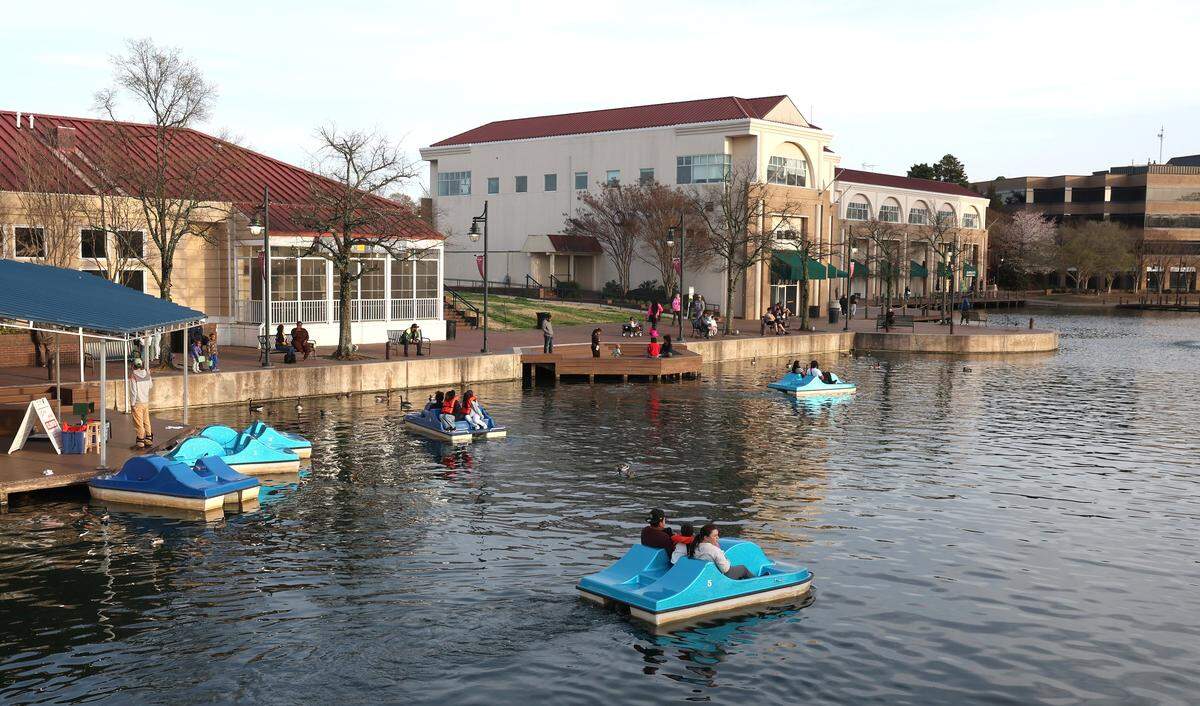
It is the closest thing University City has to a downtown.
But in the more than 35 years since it opened in 1990, the lakefront development has become dated cosmetically — with deficiencies ranging from inconsistent lighting to mismatched walkways — and developed a reputation for security concerns.
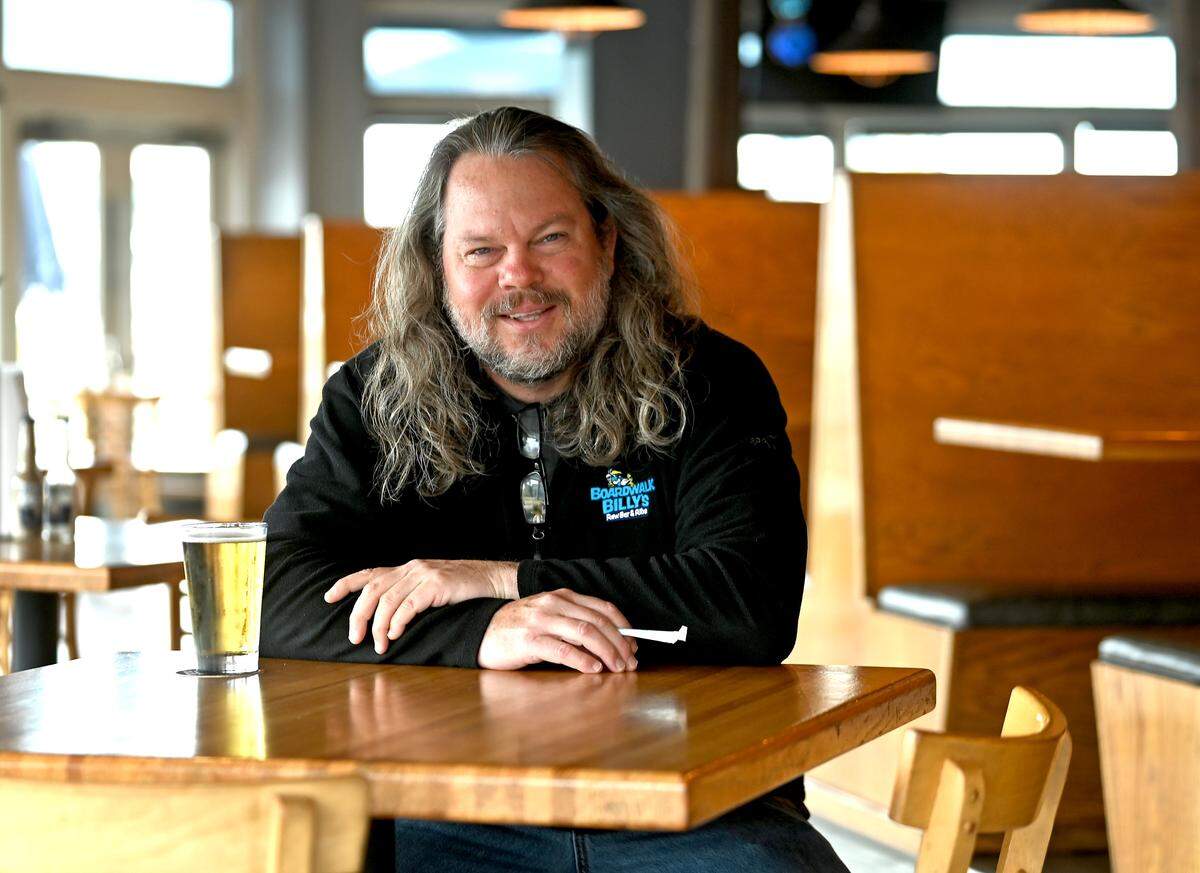
The previous owner, CASTO, brought the lakefront area to “the low point,” says Jamie Jenkins, co-owner of Boardwalk Billy’s, one of its most venerable, most successful, and most beloved restaurants (named best bar by CharlotteFive readers in 2023), a beach-themed seafood-and-BBQ-leaning joint that sits right on the water with a sunset-ready view.
“They didn’t really do much more than replace the shake siding that fell,” he says. “They were just grinding it out for money and not putting anything back into it.”
So he and other tenants are looking forward to positive change, which Red Hill Ventures CEO Todd Collins says is coming.
The revitalization plan, he says, involves giving the plaza a $5 million facelift while also increasing the occupancy rate, which was hovering just below 70% at the time the acquisition was made last year.
As part of the latter goal, Collins says, they will relocate breakfast/brunch/lunch lakefront spot Famous Toastery to another part of The Boardwalk to make way for a Brixx Wood Fired Pizza + Craft Bar. Although Brixx operates a mix of corporate and franchised locations, its takeover of that space would make the lakefront livelier by putting patrons on the patio at night.
The Boardwalk is also generating fresh buzz thanks to the popular soul-food restaurant Sol’Delish, which opened its second University City location last September.
Mike Winslow, Boardwalk Billy’s’ general manager, believes these types of moves could help The Boardwalk evolve into a trendier destination. “Give it five or six years,” he says, “and that stigma may be gone.”
The question now is whether the revival of one development can do what no restaurant, landlord or planner has yet managed to do: make University City feel like a dining destination rather than an afterthought.
‘Sooner or later, it’ll probably get there’
Stanley, of University City Partners, often thinks about a moment that hasn’t arrived yet.
One day, he says, The New York Times will return to Charlotte to produce a fresh installment around the city’s offerings, having last featured us in its travel-oriented “36 Hours” series coming up on a dozen years ago. When that happens, Stanley hopes the itinerary will expand beyond Dilworth, NoDa and Plaza Midwood.
He hopes to see a paragraph that begins with something like, “Grab a Lynx light rail train from uptown to the burgeoning restaurant scene in University City, where you’ll find ______ at ______.”
Right now, it’s just a dream.
But with new investment arriving around the lakefront and thousands of new residents moving into the area each year, he and other stakeholders think it could come true.
In fact, it might start with a place like Sol’Delish. On a recent Sunday afternoon, around 4:30, a line of diners began forming out front — and as soon as the restaurant opened at 5, the tables filled up quickly. Anyone who showed up after that was told the wait would be about an hour.
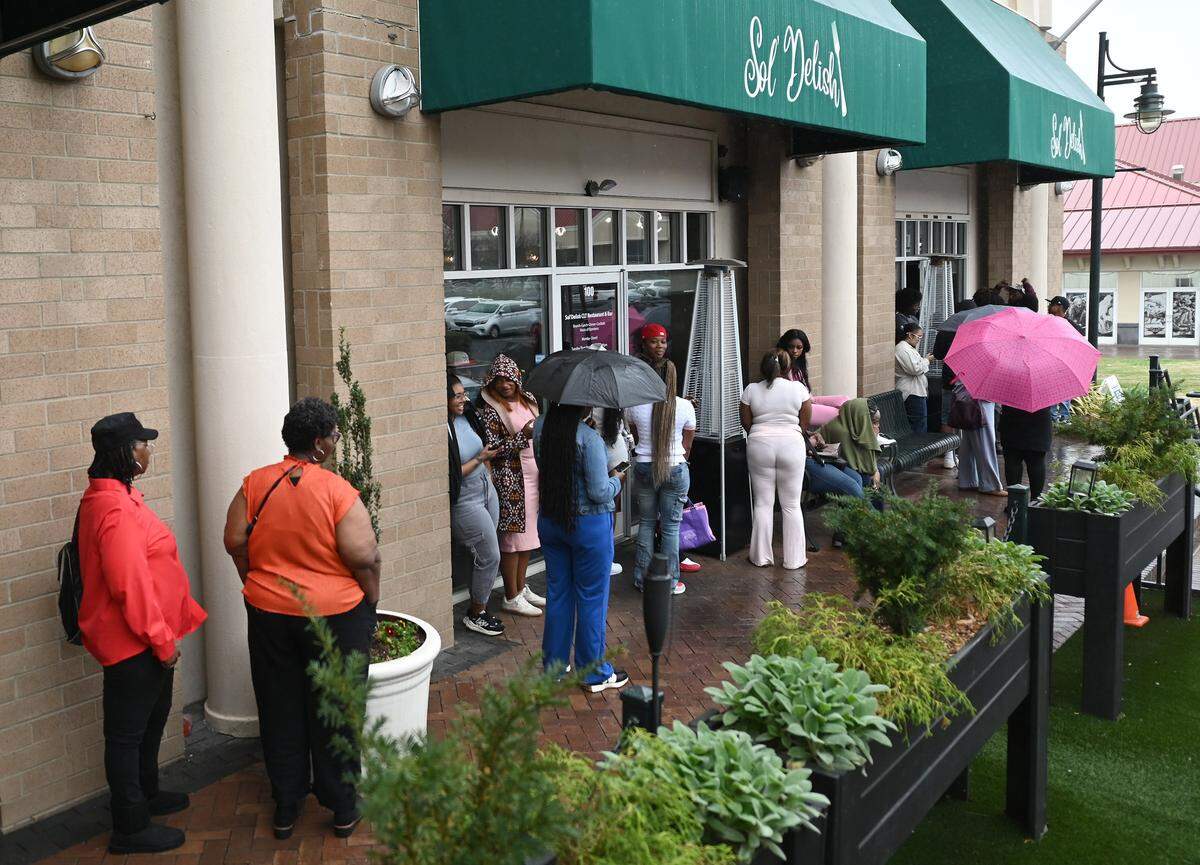
It’s a typical scenario for Sol’Delish. It is also, for Sol’Delish co-owner Latell Brice, affirmation that he set up shop in the right place.
When he and his business partner began looking to expand from their tiny nearby space on North Tryon to a larger restaurant, they initially considered moving to Steele Creek. But former Charlotte City Council member Renee Johnson, a frequent customer, encouraged them to stay in University City and helped connect them with the vacant lakefront space at The Boardwalk, where Ciro’s Italian Restaurant had closed during the pandemic.
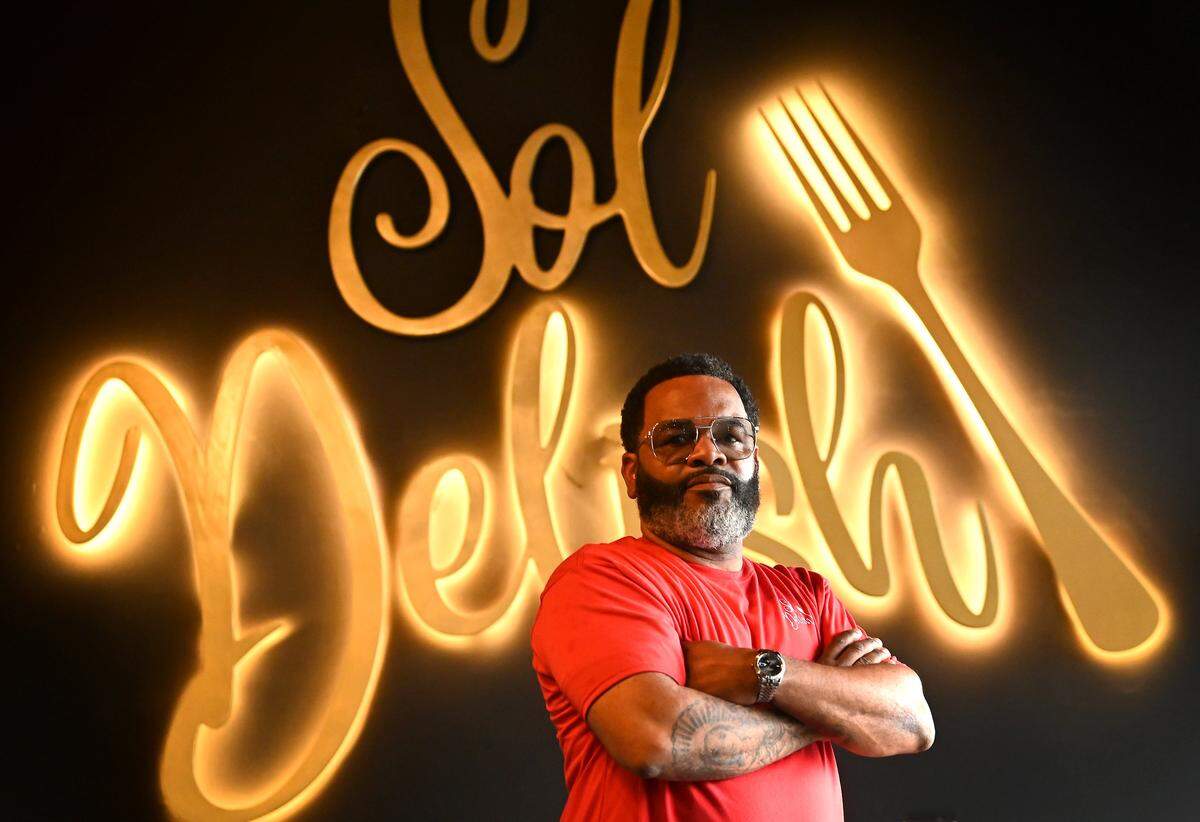
In truth, Brice didn’t need much convincing. A University City resident for nearly 16 years, he says he’s always believed the area could grow into a true dining destination.
And “sooner or later,” he says, “it’ll probably get there.”
Sooner or later, he believes, more independent operators like him will give people from all over Charlotte — perhaps even beyond it — a reason to say something you don’t hear very often:
Hey, let’s go try that new place in University City.
This story was originally published March 24, 2026 at 5:00 AM.