Charlotte is losing The Great Westside Fish Fry. Here’s what’s staying
Our Uber driver told us to “have a great day” when he dropped us off at The Great Westside Fish Fry, but he didn’t need to. As soon as I stepped out of his Honda Civic and caught a whiff of what was cooking, I knew it would be.
I thought back, right away, to the fish fries I went to as a kid.
Most were held at church, which meant the price of fried fish was often sitting through an extended sermon led by a long-winded pastor. It was always worth it anyway.
I’d go straight for the biggest piece I could find and a scoop of coleslaw about the size of my fist, then cover the fish in hot sauce (Texas Pete, always) until it barely looked like fish anymore.
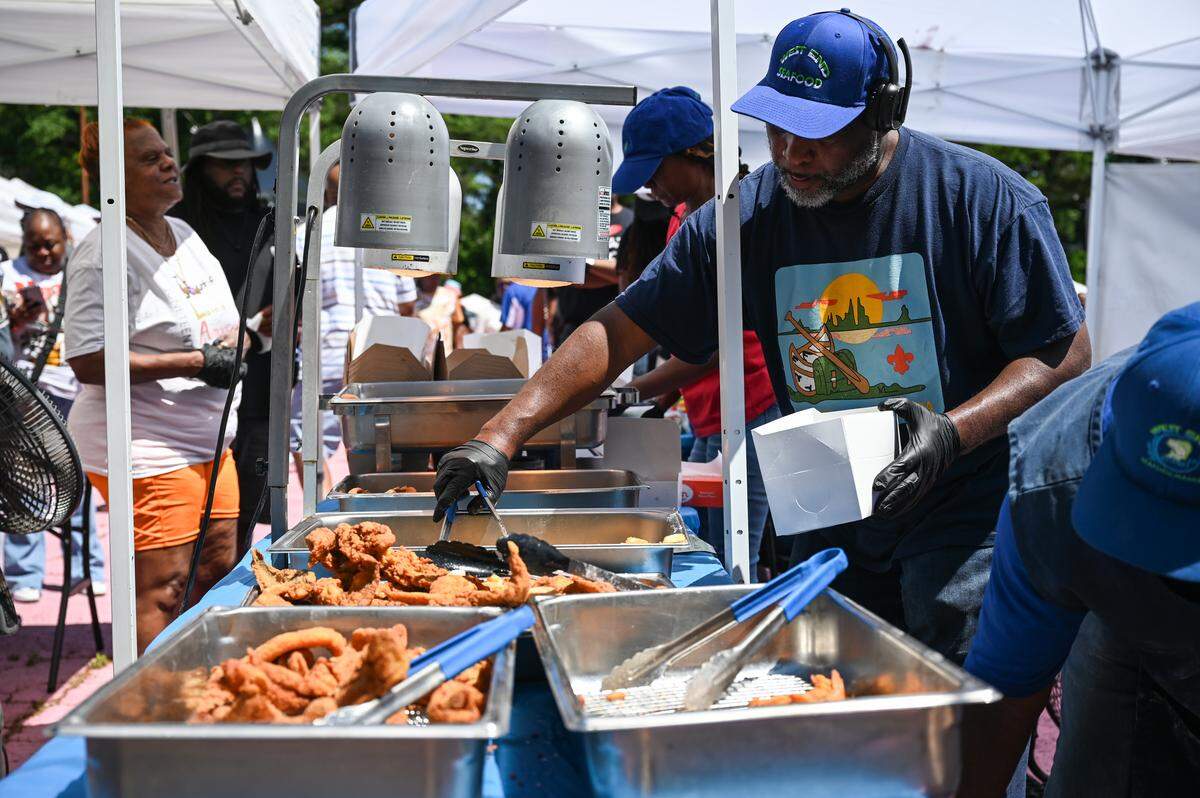
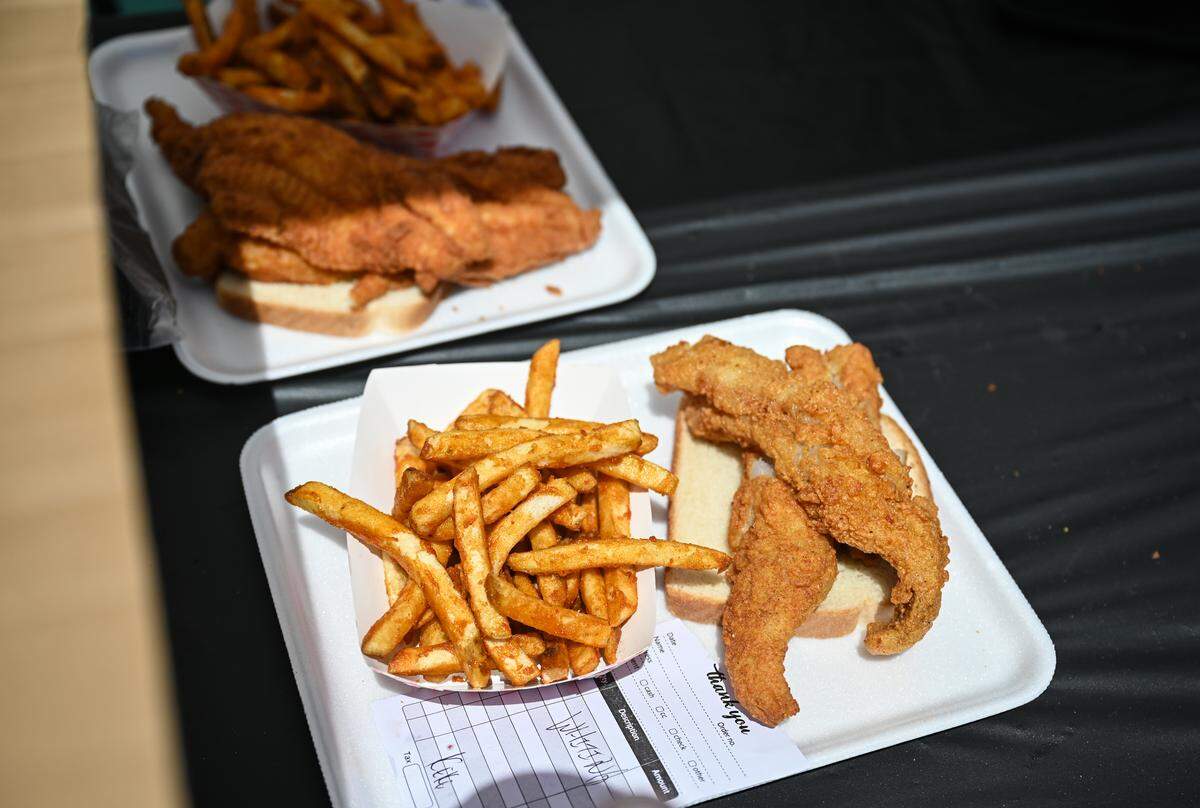
That’s what I did with Uncle Gene’s Fish Sammich from Jimmy Pearls at the fish fry Saturday.
If Jimmy Pearls sounds familiar, it’s because it used to be the seafood spot in 7th Street Market that closed in 2024. It was run by James Beard Award semifinalists Daryl Cooper and Oscar Johnson, who has since started a breakfast pop-up called Biscuit Jam.
The “Fish Sammich” came with fried fish, two slices of white bread, Jimmy sauce, field pea slaw and hot sauce. I found a standing table nearby, already crowded with extra hot sauce packets – never a shortage.
The fish itself was tender and flaky, with a light, well-seasoned crust. I meant to think more about it, but I ate it too quickly.
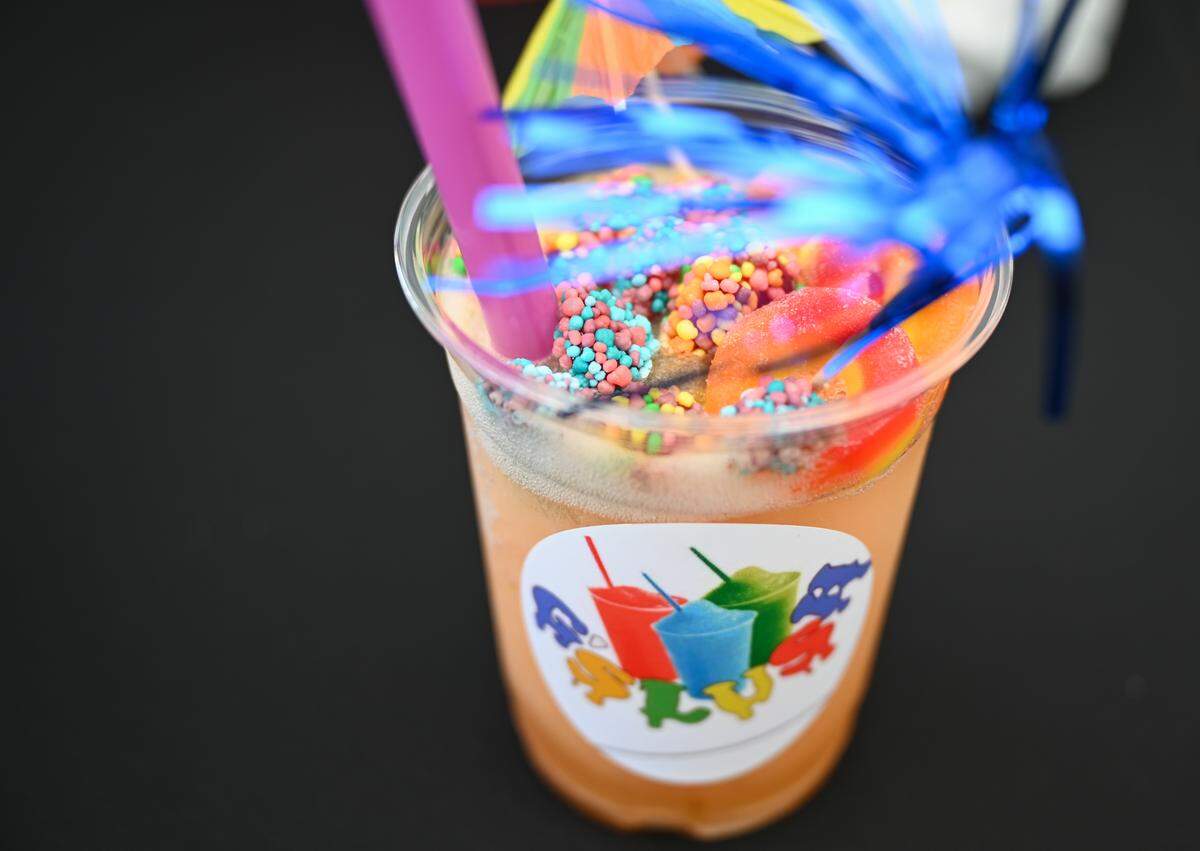
It was 90 degrees that day, which made the cup of lemonade (which was heavy on the sugar and tasted amazing) less refreshing than it sounded in the moment.
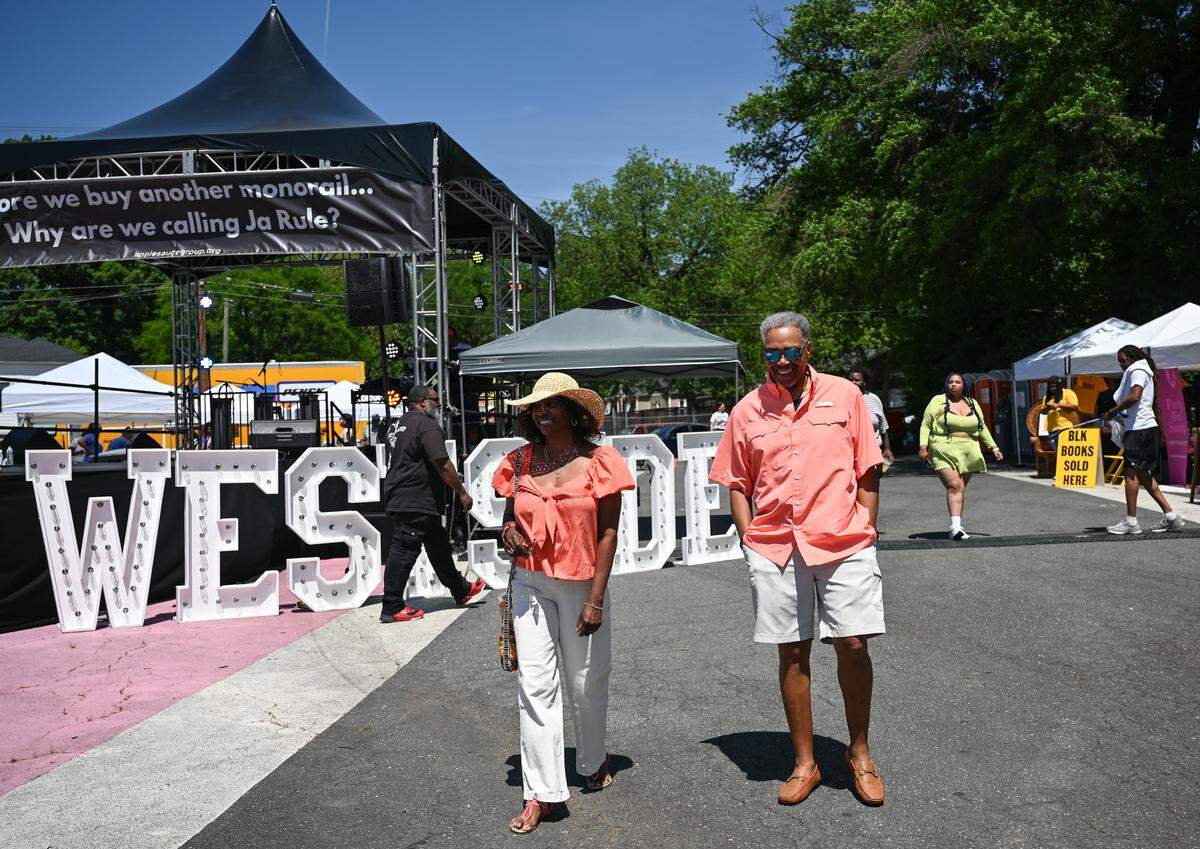
Afterward, I stepped into the shade and took a break from the sun, then wandered through booths with art, fashion, books, civic groups, and entertainment, including a virtual reality racing game that looked more fun than I felt like admitting.
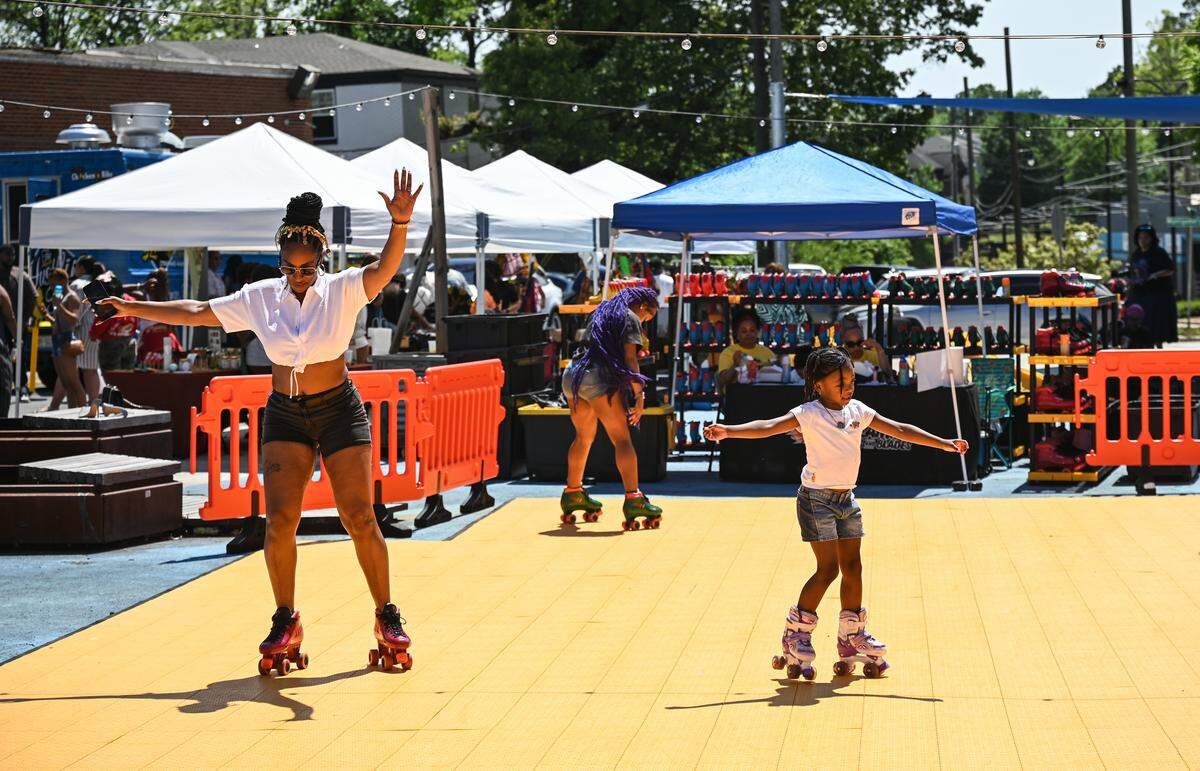
I even tried roller skating, something I never quite got the hang of as a kid. That became clear within seconds of putting the skates on. To be fair, the rink was on a slope, which didn’t help anyone.
It was my first time at The Great Westside Fish Fry. It will probably be my last.
The last fish fry, for now
Event organizer Winston Robinson recently told CharlotteFive this iteration of the fish fry would likely be the last. Though he didn’t give a reason, he didn’t understate the importance of the event.
“This thing started as just a gathering,” he said. “Now it’s five years of building community joy. That’s a flex.”
Fish fries have long held a central place in Black Southern life, shaped by a mix of necessity, tradition and community care. In a region where access to resources was limited for much of Black history, they became an efficient way to feed large groups of people.
Over time, they grew into something more than just a meal. They became gatherings where families, neighbors, and church members could come together, talk and stay connected.
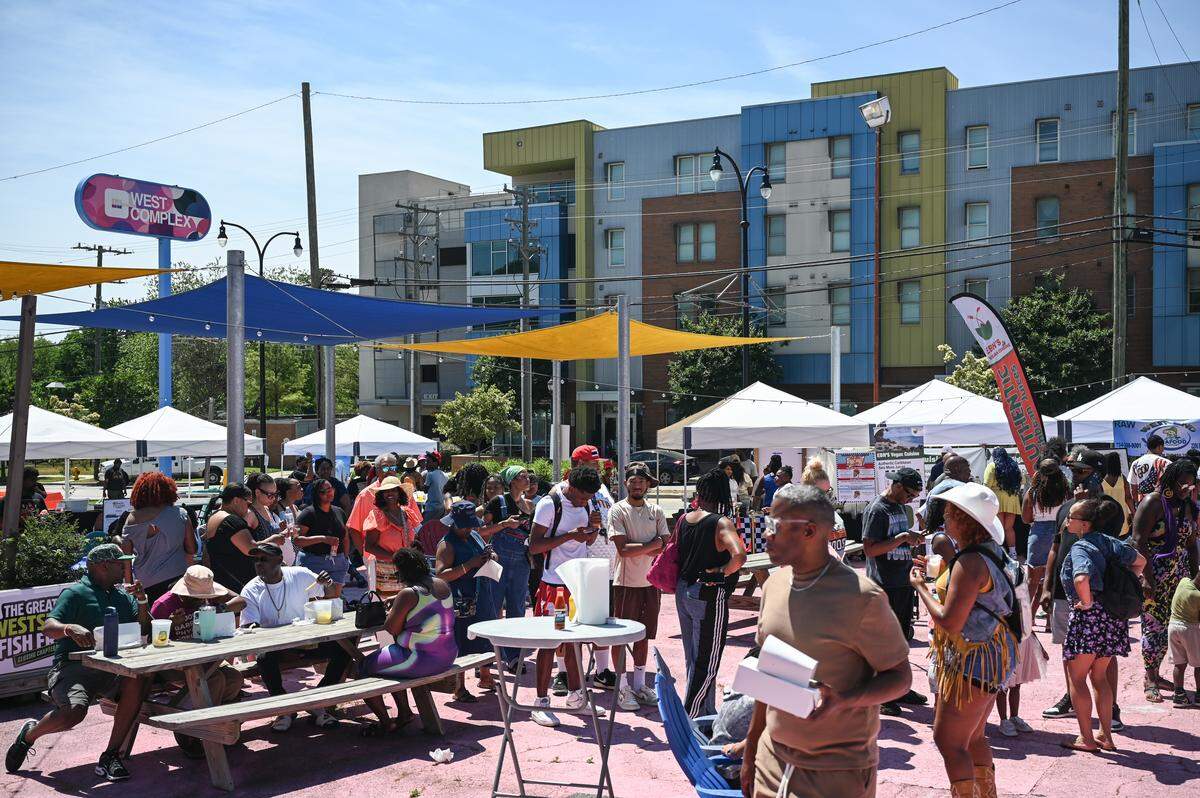
In Charlotte’s West End, long a historically Black neighborhood where the fish fry was held, that tradition has carried extra weight. Events like the fish fry built on that legacy, bringing in food, music and local culture in a public, shared space.
As the neighborhood changes through gentrification, those kinds of gatherings take on a sharper meaning. When they disappear or move, it isn’t just the loss of a festival – it’s the fading of one of the few remaining spaces where that older version of community life is still visible and actively practiced.
That’s why the uncertainty around the fish fry matters. It sits alongside a broader pattern in Charlotte, where longstanding Black cultural touchpoints, such as the CIAA Tournament’s departure from the city and the disappearance of events like Spring Fest and Culture Jam, have shifted elsewhere or evolved into something less rooted locally.
What lingers after the smoke clears
Even if this was the last Great Westside Fish Fry, it doesn’t really end there.
What stays is less tangible – the memory of it, the taste of it, the feeling of being in a place built around food and people and shared time in the heat. For many, fish fries like this one are less about the event itself and more about what they represent: a kind of gathering that doesn’t ask much beyond showing up.
In that way, the legacy is already in place. It lives in the church fish fries that still happen every spring, in backyard fryers set up on folding tables, in the quiet repetition of people coming together over something simple.
Even as Charlotte’s West End continues to change, those patterns don’t disappear so much as they shift, moving to new blocks, new spaces and new versions of the same idea.
And as the neighborhood evolves, so too does the possibility that events like this will return in different forms. Growth doesn’t erase culture on its own; it often reshapes where it shows up.
The West End may look different in the years ahead, but the instinct that built the fish fry, and the pull toward gathering, feeding people and making a day out of it, has a way of finding its way back.
This story was originally published April 20, 2026 at 9:15 AM.