I visited Boss Hog BBQ during its final days. It served one last sense of home
I didn’t mean to linger at Boss Hog BBQ in Sherrills Ford on Tuesday. The plan, in my mind, was simple: Eat, report back, leave. But the parking lot suggested a different story — one that had been unfolding there for more than three decades.
The restaurant, which opened for business in 1989, recently announced it will close on the Fourth of July, CharlotteFive reported.
The announcement comes as the 7.65-acre tract the eatery sits on is under contract, a spokesperson for Ascent Real Estate Partners, the Charlotte-based firm behind the listing, confirmed to CharlotteFive. The sale price for the property was not disclosed.
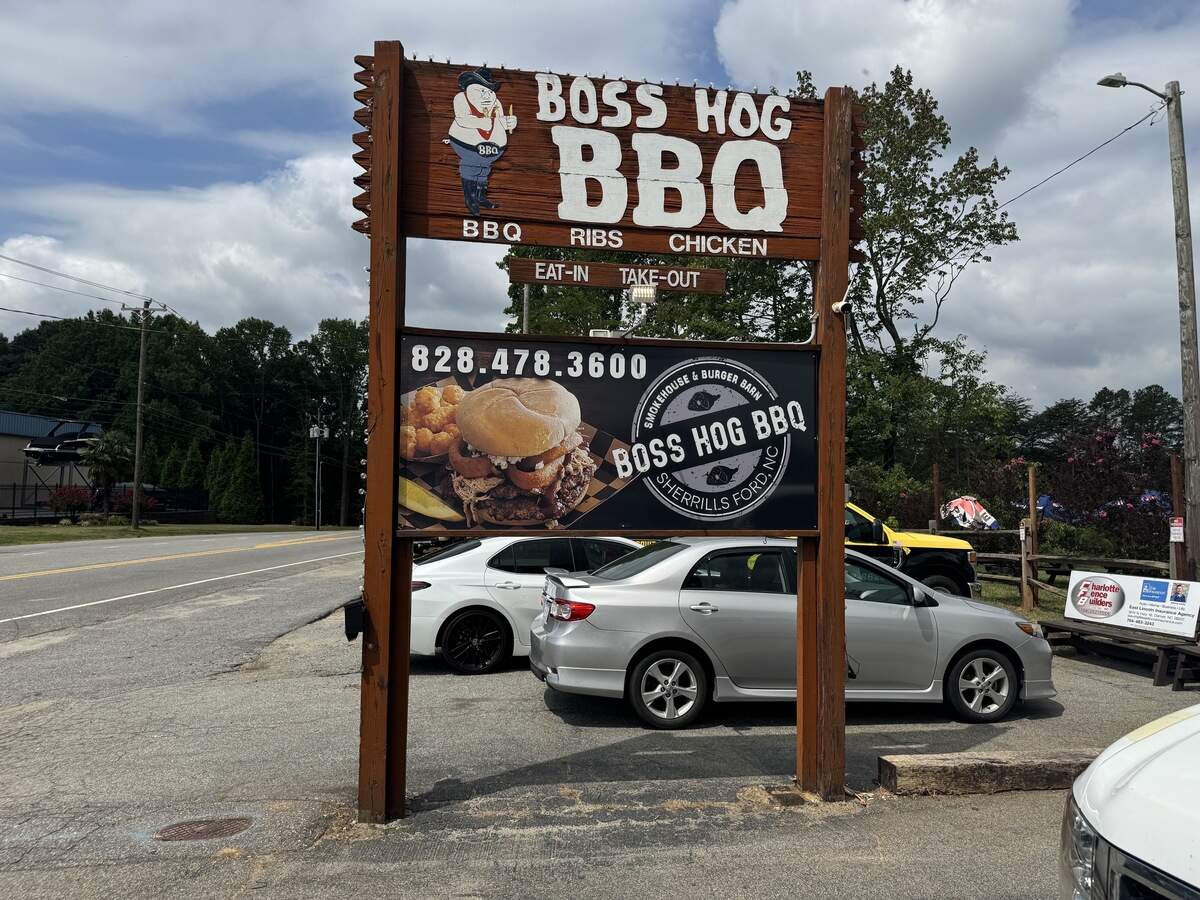
“Because you have been valued customers over the years that we’ve served you, you feel more like family, and we cannot leave here knowing we haven’t said our goodbyes,” the owners wrote in a farewell Facebook post to patrons. “We wanted to give you notice and make the transition as smooth as possible.”
A post that stuck to the bones
I saw that Facebook post Saturday night while I was mindlessly scrolling. It was shared to a local Facebook group I’m in full of people who live in Denver, just south of Sherrills Ford.
“I love Boss Hog BBQ. Please say it’s not true,” one person commented.
“Best barbeque on the lake! You will be missed,” another wrote.
“Was it really the best?” I asked myself.
I grew up in Denver, and though I’d never been to the restaurant, I’d had Boss Hog ‘cue before.
The most recent time I remembered was after one of my rec league basketball games at East Lincoln Community Center. I averaged six points a game in a league where defense was optional, and I was proud of that.
The mom of one of my teammates brought us barbecue sandwiches from Boss Hog after a game. It was good, but was it the best?
I’ll admit, Boss Hog never seemed like a place I’d end up. From the outside, it looked like the kind of hole-in-the-wall barbecue joint tucked away in a rural part of the county, and Sherrills Ford, like Denver, has long been a predominantly white community. I carried a few assumptions with me before I walked through the door.
And the restaurant’s name sounds similar to Boss Hogg from “The Dukes of Hazzard.” I wasn’t familiar with the TV show, but after looking it up, I learned it has faced criticism in recent years over its use of the Confederate flag. Whether the restaurant’s name was meant as a reference or not, I wasn’t sure what to expect.
Line dance at lunch
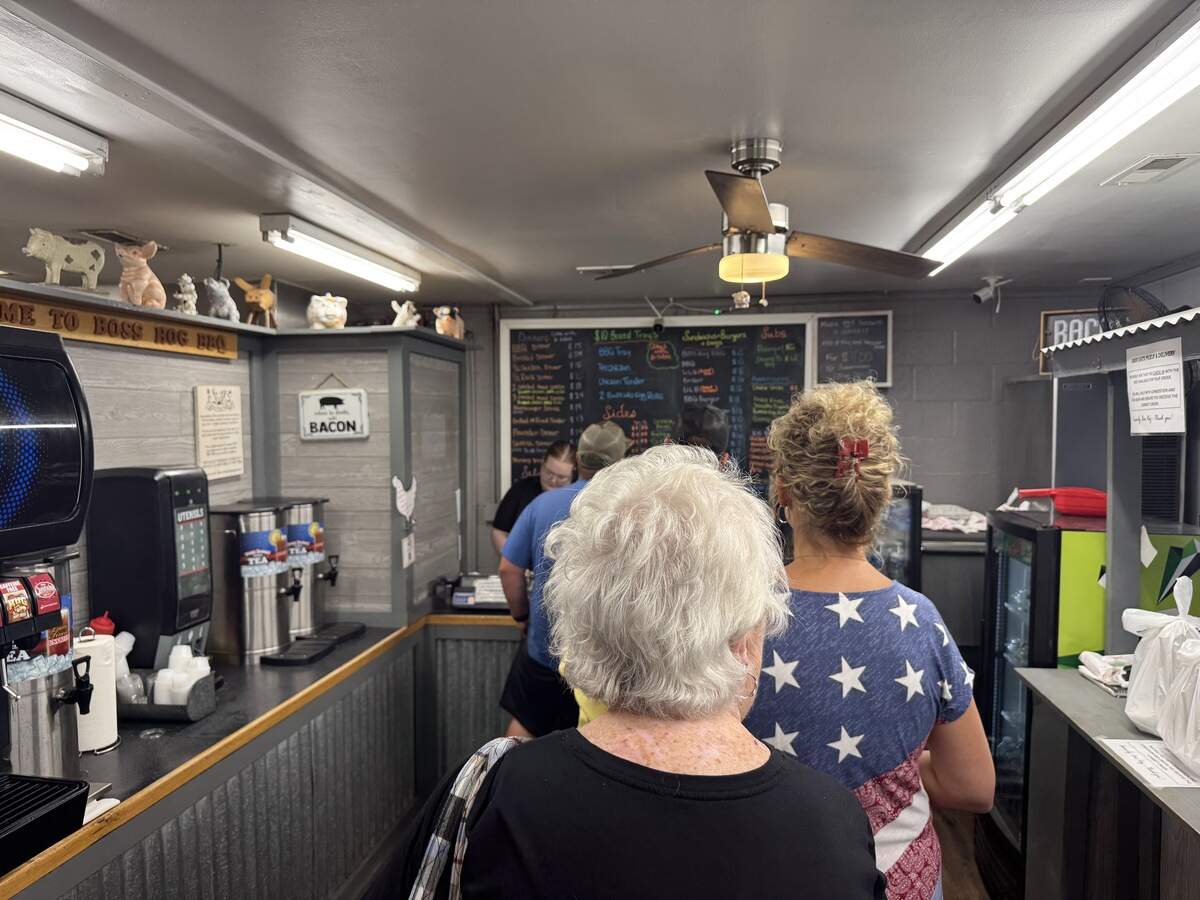
The line inside Boss Hog on Tuesday stretched from the ordering counter to the entrance, which isn’t saying much since, according to Catawba County property records, the entire building is about 1,200 square feet. But it was packed.
Customers waited patiently to get their fill, possibly for the last time.
It took me about half an hour to get through the line, and another 15 minutes to get my food. That time went by fast, though, since I had company during the wait.
The restaurant only had about six tables inside, and I managed to find an empty one after I ordered. Not long after, a man in his mid-50s who was also waiting for his food got my attention and asked if I was leaving soon. I told him I wasn’t, and he took that as an invitation to sit down. I didn’t mind at all.
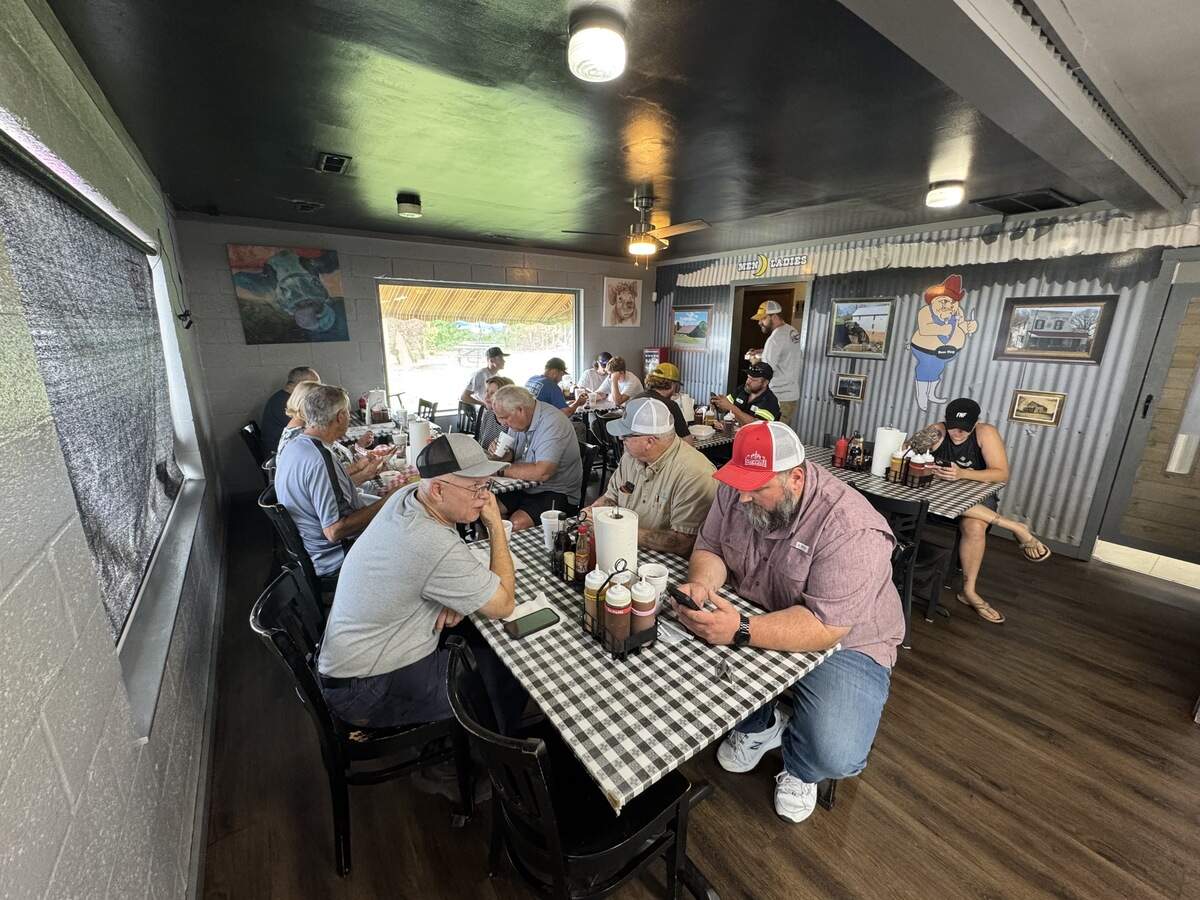
I didn’t get the man’s name, but I quickly found out he was also from Denver. He graduated from the same high school I did, East Lincoln, and even knew a few of my relatives, including my cousin, Johnson “Jeep” Hunter, a former Mustang football standout.
He told me he later got a job in law enforcement and eventually served as the school resource officer at East Lincoln High for a number of years.
“I probably left right before you got there,” he said about the resource officer job. It was probably a good thing he didn’t already know who I was.
The subject then shifted to football. He mentioned Bandys, a high school in Catawba County many would consider to be one of East Lincoln’s rivals. (It’s pretty lopsided, though — East Lincoln has collected three state championships since 2012, while Bandys is still in search of its first title.)
Then a customer at the next table jumped in, revealing that two Bandys players signed to play football at Lenoir-Rhyne University, where my dad played basketball in college.
We bonded over that for a few minutes, and I thought back to the Facebook post.
“You feel more like family” was starting to ring true.
But when the conversation turned to growth, so did the tone.
The long simmer of change
If you ask any lifelong Denver resident over a certain age, they’ll probably reminisce about how the intersection of N.C. 73 and N.C. 16 Business — now among the busiest junctions in Lincoln County — used to be “just trees.” The man who sat at my table was no exception.
“There was only a caution light there,” he explained.
Though future plans for the property have not been confirmed, some locals see the loss of Boss Hog as another casualty of expansion.
In the immediate area around Boss Hog, thousands homes have been approved in the last decade, most notably at Village at Sherrills Ford, a mixed-use development a third of a mile away anchored by Publix that will eventually include 6,000 residential lots.
In Denver, hundreds of new homes have been approved in recent years, adding to the congestion along major thoroughfares in the area, including N.C. 16 Business and N.C. 150.
As Denver continues to grow, resident Jack Carter worries the community is losing some of the places that gave it its identity.
“We’re growing at such a rapid pace, I feel like we’re losing a lot of what helped make this a community,” Denver resident Jack Carter, who lives near the intersection of the two highways, told CharlotteFive.
Plates, people and passing conversations
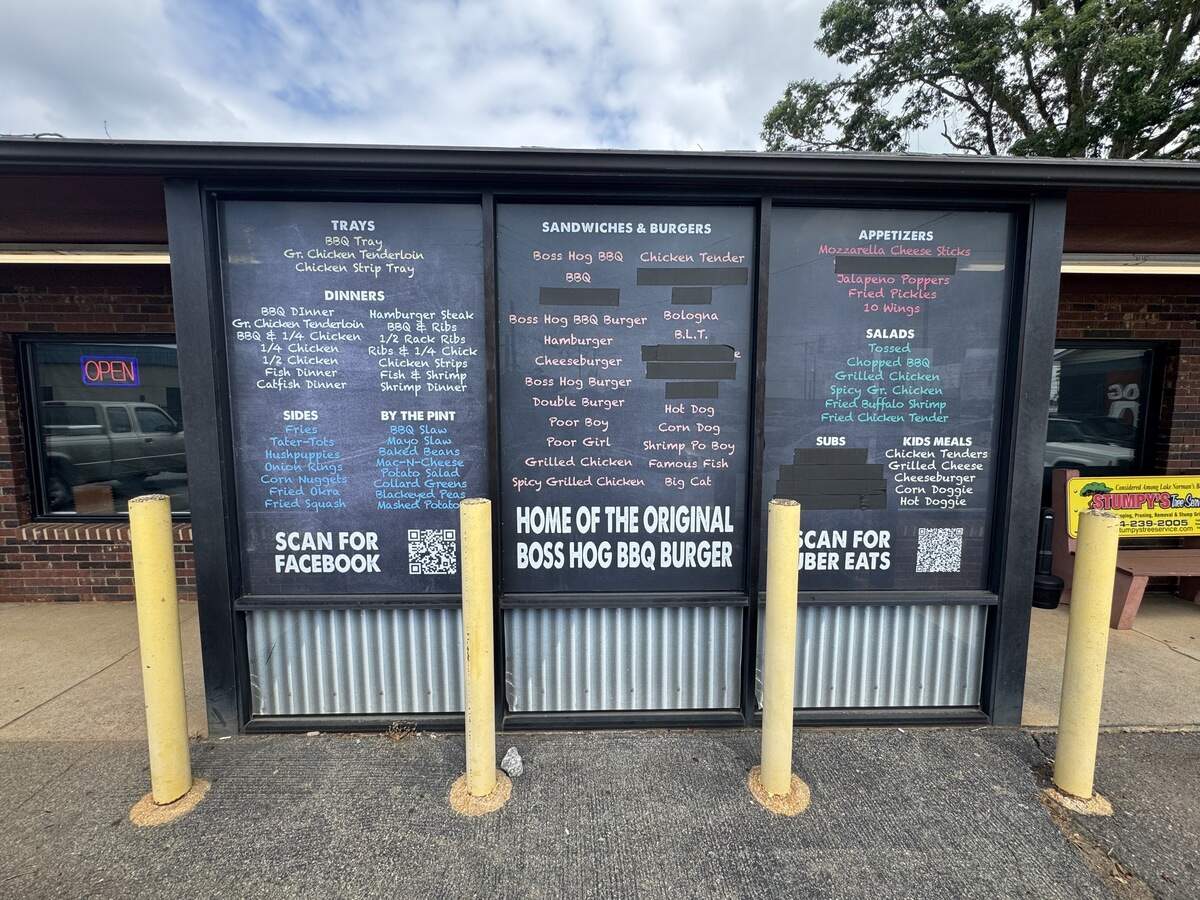
I’ve always told myself I’m calm under pressure, but that’s never been true. So, when the cashier at the counter told me the restaurant was out of mac n’ cheese, I panicked and ordered potato wedges.
Which would have been fine, but the barbecue tray I ordered came with two sides, and the first one I ordered was french fries. I got double potatoes.
The first thing I noticed about the barbecue was that it didn’t have any sauce, but each table had an assortment of sauces available, including “hog sauce.” The ingredients in it weren’t listed, but it sounded appetizing.
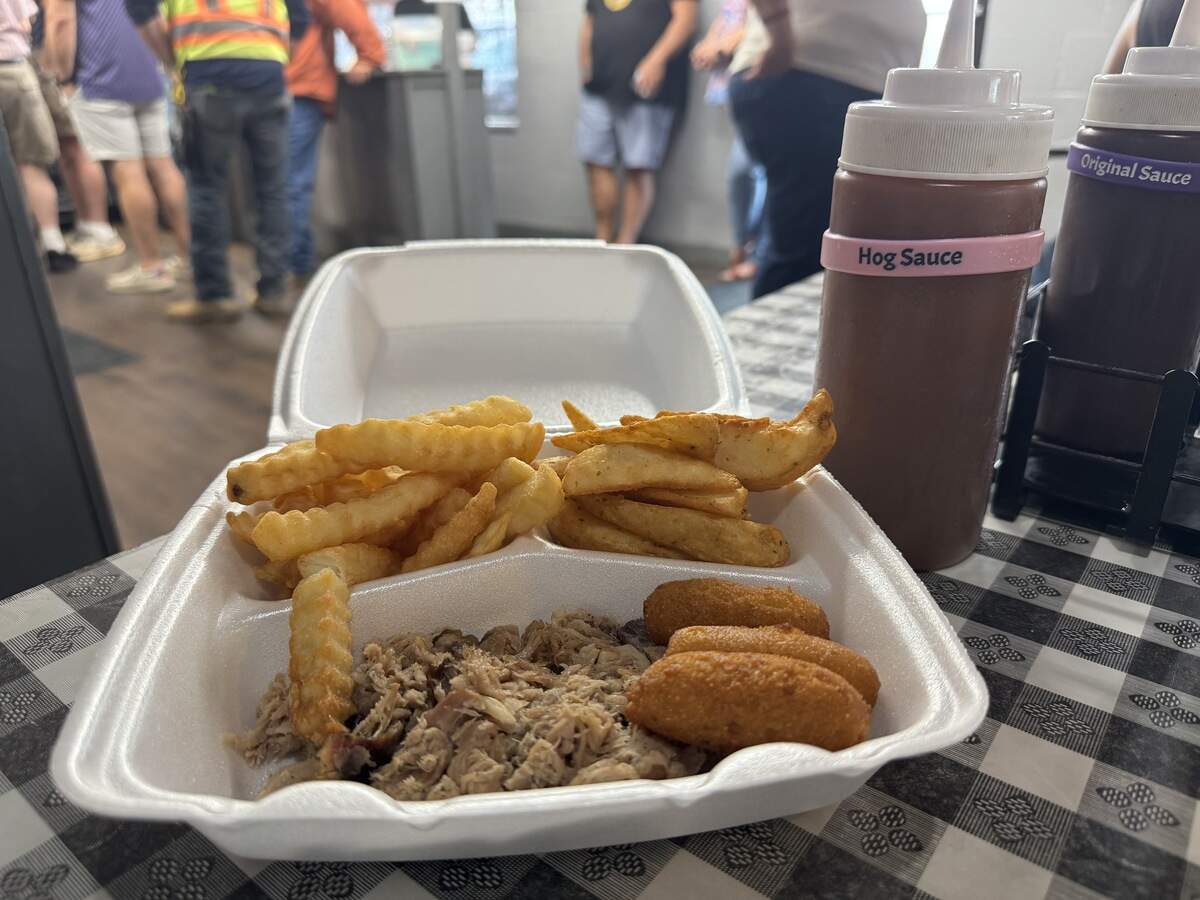
I scarfed that food down. So much so that I could hear the echo of my mom’s voice scolding me, saying: “It’s not going anywhere.”
I was itching to know what made Boss Hog special, so I asked around. Like Carter, Denver resident Daniel Norris is a frequent customer at Boss Hog.
“We love the food here, and it’s close by,” Norris said. “We come here a couple times a week, every week. It’s terrible that it’s going away.”
Others were more optimistic, like Shawn Abernathy, who I caught after he picked up his to-go order from the restaurant.
“I’ve been coming here for a couple of years now,” Abernathy said. “They just have great food, great people and great service. It’s kind of hard to hear the news that’s going on, but the corn dogs are what you gotta get.”
While the restaurant is closing, the owners of Boss Hog haven’t smoked their last rack. They still plan to run their food truck — The Boss’s Backyard Wagon — which is scheduled to appear in Maiden on July 10th for the town’s Jive After Five concert series, according to a recent Facebook post.
Still, for many, it’s the loss of the familiar place itself that lingers.
“I’m going to miss having a local spot here that everyone knows that was family-owned,” Carter said. “Families have come through here and eat, and it’s been a part of the community for a long time.”
And in a way, sitting there between strangers-turned-tablemates, swapping stories over barbecue trays and shared geography, it already felt like what the owners said it was: family — just for an afternoon, passing through before the smoke clears.