
‘He viewed me as the gap between cars instead of a human’ — a cyclist, hit by a car.
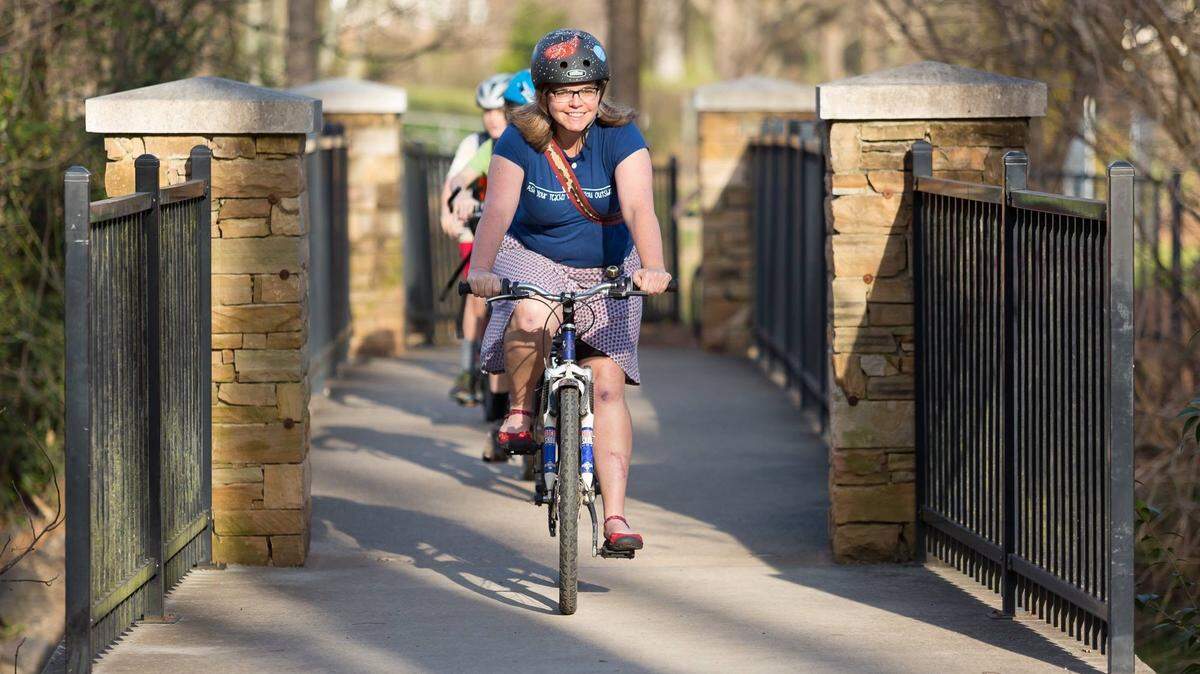
Editor’s note: Charlotte had the nation’s third highest cyclist fatality rate in 2017, as five cyclists died in motor vehicle crashes that year. In 2018, three people died. Authorities differ on how to combat bike-related deaths, and the city has seen two more in recent weeks. Here, Charlotte cyclist Bethanie Johnson writes about bike safety on Charlotte’s streets:
Wear bright clothes! Use lights! Wear reflective gear! You don’t have enough lights! Look, they’ve made this cool new spray paint for your body and bicycle. Spray paint yourself! Have you tried this cool new backpack/helmet/safety vest that blinds drivers and folds into a one centimeter square?
These are the things people who ride in my community hear on a daily basis. Am I being safe enough? Do I have enough lights? Am I riding the correct streets? Am I doing every possible thing I can think of to make myself safe? I even decided to do some of my rides with loud speaker music blasting from my water cage. I have a great safety vest with pockets. I wear a bracelet on my wrist with all my information so my daughter will know something happened to me (in the terrible event that it is needed). I ride greenways when possible, well designed bike infrastructure when practical.
When it comes to cycling safety, I’ve been educated to within an inch of my life.
And yet I know all these suggestions, links and gear references are thrown at the everyday cycle commuter out of concern about safety. It’s a way of giving bike love.
In the past few weeks, there have been two hit and runs in Charlotte. The first one was hard to read about, but the second one was harder, because some of my cycling and non-cycling friends knew him. Because he was hardly more than a boy. Because it’s difficult to understand that people have lost their humanity to the extent that they’d drive off and allow a human being to die in the street. How does one respond to that?
‘The driver took a left hook into me.’
When I was hit, it was a classic case. The driver took a left hook into me. He viewed me as the gap between cars instead of a human. But once I’d landed on the ground, not only did he stay at the scene, another woman stayed and directed traffic, someone else called 911, and a startled by-stander looked on and commented, “Oh God.” But all those people stood around, waited for the ambulance, made sure I was OK while they waited and saw me safely into the ambulance. And I’m still here. And so thankful for all the people who stopped, parked their cars and stayed, even to the man who hit me for not leaving the crash he caused. In that sense, I’m not a classic case.
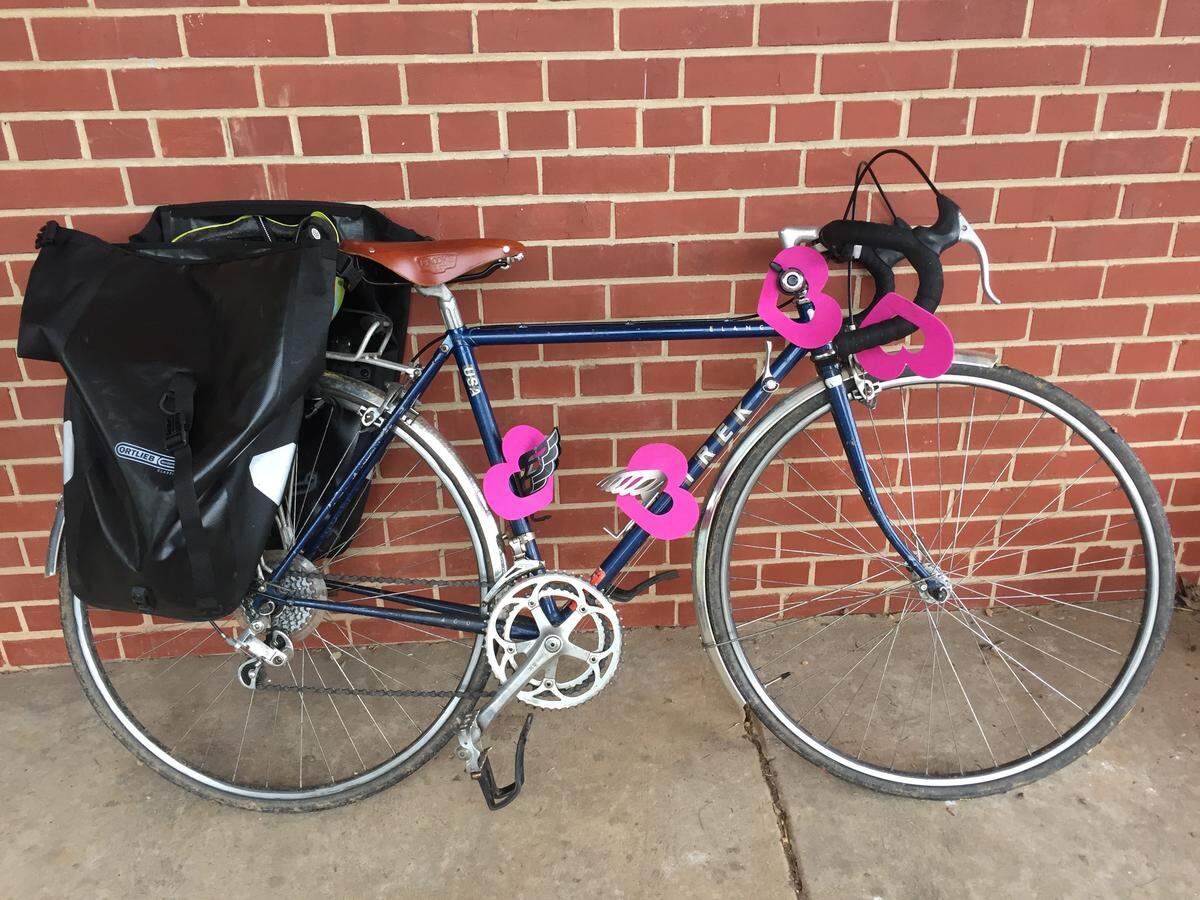
Many pedestrians and cyclists that are hit by cars are just left in the roadway. That’s the classic case of a cycling crash. That you’ll be left behind. That those precious moments of life after the accident will be run through, and that you won’t make it (as has been the case with the last two Charlotte hit and runs involving cyclists). Those seconds matter. They are actually the difference between life and death. In other words, if your insurance premium is more important than a human life, you shouldn’t be driving. If your police record is more important than a human life, you shouldn’t be driving. If you just can’t be bothered to stop because it’s going to put a blip in your day, I’m not sure you should even be allowed in public, and you definitely shouldn’t drive a car.
I’ve said, and will continue to say that it’s up to all of us using the roadways to keep them safe. I can wrap my body in Christmas lights and wear a flashing helmet … spray paint my body and bicycle, slap glow in the dark stickers on everything I own (I have several on the rear of my bicycle), but if you are on your phone, you will not see me. If you only see your moment and yourself as the last person through the already red light and decide to floor it, you will not see me. If you’ve had too much at one of the multitudinous Charlotte breweries, you will not see me.
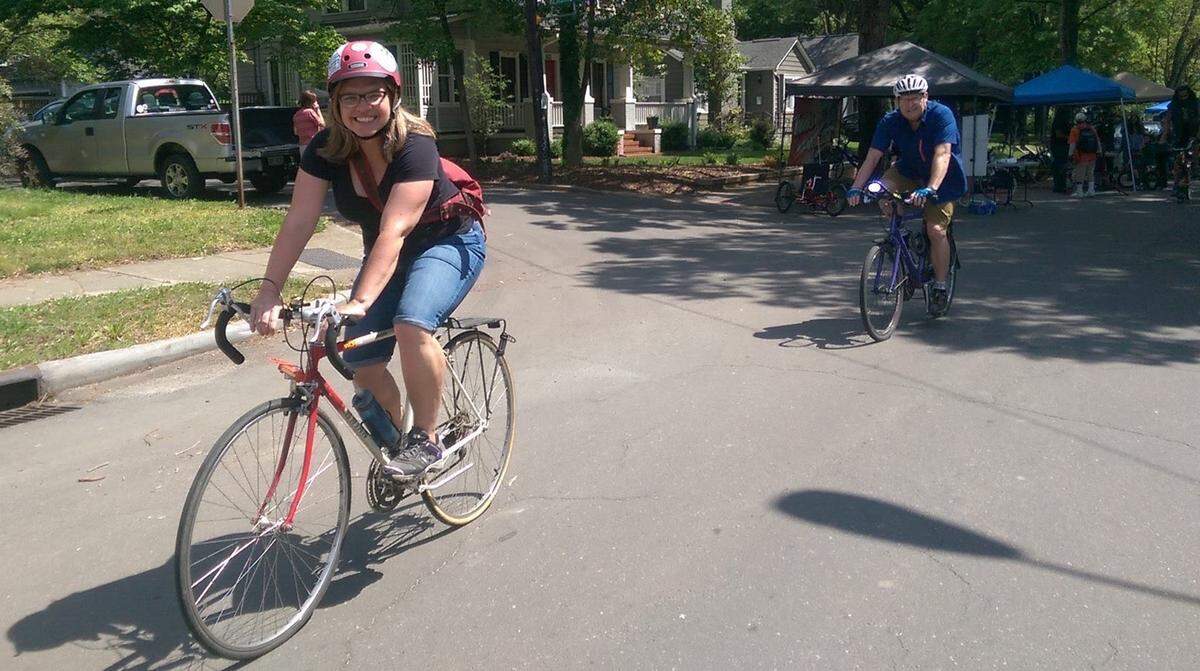
As cyclists, we need you to see us. As pedestrians, we need you to see us. We’re humans trying to get to where we’re going, just like you. I recently came out of the building at Park Road Montessori where my bike was parked next to a friend’s, and someone had taken a moment to cover her bike with pink foam hearts. It was as if the person was covering her bicycle with the love they hoped she’d experience, and that’s how I see every “be safe, have a good ride, stay safe out there.” It’s bike love. I’m so sorry for the young man who was hit, and to all the people who lost him. He was around my daughter’s age. And because of that, I want you to know that if you drive, you can give bike love, too. You can make sure there’s room for you to pass. You can put down your phone. You can make sure you pay attention all the way into your neighborhood, which is where our youngest cyclists are often hit. That’s what bike love is. It’s attention to our roadway community and how you can help us all get home alive.
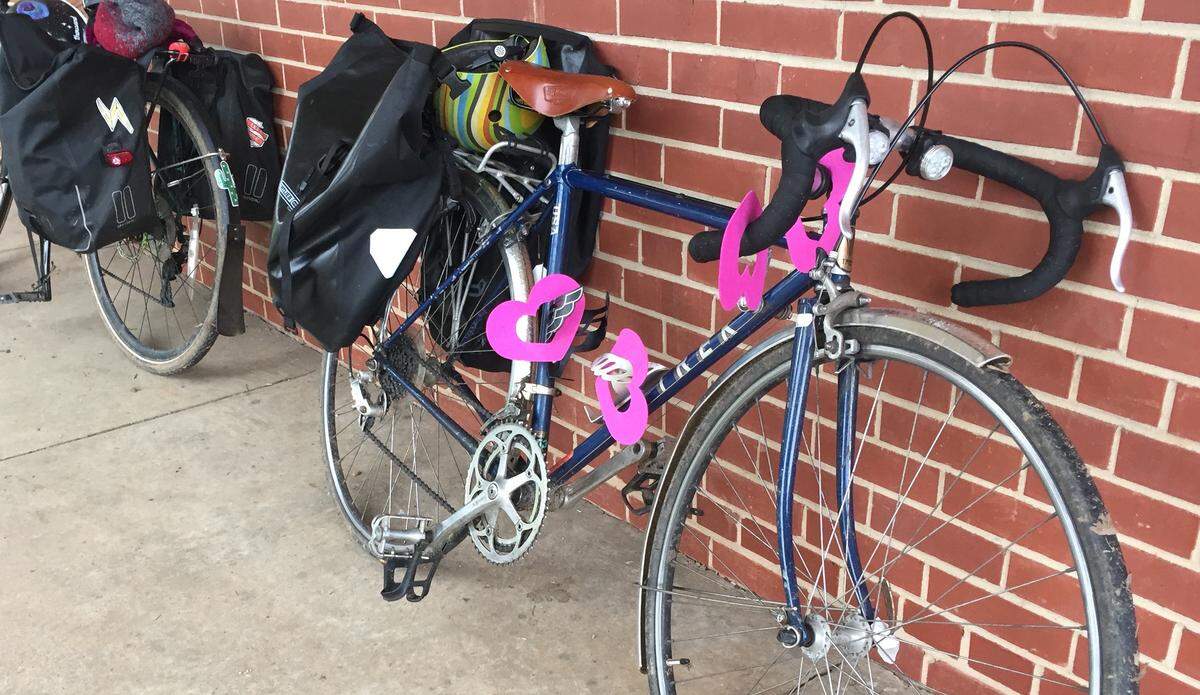
When I saw my friend’s bike covered in hearts, I thought of the young man who died … the picture I’ve seen of him with his dog … and the people who lost him. And I thought about my own daughter, who rides her bike sometimes, and that it could be her. I just stood there and looked at it, and thought all those things and hoped, once again, for bike love on our streets.
Bethanie Johnson is a Montessori Teaching Assistant, a six-year car-free cycle commuter and the co-founder of Bicycle Friday and CLT Bike Camp, which are both geared toward getting kids on bicycles as well as teaching good skills and safety. She also writes a blog about life and cycling.