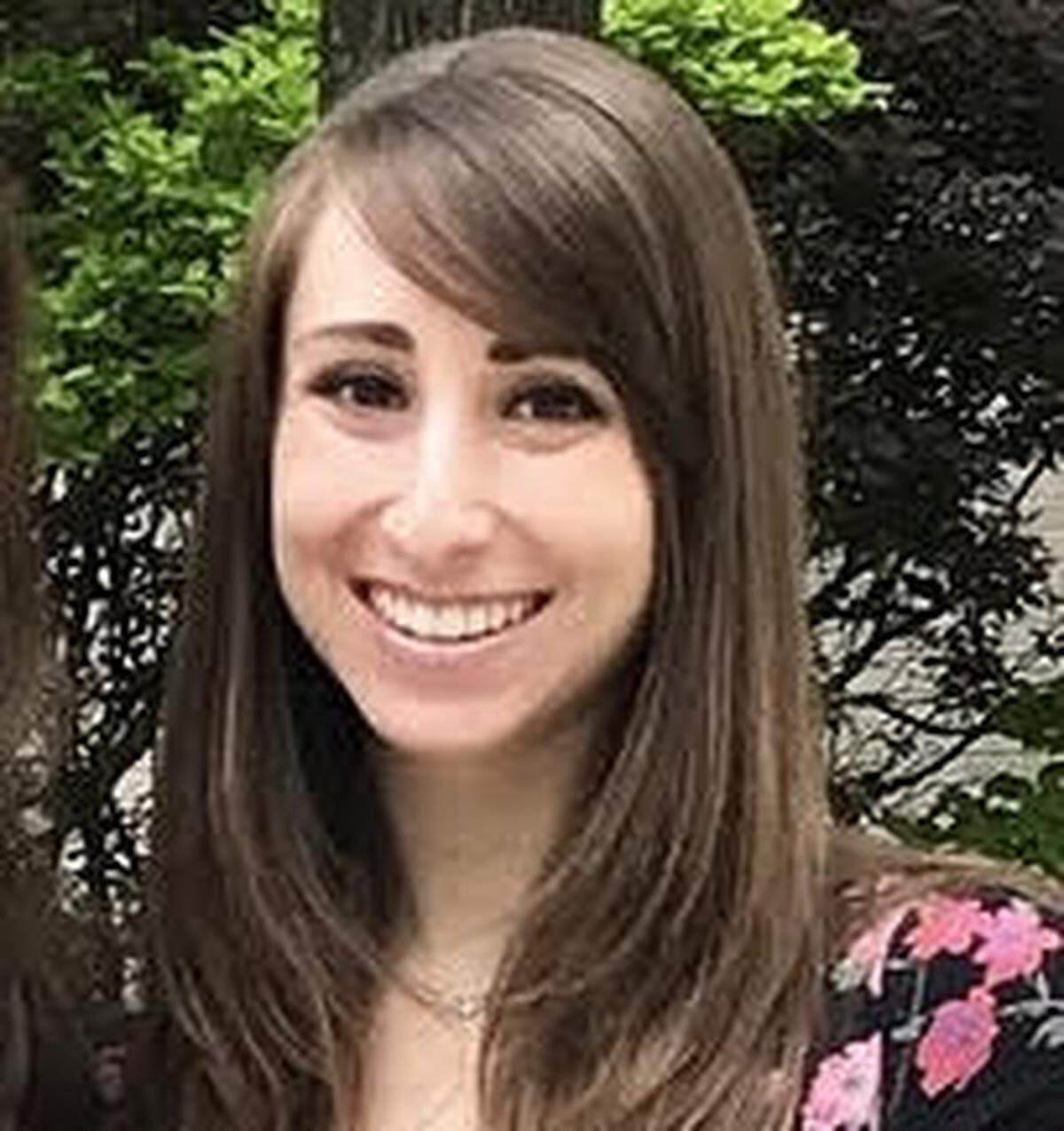
This Charlottean clocked 57,000 miles on her bike. Here’s how you can, too.
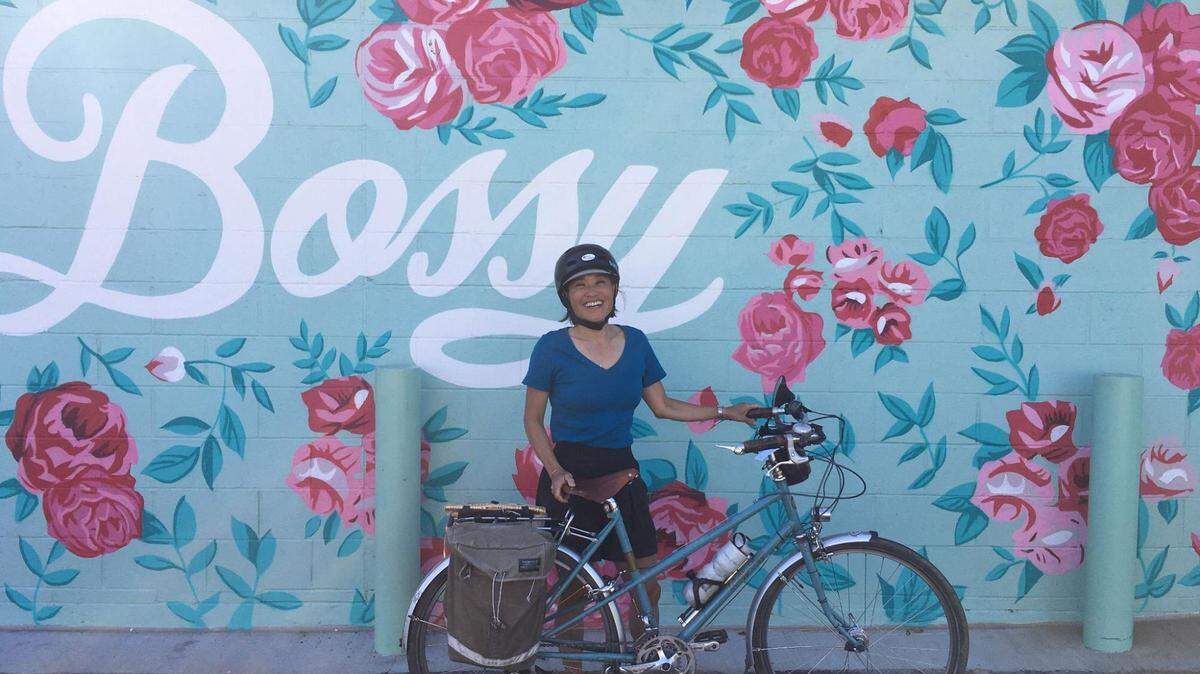
Planning to hop into your car to run errands? Think again.
Bikes are having a moment, and it’s time to ride. The COVID-19 pandemic saw a surge in bicycle sales, making it difficult to find bikes in time for the holidays. And though we’re trickling back into more social settings, experts believe the bicycle boom is here to stay.
“Two big trends we see are people who either returned to the sport or discovered it for the first time and are really falling in love with it, paired with a constantly growing adoption of the bicycle as transportation,” Bill Clark, president of Canyon’s U.S. division, told Outside. “Americans are finally waking up to the transformative power of bikes for transportation, not just recreation.”
As more people return to the office, it’s predicted that people may feel more comfortable with socially distant commutes via bike as an alternative to public transit.
Charlottean and cyclist Pam Murray switched from traveling by car to a bike long before the pandemic. In 2006, she purchased her first adult bike and has since clocked 57,000 miles cycling — and only 2,500 miles on her car.
“All those miles you put on your car, I put on my bike,” she said.
Meet Murray
Though she owned a bike as a child, Murray didn’t get her first adult bike until she took her daughters to purchase their own bikes as kids.
“I had a bike when I was 10 or 12, but hadn’t ridden past that,” Murray said. “Most people don’t ride after they get their driver’s license.”
Once she had her bike, she just started riding.
“It was a lot of fun and good exercise, and it was something my daughters and I could do together, Murray said. “Then I started thinking, I don’t like driving anyway.”
Murray started out by riding her bike all day, once a week. She was a financial adviser at Merrill Lynch for 20 years before retiring in 2012. Eventually, riding daily became a habit, and now she takes her bike wherever she wants to go. To keep her car battery working, she drives to the farmers market once a week.
“In Charlotte, you really can make all of your trips on a bike. You don’t really need your car,” Murray said. “Most people don’t realize that or think that they can’t because they’re so used to doing it the way they always have.”
Murray makes all of her daily trips on her bike. On the day we spoke, she’d gone to the bank, the library, a friend’s house, the jewelry store and Pasta & Provisions to pick up dinner.
“I get a lot of stuff done on my bike, and I’m getting exercise at the same time,” Murray said. “When people think about driving, they think, ‘Oh, I’m just going to lump everything into one trip, I’ll do that on the way.’ But you’re still driving your car, and every time you start your car, you have emissions.”
Murray brings up the idea that most people choose to stop on the way home at places that are only 2-5 miles — a quick trip. But those errands could also easily be done on a bike.
“There’s really nothing that’s too far,” Murray said. “All I need is more time, and the time differential is not a lot. You have to remember, you’re doing two things at once: You’re getting your errand accomplished, and you’re getting your exercise. If you ran your errand in your car and you did your exercise, it would take more time than that.”
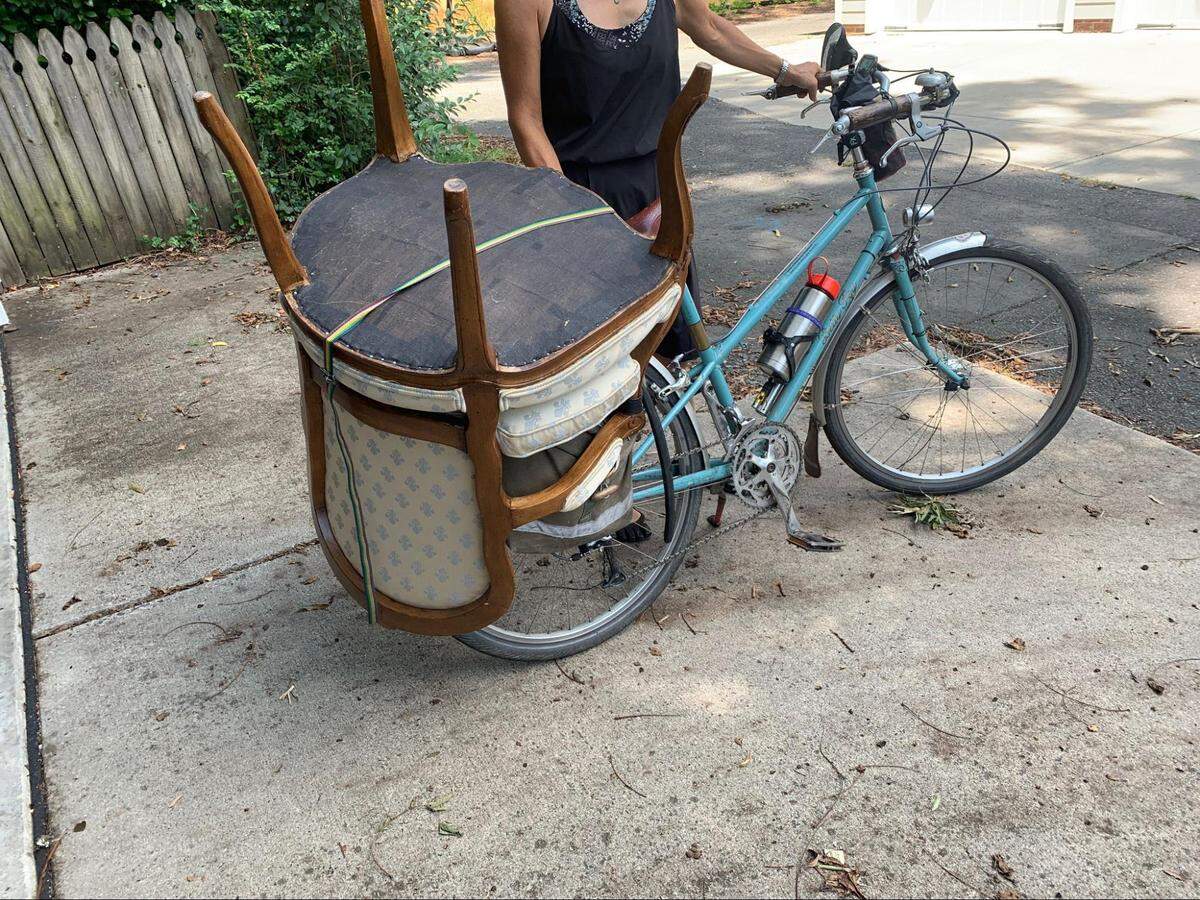
To carry all the items she needs for her errands, Murray attaches a traveling trailer to her bike. She’s carried everything from groceries to a Christmas tree. Yes, a whole Christmas tree.
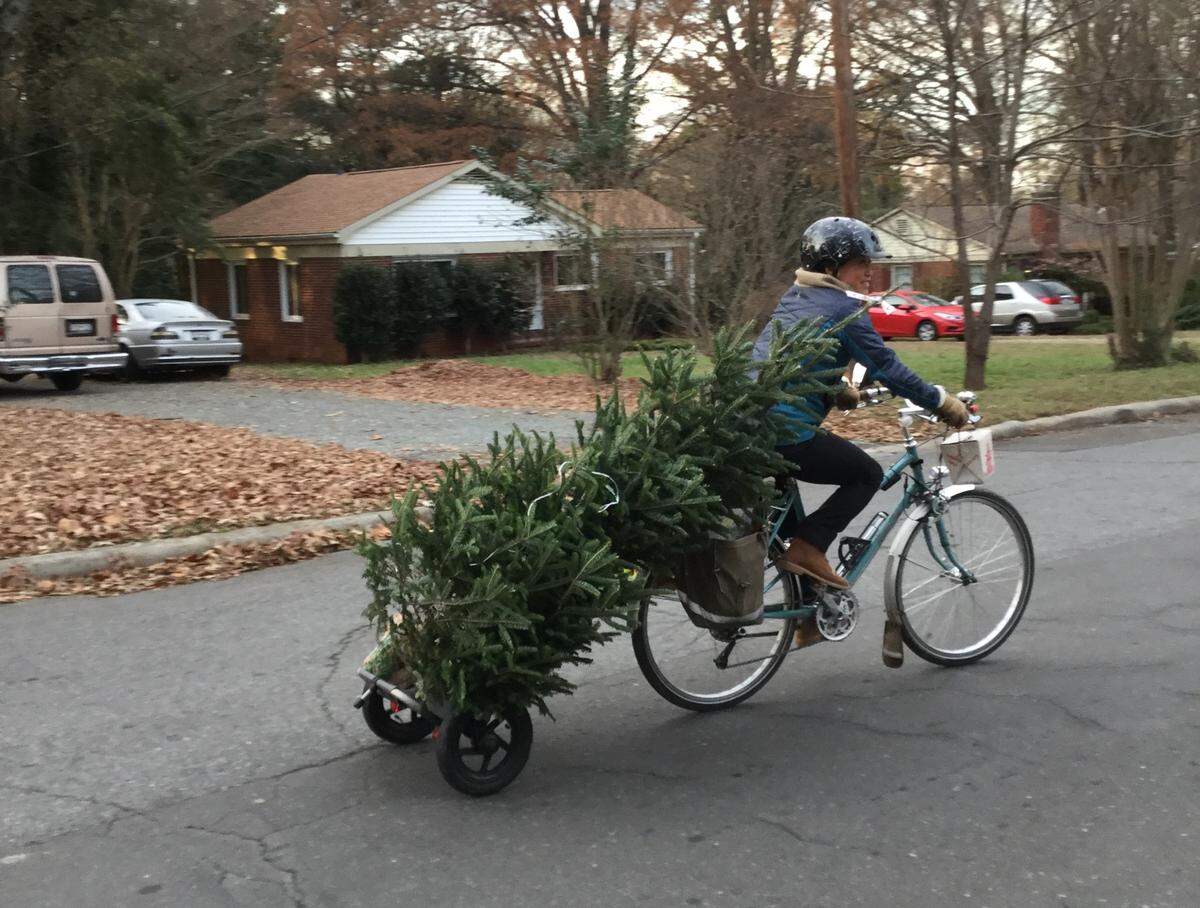
“People think that’s so funny,” Murray said. “The thing is, a Christmas tree is not heavy. My trailer has a 50-pound weight limit. I’m not a big person. I’m 5 feet and about 102 pounds, and I ride a heavy bike. The point is, if I can do it, anybody can do it.”
Getting started
Ready to trade in your morning commute for a bike ride — or, at the very least, try a simple errand?
“It’s going to take some experience, and you’re not going to do it unless you feel comfortable,” Murray said.
Murray teaches beginner courses at CyclingSavvy, a network of cycling instructors that teach best practices for hitting the road on two wheels.
“CyclingSavvy will teach you how to ride by yourself. You’ll get on-road experiences so you won’t be scared to death, and you’ll see it’s not hard.”
Instructors will teach you navigation and how to figure the best way to ride your route. For instance, you may think riding in the bike lane is the safest route to your destination. However, as Murray mentions, not all bike lanes are well-designed. Some, especially those painted to the left of parked cars, open up a door hazard.
“It’s all very situational. CyclingSavvy encourages you to build your situational awareness so you can identify these potential hazards because everything is so dynamic. We give you those skills, so you can handle whatever situation comes up,” Murray said.
Murray also recommends checking out Bicycle Benefits, as it will give you economic incentive or encouragement to ride. For instance, Murray received $1 off her pound of pasta at Pasta & Provisions, simply for riding her bike instead of taking her car. The Bicycle Benefits organization partners with mom-and-pop businesses to not only encourage healthy bike habits, but also to drive traffic to these locally owned spots.
“When we did our rides (pre-pandemic), we were able to support 100 local businesses per year because we rode rain or shine,” Murray said.
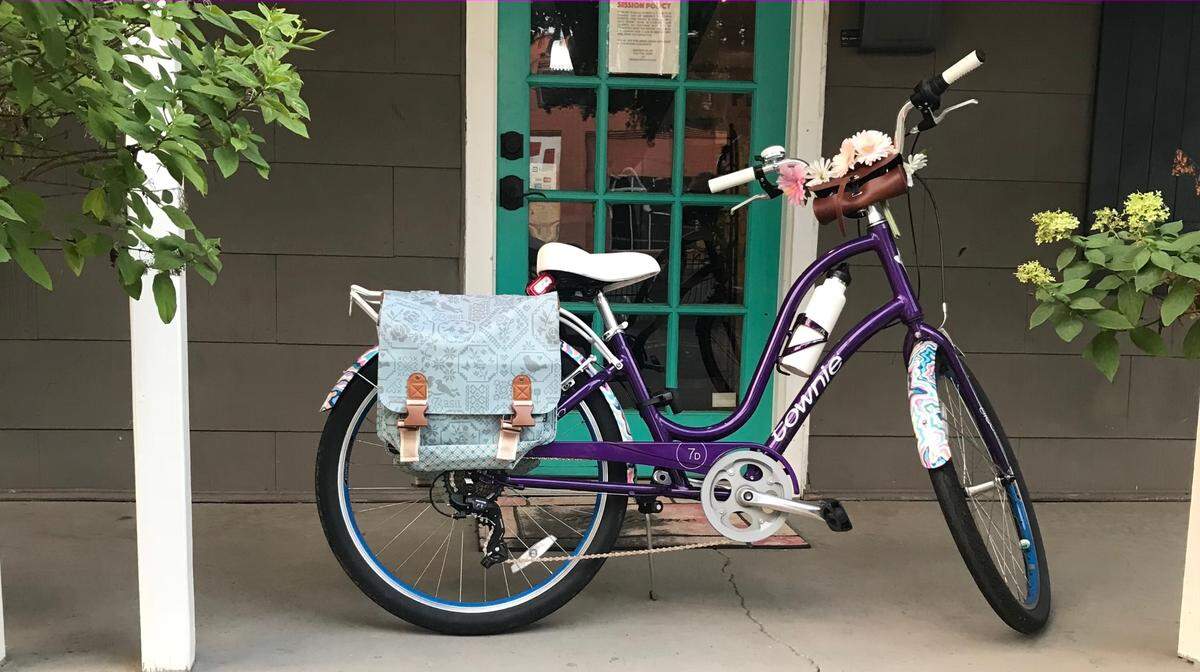
Murray and a few of her fellow cycling friends also set up the Charlotte Spokes People website, which acts as a repository for all of the fun cycle-related events, courses and news in the Charlotte community.
“My idea is to show you that you can do it. You don’t need any special equipment or bike, all you need is the motivation to ride,” Murray said.
How to pick a bike
In addition to finding a bike you feel comfortable riding, Murray suggests getting a serviceable bike from a bike store.
“If you buy a bike from Walmart or Target, you’re not going to be able to sell it if you don’t like it. On some of the department store bikes, they have parts that are not replaceable. So if something breaks, you have to get a new one,” Murray said. “If you get a bike from a bike store or a bike gallery, you can fix everything if something breaks. I always tell people to get a serviceable bike because no bike you buy is going to be your last bike.”
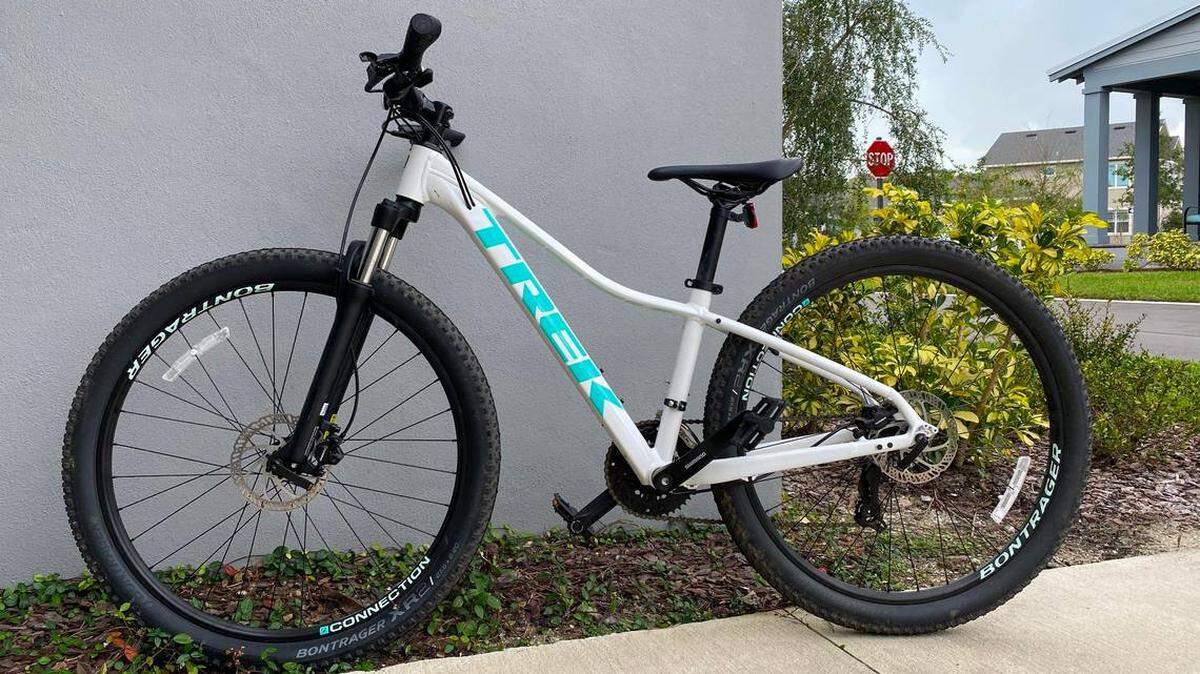
When looking for your ideal bike, Murray suggests considering your points of contact with the bike and how it fits your preferences. Do you want the handlebars to be flat? What seat do you like? What size tires?
“If you have big, wide tires, it’s going to feel like riding on air. If you don’t have wide tires, and instead they’re skinny and large, you’re going to feel every bump,” Murray said.
However, Murray stresses that it’s not about getting just the right bike or taking all of the courses right away, but rather, just going out and getting started.
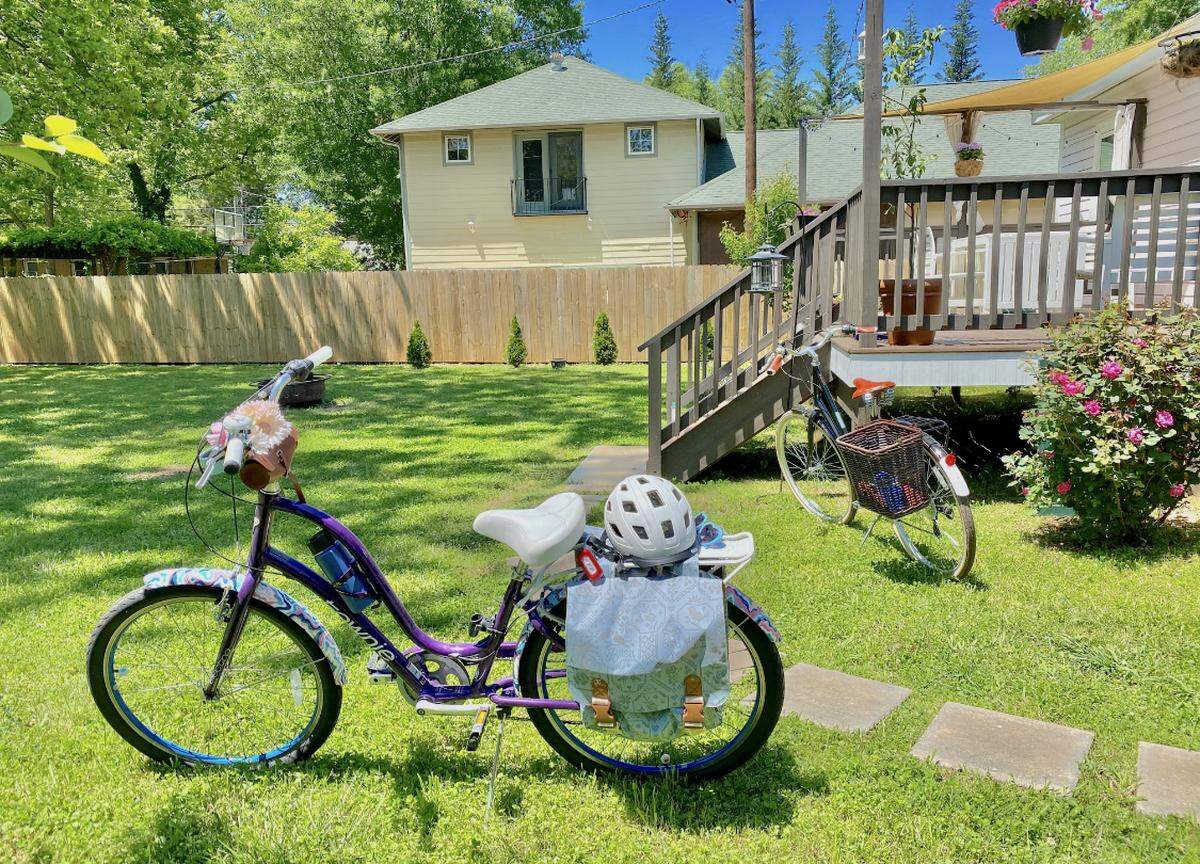
Do you have a bike setup that you love? Send us pictures of your bike and tell us about it at CharlotteFive@CharlotteFive.com. We may publish it in a future article.