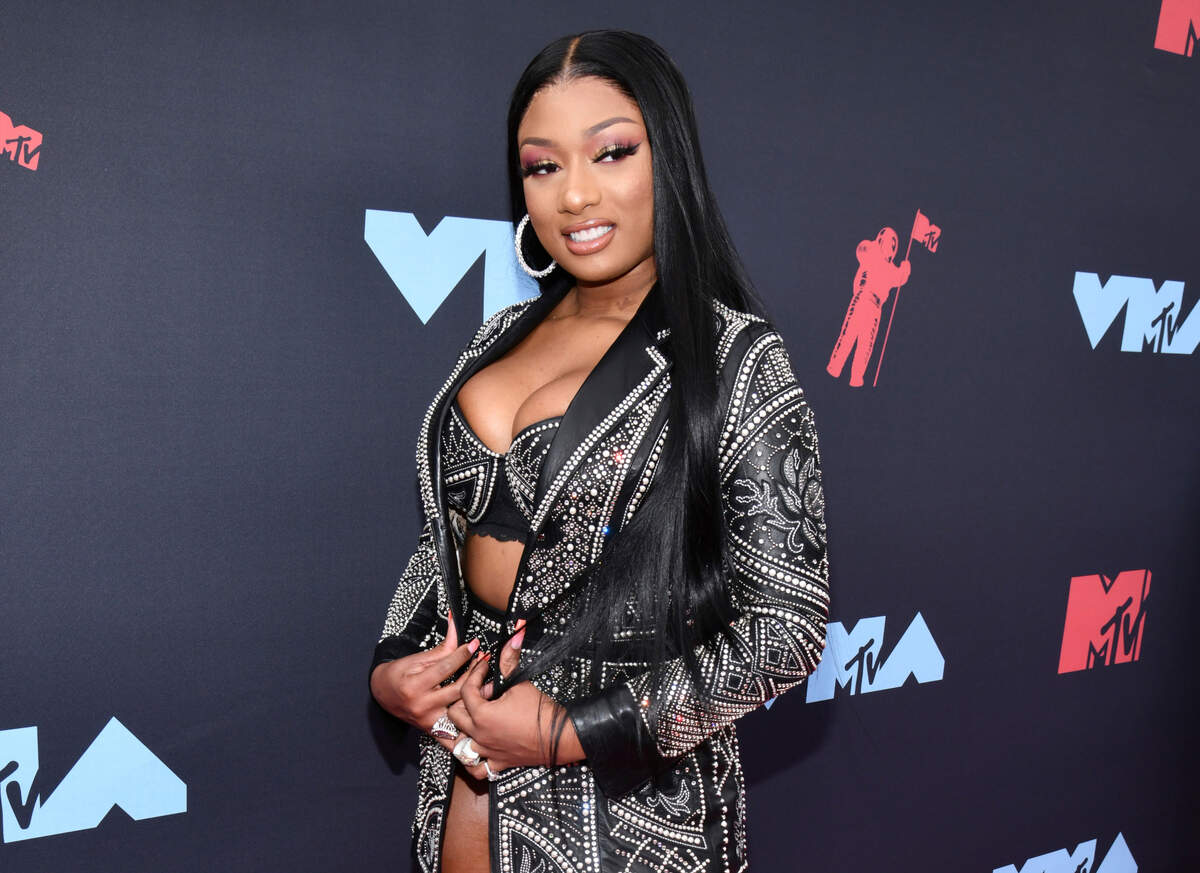
Megan Thee Stallion’s latest hit doesn’t have a trendy TikTok dance yet. Here’s why.
If you’re a TikTok addict (who’s not these days?) and you’ve noticed a difference in your FYP lately, there’s a reason. Black creators on the app, fed up with the lack of credit for creating viral dances displayed by powerhouse TikTok stars, decided it was time to go on strike.
FOR EXAMPLE: Megan Thee Stallion’s latest song, “Thot Shit” was released earlier this month, and unlike her previous TikTok hit song, “WAP,” there is not a viral dance that has caught on among users.
“Thot Shit” has been used in over 350,000 videos, but despite having over 22 million plays on Spotify, Black creators are refraining from showcasing their dances to the hit song.
“I don’t ever wanna hear another (expletive) white woman ever say that TikTok dances and TikTok trends aren’t entirely stolen from Black women because a Black woman has yet to give a dance to this song,” a TikTok creator who goes by Sugarbunny said in a post that went viral.
Many of the most popular TikTok dance trends have largely been fostered by Black creators to songs created by Black artists. These creators incorporate dance styles seen within the Black community, but very few ever get the monetization and recognition that is constantly given to white creators who recreate the dances.
In a TikTok created by Erick Louis, he teases viewers by mentioning he has made a dance to Megan Thee Stallion’s new song. But right when you think he’ll start dancing, he flips off the camera with the caption: “SIKE. THIS APP WOULD BE NOTHING WITHOUT BLK PEOPLE.”
‘US pop culture is built on stealing from Black people’
Bree Newsome, an activist from Charlotte, said she believes the strike is a great display of how the American economy has been built on stealing culture, intellectual property and labor of Black people while turning a blind eye once Black creators seek their rightfully earned compensation and credit.
“The TikTok strike truly is amazing b/b it shows not only how US pop culture is built on stealing from Black people, but how the music industry depends on this cycle of theft & whitewashing in order to monetize the music,” she wrote on Twitter.
The results of the strike
Since Black creators have not made a popular dance to “Thot Shit,” under the sound on TikTok, users will mostly see white users dancing aimlessly with their arms in the air while moving their hips side-to-side — although Megan Thee Stallion explicitly called in the song for people to put their hands on their knees and twerk.
This is not a typical strike, though. Although largely refraining from creating a dance to “Thot Shit,” Black creators are continuing to post on the app. The Black content creator community wants to clearly show that the app needs Black people to thrive, and they should be accredited for their hard work whenever someone else imitates their dances.
“I think it’ll get people to pause and realize that Black creators are the source of virtually every trend on TikTok,” TikTok creator Mackenzie Parker told CharlotteFive. “However, I feel like once Black creators return to dancing on the app, people will continue to profit off of their choreography without giving credit.”
Parker, who has lived in Charlotte but is now in Pittsboro, NC, primarily makes humorous content on her TikTok but resonates with other Black creators’’ frustrations. She said she thinks crediting the originator is the least people can do if they are going to imitate a trendy TikTok dance.
“If it’s someone with a large following, it’s pretty upsetting to see them not provide credit to the original creator,” she said. “With their fanbase, they can literally change lives by just tagging the original creator of a dance, so it’s pretty inconsiderate of them to make money off of their audience without giving credit where it’s due.”
History of TikTok suppressing content
The strike is rooted in the app’s history of predominantly white creators benefitting from Black creators’’ original content.
In 2019, Mashable reported on a creator-led campaign that alleged TikTok was suppressing Black creators’ content through an through an algorithm working against them. After a call to action for better representation on users’’ For You Page, TikTok admitted a couple of months later to suppressing content from users they deemed at high risk of being bullied. Users at high risk included disabled, fat and queer content creators.
Jalaiah Harmon, the creator of the “Renegade” dance, and Keara Wilson, creator of the dance to Megan Thee Stallion’’s “Savage Remix” are among the vast population of Black creators on TikTok whose dances have gone viral but with no credit to their respective names during the rise of the trend. It wasn’t until The New York Times wrote that Harmon was the originator of the “Renegade” dance that a worldwide calling began for users to credit the choreographers.
“We care deeply about the experience of Black creators on our platform, and we continue to work every day to create a supportive environment for our community while also instilling a culture where honoring and crediting creators for their creative contributions is the norm,” a spokesperson from TikTok said in a statement to TechCrunch.
The dance hijacking continues — even during the TikTok strike
Despite many Black creators joining in on the strike, creators Skai Beauty and sir.rez quickly made a dance to “Thot Shit,” and white creators repeated their dance without crediting them. One of her top comments: “Yall better get the credit for this dance cause the YTs on this app will take it and rinse the seasoning off and act like it’s giving.” (“YT” is short for “white” on the app and is used as a way to get the message across in fewer characters while also avoiding any race-related TikTok moderation.)
Giving dance credits in captions is an upward battle, and although viewers are quick to tag the original choreographers if they see a fellow TikTok creator who has abstained from tagging the originator, Parker told us she believes the problem will continue.
“I wish Black creators didn’t feel the need to be silent to make their point, but historically, the only way that people pause to listen to Black voices is when it interrupts their daily lives,” she said. “If non-Black creators with a huge following don’t have any source material, it puts a pause on their content creation and makes them at least wonder what’s going on. Even then, it seems that their understanding isn’t guaranteed.”
Editor’s note: Are you a Black TikTok creator from Charlotte? Share your thoughts on the strike with us at charlottefive@charlottefive.com.
This story was originally published July 9, 2021 at 1:32 PM.