
Charlotte banker’s harrowing escape from the World Trade Center’s North Tower on 9/11
He was sitting on the 81st floor of North Tower on Sept. 11, 2001.
The first hijacked plane struck the 93rd floor.
Charlotte banker Dave Paventi had arrived in New York City a day earlier for business meetings. “I remember it was a foggy day, and I got to the office and immediately walked over to the windows and stepped up on the heat register to look out and couldn’t see a thing,” Paventi said.
“A colleague of mine who was a little paranoid immediately said, ‘What are you doing? That gives me the creeps.’ Then, very offhandedly — ‘How do airplanes not hit this building?’ My response at the time was, ‘Seriously? Who even thinks about such a thing?’” That conversation took place on Sept. 10, 2001.
The next day, at 8:46 a.m., Paventi was in an interior conference room when he felt the entire building lurch forward and then return back into place. “We had offices in San Francisco, so my brain automatically went to earthquake, and I started to get under the table,” Paventi said.
A stairwell in the North Tower
His coworkers — some of whom had experienced the World Trade Center bombing in 1993 — knew better and quickly began to make their way toward the stairwell. Paventi called his wife on his cell phone. “He said I’m fine, I’m leaving the floor now and will call you when I get to the bottom,” Lynn Paventi said. “We still really didn’t know what had happened.”
As they made their way toward the stairs, Paventi recalls someone yelling in the background that an airplane had hit the building. “The assumption was that maybe it was a small plane. At the time, we had no frame of reference for a passenger jet crashing into a building,” Paventi said.
“There was not a lot of traffic on the stairs — which should tell you something about what was happening higher up,” Paventi said. “I got about to floor 75 and stopped to wait for my longtime colleague, Bob, who was making sure our floor had cleared out.”
The stairwells were narrow — only two people wide. At the 65th floor, the traffic slowed to a near stop. “We couldn’t see anything. It was eerily silent. You expect in New York for it to be loud and boisterous, and it was very, very notably quiet. We would go down a few steps, stop. Down a few steps, stop. That went on for about 45 minutes.”
At the time, there were no smartphones. But in addition to his flip phone, Paventi had a pager. The pager could send and receive short emails, and Paventi had it programmed to give him stock-related news. It began to buzz with reports of the stock market opening being delayed because a plane had hit the towers. Then, news came in of a second plane and mentions of terrorist activity.
“Finally, (the pager) buzzed and said it was a 767,” Paventi said of the first plane that hit. Rather than cause further panic in the stairwell, he and his co-worker kept these updates to themselves.
Paventi also began sending emails to his wife. “I remember the first one said, we’re on the 56th floor. Those emails became my lifeline that day,” Lynn Paventi said.
The irony is that pager nearly got left behind in Charlotte. The day before, Paventi had forgotten it on the way to the airport, and he and his wife had made the decision to turn around and go get it. “Without that pager and those emails, I don’t know how we would have communicated,” Lynn Paventi said.
As Paventi and his co-worker navigated the stairwell, “We would stop at each level to feel the doors and see if they were hot, and I would think, ‘Would we be better off going to find another stairwell? Is there a better way out?’” Paventi said.
When they arrived at the 30th floor, traffic came to a complete halt.
Firefighters rushing toward the danger
They began to see firefighters making their way up the stairs. Carrying enormous hoses and equipment, these brave men and women assured everyone that the stairwell was open at the bottom and to just keep going.
“I will never forget this one fireman. He stopped and put his hose on the ground and hunched over to catch his breath and made the comment, ‘I get to do all this for 35K a year.’ And then he picked the hose back up and kept going. It was a real gut check,” Paventi said.
Back in Charlotte, Lynn Paventi got a call from her mother-in-law. “She said ‘I know he is in New York. Do you know where he is? Is he OK?’ And I had to tell her that he was in the World Trade Center,” she said.
“I think that was probably the hardest thing I had to do that day. Now, being a mom … it’s hard to tell a mom that their son is in the building that they are watching on TV that’s engulfed in flames.”
When Paventi and his co-worker ultimately made it to the lower level, which was lit by emergency lighting, Paventi described it as looking like a scene out of the movie “Die Hard.”
“All of the windows had blown out, it smelled of gas and the sprinklers must have been on — it looked like a bomb had gone off. And I remember walking down an escalator and getting out of the building through a shattered window.”
‘Run, get away from the building and don’t look back’
“Once we were out in the courtyard, a policewoman began screaming at us all to run, get away from the building and don’t look back. That’s when we took off. About three blocks down, I saw Bob round a corner and tuck behind a building. He had been on my phone with his wife. I followed him, and just as we did that, an enormous white cloud came rushing down the street.”
“What was remarkable to me in that moment was that neither of us really got dirty. You see all these pictures of people who were there that day, covered in dust from head to toe — you can see their eyes and that’s it. We were in the courtyard when the building started to fall and three blocks away when it came down completely, and yet all we had on us was a little dust.”
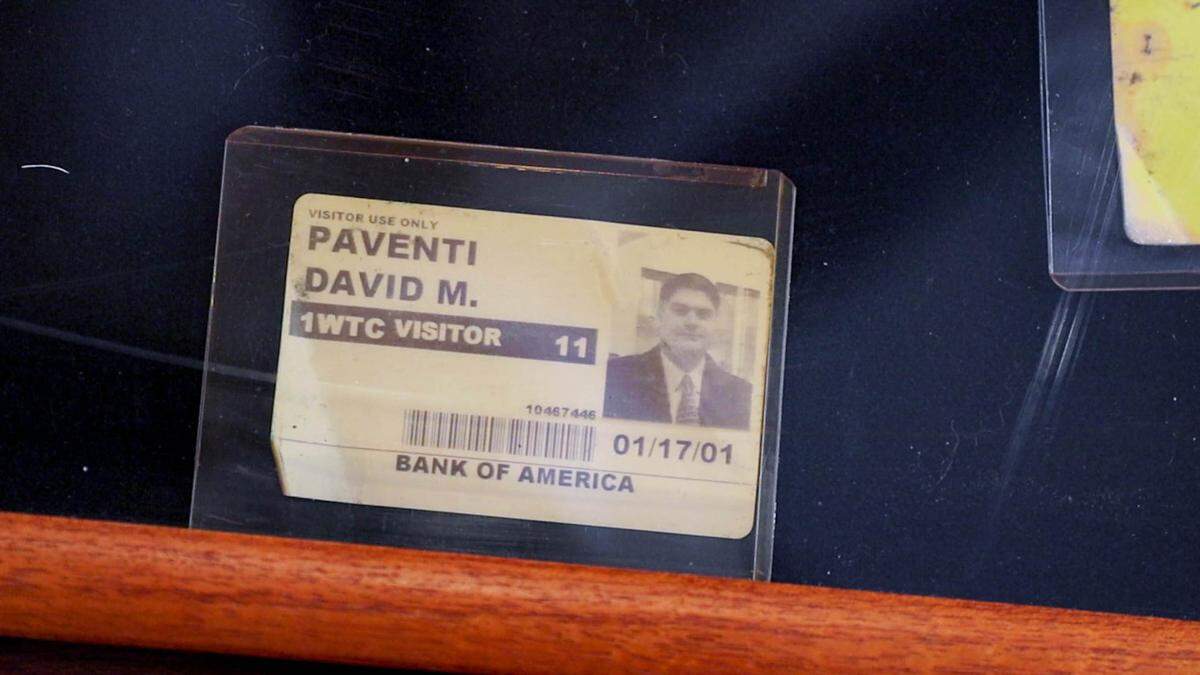
Paventi still has the shirt he was wearing that day, along with his World Trade Center visitors badge, dated Sept. 11, 2001, featuring his photo.
Fearful of more attacks
In a state of disbelief, Paventi and his co-worker, Bob, had a singular goal — to get off the island of Manhattan and on to the mainland. Ultimately, they decided to head to the Queensboro Bridge in an attempt to get to Bob’s brother’s house on Long Island.
“I knew there were only two ways off Manhattan — a bridge or a tunnel, and I thought at least on a bridge you can jump and have some chance of survival,” Paventi said.
The inbound lanes of the Queensboro Bridge had been closed to driving traffic, so hundreds of people were walking across the lanes. “We started to hear a rumbling noise, and we looked over our shoulder,” Paventi said. “We watched the North Tower — the tower we had just been in — melting down into the horizon. That’s when we took off running.”
‘Just nothing made sense.’
In Charlotte, Lynn Paventi had lost contact with her husband. “I didn’t know which tower he had been in. I didn’t know what floor he had been on. My heart just sank. I didn’t know where he was.”
Though Paventi was hesitant, Bob insisted that their only option once they crossed the bridge was to hitchhike. A gentleman in a green Dodge Neon kindly pulled over and asked where they were going.
“He said, ‘I’m not taking you to Long Island. What’s your other option?’ We told him JFK, thinking we could get a rental car,” Paventi said. “That’s when he told us: ‘I’m only doing this because my wife is in the World Trade Center, so I’m hoping if I help you, someone will help her.’” It was a sentiment that has stood out to Paventi to this day.
The duo was just five people away from the front of the car rental line when the company ran out of cars. “Everyone started bolting for the door, and at that time the different rental places at JFK were separated by a chain link fence. Bob somehow noticed a hole in the fence and we ran through it and because of that managed to be the second people in line at the next rental car agency,” Paventi said. “Without that hole, we may not have gotten a car.”
They made it to Long Island, and the next day drove back to their families in Charlotte. Though he has told this story hundreds of times, Paventi still shakes his head at how it all unfolded.
“You take a look at that whole day and just think of everywhere you made a decision, and how with one little change it could have literally changed everything.
“What if we had decided to try and find another staircase when we were stopped on the stairs? What if we had stopped running or made a wrong turn in the cloud of debris and something had hit and killed us? What if we hadn’t run over the bridge and met up with the guy in the green Dodge Neon? What if Bob hadn’t found that hole in the chain link fence? One different choice and we may not be here. It’s hard to sit back and not think there has to be something bigger guiding you through.”
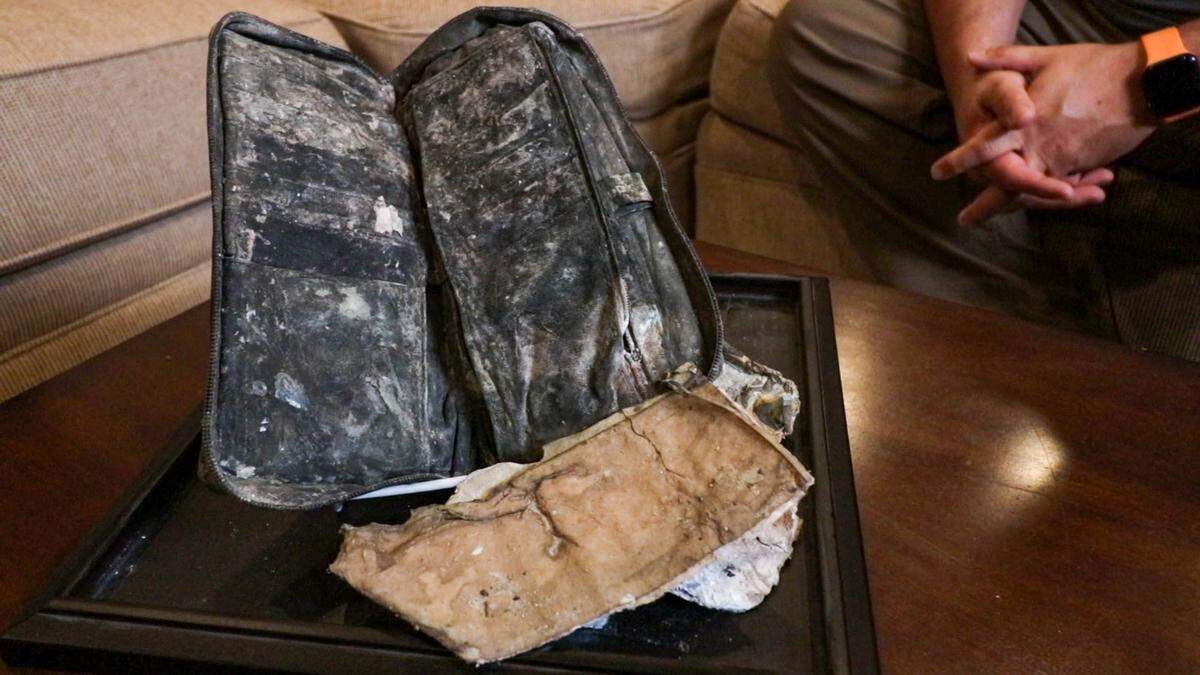
Paventi’s story does not end there. A few years after 9/11, he was sitting in Charlotte when his phone rang. It was a New York Police Department sergeant.
“He said, ‘Sir, we have your briefcase.’ I said, ‘What do you mean? I’m staring at my briefcase here in Charlotte.’ And he asked, ’Were you in downtown New York on 9/11?’, and I just froze.”
“A few weeks later, I was in New York and went by the precinct’s recovery room. I had this travel wallet that I used to carry, and there it was. The items were covered in ash and a bit charred, but it still had my passport, my boarding pass, my frequent flier cards and some coins in it. When you think of all the debris and destruction that day, the fact that this was still fully intact is just unexplainable,” Paventi said.
“When I opened the portfolio, there was a paper that had been filled out and placed inside that said ‘assumed DOA.’ That was a humbling moment.”
Twenty years later, Paventi and Bob remain friends and colleagues, working together in Charlotte.
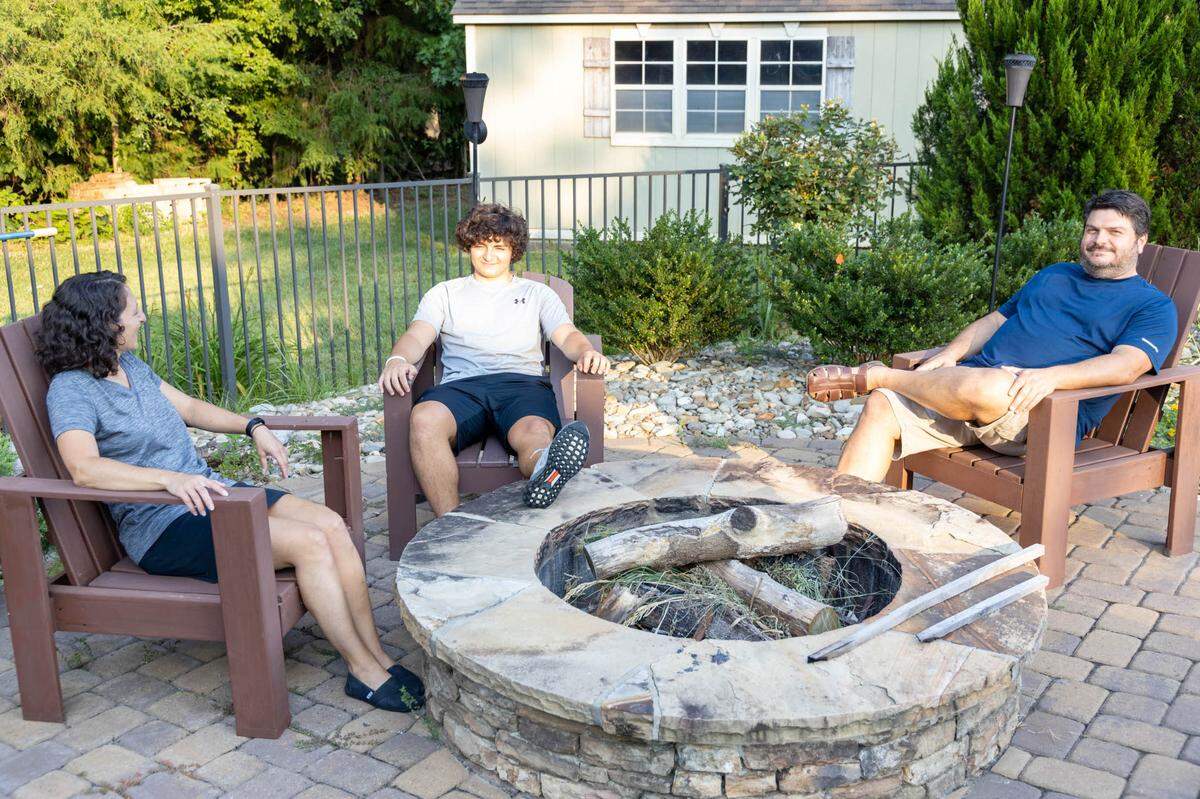
The Paventis have a 16-year old son, Zack, who has grown up hearing his dad’s story. He was 6 years old when he realized the significance of it.
“It was the 10-year anniversary, and I was sitting in the office listening to my dad tell his story and I remember thinking, ’If anything had happened to my dad, I wouldn’t be here. My mom would have a different life. Everything would just be different than it is now,” Zack said.

This story was originally published September 7, 2021 at 6:30 AM.