
Red Justice Project calls attention to NC’s missing and murdered Indigenous people
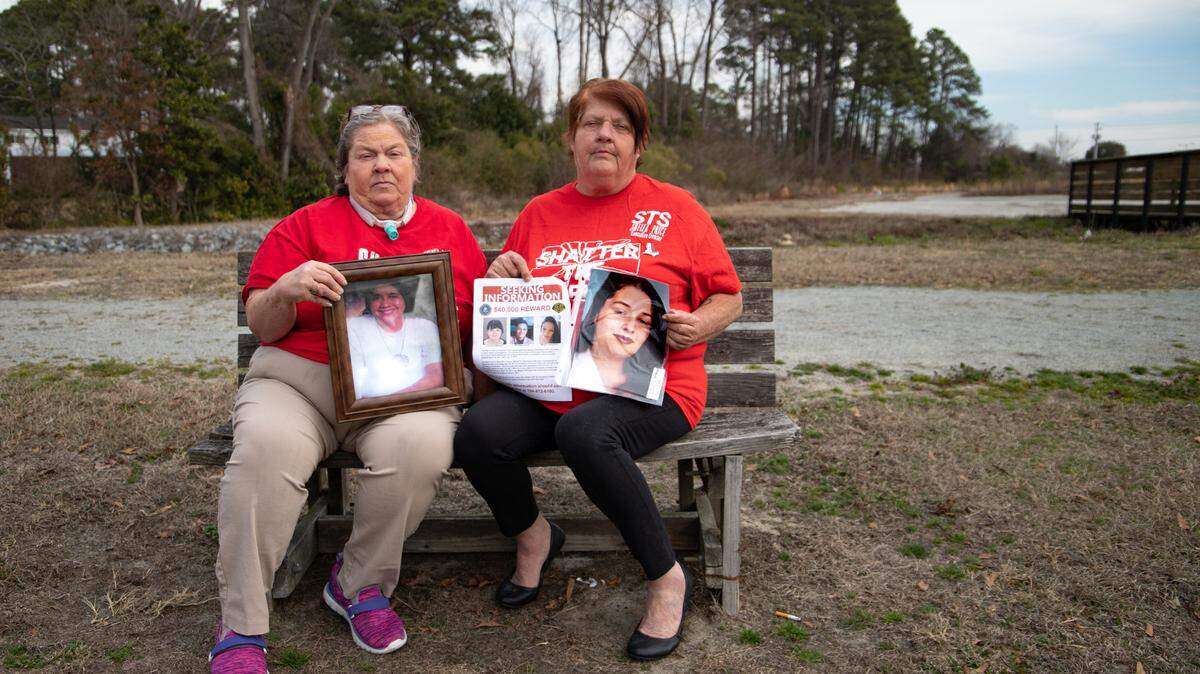
Marcey Blanks’ mother is still waiting for the trial of the man charged in her daughter’s murder.
In the early hours of Nov. 16, 2016, Blanks’ attacker raped her, stabbed her 89 times and set her Robseson County home on fire. Blanks managed to get up, walk to her neighbor’s home and tell him the name of her attacker before died on his doorstep. She was 18.
More than five years later, the case hasn’t gone to trial due to a series of delays tied to the defendant.
When the Red Justice Project podcast featured Blanks’ case last year, her mother, Mary Sue Hunt, was thrilled. The podcast’s focus on her daughter’s death, which otherwise received little media coverage, helps keep interest in the case alive, she said.
At the time of Blanks’ murder, several local news outlets didn’t even spell Blanks’ name correctly in their brief reports.
“She was a good girl,” Hunt said. “How hard she fought that morning — that’s how hard I have to fight for her.”
True crime podcast
The Red Justice Project is a true crime podcast devoted to bringing attention to the widespread violence against Indigenous people in North Carolina and beyond. Brittany Hunt and Chelsea Locklear, both Lumbee women like Blanks, started the project during the summer of 2020.
With more than 5,000 downloads, the podcast has reached listeners across over 40 states and 60 countries —and victims’ families are grateful for the renewed attention their loved ones are receiving.
“That story should have made national news,” said Hunt, a former social worker at Blanks’ high school. “It’s traumatic. I think a lot of families feel a lot of anger around that, that people didn’t care more.”
On the podcast, Hunt takes the time to cry, grieve and remember who Blanks was with Blanks’ mother.
“That episode was kind of a turning point in our podcast and also in helping us think about how we can give families the dignity and respect that they deserve, even though they have not been given that from the media,” Hunt said.
‘I started dreaming about them’
Indigenous communities are spread widely across North Carolina. The only federally recognized Indigenous tribe in the state is the Eastern Band of Cherokee in western North Carolina, but the state recognizes seven other tribes, including the Lumbee. With more than 70,000 members, the Lumbee are the largest tribe east of the Mississippi River.
The Lumbee primarily live in Robeson County, where many of the cases featured on the podcast took place. Robeson County had the highest violent crime rate in the state in 2020.
But violence against Indigenous women isn’t unique to Robeson County or North Carolina. Indigenous women across the U.S. are over three times more likely than other women to experience violent crime in their lifetime, and nearly half of Indigenous women in the U.S. have been raped. In North Carolina alone, there have been around 90 unsolved cases of missing or murdered Indigenous women since 1994.
These statistics don’t show the whole picture, and cases are likely much higher, Locklear said. Victims from tribes that aren’t federally recognized aren’t counted in national statistics, she said, so Blanks’ case wasn’t federally acknowledged.
Additionally, many Indigenous victims are misrepresented as being non-Indigenous or aren’t given the ability to be represented as Indigenous on police forms.
“Native American sometimes is not an option,” Locklear said. “You have to go into another box.”
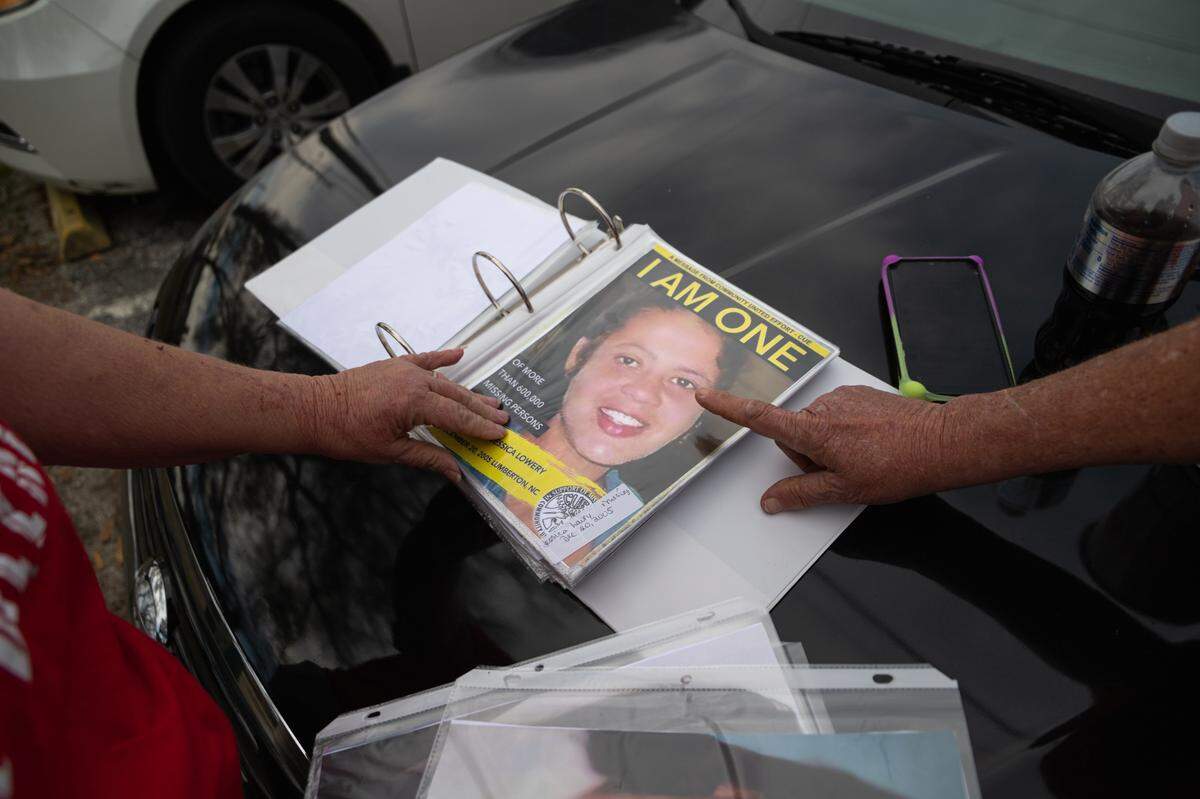
Locklear had long been a fan of popular true crime podcasts. But she noticed that most true crime podcasts primarily featured white victims — so, she set out with Hunt to give their own community the attention they felt it deserved.
Locklear, 32, works for an investment management firm in Raleigh. Hunt, 31, is a postdoctoral research associate at Duke University, where she researches how education disenfranchises Indigenous history and affects Indigenous culture.
The two Lumbee women met on Facebook, which is a popular way for Indigenous people to meet members of their extended communities, Hunt said. They searched for cases to cover by sifting through social media, news articles and police reports and talking to victims’ family members.
Hunt and Locklear record the episodes on their own computers,and Locklear’s husband edits the audio files.
Hunt and Locklear are now planning the second season of the podcast. It’s taken a while for the pair to get started — telling their community’s stories has taken a toll on the next season.
“Some nights, I wouldn’t get sleep, and I started dreaming about them,” Hunt said.
‘A horror story’
Casey Elaine Young — featured on episode 13 — went to high school with Hunt. She was found dead in the woods a few hundred yards from her home in Robeson County on June 15, 2009. She was 21.
“Casey was humble, kind, a great basketball player and a good leader,” Hunt said on the episode.
Young had a gunshot wound to her head, and her hands were missing. The police ruled the case a suicide, but the gunshot wound trajectory came from her nondominant hand.
Friends and family believe Young was murdered. Her aunt, Angela Baxley, has been fighting for justice ever since. Baxley’s daughter, who discovered Young’s body, was close with Young.
“It was a horror story for my daughter to see her cousin and best friend laying there like that,” Baxley said. “My daughter went through a lot of dark periods.”
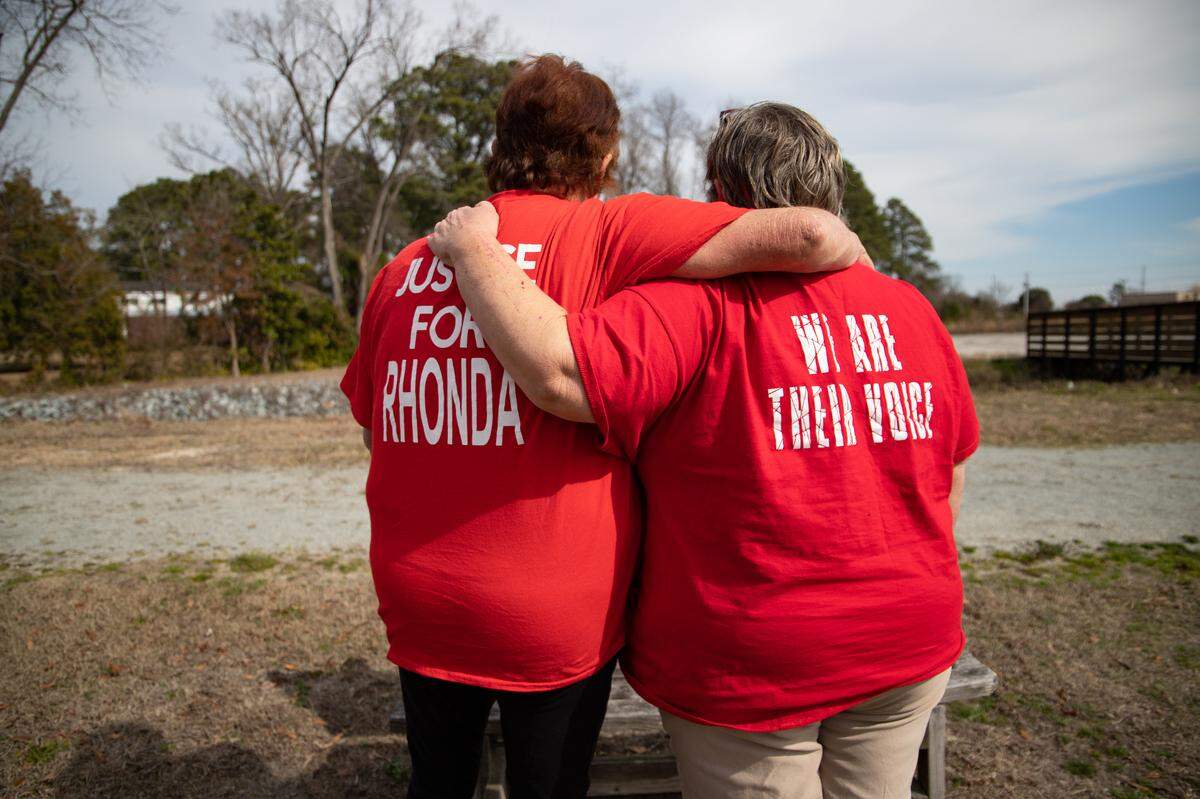
Baxley is secretary of Shatter the Silence, an organization that advocates for justice for missing and murdered Indigenous people in North Carolina. Red Justice works closely with Shatter the Silence, which was founded by Shelia Price, the mother of Rhonda Jones. Jones was a Lumbee woman whose body was found in a trash can in Robeson County. Jones’ murder remains unsolved.
Shatter the Silence holds rallies and marches and supports victims’ families. The organization’s Facebook group has over 9,000 members, and Baxley credits Red Justice for helping to add to that number.
Baxley said officials are taking a closer look into Young’s death. The Robeson County Sheriff’s Office did not respond to a request for comment for this story.
Baxley is thankful to Hunt and Locklear for humanizing the victims they feature on the podcast.
“I have nothing but love and respect for them, because they’ve brought an issue back to the forefront of the county,” Baxley said. “They put a face to these women and to these men.”
‘Love for our community’
To describe violence against Indigenous women as epidemic does not do justice to what takes place in Indigenous communities, Hunt wrote in an article for the North Carolina Medical Journal in November 2021.
“The problems that Indigenous women face are neither short-term, nor isolated. These were the same problems faced by their mothers and grandmothers before them, the same problems that their own daughters and granddaughters face now,” Hunt wrote.
The love that Hunt and Locklear have for their community is what keeps them going, Hunt said. Both women are still deeply connected to their Indigenous ancestry and their community.
“With love comes this great sense of injustice for what’s happening in the community,” Hunt said. “If we didn’t love it, we probably wouldn’t care so much.”
This story was originally published March 16, 2022 at 6:15 AM.