An Avett Brothers band member just wrote a book ... on John Quincy Adams?
The words beach read and John Quincy Adams seem about as unlikely a pairing as a folk rock star and a presidential historian.
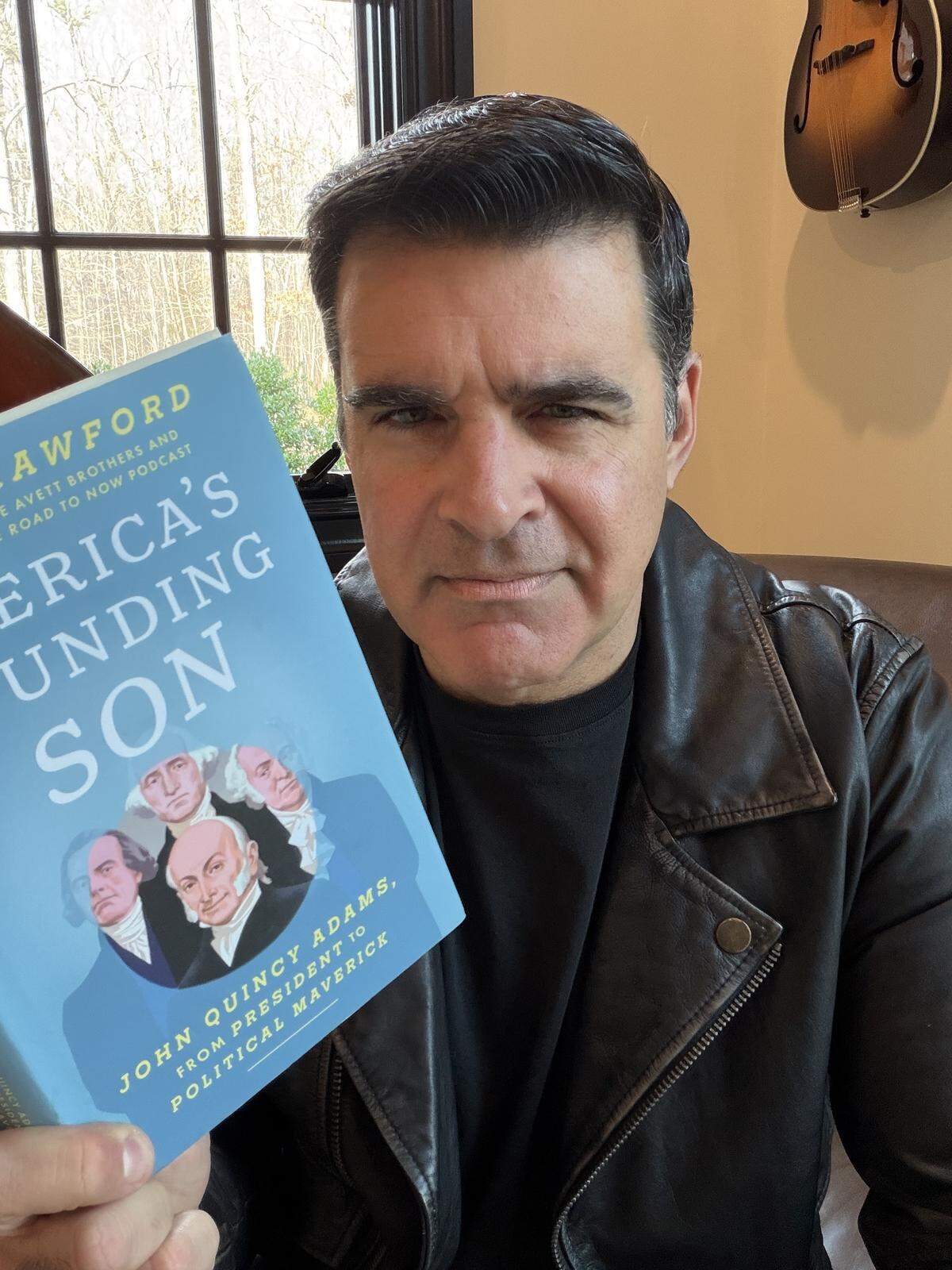
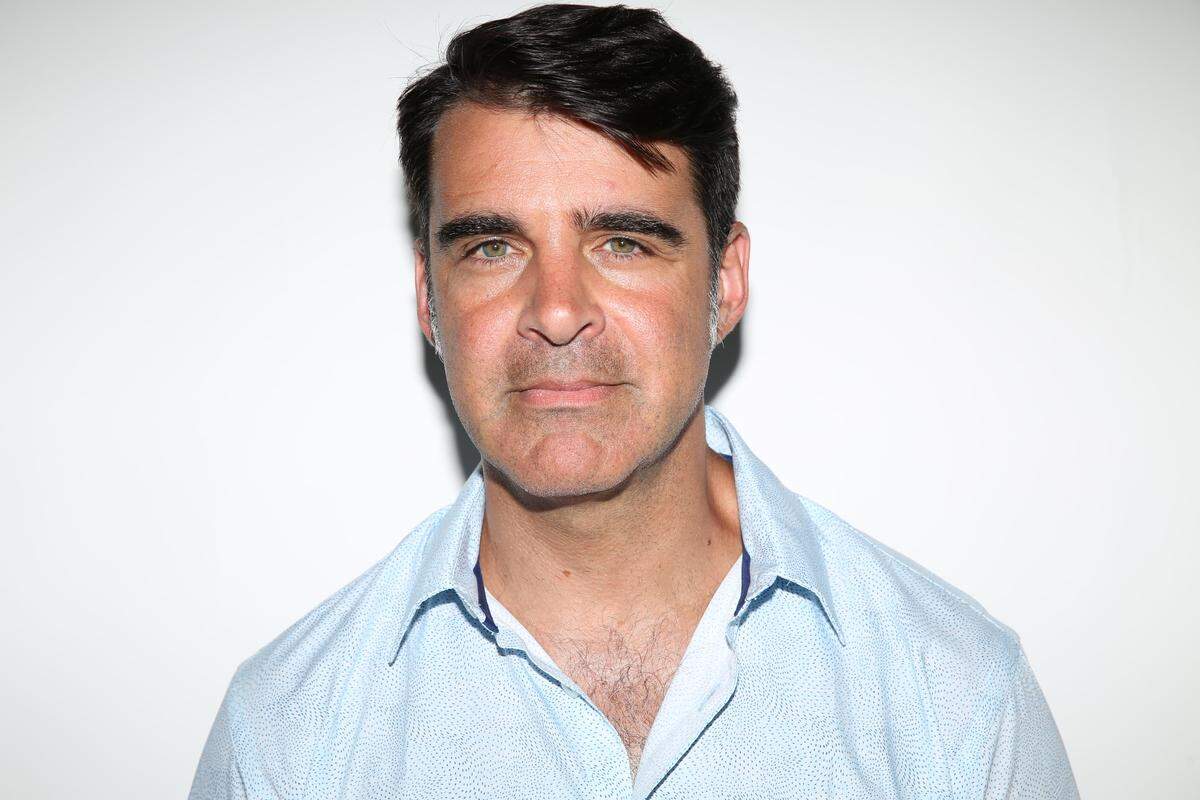
And yet, that’s just what’s unfolding this month. Bob Crawford, a founding member of Concord’s beloved Avett Brothers band, wrote a book about Adams, the nation’s Founding Son and sixth president.
Crawford’s 352-page book, “America’s Founding Son: John Quincy Adams, from President to Political Maverick,” publishes March 10 from Zando, an independent publisher.
It’s no fusty academic tome. Rather, Crawford set out to chronicle Adams’ story at a pivotal moment in the life of the ex-president while drawing parallels to our own time. And he does so in a conversational tone, dropping in references to the likes of “sick burns,” C-SPAN and “Stairway to Heaven” along the way.
As Crawford readily acknowledges, “I’m a historian, but I’m not your average historian.”
In a recent interview with The Charlotte Observer, Crawford spoke of the journey that led him to write about Adams’ unexpected path from failed one-term president to the leading voice in Congress against slavery and for free speech.
The period of American history Crawford captures is not nearly as resonant in the popular mind as the ones that bookend it, the Revolutionary War and the Civil War. But he was intrigued that George Washington appointed Adams to his first diplomatic post and Adams later served in Congress with Abe Lincoln.
“He really was the man in between” the founding era and the Civil War era, Crawford said. “No one makes more of a turn (in their life) than John Quincy Adams. And the more I looked in on that, the more I felt there were echoes, vibrations, that we can see in our own time.”
There’s a rabble-rousing politician with grievances galore. People questioned who were “real Americans.” There were attacks on free speech and attacks in the partisan media. Sound familiar?
“It’s just shocking how relevant it is,” Crawford said.
A young musician and history buff
Growing up in south Jersey (“Exit 7S off the Parkway”) in the 1970s and ‘80s, Crawford was a news junkie. Back then, there were a grand total of four channels on TV. Crawford nevertheless was hooked on political debates and election coverage from a young age.
His mom would take him to historic sites in the region and a fourth-grade teacher inspired him with local lore.
In high school, Crawford mostly earned Cs and Ds. But he was acing history class to the point where his teacher would ask, “Does anybody besides Bob know the answer?”
A historian’s journey begins
In the early 2000s when The Avett Brothers were starting out, Crawford and Scott and Seth Avett would travel to gigs in a Chevy van. Six, eight hours a day. They talked music. They talked songwriting. They read. They did not talk politics. Those rides left lots of time to think, too.
When stories of U.S. abuses at Abu Ghraib prison began to emerge in 2004 after the invasion of Iraq, Crawford asked himself, “How did we get from 1776 to being this nation, and this invasion of Iraq, which we kind of knew was sketchy from the get-go?”
At around the same time, popular historian David McCullough released his book “1776” just a couple of years after his John Adams biography won the Pulitzer Prize.
Crawford devoured those books. But it was another one that he read a year or so later that set him on his journey as a historian — Sean Wilentz’s thousand-page book, “The Rise of American Democracy: Jefferson to Lincoln.”

Attracted to ‘Old Man Eloquent’ and his times
The more he researched the years between 1820 and 1850, the more he encountered a period rich with vibrant characters:
- A populist with a seething grudge and a firm belief that his presidential victory was stolen out from under him by Adams and other duplicitous foes: Meet Andrew Jackson.
- The Quaker publisher who walked thousands of treacherous miles across the country, and even into Mexico, to promote the cause of abolition: That’s Benjamin Lundy.
- An outspoken woman shunning her Southern plantation roots, railing against slavery and advocating for women’s rights, so much so that not even a pro-slavery torch-carrying mob slinging rocks and breaking windows in the hall where she was speaking could stop her: Angelina Grimké stayed on message.
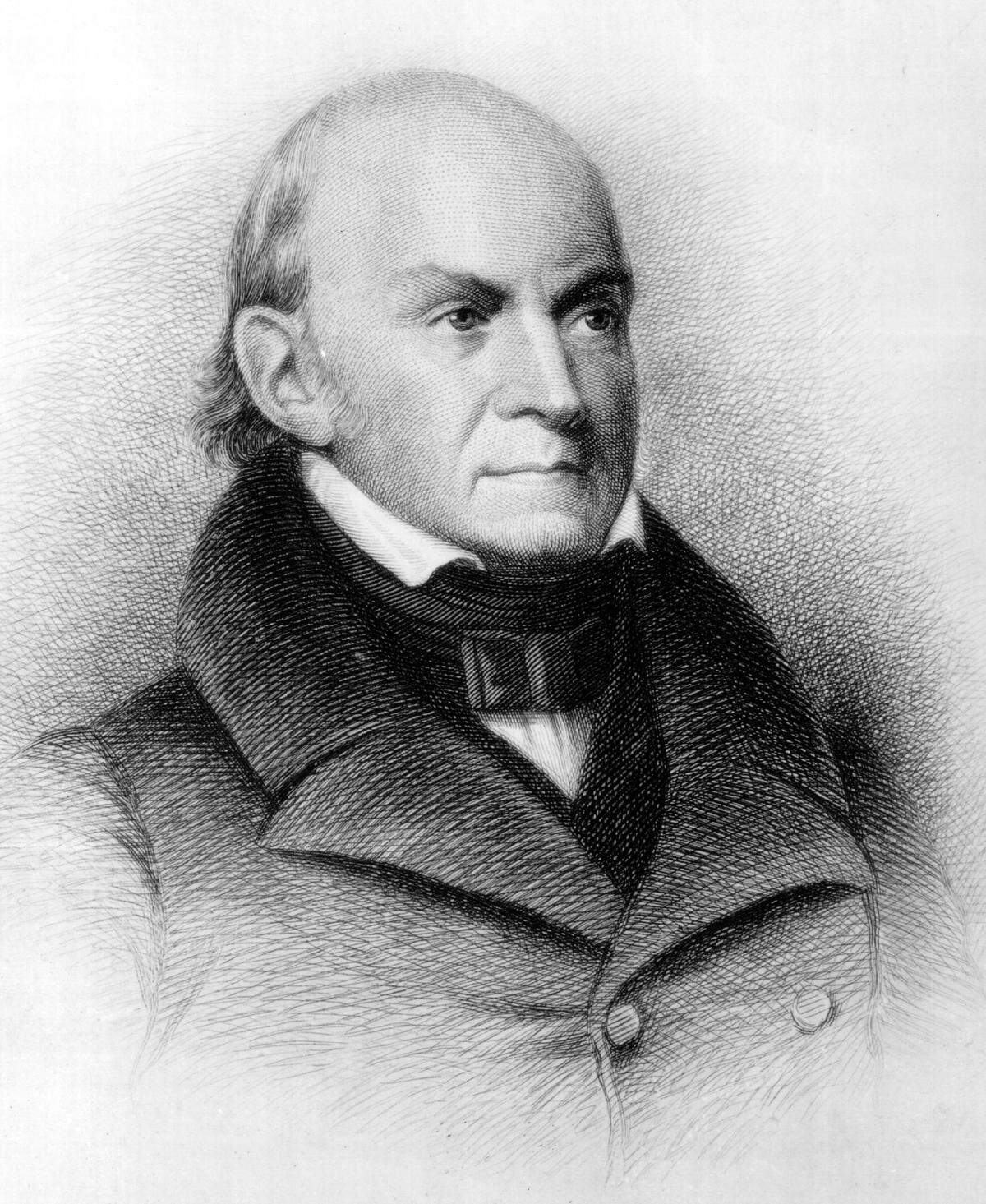
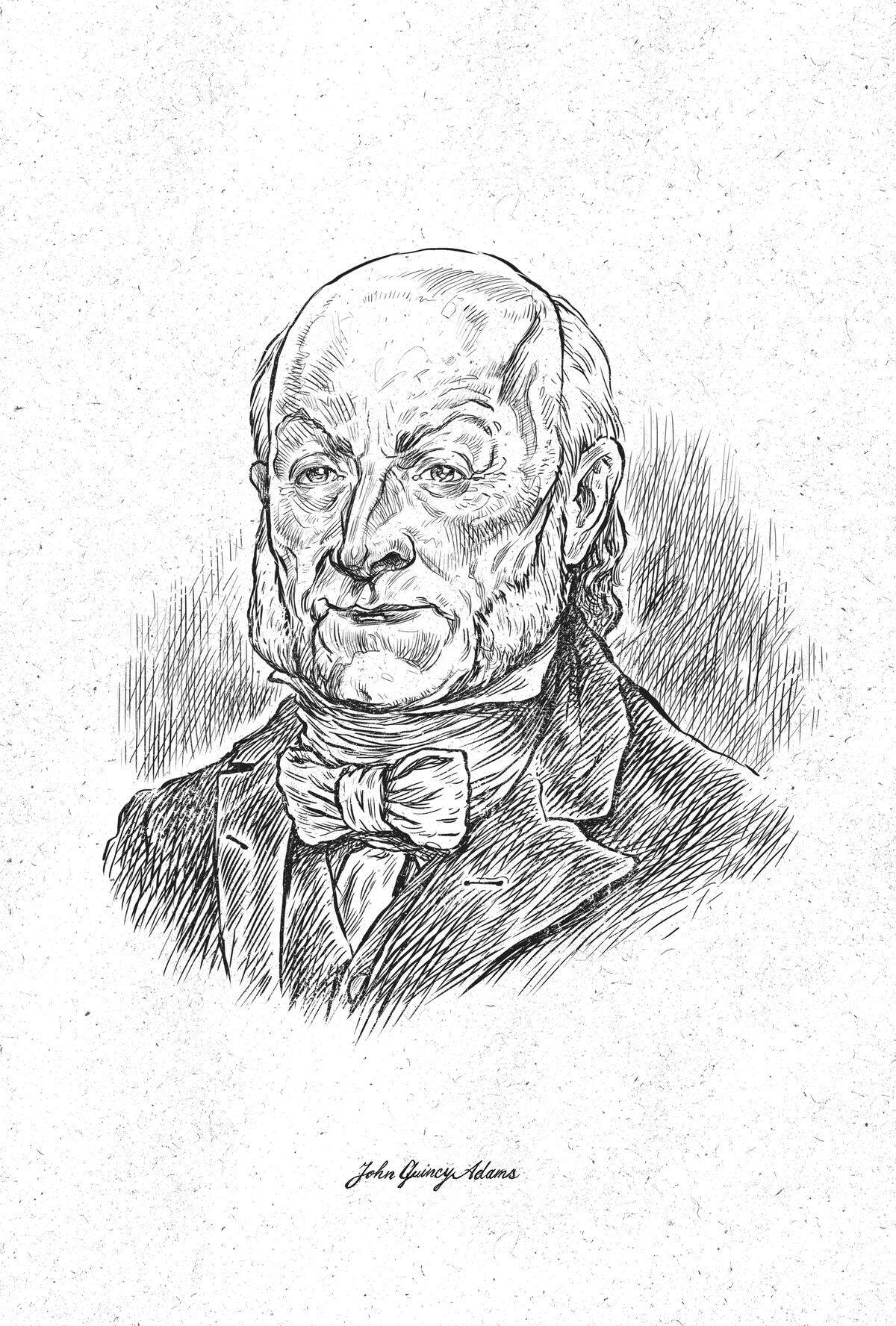
Then there’s Adams. Who witnessed the Battle of Bunker Hill as a boy. Who led negotiations to end the War of 1812 with the Treaty of Ghent. Who was the main force behind the Monroe Doctrine as Secretary of State.
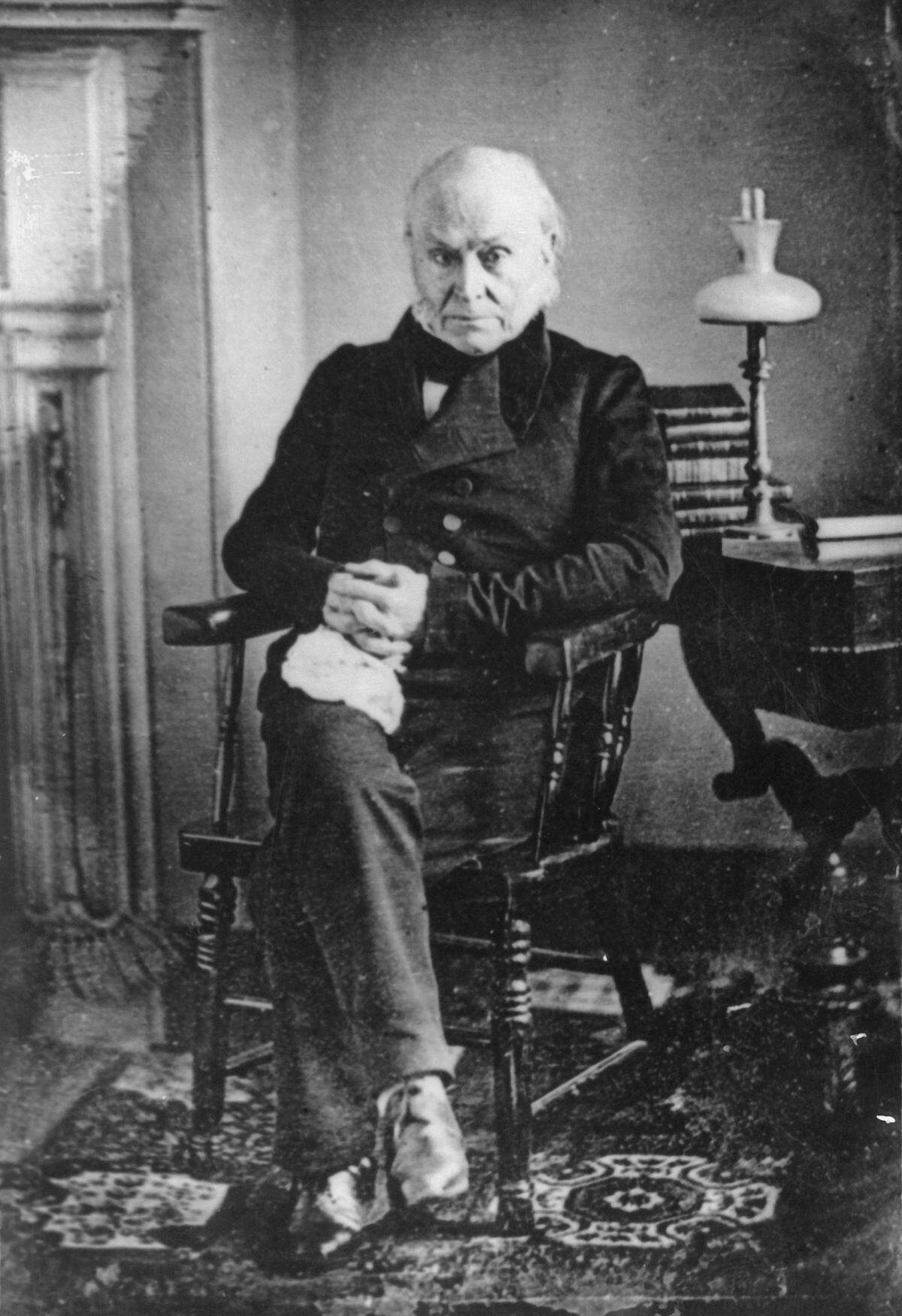
He frequently tangled with Jackson, who easily bested him in their presidential rematch. And Adams held another successor, slave-owning John Tyler, in such low esteem that Adams described him as having “talents not above mediocrity, and a spirit incapable of expansion...”
Or, as Crawford wrote, “Let us pause for a second to point out that sick burn: talents not above mediocrity. That’s why I love John Quincy Adams. Old Man Eloquent had been thrown a vicious twist of fate (when Tyler became president after William Henry Harrison died shortly after his inauguration) ... But John Quincy Adams was more cantankerous and possessed more political capital than ever.”
And when Adams thought his best days behind him, he began a 17-year journey in Congress, the only ex-president to serve there. It steered him to his final fight and greatest victory, as an anti-slavery activist.
John Quincy Adams and the ‘Gag Rule’
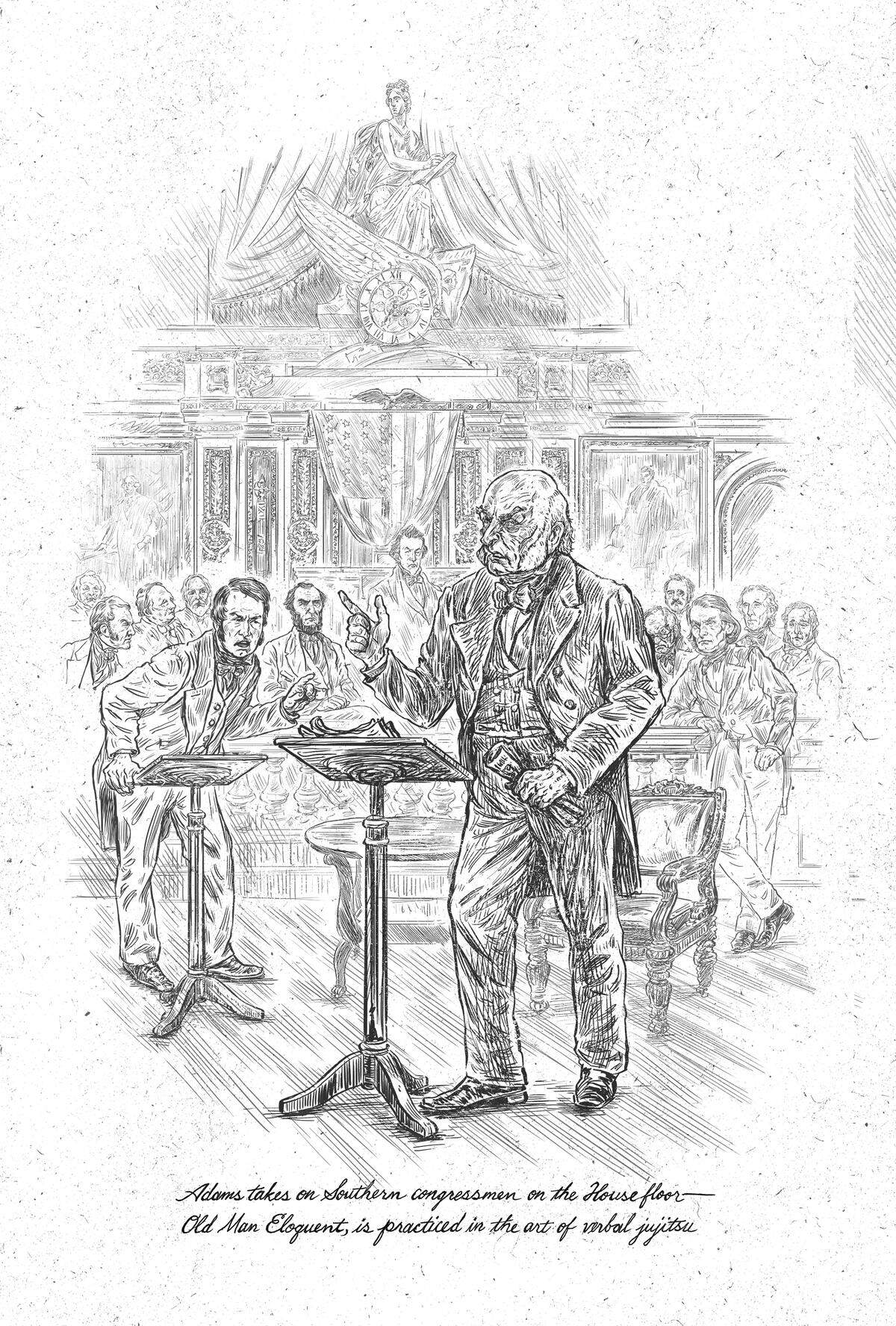
The catalyst for Adams’ transformation was the infamous congressional “Gag Rule,” which Southern politicians conceived in 1836 to automatically table without debate any petition dealing with slavery.
Adams would not be daunted. A master of parliamentary procedure, he led the charge against the Gag Rule. One time he used a loophole to rail against slavery for weeks on end during a Texas annexation debate.
Finally, a congressman asked Adams if he was ever going to shut up. Adams shot back that he’d keep talking for as long as God gave him life, breath and the ability of speech. Or as Crawford wrote, “Like Captain America, Adams was saying, I can do this all day.”
Adams kept railing against the rule until he had the votes to finally repeal it in 1844.
On ‘The Road to Now’ with Bob Crawford
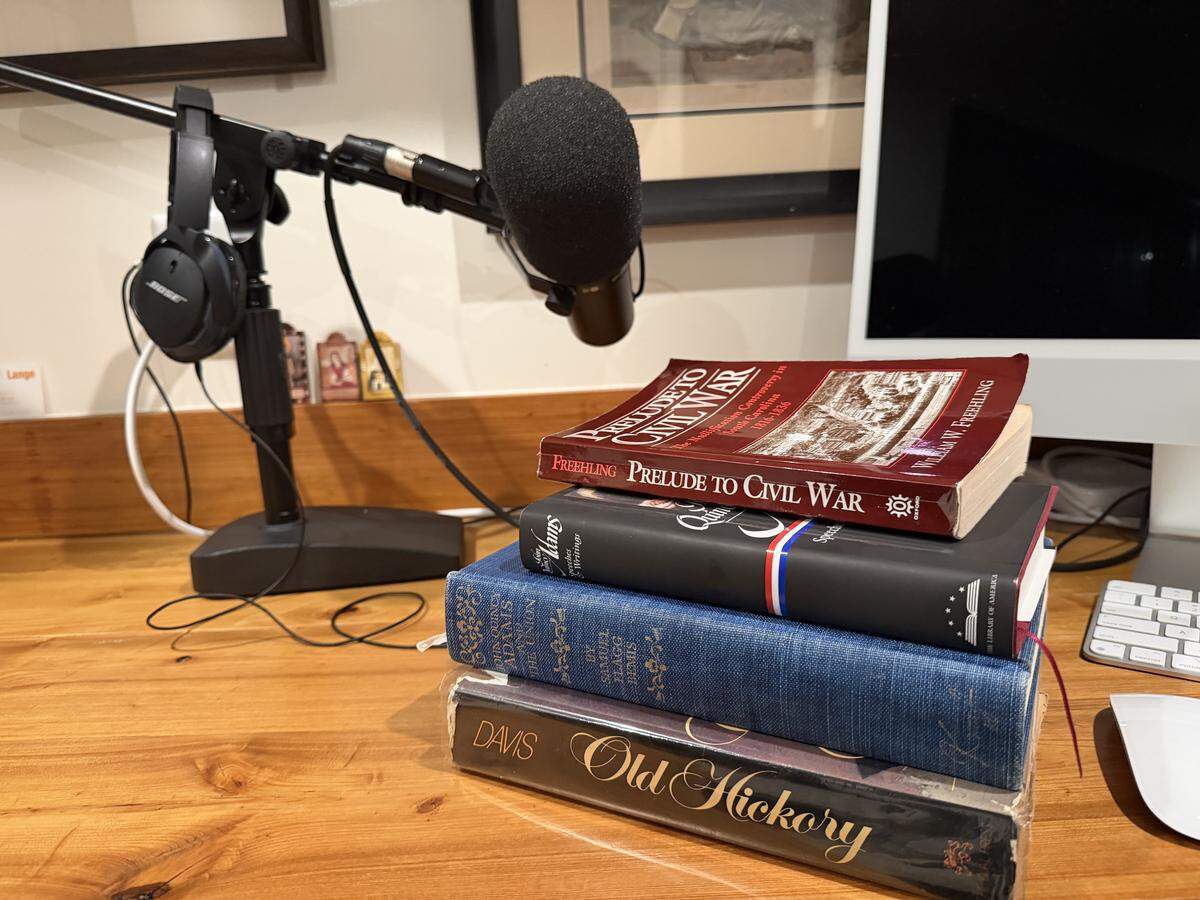
As Crawford continued to consume history, he launched a podcast in 2016 with historian Benjamin Sawyer called “The Road to Now” on Spotify and iTunes.
They and their guests cover the history behind important events and people. To date, there have been 360 episodes, on topics as diverse as an oral history of the Jan. 6 Capitol riot, the Folk Americana Roots Hall of Fame and a ”forgotten history” of Chinese life in the U.S.
Crawford earned undergraduate degrees in communications from Stockton University in New Jersey and in music from Winthrop University in Rock Hill. He got his master’s degree in history from Arizona State online in 2020.
The path to the Adams book ran through SiriusXM during the pandemic in late 2020.
Crawford was acquainted with Michael Smerconish, who has a political show on Sirius. He asked if Crawford wanted to guest-host while he was away. Crawford quickly said yes.
It went well enough that further talks with Sirius producers led to Crawford creating a six-part series on the history of benefit concerts called “Concerts of Change.” He talked to Bono, Bob Geldolf and George W. Bush for the series.
Crawford felt he had a knack for this.
A take-it-or-leave-it offer
Crawford pitched an Adams series to iHeartRadio in 2022. He waited half a year before hearing anything. After executives said yes, his six-part podcast on Adams premiered in spring 2023.
Buoyed by the project, Crawford began pitching Adams’ story as a book. His agent sent out proposals to 20 publishing companies. Only two responded.
The first was lukewarm. The second was Zando. Editor Sarah Ried loved the idea, made an offer and gave Crawford six hours to take it or leave it.
“Accepting (the offer) was a real exhilaration,” Crawford said. “Then terror, within an hour, of realizing that now I had to do it.”
He had a year.
Writing on The Avett Brothers’ ‘nerd bus’
He started writing in June 2024.
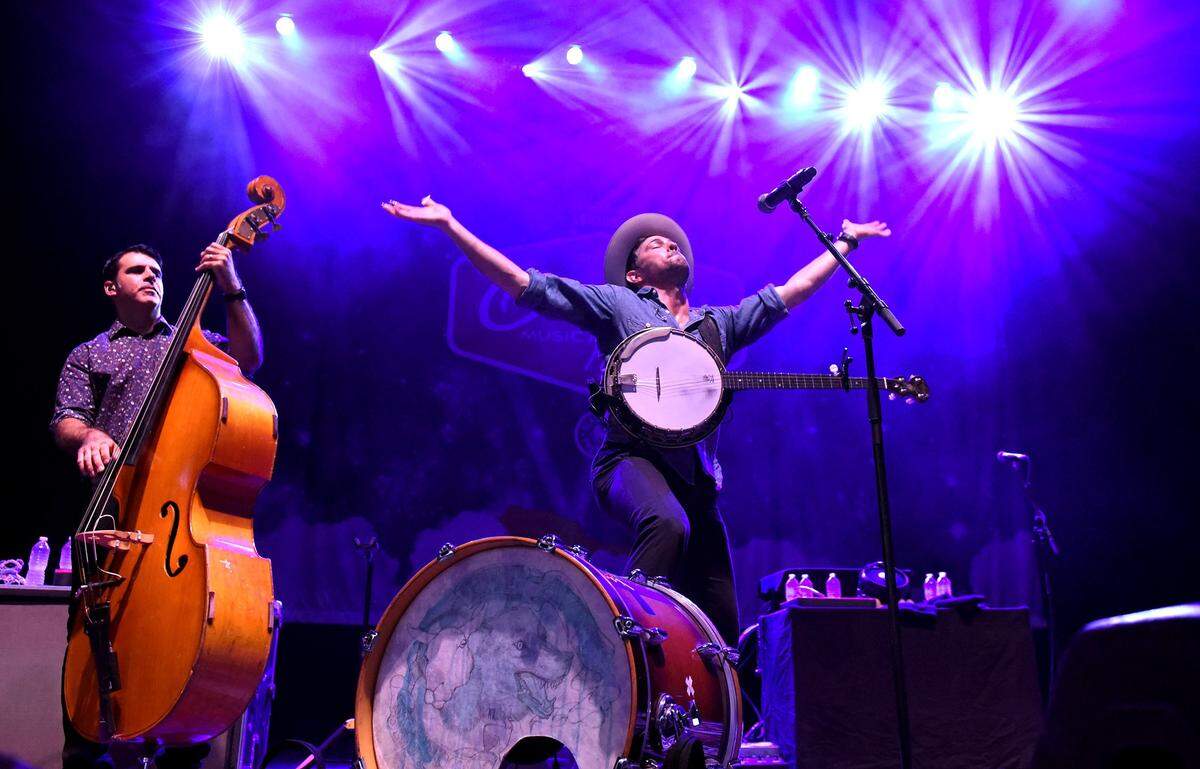
The days of the band traveling in the old Chevy truck were long gone, as the expanded team rode in two tour buses. Crawford’s companions include cellist Joe Kwon and Bonnie Avett Rini, the Avett brothers’ sister who plays piano with the band on the road.
Crawford calls it “the quiet bus,” “the nerd bus,” “the reading bus.”
He’d often take over the back lounge with a bunch of books for the project. “There’s so much downtime in what we do on the road. Historically, when you think about rock bands, it’s not very good. It’s not very healthy, right?”
But these days, he said, you’re much more likely to see musicians working out or diving into other projects. “I don’t seem like much of an outlier,” Crawford said.
On the road, Crawford could work on the book right up until the band’s sound check for a gig. That’s the time when the real work begins, where the musicians take the stage, work out the technical aspects for the show and rehearse.
It’s a demanding life and a tricky balance. The Avett Brothers’ longtime manager, Dolphus “Dolph” Ramseur, recalled on social media how he’d see Crawford “reading a zillion books in the van/tour bus, backstage, airports, etc ...”
But Crawford knew when to set Adams aside.
“I had to be very disciplined at times to put (the book work) away at sound check, and definitely put it away after the show because it’s such brain work.”
Crawford spent his days off researching and writing the book. When he was back home outside Durham, he’d be up by 6:30 or 7 to start work, help get his two kids moving then turn back to the book while they were at school.
But when the kids were in bed, he’d stay up late working on the book.
Crafting the beach read for the Adams bio
Crawford aimed to be as conversational as possible in telling the story, like he was tapping a friend on the shoulder, saying, “I have to tell you this.”
He had pitched the book as a beach read, something folks could get through in a couple weeks. If it piqued their curiosity to learn more about the people and the era, as he hoped, they could consult his 21 pages of footnotes.
Crawford hoped his plain-spoken language would resonate with readers, “that they know I’m not sitting in some high tower preaching to them, or bogging them down with an overly dense history tome. Most people are not going to want to do that at the Outer Banks. “
So you’ll get lines like this in the book, when Crawford describes the slavery stalwart from South Carolina, John C. Calhoun, a rail thin man with gaunt eyes: “I believe a picture of middle-aged John C. Calhoun on your front door in October would be a suitable addition to any exterior Halloween design aesthetic.”
Or this, when Crawford took stock of the curmudgeonly Adams and the carousing, powerful statesman Henry Clay, who roomed together in Belgium to help negotiate the Treaty of Ghent: “To continue The Odd Couple homage, ‘Can two ambitious diplomats share an apartment without driving each other crazy?’ The answer is barely.”
Throughout the book, Crawford worked to connect for readers “the past and the present in a way they can understand.”
He turned in his draft — on time — last June. A few weeks ago, Crawford unexpectedly received a box of the finished book. It finally felt real.
What’s next for Bob Crawford
Crawford’s going to be quite busy in the coming weeks.
There’s a cross-country book tour that takes him from Durham to the “Church of the Presidents” in Quincy, Massachusetts, where Adams, his father and their wives are buried. Interviews with C-SPAN, Brett Baier, Smerconish, NPR’s “Morning Edition,” the New York Times book podcast and CBS Morning News are on tap.
He’s also working on another book proposal, set in the 1850s. Crawford has a pretty good idea who it might be about, though he’s not sure if he should say who it’s about yet. Still, he’s very focused on it, while knowing, “I’ve got to keep my day job” with the band.
Crawford spoke again of the reverberations from Adams’ era. Americans were experiencing dark, uncertain days, where few could conceive of the end of slavery, the nation’s biggest industry. Then he spoke of current times, another period of great anxiety for many.
Democracy, he said, is always in crisis.
“We don’t know what the other side of this moment looks like, right?” Crawford said. “But there surely will be another side.”
More arts coverage
Want to see more stories like this? Sign up here for our free, award-winning “Inside Charlotte Arts” newsletter: charlotteobserver.com/newsletters. And you can join our Facebook group, “Inside Charlotte Arts,” by going here: facebook.com/groups/insidecharlottearts.
This story was originally published March 3, 2026 at 5:15 AM.