4 ways to appreciate art in Charlotte — without getting bored
Art is so many things. It is a beautifully complicated story. For some, trying to grasp its meaning feels like trying to run a marathon — not everyone makes it to the finish line, or even decides to run the race at all. So how do you do it? How do you visit one of Charlotte’s galleries or museums without feeling like an imposter or a little kid on a school field trip?
“If you have only been to a museum on a field trip, you think of this place where you go to learn, to talk, to look and hear,” said Jen Sudul Edwards, chief curator and curator of contemporary art for The Mint Museum. “It is a very pedantic and didactic experience — literally didactic, because we have text all over the walls — but one of the things that I think this show is emphasizing is that museums are really fun.”
Edwards shared a few tips about how to see a show, such as “Classic Black,” (highlighted below) and actually enjoy it.
“If you take all that pressure off to go in and to have to read, and to have to learn, it happens naturally,” Edwards said. “We all understand objects. We all understand material culture. We are a credit heavy society because we buy things. This speaks to all of that — like that lust for objects, and interest in filling our lives with things, whether it is these ceramic objects, or it is the color or the decoration on the walls.”
With that in mind, here are four Charlotte arts exhibits to check out:
(1) Bechtler Firebird
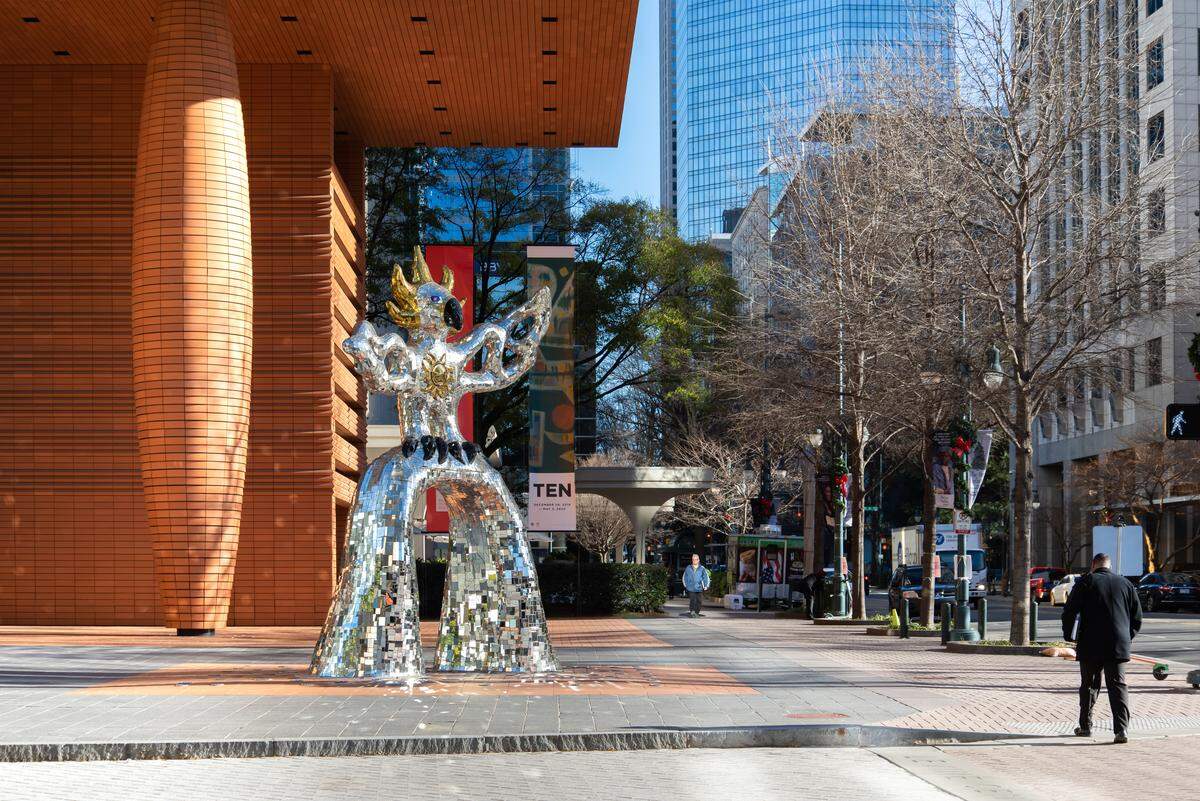
It stands before the Bechtler Museum of Modern Art in Uptown. It does not require an admission ticket, only your time. Niki de Saint Phalle is the mastermind behind the “Firebird” sculpture.
Her work stands a few feet from the ¼ scale replica of “Cascade” by Swiss kinetic artist Jean Tinguely’s sculpture “Cascade” in the museum lobby. The pieces symbolize a love story. Both de Saint Phalle and Tinguely influenced each other as artists. They were also lovers and at one point husband and wife.
If a scavenger hunt interests you, head to the Carillon building (227 W. Trade St.) to experience the original 40-foot sculpture commissioned by Andreas Bechtler, for whom the museum is named.
(2) “Classic Black: The Basalt Sculpture of Wedgwood & His Contemporaries” at the Mint Museum Randolph
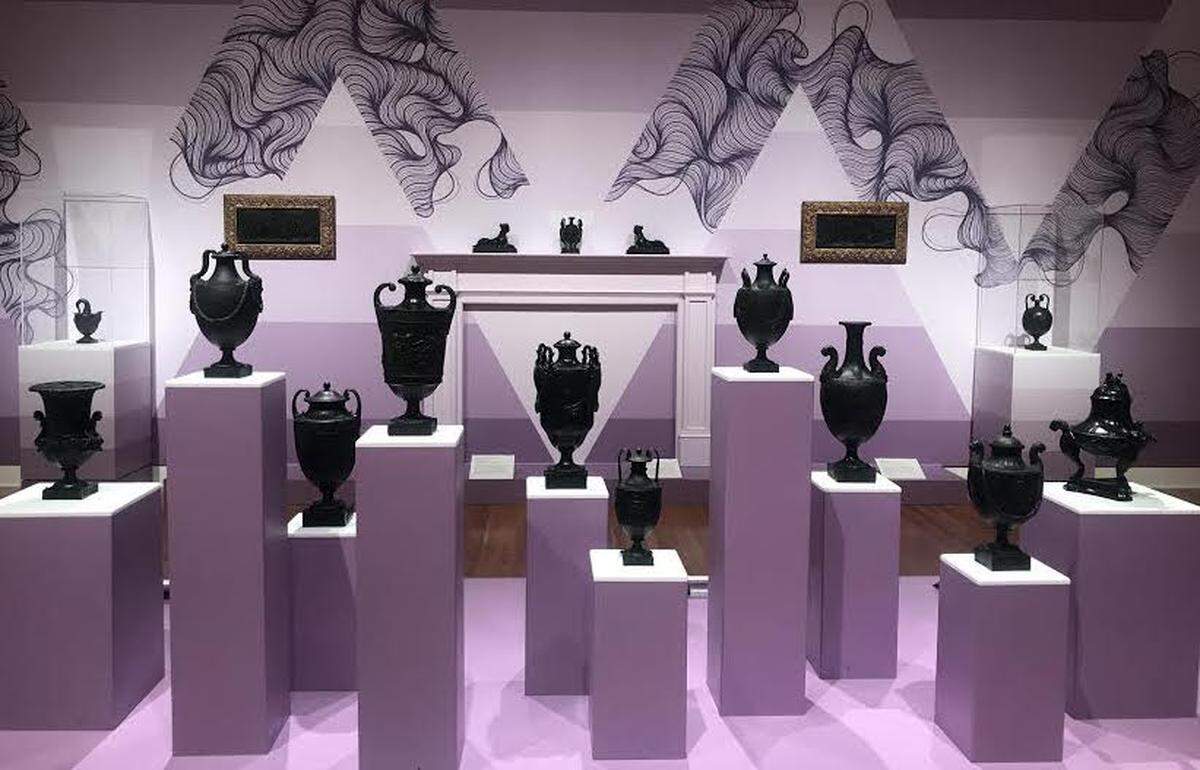
“Classic Black: The Basalt Sculpture of Wedgwood & His Contemporaries,” curated by Brian Gallagher, opened at The Mint Museum Randolph earlier this month and runs through Aug. 30. It is the first exhibit to highlight Josiah Wedgwood’s work in this medium, with over 100 black basalt sculpture pieces. Does this already feel confusing? What is black basalt? Who is Wedgwood? Will there be a test, and why should anyone care about works from late 18th century English potters?
Gallagher and show designer HannaH Crowell assembled a show that places you in England 18th century England, with a contemporary twist. Local muralist Owl provides a colorful backdrop, in the showrooms, library and the drawing room. Each section of the show draws on the cultural significance of the time as it pertains to these rooms.
“You are coming to this showroom to help you envision how these objects might look in your own home,” Gallagher said.
Consider the drawing room the space in the house you wanted everyone to see. It served as a place to formally entertain guests. Meanwhile the library would act as a space for peace and quiet. As for showrooms? Imagine the ultimate marketing scheme, attracting the most affluent customers. At the end of the day, Wedgwood was a savvy businessman.
“Everything about this show is very thoughtfully curated. It all has some sort of historical connection and importance,” curator Edwards said. “That is true, and you can learn all that, if you read the catalogue, if you talk to anyone who did the show, if you read the labels. But you can also just come in here and be blown away by this incredibly happy and just energy infused space, and that is an extraordinary gift to have in the community.”
(3) “Particle Falls”
If you see this display as blue, you’ve come on a good night. If it’s yellow or orange, well ...
Clean Air Carolina exposes Charlotte to environmental art through the work of Andrea Polli’s real-time local air quality display. The colors change based on the current air quality. The orange and yellow bursts indicate particle pollution that you are breathing.
Particle Falls first visited Charlotte in 2016, and now it’s back. From now until March 28 beginning around 6:30 p.m., “Particle Falls” will be projected onto the west side of UNC Charlotte’s Uptown location at 320 E. 9th St. It will be visible rain or shine. In 2016 “Particle Falls” was on display in Charlotte, but has also traveled to cities including Paris and Philadelphia.
“Because air pollution is invisible, we often don’t appreciate how it impacts our day-to-day lives,” Polli said in a statement. “‘Particle Falls’ allows us to see the invisible particulate pollution in the air we breathe, connecting the complexities of air quality and climate change to policymakers and the general public.”
(4) Portal

Editor’s note: Portal is temporarily closed while it moves to a new location. Stay tuned for re-opening details.
What happens when artists get to go crazy in a room? You get Portal, an immersive art experience. You’ve seen everyone else’s photos at Portal, and let’s be honest, no one enjoys FOMO. Go sit on the giant shoe, or get lost in the playroom.
At the end of the day, it’s about experience
However you choose to experience art, be open to trying something new.
“There is a joy that infects you before you realize what that may be,” Edwards said. “Even in the case of the Wedgwood pieces, that might not be the case when you look at one of those black basalt urns, but the design of the exhibition at least boost you until you get to the object and become engaged with the work itself.”
This story was originally published March 4, 2020 at 5:40 AM.