
Director brings ‘Palestine that my parents were born into’ to Charlotte theaters
For a modern viewer, the opening shots of “Palestine 36” can be arresting.
They’re not the images and videos shared throughout the news. Rubble, pain and intimidation aren’t apparent. It’s almost boring: just a street.
“It’s a busy street. It’s a policeman. What I think is very important is that Palestine is a multiethnic, multireligious, multilingual, diverse place. That is the Palestine that my parents were born into,” said Annemarie Jacir, the film’s writer and director.
“They were the last generation to live in that Palestine. And ever since then, it’s been division, borders, separation and trying to make it monolithic — and we reject that.”
“Palestine 36” is set to open on Friday, April 3, at The Independent Picture House and AMC Concord Mills 24.
Bringing little-known history to life
The film incorporates colorized archival footage from the British Mandate for Palestine, offering a lens into a different time in the nation’s history while aligning with the period the film covers.
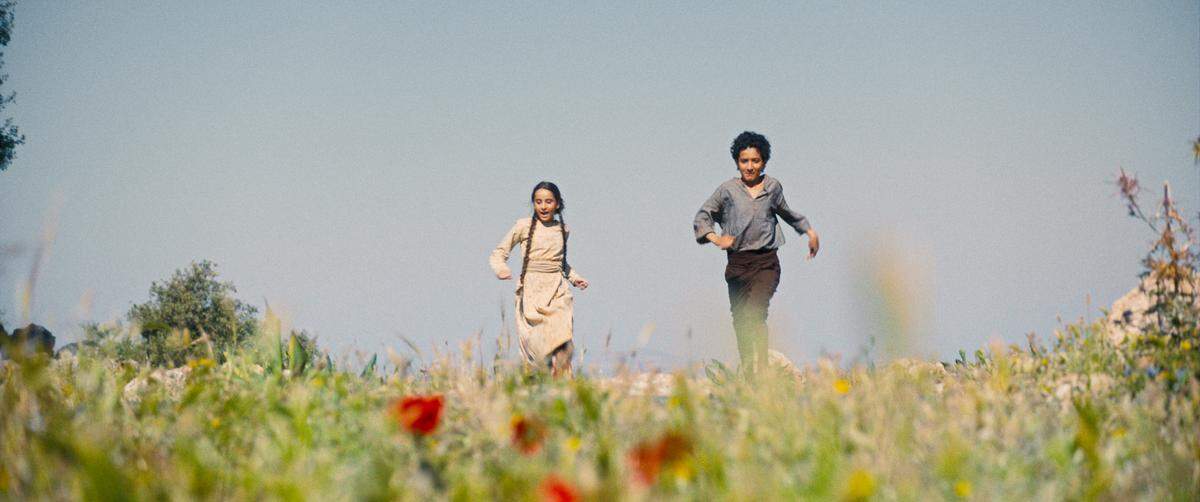
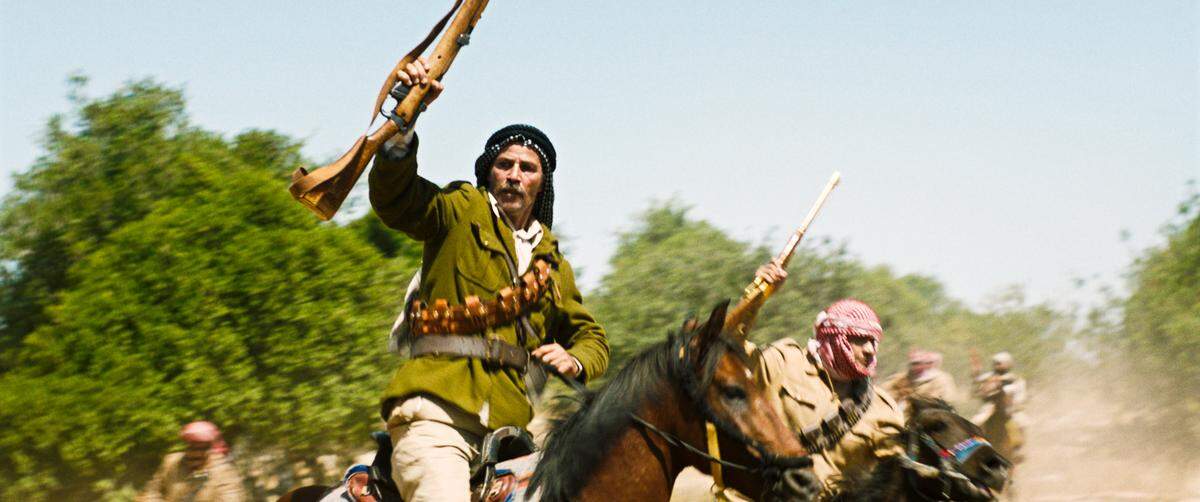
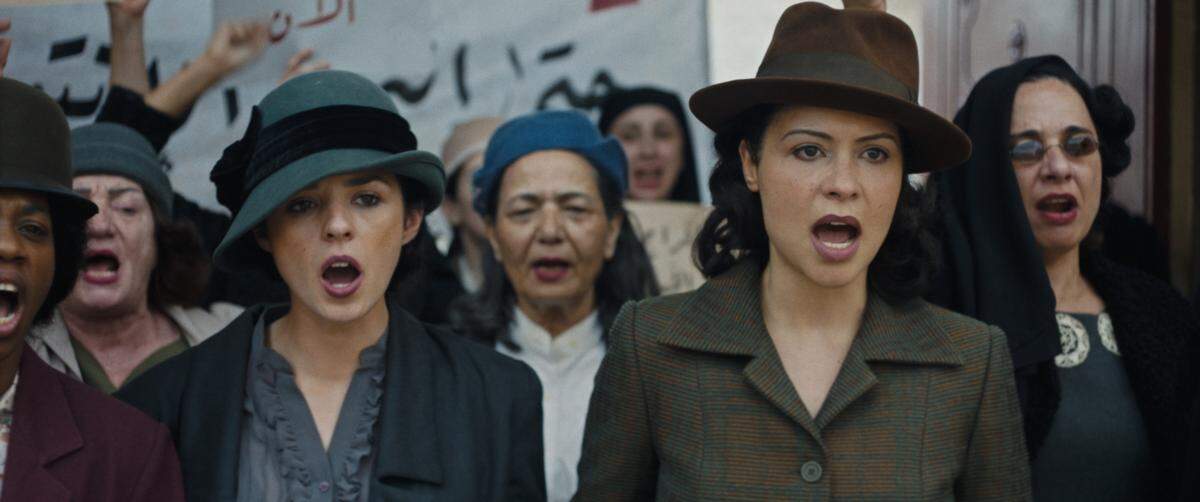
Following an array of characters from 1936 to 1939, “Palestine 36” tracks the Arab revolt against the British Empire, which also included what Jacir called the longest strike in history. The tightening of the reins in the British Mandate for Palestine comes as Adolf Hitler and Germany invade Poland, triggering the beginnings of World War II, and as Jewish refugees fleeing persecution begin entering the region.
“It’s full of life. To see (the footage) in color — and also to make a film pre-1948, when we had lives ... I think that’s really something to celebrate,” Jacir said. Israel became an independent country in May 1948.
“Some people, Palestinians mostly, have told me as soon as the film started, they began to cry because of those images. It was immediately a very painful thing because you know what happens after, right? Other people have told me they thought it was the film, and then they realized later it was archival. But including it the way it is, and having it dispersed throughout the film — what I think, really, the film is about is a group of people who have lives and are fighting to keep having life.”
When the Israel-Hamas war broke out after Hamas attacked Israel on Oct. 7, 2023, it shut down production.
Jacir said the film was set to begin principal photography a week later, but the project was thrown into uncertainty.
“It was like everything fell out. We lost everything. All of that work was gone, and it was really, really devastating. We felt unable to talk about it because what was happening in reality was so much worse than trying to make a film,” Jacir told Reverse Shot in March.
“All our preparation was in the garbage, but there’s a genocide going on now. What’s there to say?”
Financiers stuck with the project, and production shifted to Jordan six months after the original start date before eventually returning to the Palestinian territories soon after.

Western, Palestinian audiences have different reactions
Jacir said the first screening — at the 2025 Toronto International Film Festival, with 3,000 attendees — was “one of the most memorable screenings.”
The film also was shown at a number of other festivals before hitting the awards circuit as the Palestinian entry for this year’s Academy Awards. Jacir said many of those screenings opened eyes to a history many people never knew.
“I found that American audiences, as well as in the U.K., have been really generous and amazing. But one thing that I keep hearing is that we had no idea. We didn’t know; didn’t even know the British were in Palestine. We didn’t know that life we’re talking about (in the film) — that there were basic things: cinemas, printing presses, the British and the Palestinian elite,” she said.
“I think part of that is for North Americans: Many of them are brought up believing that there was nothing in Palestine until, like, 80 years ago. So you see there was a whole world.”
Jacir said the film has resonated with Palestinians, especially the generation that lived through or remembered British rule.
“A lot of people (in the Palestinian territories) are going with their families (to see the movie), and especially their parents or grandparents. There’s been a really incredible reaction to hear people say that they’re seeing their lives represented for the first time — especially that generation who lived it,” Jacir said.
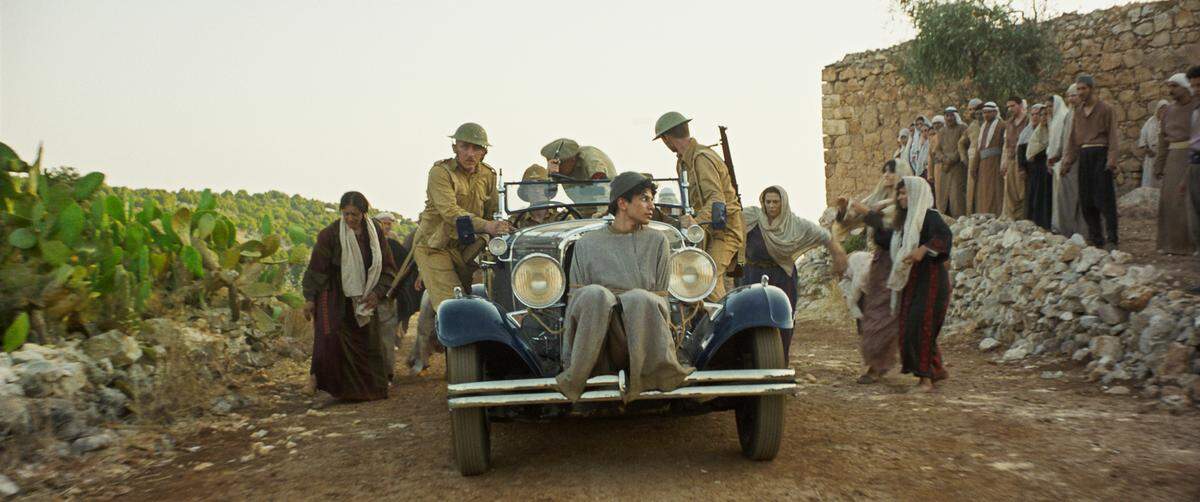
“There was one recently where there was a man in the audience who said, ‘That was my village where that incident on the bus takes place (in the film). And I want you to know,’ he said, ‘I never thought I would be watching that on screen. And I want you to know one thing: They put the best men of our village on that bus.’ So there’ve been some really intense moments with audiences.”
In Charlotte, Jacir hopes the film’s screenings at The Independent Picture House, and AMC Concord Mills can spur conversation.
“I think it’s a film that should be watched in a cinema — not just because of the big-screen thing, but also because I think people coming together is so important,” she said.
“There’s an intimacy about it. I think there is an experience. Certain films should be experienced in a community, as the film is about community.”