Théoden Janes: I set out to cover Charlotte’s comedy scene — and ended up on stage
Loïc Adjevi and his fellow Charlotte comedians have a phrase they use when they know the room is going to be brutal.
“Some open mics — some nights — it’s just impossible,” says Adjevi, a speech-language pathologist by day who has been moonlighting as a comic for about five years now. “And it’s kind of funny, because we’ll hear people bomb, and then (when it’s our turn to go up) we’ll be like, ‘All right. Time to serve my bid.’ ”
Which sounds less like stand-up comedy and more like a prison sentence.
In a way, it is. Every comedian eventually has to endure a set where the jokes don’t work, the audience stares blankly into space and the silence becomes so thick they can practically hear their self-esteem collapsing in real time.
“Silence,” says James R. Hustle, a 10-year veteran of the local comedy scene who also is head chef at an area golf course, “is worse than getting booed. That’s why I consider stand up one of the hardest forms of entertainment there is, because you’re up there by yourself. It’s you, a stool, and a microphone.
“With improv, you got a group up there with you. With music, you got a band with you. Comedy, you’re up there by yourself. If you’re up there for a 20-minute set, and they haven’t laughed five minutes in, you gotta finish. You can’t just run off a stage.
“I mean, you could — but you’re not gonna get paid or ever booked again.”
The strange thing is that serious comedians don’t merely accept bombing. Eventually, they learn to study it.
If you bomb when you’re starting out, “it just feels like you physically are alone. You feel so tiny,” says Alex King, who works as an engineer at Lowe’s but tried standup for the first time about 3-1/2 years ago and has quickly progressed to where last year was named QC Nerve’s “Best Charlotte Comedian.” “You feel like, Oh, okay, that’s great. I’m not funny at all. ... Why did I do this? ...
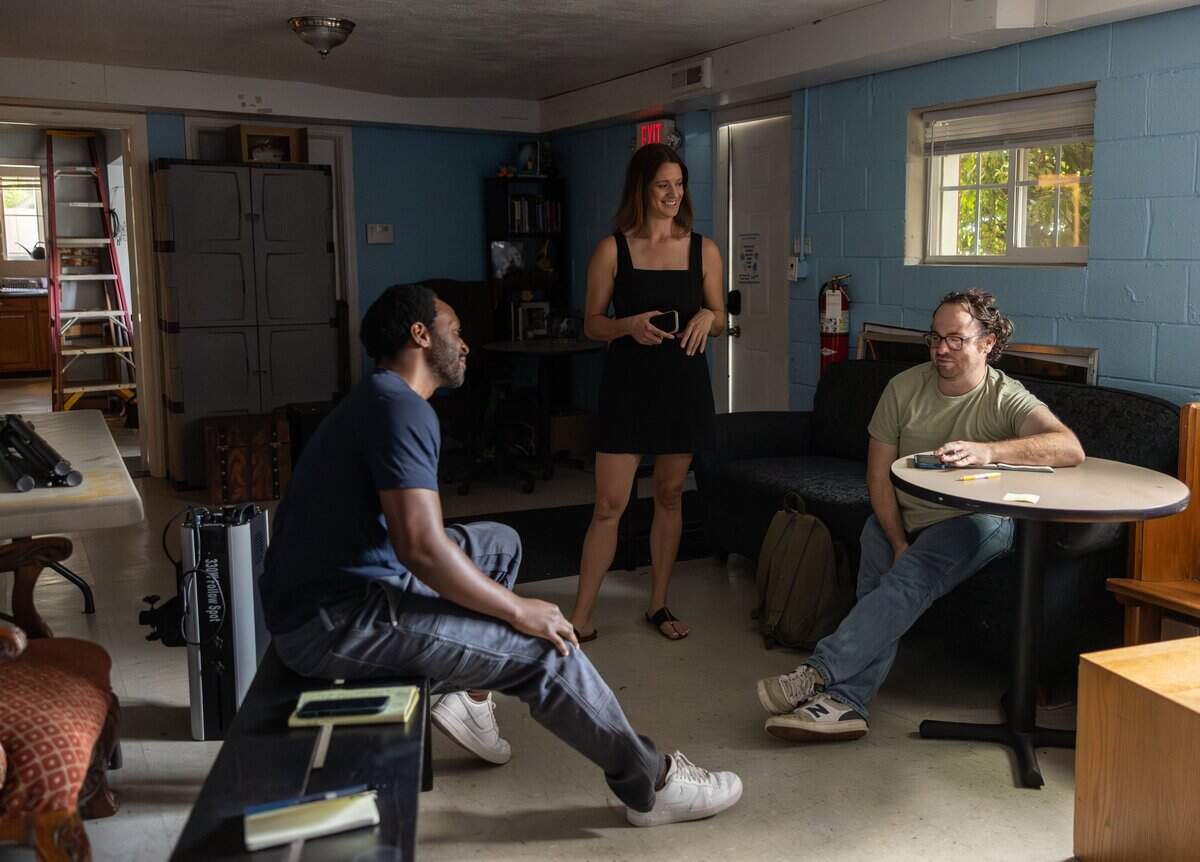
“But once you get past that initial in-the-moment feeling of aloneness and failure, it quickly — for me — turned to, Why didn’t it work? I want to really dissect this and figure out, What can I do better?”
The mystery of a bad set
Jason Allen King (no relation to Alex) is one of Charlotte’s most accomplished comedians.
Last year he was named “North Carolina’s Funniest Person” at Goodnights Comedy Club in Raleigh. He performs locally a lot, but also at ski resorts in Virginia and on cruise ships in Alaska. Comedy is not just a hobby for him. It’s a full-time job.
Yet when asked about bombing, his answer doesn’t yield some hardened veteran’s shrug. It elicits trauma. King immediately thinks of a weekend years ago at The Comedy Zone, when he was still relatively new to “featuring” — i.e. serving as the middle act on a comedy-club bill, responsible for roughly 25 to 30 minutes.
The Thursday show had gone fine. The early Friday show had gone fine. But for reasons King still can’t fully explain, the room simply stopped responding during the late Friday show.
Then things got worse. And worse. And worse.
“Every minute got progressively quieter,” he recalls. “By 10 minutes in ... they were just not reacting, not responding at all to anything.”
If a musician has a bad song, another one starts in three minutes. If a baseball player strikes out, he gets another at-bat. But if you’re a comedian 10 minutes into a 30-minute set and nobody is laughing? Congratulations. You still have 20 minutes left.
King drove home that night wondering whether he was about to get fired. He spent all of Saturday thinking about it.
Then he returned in the evening for two more shows — and the audience loved him. Which left King confronting a mystery that all comedians eventually learn to accept.
“The audience is an organism,” he explains. “Every show, they’re a little bit different.”
Stand-up comedy, he says, is “physics, it’s math, it’s magic, it’s poetry, it’s art. It’s all of those things. So good luck actually figuring it out.”

Naturally, I interpreted this as an invitation.
‘I am NOT a comedian’
It’s not where I expected to be when I started exploring Charlotte’s comedy scene.
My original plan was simple. Interview comedians. Watch some open mics. Attend some shows. Write my story. Instead, I somehow convinced myself that true journalistic rigor required getting on stage.
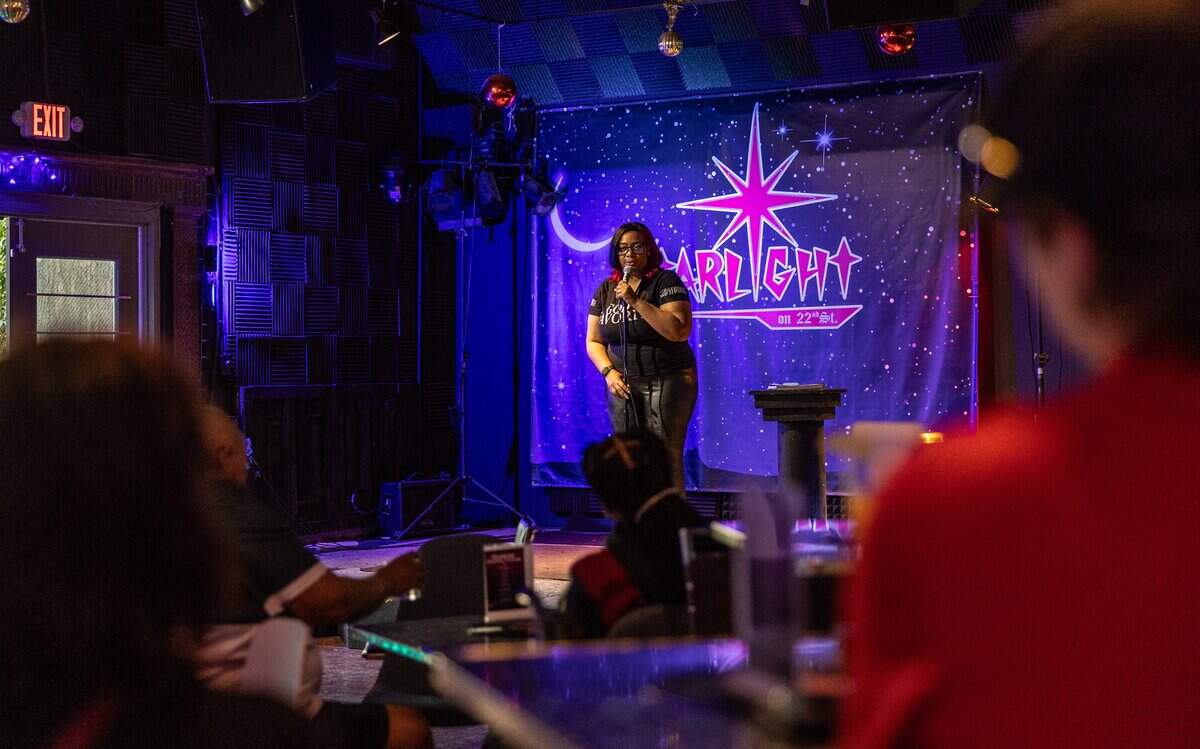
So I prepared. I wrote jokes. I practiced them. And suddenly there I was, sitting in the crowd at Starlight on 22nd in NoDa waiting for host Kayla “Kandi” Lanei to call my name at the bar’s Tuesday-night open mic. Waiting nervously — while trying very hard to pretend not to be nervous.
One thing I quickly learned, by the way, is that there is a significant difference between understanding nervousness intellectually and understanding it while walking onto a stage, into a spotlight and toward a microphone stand in front of dozens of strangers.
Intellectually, I knew the worst thing that could happen was the deafening silence James R. Hustle had described.
Physically, my body had become convinced I was moments away from being pelted with tomatoes.
When it was finally my turn, I climbed onto the stage and tried not to let everything I had planned slip away from my short-term memory. The walk-up music stopped. All eyes turned toward me.
I froze.
Then I took a breath.
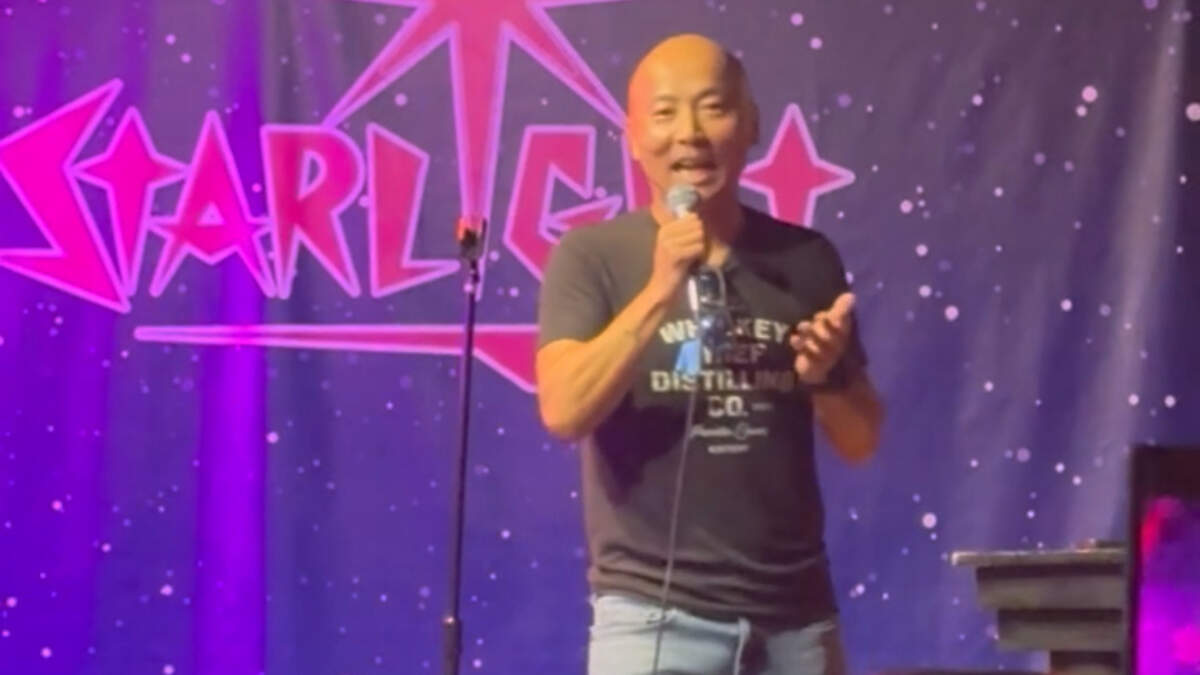
“First off, just wanna say, for the record: I am NOT a comedian,” I managed to get out, remembering my opening line. “I’m actually a reporter for The Charlotte Observer. And THIS” — dramatic pause — “is research.”
My wife later accused me of cheating. “You told them you were a reporter,” she said. “Now everybody feels obligated to laugh because they want to be in the story.”
I disagreed.
“Did you happen to notice,” I pointed out, “that almost nobody was laughing?”
It was an awful experience. Maybe...
That wasn’t entirely true.
Admittedly, some of my favorite jokes never landed the way they had while rehearsing them in the sunroom. A couple got pretty darn close to no reaction whatsoever. An elaborate story involving being brought the wrong beer repeatedly at Duckworth’s, for instance, mostly served as a reminder of why comedians spend so much time editing.
And several jokes did indeed disappear entirely when my brain decided, in the middle of my set, that it would be fun to forget them.
But much to my relief, a handful of jokes actually seemed to work. When I remarked that I had come to the open mic strictly for journalistic research into the experience of bombing — “and I’m finding out right now” — people seemed amused.
I didn’t get huge laughs. Not the sort of laughs that cause Netflix executives to immediately begin drafting contracts. But I got a few laughs nonetheless.
Going into it, in my head, I had imagined only two possible outcomes: triumph or disaster. Instead, when my time was up, and I returned to my chair, the actual result of all my preparation and agonizing and stumbling through the material felt much more nuanced.
To me, at least, it seemed far from a disaster. Nobody heckled me, or booed me, or walked out on me. Nobody threw tomatoes. Not even my wife.
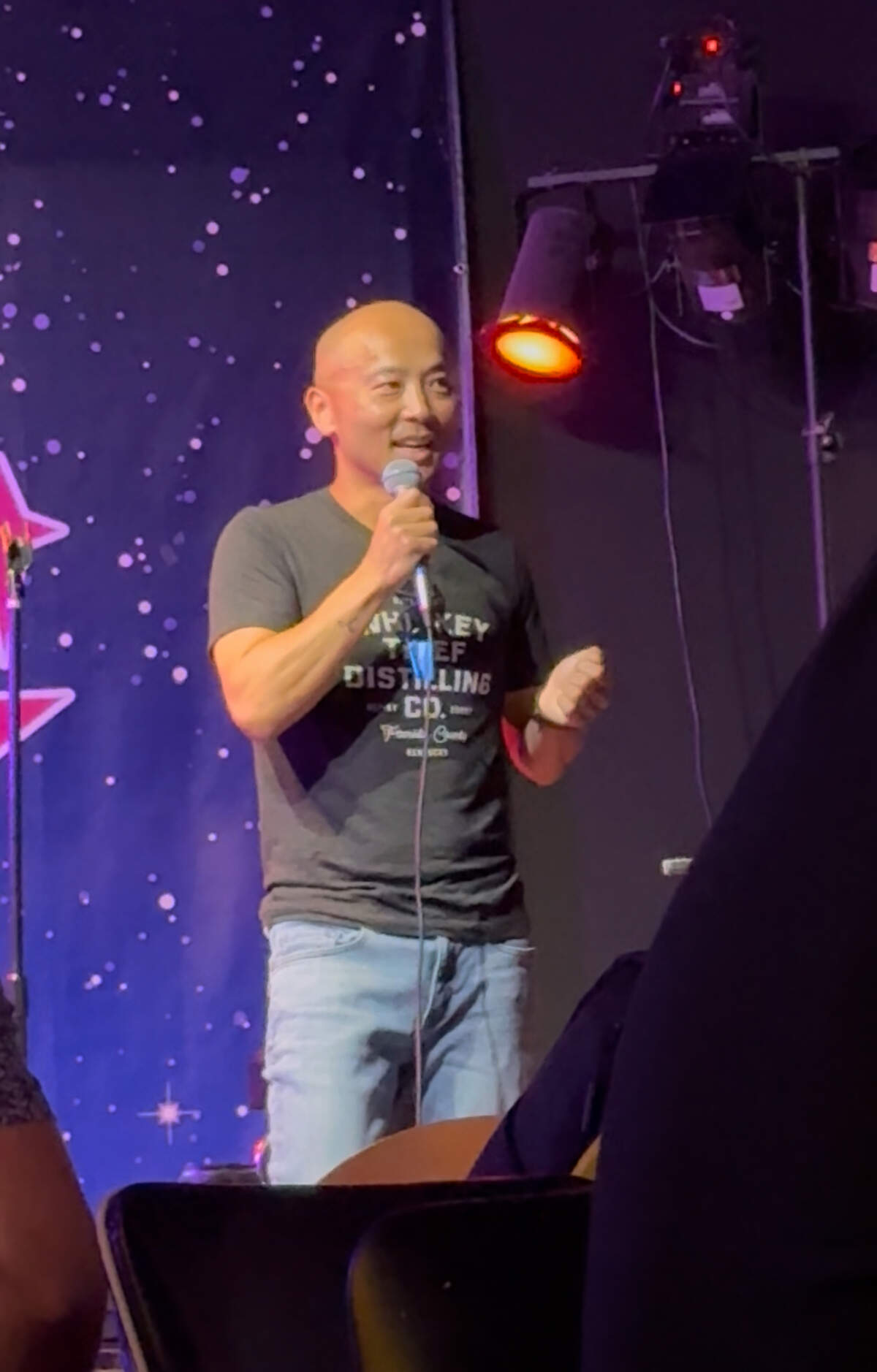
At the same time, while I’d like to think that some people were at least mildly amused, it was also nowhere close to a triumph. No one came up to me afterward and said, “Man, that was HILARIOUS!,” or “Oh my God, dude, you had the funniest set of the night!”
Basically, I got through it. I served my bid.
But while I experienced enough glimpses of what it feels like to fail that I probably shouldn’t ever want to try that again, I also experienced one or two flashes of something else Jason Allen King had described to me.
He was talking about the first time he ever did an open mic, long before his big bomb at The Comedy Zone.
“I don’t remember what I said; I don’t think I did very well. But I remember how it felt,” King recalls. Then he explains further: “There is a feeling after a set — and I don’t care what the set is — of you are being flooded with endorphins and with adrenaline. So there is a buzz and a high, and you do a big show, and you do well. I can’t imagine there is a drug better than that.”
I may not have experienced exactly what King was describing.
But I experienced something close enough to it that I can understand why otherwise rational adults voluntarily spend hours and hours preparing to spend five minutes on a stage in front of a few dozen people — and why I suspect my “research” may not yet be complete.