Mask shaming: America’s new favorite pastime during COVID-19 — including in Charlotte
In a debate as divisive as some presidential elections, or even the 2015 viral blue or white dress dispute, mask wearing — or not wearing — has become a dividing force amid the COVID-19 pandemic in Charlotte. People on both sides are doubling down, some even resorting to public shaming.
We’ve all seen the posts, mocking those who wear masks, shaming those who don’t.
The Charlotte Observer recently set out to answer the question about whether Charlotteans are wearing masks. The newspaper sent its team to observe 75 stores in the area.
A recent poll conducted by the Associated Press-NORC Center for Public Affairs Research, found that 76% of Democrats said they are wearing a mask when leaving home, while 59% of Republicans said the same. But party lines aren’t the only factor playing a role in the decision to wear a mask. Gender and race are also influencing people’s decisions.
First, the rules: CDC guidelines recommend the use of masks in public settings where social distancing is not possible. Mecklenburg County is following the same recommendations, and encouraging retailers to turn away customers who aren’t wearing masks.
Despite those recommendations, a recent study by Middlesex University in London and the Mathematical Science Research Institute in Berkley, Calif., found that men are less likely than women to wear face coverings in countries where face masks are not mandatory because of fears about being perceived as weak, uncool and ashamed.
Shamed at a Charlotte restaurant: ‘What a pretty mask, you sissy’
Ryan McGee, a Charlotte-based ESPN senior writer and co-host of the show Marty and McGee, experienced shaming firsthand on two separate occasions — one at the outset of the pandemic in March and another about a week ago.
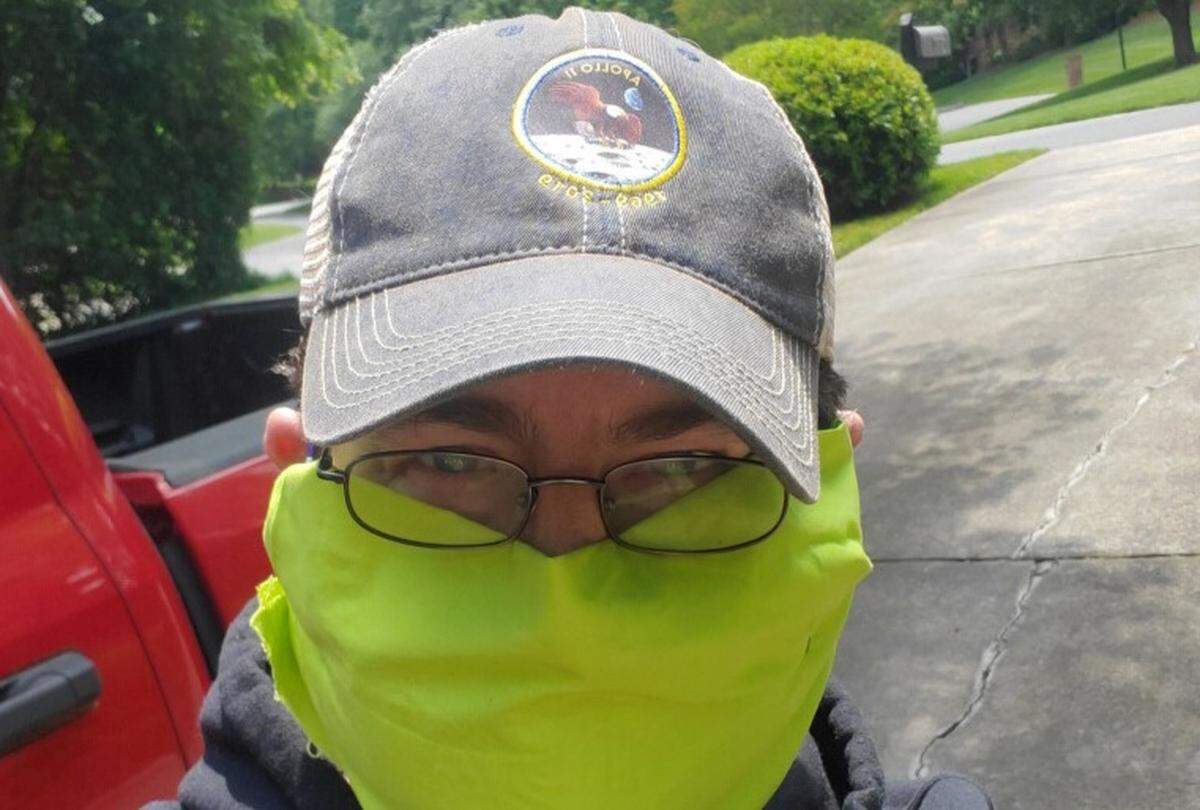
In the first instance, McGee was one of six patrons picking up food at a local restaurant — all of whom were masked. McGee was wearing a homemade mask his wife and daughter had put together using pillowcases and hair ties. When an unmasked man entered the restaurant, he walked up to McGee, pointed a finger directly in his face and said, “What a pretty mask, you sissy!”
McGee said there was a sense of camaraderie amongst the masked guests, that everyone was in this together and willing to sacrifice for the greater good. But the mood seems to have shifted in the last two months, becoming more divisive.
During the second encounter, McGee exited his truck and began putting on his wife and daughter’s homemade work and was once again the target of a shamer. Calling him by name, presumably recognizing him from his show, the taunter yelled, “snowflake” and “sheep” at the broadcaster. McGee, in return, took the high road and thanked the man for watching his show. No one else around was wearing a mask.
McGee was able to laugh off the criticism, later joking on Twitter: “Why does he care? Besides, I know my reasons for wearing a mask are way better than whatever convinced him to leave the house in those blue Crocs he had on.” Like many, he said he doesn’t understand why the wearing of masks became so polarizing and shaming became so widespread.
When race plays a role: “A small hidden fear of ‘being masked while black’”
The choice behind whether or not to wear a mask is also being impacted by racial prejudice. “Unfortunately being safe and attempting to remain healthy for some of us in the African American community has different complexities than some,” said Nikita Blakeney-Williams. A cancer survivor with a nursing background, Blakeney-Williams takes extra precautions, wearing a mask and trying to avoid crowds. Her daughters and youngest son follow suit, but her three older sons and husband do not.
“The older boys don’t wear a mask when they go out because of their image and their desire to avoid unnecessary confrontations,” Blakeney-Williams said. “My husband chooses not to wear a mask because he takes increased precautions being sanitary and sanitizing things. He is a very healthy guy and conscious of his environment, however, I can’t help but wonder if he too shares a small hidden fear of ‘being masked while black’ and the possible negative outcome that can accompany it.”
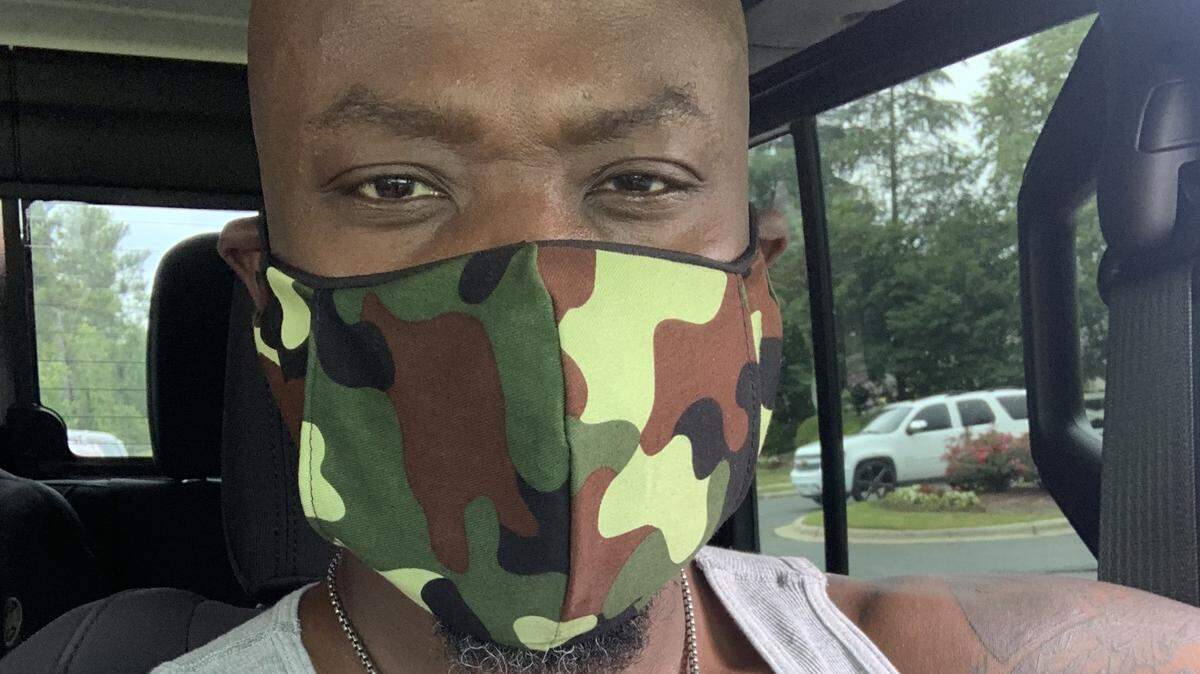
Mecklenburg County resident Enoch Glover faces similar fears regarding race. “I am choosing to let safety win out and am wearing a mask, but I am doing so while taking precautions,” he said. He opts for professionally made masks and steers clear of bandanas, which he feels can carry a negative connotation. He also makes conscious decisions about his attire, ensuring his outfit is not one that triggers any racially-motivated suspicions.
“I have two sons, and I’ve always had discussions with them about wearing hoodies and not putting their hoods up until they are in a safe environment,” Glover said. “Masks are really the new hoodie.”
This story was originally published May 18, 2020 at 12:22 PM.