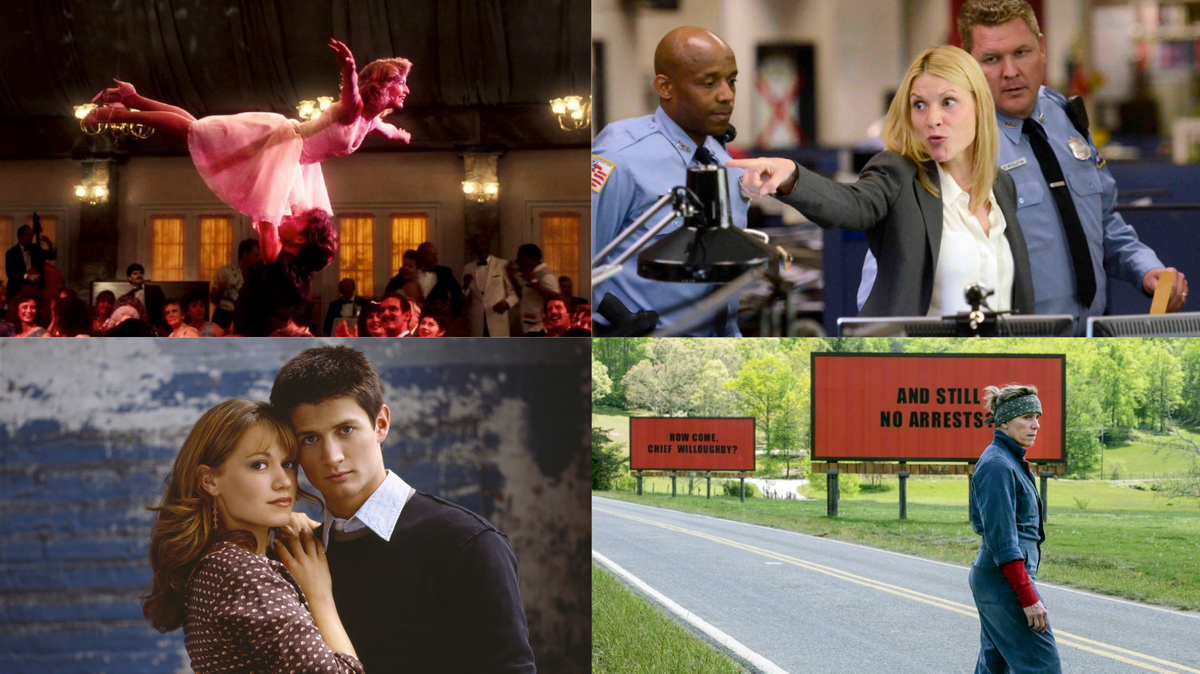
2021 was a record-breaking year for NC’s film industry. Where does it go next?
READ MORE
North Carolina’s history of making movies
The way North Carolina’s current film incentive program is structured, the state is unlikely to host the production of another blockbuster movie like “Iron Man 3.” But the film industry here, which spans more than 100 years and just set a record in 2021, seems to have found a sweet spot by producing TV shows and smaller movies. And it isn’t just North Carolina’s locations on screen. One famous face could win an Academy Award this weekend. Are you, or the places you love, the state’s next screen gem?
Expand All
After years of success in the early 2010s, North Carolina’s film industry experienced a perfect storm of events that brought the industry’s mounting success to a halt.
Changing incentive programs, controversial “bathroom bill” legislation and the COVID-19 pandemic, among other events, led to some of the industry’s least successful years, in terms of direct in-state spending by productions from 2015 through 2020.
Now, though, the industry could be flipping the script.
Last year marked the industry’s most successful, setting a record for the most money spent in-state by productions at an estimated $416 million, as more than 90 projects filed “intent to film” paperwork with the state film office.
That eclipsed the industry’s previous record, set in 2012, when “Iron Man 3” and other productions invested $373 million in the state — though, with inflation, both totals are roughly equal.
Coming off of last year’s successes, North Carolina’s film industry leaders are hoping to continue the momentum in 2022.
But the industry is much different now than it was 10 years ago. The state’s film incentive program has changed significantly since then, and the state is battling a depleted industry workforce stemming from years of decreased work opportunities.
With new changes included in the state budget that could bring more productions to the state, plus workforce training programs in place, 2022 could be another big year — but only time will tell if it will be another blockbuster success, or a box office flop.
Finding NC’s ‘sweet spot’ amid setbacks
None of the films or television series filmed in the state during last year’s record-breaking industry performance are likely to draw the awe from moviegoers that “Iron Man 3” — complete with its Marvel Cinematic Universe ties and star-studded cast, plus a $200 million budget — did when it filmed in Wilmington in 2012.
In some ways, that’s the point.
Leaders in the state’s film industry say they’re settling into a “sweet spot,” or niche, that maximizes the use of the state’s scaled-back film incentive program — the rebate-based North Carolina Film and Entertainment Grant, which went into effect in 2015, after a previous tax credit program for productions hit its sunset in 2014.
In its original form, which included just a $10 million allocation on a non-recurring basis, the grant program was confusing for production companies, who generally felt it was unstable and lacked reliability, recalled Johnny Griffin, director of the Wilmington Regional Film Commission.
“Conversations would end sometimes because we had to wait until the legislature made the allocation, and it takes time to market that again and get the word back out,” Griffin told The News & Observer.
That led to a dramatic drop in interest in filming movies and shows in North Carolina, The N&O reported in 2014.
According to numbers from the state film office, direct in-state spending by productions dropped to less than $150 million, and the number of job opportunities dropped to less than 5,000, when the scaled-back program launched in 2015.
The industry was also hit hard the next year, in 2016, by the passage of House Bill 2, the state law that required people to use public restrooms corresponding to their sex assigned at birth, rather than their gender.
Several production companies, including Lionsgate, A&E and 21st Century Fox, announced they would either pull projects from the state or not consider the state for future projects due to the controversial legislation.
The law was repealed through a compromise bill in 2017, and major production companies, including Lionsgate, have since returned for filming in the state. Netflix, which chose in 2019 to film the now-hit show “Outer Banks,” which is set in North Carolina, in neighboring South Carolina, due to “remnants” of HB2, has also returned to the state, filming series and films in the state within the past year.
Success without superheroes
Allocations for the incentive program eventually rose to $31 million in 2017, and remain at that level today, and the funds were made recurring, allowing them to roll over from year to year.
That added stability and reliability to the program from production companies’ perspectives, Griffin said, making them more confident in coming to North Carolina for longer-term projects, such as multi-season series, or projects that aren’t able to wrap filming in a single fiscal year.
Even with the added stability, though, it doesn’t mean that “tentpole” productions — those with big budgets and well-known actors — are keen to film in North Carolina.
The current incentives cap the rebate payout for feature films at 25% of in-state spending, with a maximum payout of $7 million.
Griffin said that means it generally doesn’t make economic sense for productions with budgets higher than about $30 million to film in North Carolina, when they can go to other states — such as Georgia, which offers up to 30% in tax credits with a minimum spend of $500,000 — and get bigger payouts proportional to their overall budgets.
“Unfortunately, North Carolina may not see another superhero movie that would be filmed here,” Guy Gaster, head of the North Carolina film office, said in an interview. “I don’t know that we would get a huge series that has the special effects and everything, like a ‘Game of Thrones.’ But that doesn’t mean that there’s not other projects out there.”
Gaster cited several types of films that have found success with North Carolina’s current incentives, including:
▪ “High profile horror films,” such as “Scream,” which filmed in the state in 2020
▪ TV and streaming series with 10 to 12 one-hour episodes per season
▪ Coming of age projects for TV or film
▪ Projects without “bigger name talent”
“We know that if there is bigger named talent that gets attached, then typically the project’s budget increases and at some point, it prices North Carolina out of the competitive advantage because of some of the limitations of our rebate program,” Gaster said.
Changes to the incentive program included in the state budget lowered the minimum spending requirement for most productions, while raising the maximum payout for series, which could expand the pool of productions that consider North Carolina for filming, Gaster previously told The N&O.
Economic impacts of film incentives
Despite last year’s successes for the industry and the changes in incentives for this year, though, some say film incentives aren’t an effective use of taxpayer dollars.
Research has shown that, in most cases, incentive programs, whether tax credits or rebates, return just cents on the dollar to the states that offer them.
A 2019 study by J.C. Bradbury, an economics professor at Kennesaw State University, showed that “North Carolina’s return on investment from its film subsidies ranges from 22 to 61 cents on the dollar.”
Bradbury’s research also found that, overall, “film incentives were not associated with the size and growth of state economies.”
But leaders in North Carolina’s film industry say the impacts are felt on the local level, especially when those “sweet spot” productions come to town.
While bigger productions are perhaps more exciting for onlookers of the industry, who like to see North Carolina as the backdrop for big-name films in theaters, they could be more likely to spend a bigger portion of production costs out of state, such as by paying the cast or adding post-production special effects to the film through a Hollywood studio.
But smaller productions “want to put more money on the screen,” Griffin said — they’re more likely to use their relatively limited budgets on local labor and locally sourced materials, making the best use of their funds, while also benefiting local economies.
Local economies can also benefit, Griffin and Gaster said, after productions are released, as viewers often want to see where they were filmed.
“We’ll take those $20 million projects all day long, because we know that they’re going to actually end up proportionately leaving more money in the economy for us,” Griffin said.
Both Bradbury and North Carolina’s film leaders say productions are generally less likely to film in states where there aren’t incentives for doing so — making the question to keep or eliminate incentives a decision largely based on the public policy preferences of state officials.
“If a state or a territory wants to be in this game, if you will, you have to have an incentive, and it has to be a competitive incentive,” Gaster said.

Redeveloping the state’s film workforce
Coming off last year’s success for the industry, leaders say a key step for its continued success is rebuilding the state’s film workforce, which lost some workers to other states or industries when production in the state decreased.
“With the successes, there were certainly some growing pains,” Gaster said. “We’re seeing, like other industries, demand for more skilled technicians that have a trade, or have learned their trade specifically for filmmaking.”
A new nonprofit economic development organization, the Film Partnership of North Carolina, is aiming to fill the gap and diversify the state’s film workforce.
Susi Hamilton, a former state legislator and state Department of Natural and Cultural Resources secretary who now serves on Gov. Roy Cooper’s Advisory Council on Film, Television and Digital Streaming, said the goal for the program is to build a “pipeline” for film workers, in hopes of building out the workforce to at least “two generations deep.”
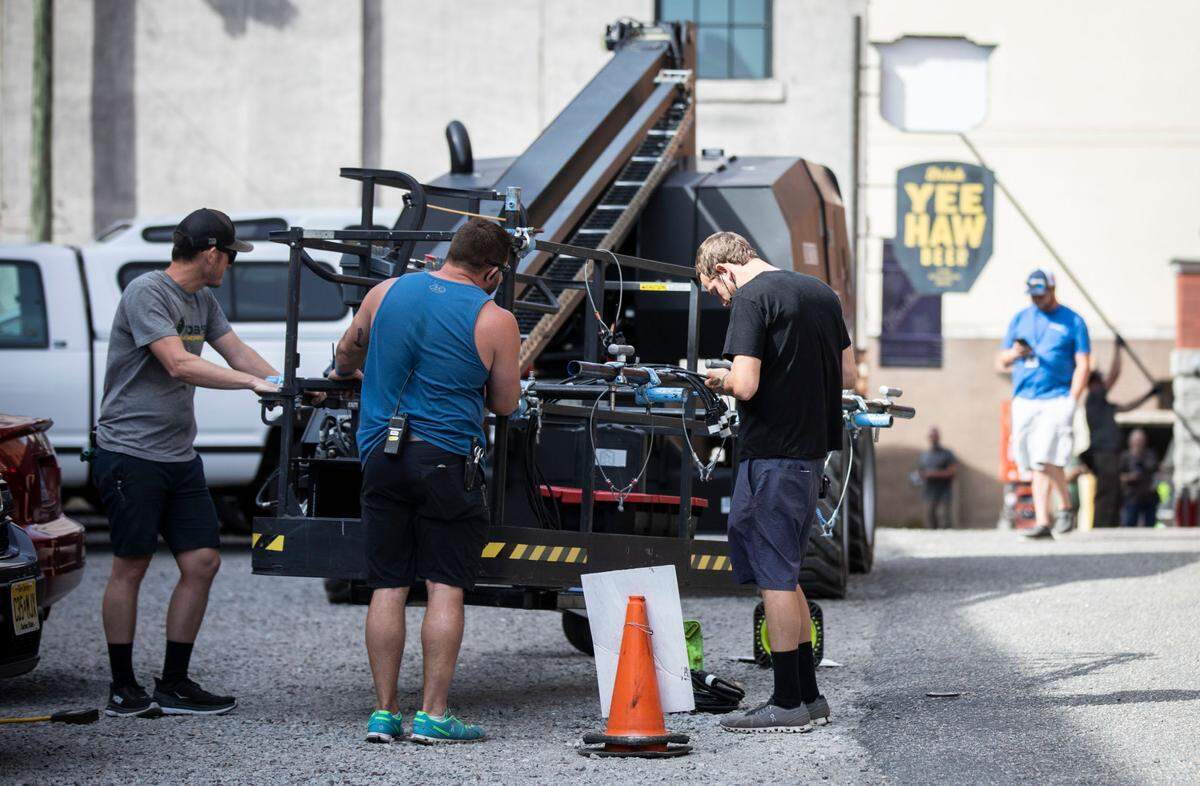
The partnership, which was granted $400,000 from the city of Wilmington last fall, will offer a five-week training program to provide participants with paid, hands-on experience in various trade aspects of production.
At the end of the five-week program, which began in April, participants could be offered by productions to stay on as employees. If that isn’t an option, Hamilton said, participants will leave the program with transferable skills that can be used across the production industry.
That will complement film programs at colleges and universities around the state, including Cape Fear Community College, where more than 100 students at a time enroll in the school’s Film and Video Production Technology program to learn trade skills for the industry.
What’s next? Building on momentum
Due to the somewhat unpredictable nature of the film industry, it’s hard to say whether 2022 will meet, or even exceed last year’s numbers.
But with workforce development measures and slightly changed incentives in place, industry proponents are optimistic that this year will be another strong one.
“I think regardless, we will have a very successful year, and we’ll see that momentum is still continuing because of everything we have in place,” Griffin said.
“All of those projects being here, and the industry seeing that and saying ‘OK, it looks like everybody’s going back to North Carolina. We want to get in line and go there as well.’ ”
This story was originally published March 23, 2022 at 6:00 AM with the headline "2021 was a record-breaking year for NC’s film industry. Where does it go next?."