
This prominent artist had strong Charlotte ties. Now her work funds arts education.
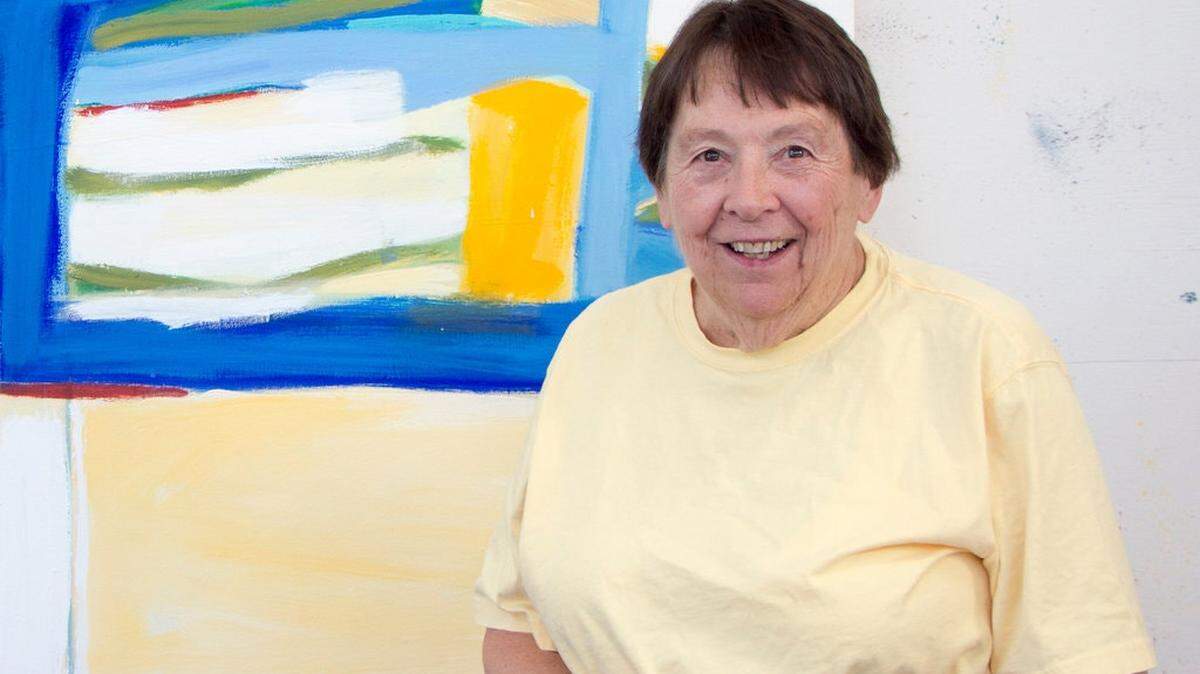
You may not know the name Lee Hall, but you undoubtedly know the names of some of her contemporaries – Willem and Elaine de Kooning, for instance. They were giants of modern art.
So was she.
The abstract expressionist, author and professor was born in Lexington, N.C. in 1934 but spent most of her professional life in New York and Massachusetts. She became disillusioned with “the politics, money and complexities of the New York gallery system,” said Bechtler Museum of Art founding president and CEO John Boyer.
After the gallery representing her – the esteemed Betty Parsons Gallery – closed in the early 1980s, Hall stopped exhibiting. That may help explain why her name isn’t as recognizable as the de Koonings, who were the subject of Hall’s explosive and controversial book, “Elaine and Bill: Portrait of a Marriage.”
Hall didn’t exhibit again until 2014 when Jerald Melberg gave her a solo show at his Charlotte gallery. In November, Melberg opened his fifth one-person exhibition featuring Hall’s work. “Lee Hall: On Paper” includes acrylic paintings on paper, watercolors, and collages. It will be up through Jan. 11.
Charlotte ties
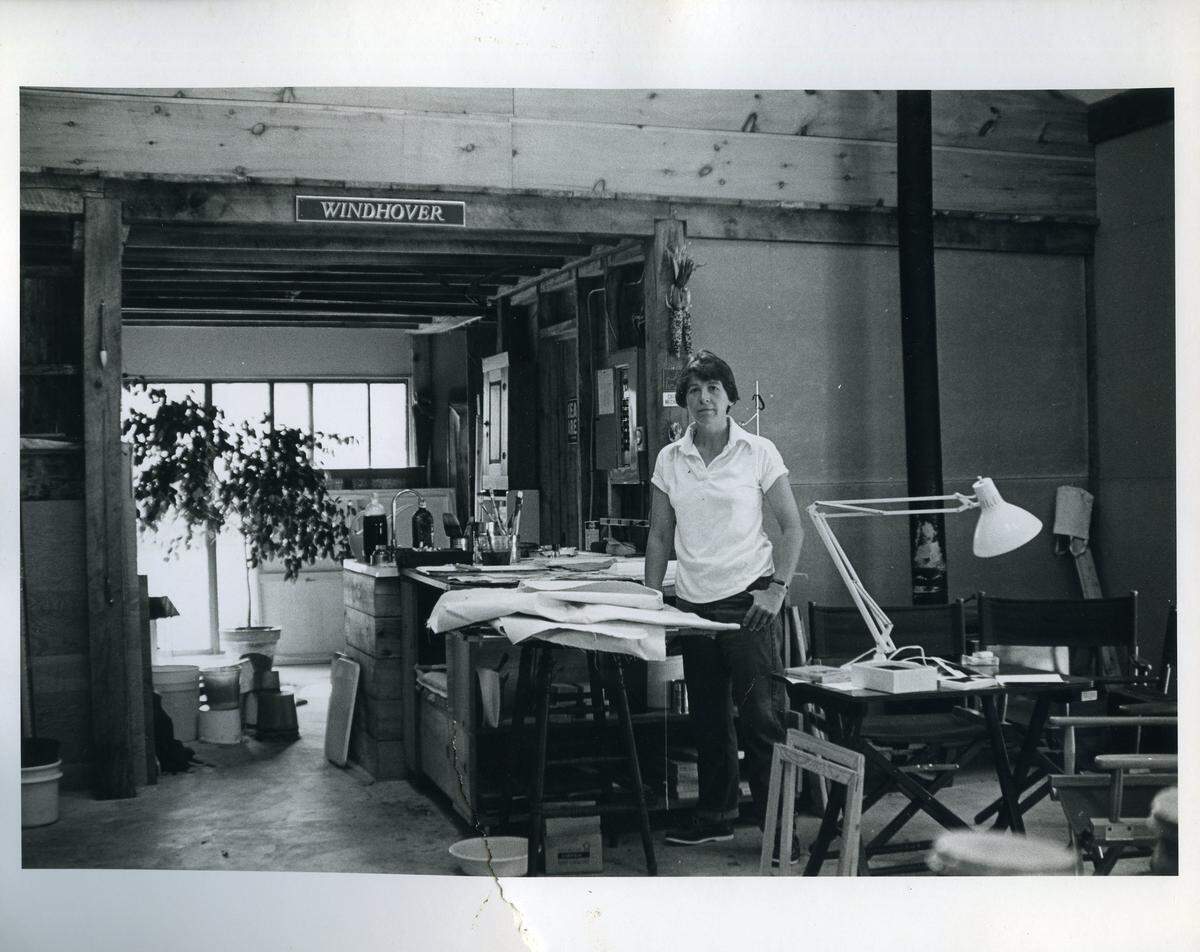
Although Hall abandoned the gallery scene decades ago, she never stopped painting. She became a professor and had as much passion for arts education as she did for creating her own art. She was equal parts academic and artist. She taught at what was then Winthrop College (now University) in Rock Hill and spent almost a decade at Drew University in Madison, N.J. where she became a full professor and chair of the art department.
Boyer already knew Hall by reputation when they met soon after he was named the Bechtler’s CEO. That was more than a decade ago – before the museum officially opened.
“Lee was one of my favorite people in the world,” Boyer said, “even though she is no longer of this world.”
Hall left her estate to the Bechtler when she died in 2017. The proceeds from selling her entire body of work – and her home and its contents, including a 4,000-volume library – help fund the museum’s educational programs. (Incidentally, that library reflected Hall’s intellect and wide-ranging interests, including “Brunelleschi’s Dome: How a Renaissance Genius Reinvented Architecture,” “Birds of North America,” “Love, Sex and Tragedy: How the Ancient World Shaped Our Lives,” “The Philosophy of the Enlightenment” and thousands more.)
After meeting Hall, Boyer approached Melberg about becoming her representative. “She became something of a cause célèbre in Charlotte during her last years,” Melberg said. “She loved it here and visited frequently.”
Melberg became her art dealer and friend.
The trio – Hall, Boyer and Melberg – spent time together at Hall’s house in South Hadley, Mass. In fact, Boyer and Melberg were on their way to see Hall when they got news she had died. “Jerald’s commitment to Lee’s work and legacy is driven by his personal affection for her,” Boyer said.
“Lee was a powerful painter and personality,” Melberg said, adding that he admired her intellect, wit and occasional sarcasm.
Land, sea, sky
“Painting has been a vehicle for understanding life,” Hall said in a 1981 speech at the Rhode Island School of Design. In the same speech, she confessed she liked solitude in her studio. She didn’t want people with her, but she did like the company of her two cairn terriers.
“I also take a blessing from the hummingbird’s visit, the kestrel’s call, from rainsplash and snowfall, from the changing pattern of light itself and around the studio,” she said.
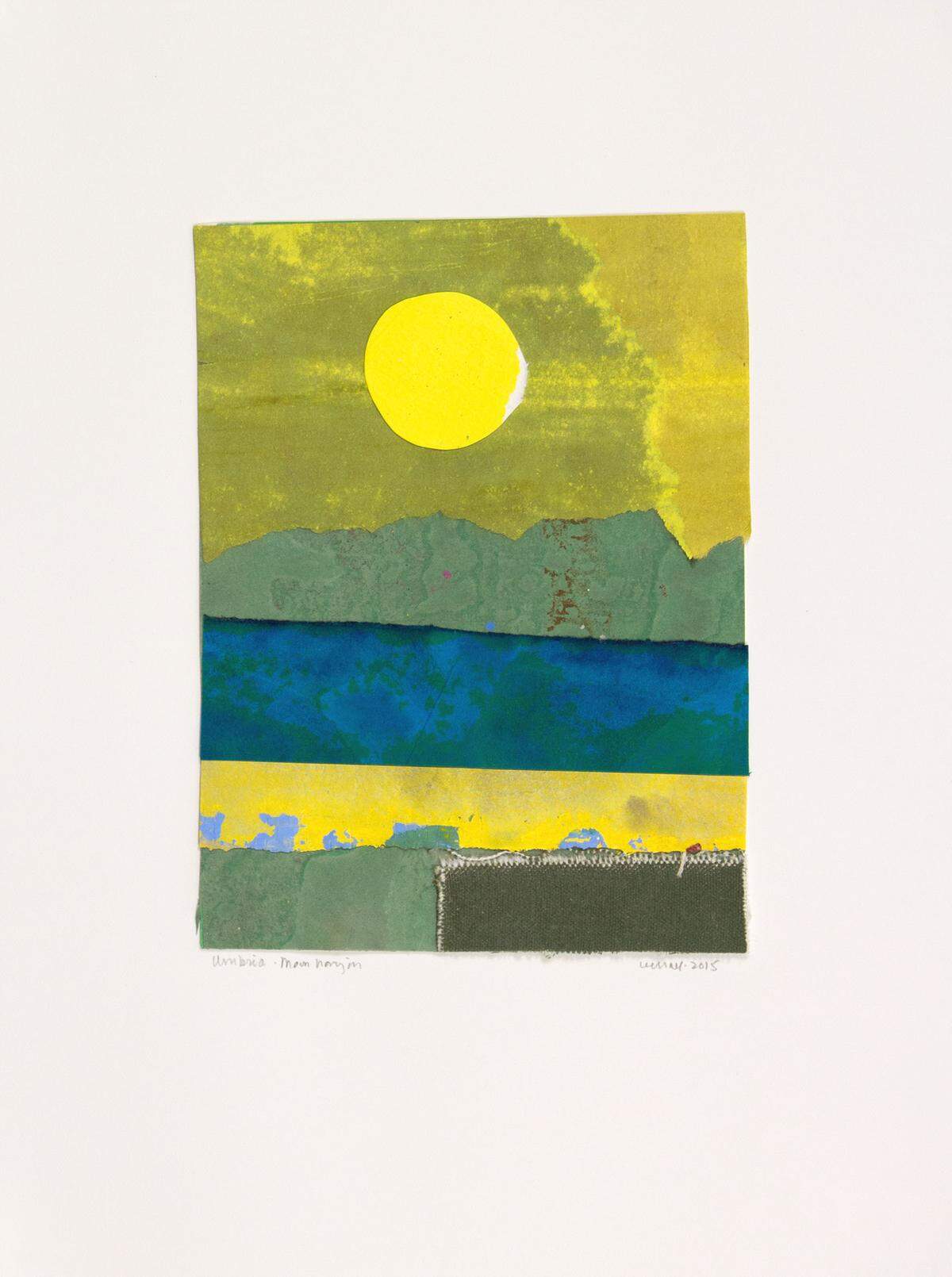
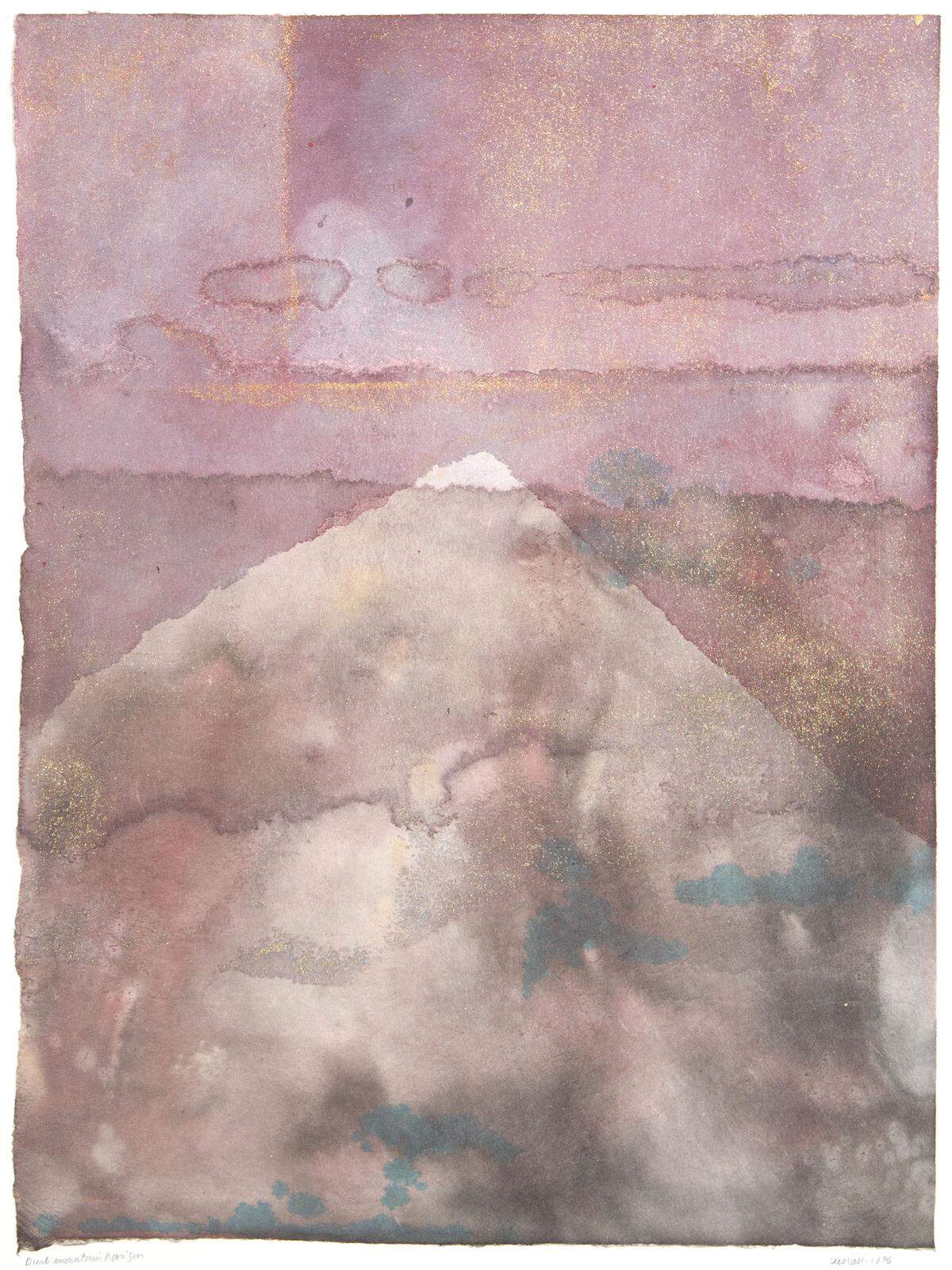
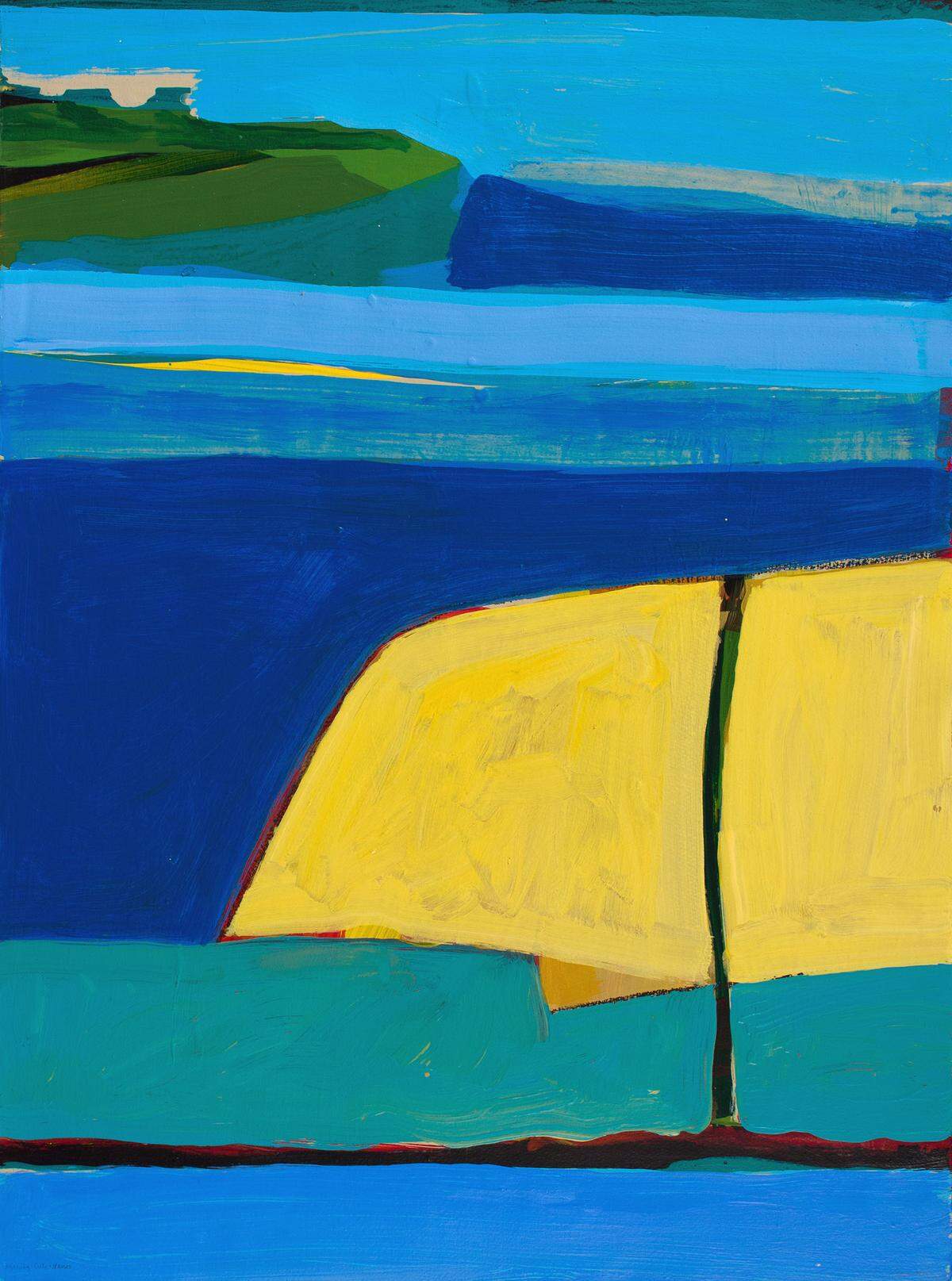
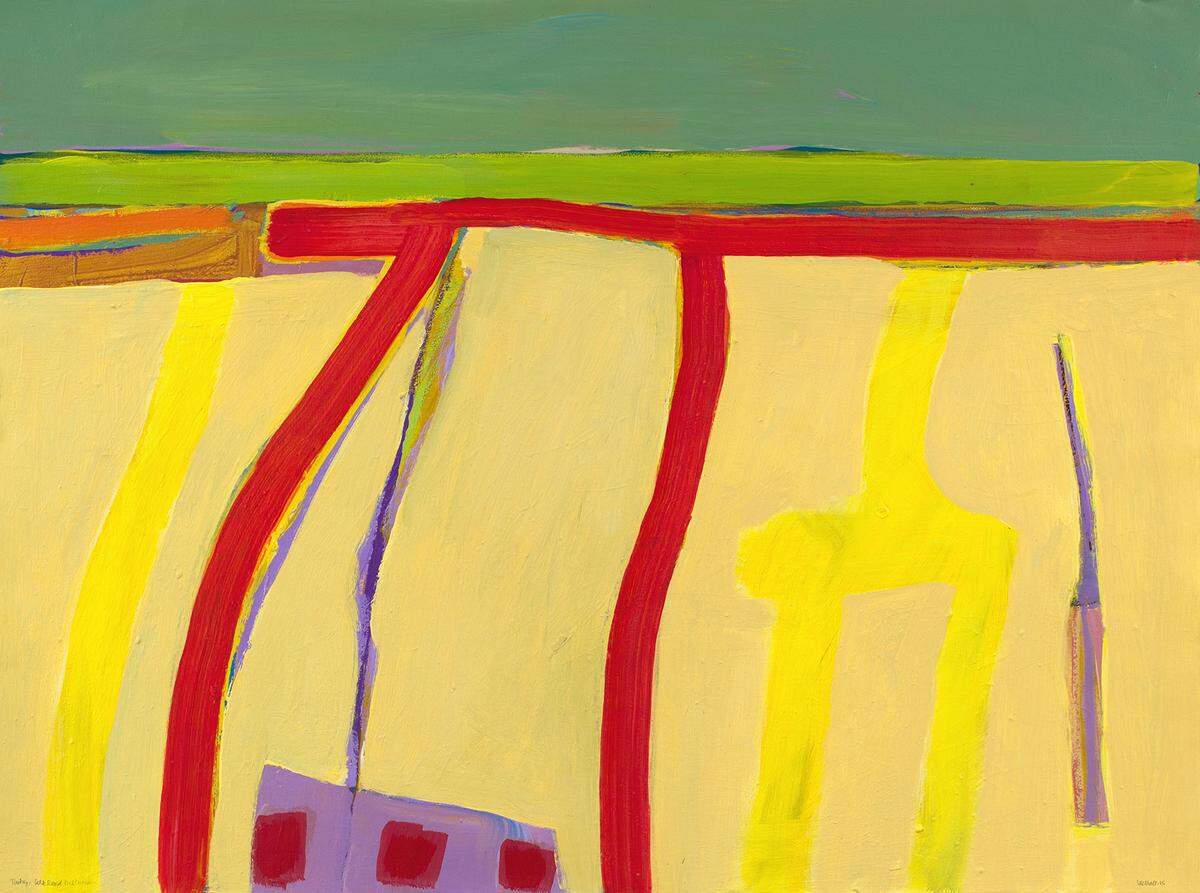
Although Hall was an abstract expressionist, her works are clearly recognizable as landscapes. There’s a sky (or something we can take to represent the sky), a horizon line. “Other times, Lee gives us a bird’s-eye view of the land,” Melberg said.
The New York Times wrote of Hall upon her 2017 death: “Ms. Hall specialized in lyrical, evocative landscapes whose flat color planes and geometric forms alluded to the natural world rather than describing it.”
No matter where she was, Hall was inspired by her surroundings. Her works each represent a specific place, as the titles indicate – “Barcelona Edges,” “Vermont Drift,” “Rhode Island Dawn.” They capture the character and colors of these places more than the details.
Her palette became more vibrant as her career progressed. “Her earlier works were a little somber,” Boyer said. “Her recent work is more brilliant and sun-filled.”
Melberg called her later work “uplifting.”
Finding her way
Hall never married or had children. She was multilingual – she knew Greek and Latin – and felt at home wherever she traveled in the world. She enjoyed immersing herself in whatever community she was in at any time, be it in Rome, Umbria, the New England countryside or Crete.
Or in Providence, Rhode Island, where RISD is based. Boyer said Hall “inherited a maelstrom” of financial woes and faculty politics when she took over the college in the 1970s. Today it’s one of the country’s most esteemed art schools.
Despite her mother’s encouragement to attend secretarial school, Hall instead earned her undergraduate degree at what’s now the University of North Carolina at Greensboro. She went on to earn both her master’s degree and Ph.D. from New York University.
Lee Hall was as significant to abstract expressionism as her peers who are famous enough to be known by one name – Pollock, Rothko, Motherwell. Those who admire Hall and her work believe it’s time we all knew her name.
‘Lee Hall: On Paper’
What: “Lee Hall: On Paper,” on view through Jan. 11. Hall’s smallest collages start at $600. Larger works like “Morning-Crete-Ltanos,” are $5,200 and up.
Where: Jerald Melberg Gallery, 625 S. Sharon Amity Road.
When: Monday through Friday, 10 a.m. to 6 p.m, Saturday 10 a.m. to 4 p.m., and by appointment.
Details: jeraldmelberg.com
More arts coverage
You can find all our arts season preview stories and calendars in one place: charlotteobserver.com/topics/charlotte-arts-guide.
Want to get more arts stories like this delivered to your inbox? Sign up for the free “Inside Charlotte Arts” newsletter at charlotteobserver.com/newsletters
You can also join our Facebook group, “Inside Charlotte Arts,” at https://www.facebook.com/groups/insidecharlottearts/
This story was originally published December 4, 2019 at 12:54 PM.