
This ASU professor combines technology and design to create 3D works of art
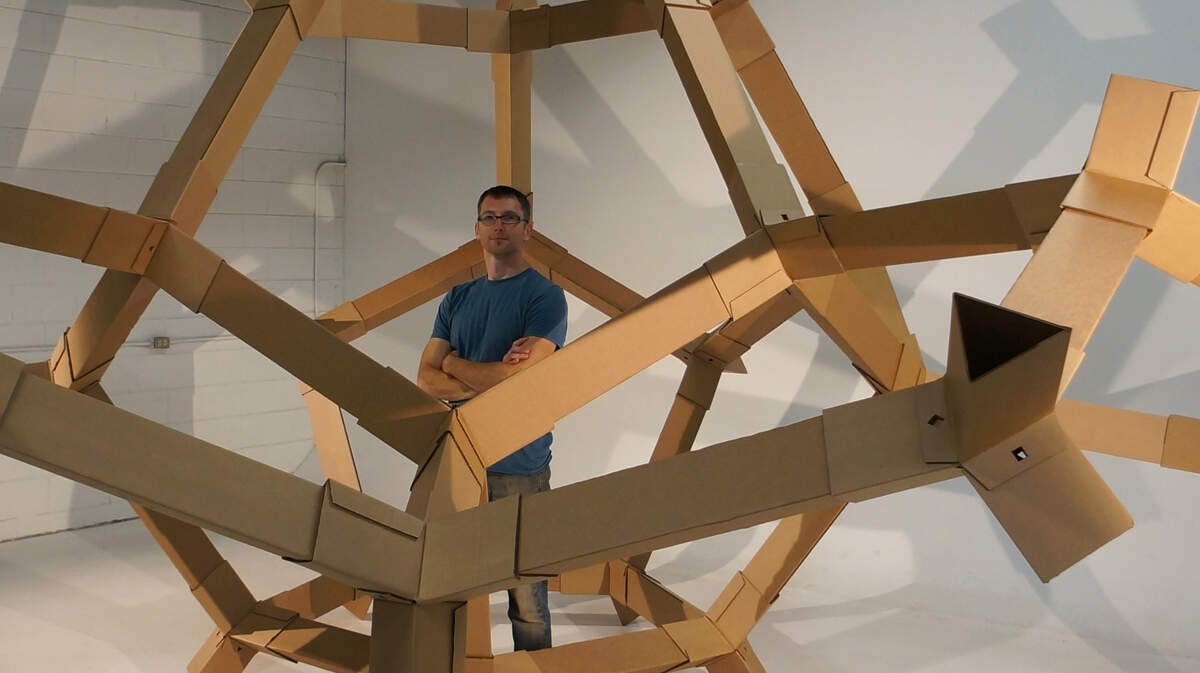
Richard Elaver’s interest in design started in his twenties while following the Grateful Dead in the mid-1990s. He dropped out of college and spent the next few years wandering – hitchhiking, driving a cab, working on farms, and living in a yoga center. He sold handmade wire-wrapped crystals at the concerts, a skill he learned from a book.
Almost 30 years later, Elaver, an Appalachian State University professor, is still making jewelry, along with decorative and functional art pieces. His methods as a designer and craftsman transformed as his experiences grew and he’s now weaving technology, model building, and computer numerically controlled (CNC) equipment into his work.
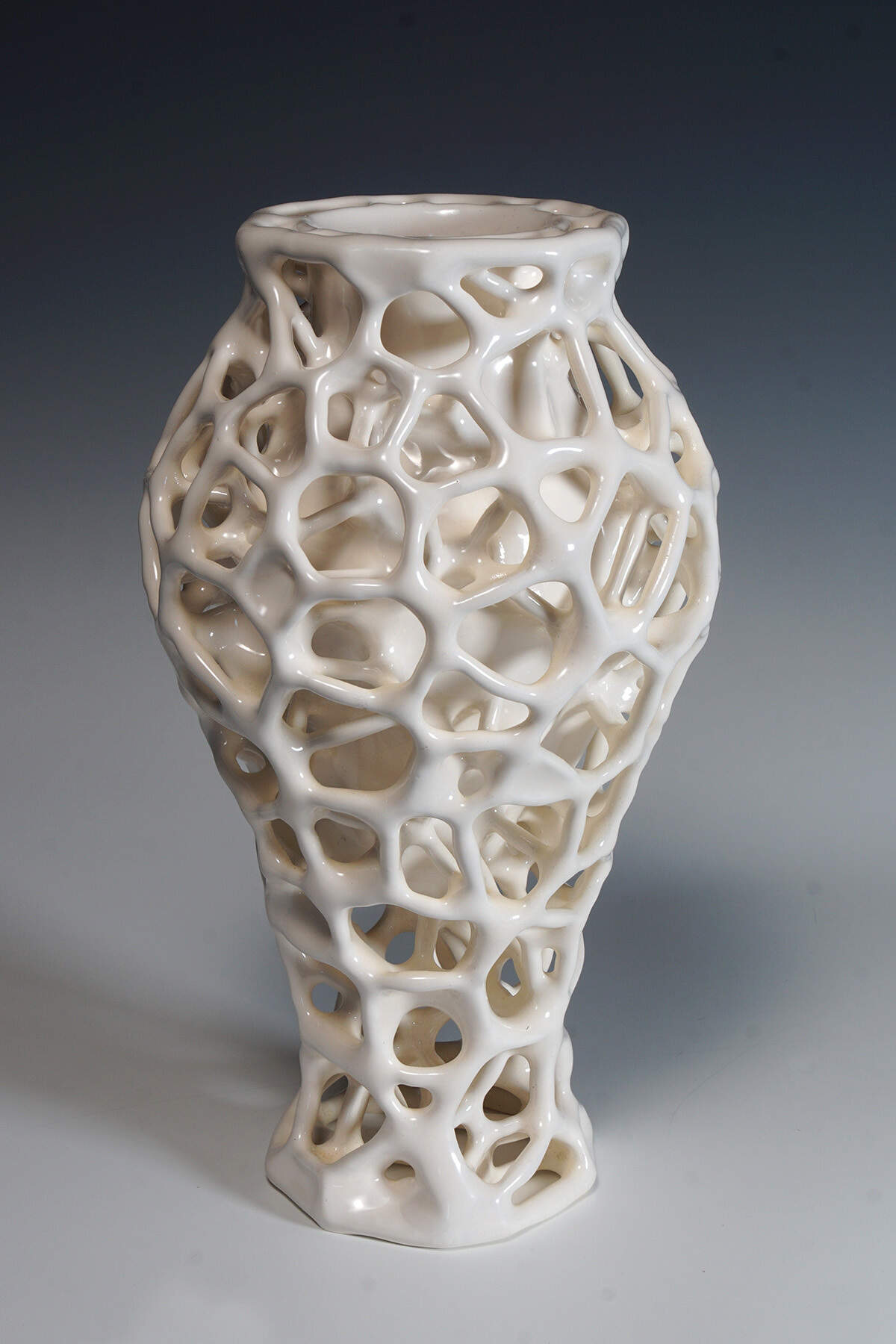
His solo exhibit, “Structure and Void” is at Overcash Gallery on Central Piedmont Community College’s main campus through March 12. Thirty pieces – 3D-printed items such as bowls, jewelry, light fixtures – are on display. The show also features Elaver’s “Pod Earrings,” “Wripple” wall hangings, and “Dissolving Tiffany” vases.
One of a kind
Fascination with finding a way to apply his craft background and product design knowledge to create mass individualization drove Elaver’s practice. His thesis for his Master of Fine Arts: He wrote three programs to create a set of silverware where no utensil was the same.
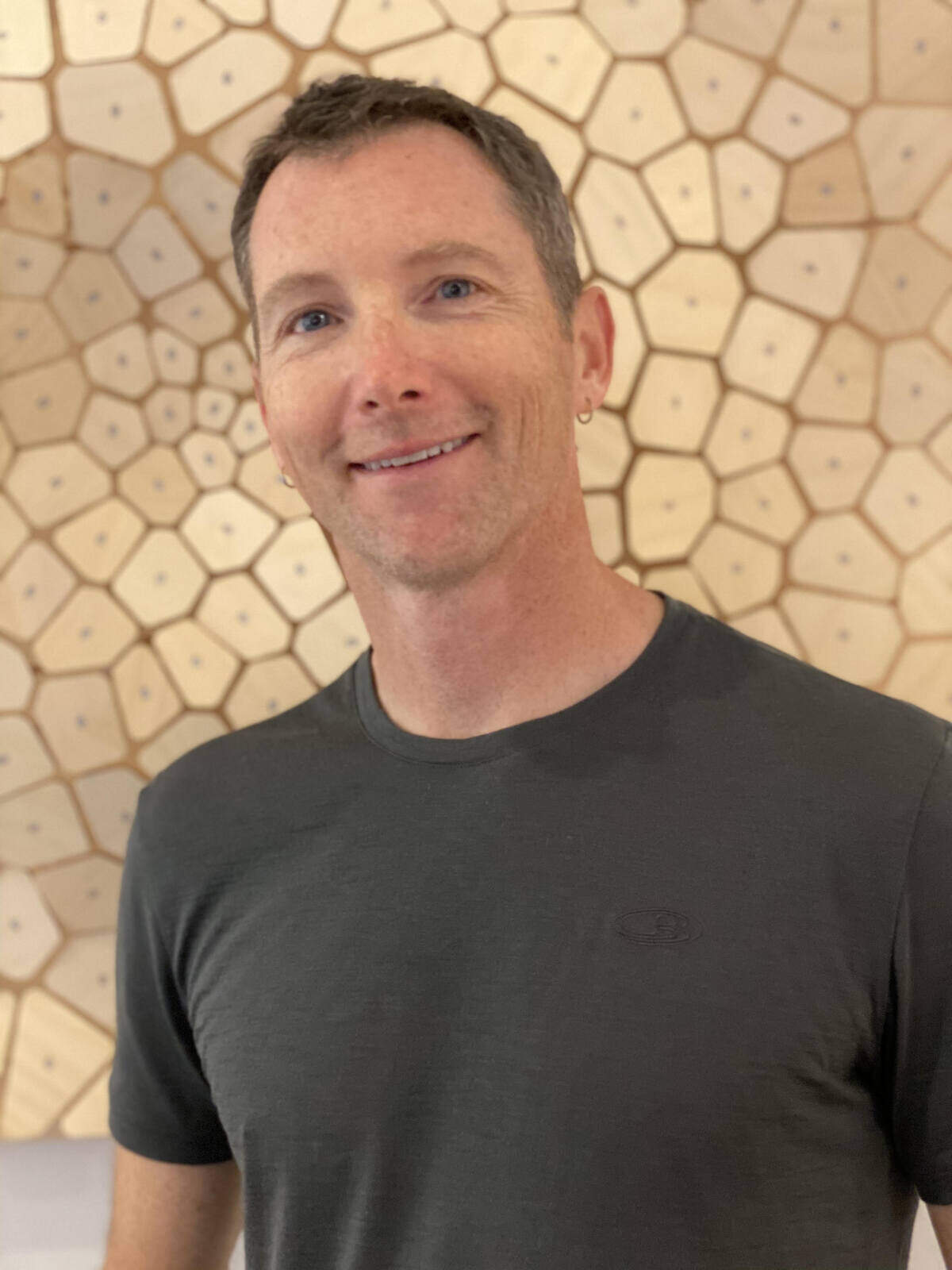
“In the product world, you’re always making thousands of the same thing,” said Elaver, 47. “The game was, how do you use that capacity with all of its precision and all of its control and all the material and processes to make one-of-a-kind objects?”
His new series, “Dissolving Tiffany,” was finished during his spring-term sabbatical last year from Appalachian State University. He learned Grasshopper, a generative software program for creating complex models. It specifically facilitates randomization.
“I’ve been trying to figure out how you take something that’s a 3D print and make it into a more luxurious object,” he said. “Instead of it having this crude grainy surface to it, how do you make it sleek and smooth and desirable or aesthetically pleasing? It’s something that’s been a challenge for me ever since I started 3D printing.”
Inspired by nature
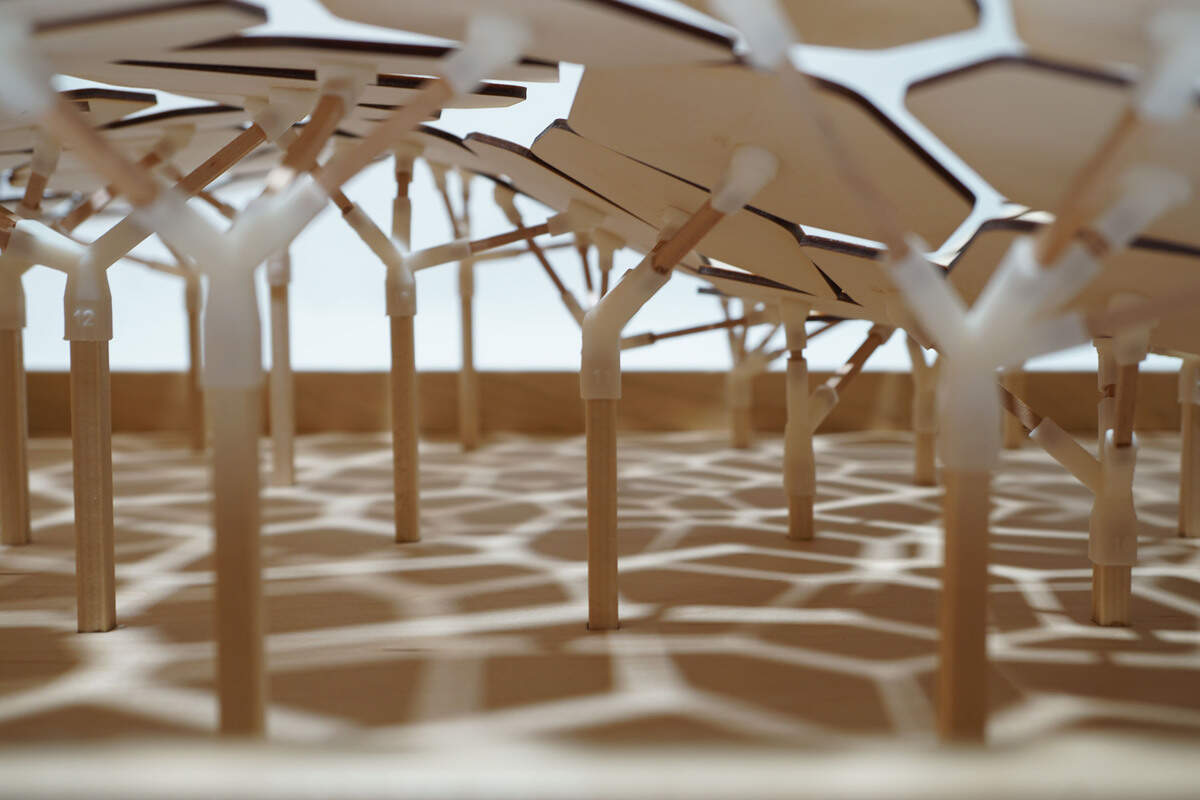
Elaver’s process starts with a sketch. He feeds the information to CAD, a 3D modeling software, and the form is exported to a CNC machine. He writes code to build objects that are different each time the program runs.
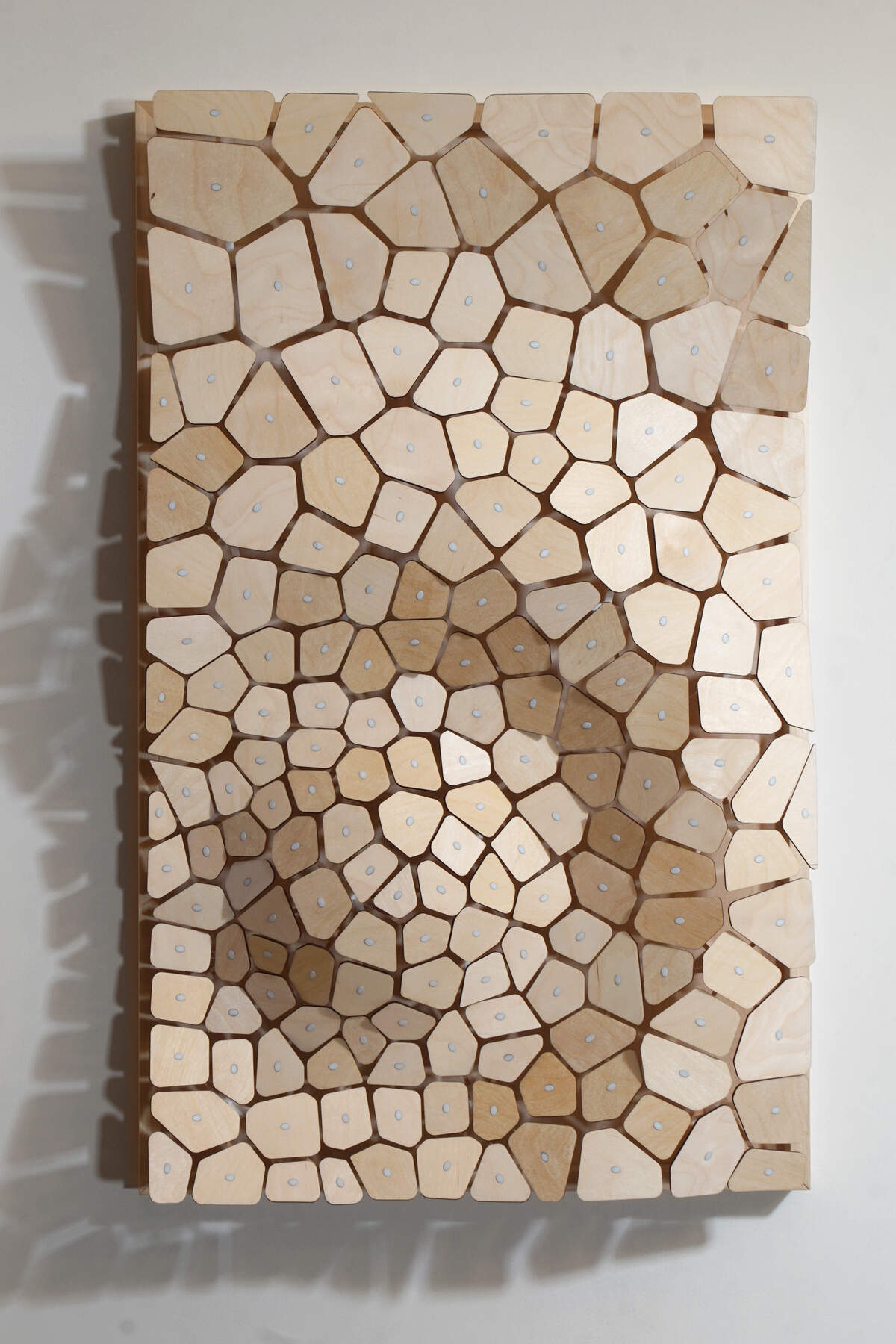
Cellular patterns in nature inspire him and are evident in his work. Materials such as nylon, plaster and plastics are sometimes coated by hand with resin or epoxy, depending on what he wants in the look and feel of the object. He also uses wood, acrylic and paper for other projects.
“I was using that process to make a series of earrings,” he said. “No two earrings are exactly the same. I would run the same program, but every time it was run, it would give (me) another shape. I used that to design a number of things – from jewelry to furniture to functional objects like bowls and vases.”
A product designer
Elaver grew up in Stoughton, Wisc. After his stint as a Deadhead, he studied under a master goldsmith in Stoughton from 1994-1999. When he decided to be a jeweler but wanted a formal education he started taking classes in art history and sculpture at the University of Wisconsin-Madison. He received a degree in metalsmithing in 2001.
“My goal was never to get a degree,” he said. “It was to become a professional craftsman. But I really liked it. I really got hooked on the academic side of art.”
After graduating, he worked three years as a product designer for Design Concepts in Madison. He designed lawn mowers, catcher’s masks and medical devices for companies such as Harley-Davidson, Honda and Polaris. But the idea of planned obsolescence and mass production got to him.
“I had become disenchanted with the feeling that I was producing next year’s garbage,” he said. “My conscience got the better of me. (I was) missing the fine art world and craving to do my own work.”
Combining art, technology
In 2003, he was accepted into the Cranbrook Academy of Art in Michigan where he studied industrial design and metal for two years. He began combining technology and industrial design with art.
His first project was making eye wear with a desktop CNC machine. He asked himself, “How can I make custom, high-end eyewear using industrial tools?”
His answer came in the form of eyeglass frames made out of Buffalo horn with gold hinges. He combined a jeweler’s attention to detail with the capacity of a machine from the industrial design side. He’s teaching this technique in “Making a Spectacle” at Penland School of Craft this summer.
“There’s a concept from hand to machine and back again that I really like,” Elaver said.
After graduation from Cranbrook, Elaver went to Amsterdam with the Fulbright Program to work with Droog, a conceptual design company. He designed exhibitions for them.
When his one-year program was complete, he taught in the Visual Art program at Purdue University Fort Wayne for four years. Nine years ago, he moved to Boone for an associate professorship at ASU where he now teaches design fundamentals, modeling software, product design, and senior capstone studio.
‘Structure and Void’
What: An exhibition featuring 3D decorative and functional pieces by artist Richard Elaver, an associate professor at Appalachian State University.
When: Now-March 12
Where: Overcash Gallery, Central Piedmont Community College’s central campus, 1202 Elizabeth Ave.
Cost: Free
Details: http://blogs.cpcc.edu/cpccartgalleries/current-exhibitions/
Artist Lecture
What: Richard Elaver talks about his “Structure and Void” exhibition.
When: Jan. 30, 3:30-4:30 p.m.
Where: Overcash Gallery, Central Piedmont Community College’s central campus, 1202 Elizabeth Ave.
Cost: Free
Details: http://blogs.cpcc.edu/cpccartgalleries/current-exhibitions/
More arts coverage
You can find all our arts season preview stories and calendars in one place: charlotteobserver.com/topics/charlotte-arts-guide.
Want to get more arts stories like this delivered to your inbox? Sign up for the free “Inside Charlotte Arts” newsletter at charlotteobserver.com/newsletters
You can also join our Facebook group, “Inside Charlotte Arts,” at https://www.facebook.com/groups/insidecharlottearts/
This story was originally published January 27, 2020 at 10:17 AM.