
These Bechtler art classes in Mecklenburg jails help develop skills and self-esteem
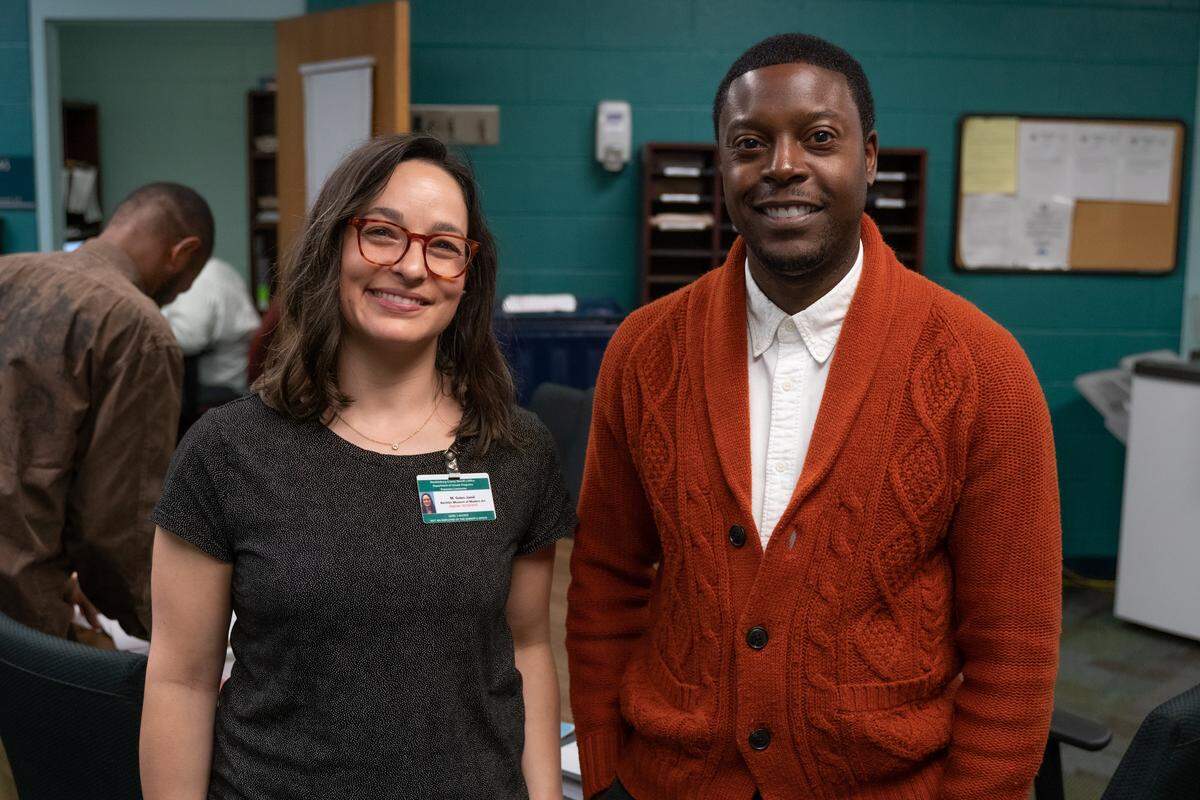
Five young men file into a sun-filled room and take their places at desks arranged in a square. Mykell Gates Jamil, the Bechtler Museum of Modern Art’s director of school and community outreach, welcomes them back.
The teens are residents of the Mecklenburg County Juvenile Detention Center. But for the next two hours these 16- and 17-year-olds are art students.
Facing anything from misdemeanor charges to felonies, these teens are part of the Bechtler’s Jail Arts Initiative, which has served more than 800 detained individuals since its 2011 inception. The Bechtler places specially trained teaching artists and staff in county jails to teach teens age 16 and up and adults. It holds up to 12 one-week residencies each year.
Today is the fourth of five days of art-making for this group. The emphasis at this 72-bed facility for youthful offenders off Statesville Avenue is on education and counseling.
This is still a jail, though. Even visitors abide by a dress code – no scarves or dangling earrings. Purses must be secured in a locker in the lobby. Cell phones must be left in the car. Security is tight.
Discovering talent
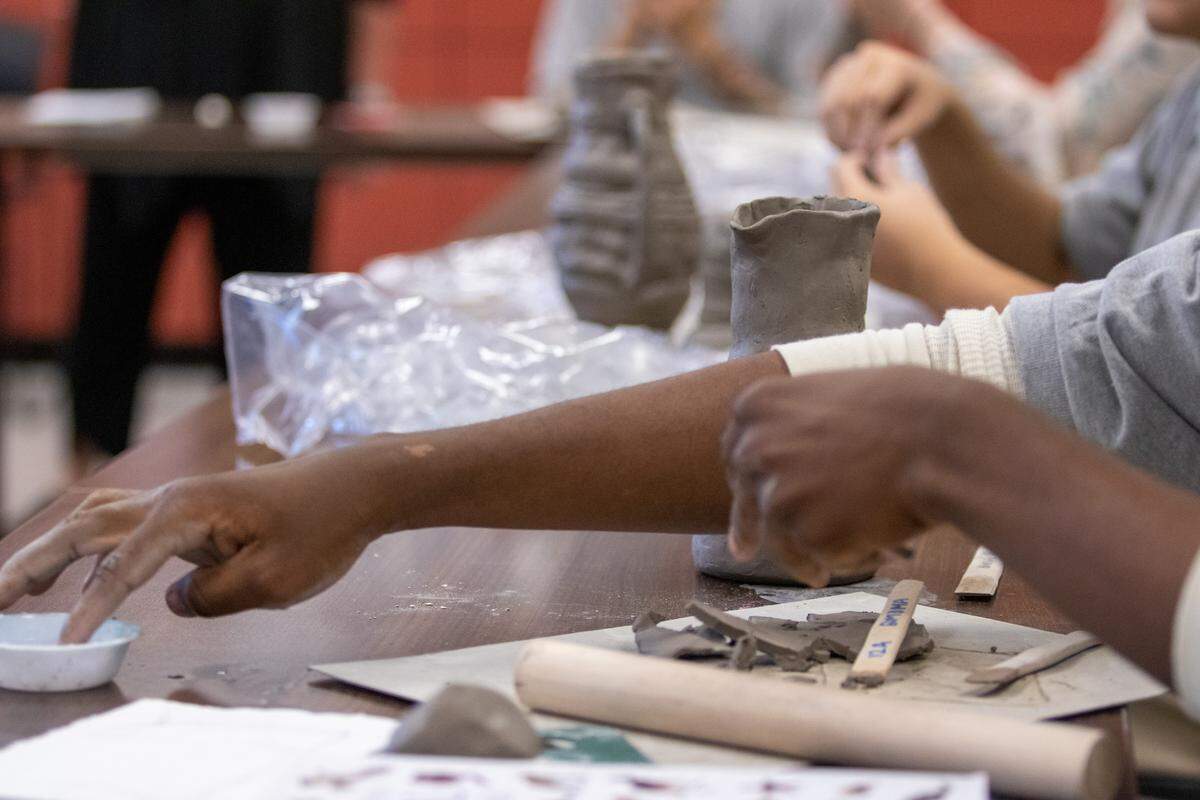
But there’s a certain freedom in the art classroom. Students don’t have to be told what to do. By the penultimate day of class, they know the routine. They dig out their works in progress from the plastic bag sitting at their place. They’re working on pinch pots inspired by Picasso – a name most of them hadn’t heard until this week.
Picasso isn’t entirely the point. The goals of these classes include increasing self-esteem, reducing stress, improving vocabulary, listening, reasoning, reflection and problem solving. Skills development – in ceramics, drawing, fiber arts and more – is part of it, too.
These teens are also going to discover they have talent. Jamil makes sure of that.
“On the second day of class, they make their own sketchbooks out of a single piece of paper,” she said. “It’s something they all can do in five or 10 minutes, so they’re guaranteed an early success.” It makes creating something out of clay seem less daunting.
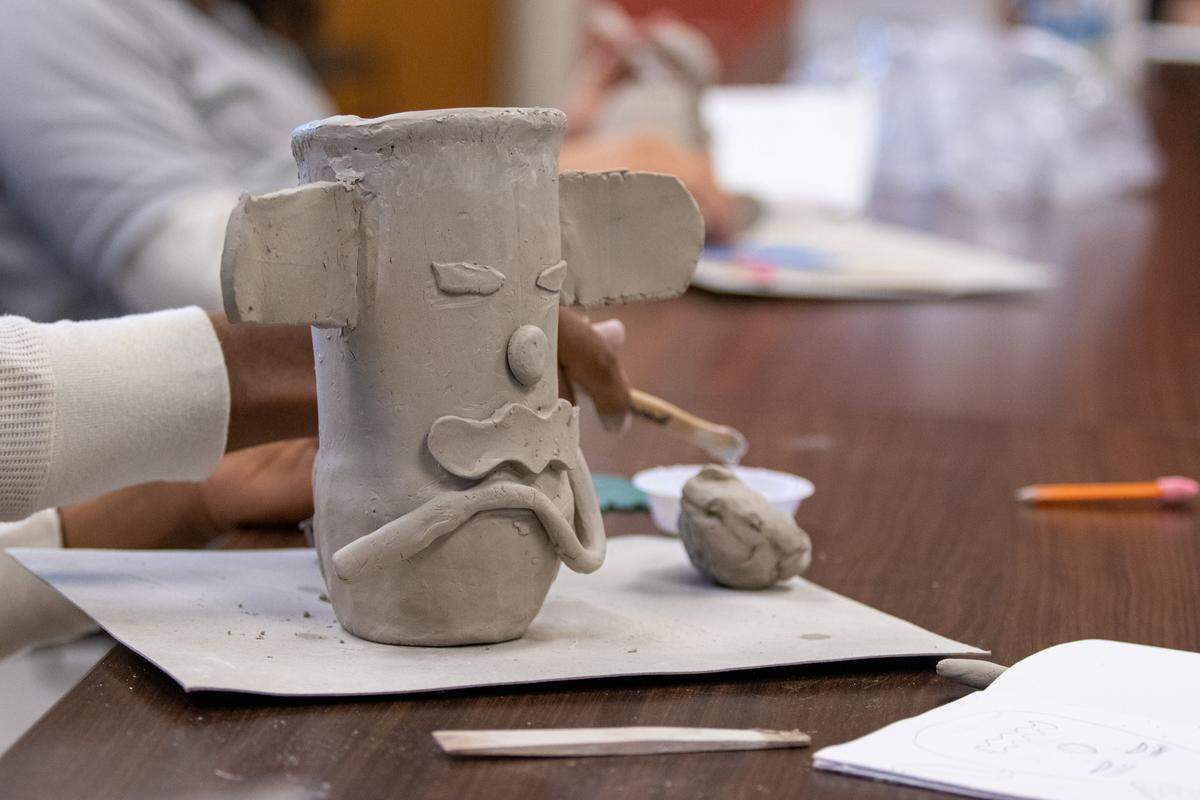
Students look through art books for inspiration and sketch out a design for a face jug. With a lid. The lid must fit the base – which is harder than it sounds. Jamil and Susan Hendley, the Bechtler’s school and community program coordinator, guide them through the process that involves repeated refining and maybe a few failed attempts before getting it right.
Each day, the artwork moves closer to completion. By Thursday, the forms have taken shape, and the artists are beginning to paint their clay creations — except for one student who had gotten frustrated the day before and smashed his still-malleable jug back into a lifeless lump.
Today, he turned the clay into a bowl and was rubbing it – hypnotically, repeatedly – until it was smooth and symmetrical.
“You’re not going to destroy this one, are you?” Jamil asked him. “I need you to promise me.” She’s both teacher and cheerleader.
She encourages, asks how she can help, instructs students on technique, tells them what they’re doing right. She tells them she’s proud of them.
Start to finish
No one is pointing it out, but these students also learn how to start and finish a task. They’re learning that persistence pays off. It’s what Keith Cradle, a PhD. who directs youth/juvenile programs for the Mecklenburg County Sheriff’s Office, calls “the completion factor.”
Cradle said they’re also learning “healthy ways to deal with their emotions.” Making art is a way to de-escalate, he said. It’s productive and therapeutic, but the teachers don’t tell students that’s part of the point. “Students figure that out on their own,” he said. “It’s not forced on them.”
One student gave his jug a set of big mouse ears and a long, curving tail that wrapped around the vessel. Another made a starfish out of clay that he later attached to his jug.
A third got really ambitious. His lid was the head and torso of a person that contained great detail, including a backwards baseball cap. The head/lid even had an expression: a frown. “He’s mad,” the young artist said.
“Time goes by fast in here,” he added. Jamil said her students often ask if they can keep working on their art after class is over.
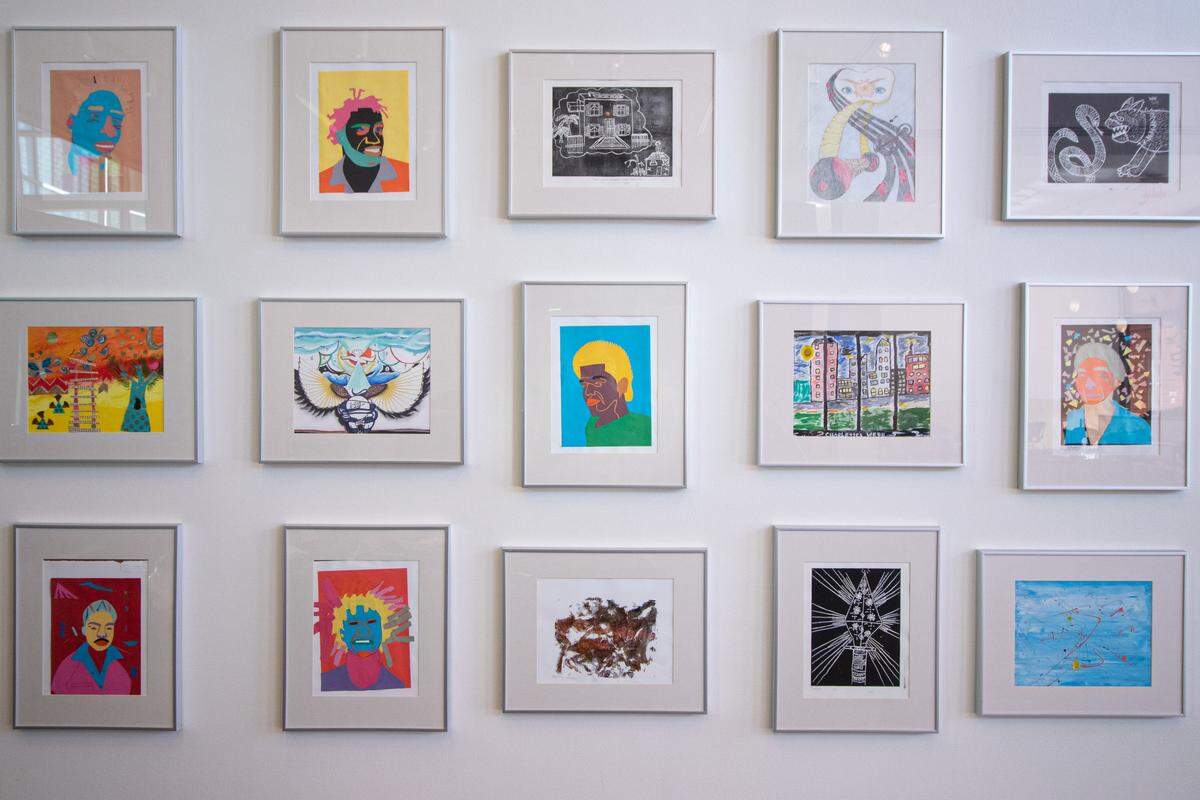
Another student said he likes art class because it takes time off his hands. These residents may be young, but they already understand: Idle hands can lead to trouble. Being given something constructive to do – and shown that they’re capable of creating a thing of beauty worthy of display in a museum – can help solve a host of ills.
The students get to decide what to do with their finished artwork. A couple of them were excited by the idea that their work might be on display in the Bechtler Museum lobby. Some plan to take their jugs home and display them in their rooms.
One student said he planned to give his to a jail staffer.
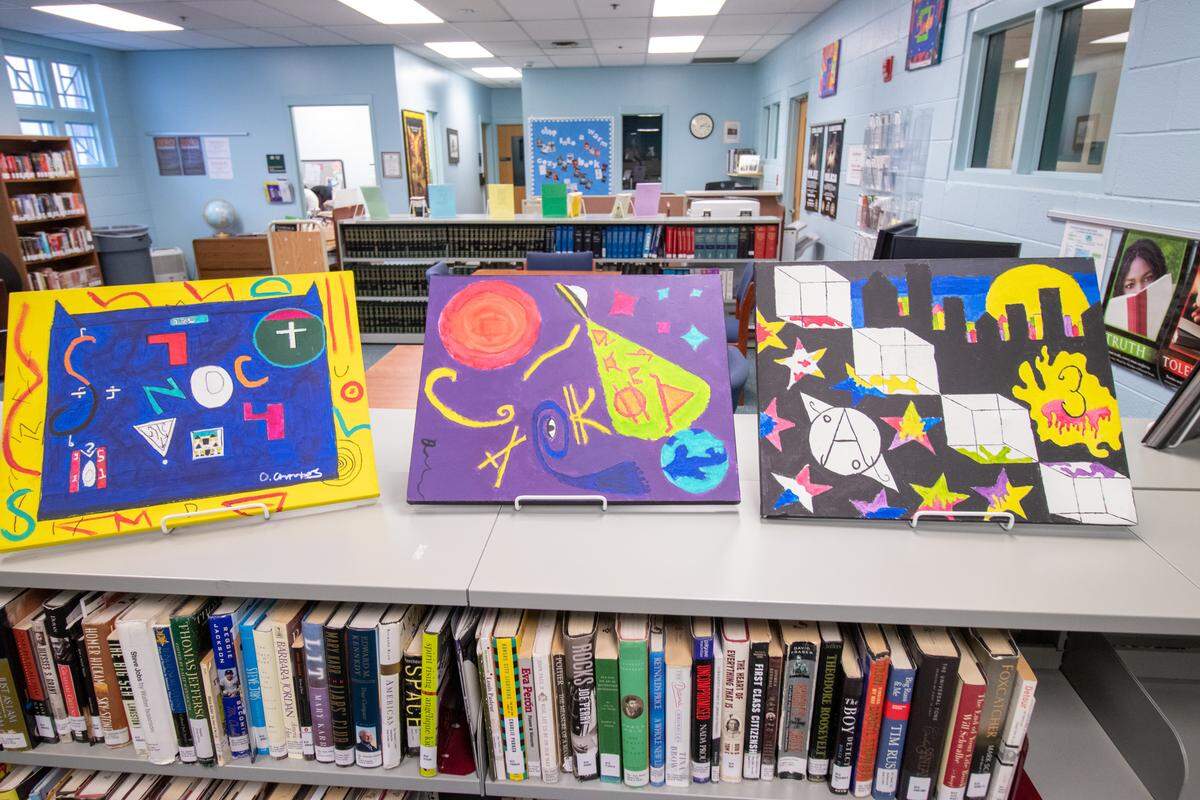
“Some students donate their artwork to a counselor or staff member they’ve grown close to,” Jamil said. As proof, she took me to several offices where student artwork is on display. The jail’s library is filled with colorful artwork by former residents.
The power of art
The Mecklenburg County Juvenile Detention Center has a transient population. Residents are awaiting a court date, after which they’ll go home, or go to another facility in the state that houses youth, or go to prison.
Some residents are at the facility for a day; others have been housed here for two years, Cradle said. The judicial system moves at an unpredictable pace.
But the residents’ schedule, while they’re here, is structured and predictable. They have school; they’re either in Charlotte-Mecklenburg Schools or working toward a GED. And they have other classes – money management is one – and access to a recreation center and a library. “There are no holes in their day,” Cradle said.
The students said art class is the best part of their day.
They’re often surprised to discover that. Many residents are making art for the first time. “They are not always getting these opportunities in schools,” Cradle said. “The arts keep getting cut.”
Some of these artists’ almost-completed works looked so accomplished, you might think they had prior training.
Jamil asked the class, “When was the last time you made something with your hands?” Some said they recall an art class or two from elementary school. Others said they’d never had an art class.
Cradle noted that the relative quiet in the classroom indicates how engaged students are. They’re creating; they’re not talking or goofing off. “They’re into it,” he said. “They’re listening to their teachers, and they want to be affirmed.
“They are,” he concluded, “transformed by art.”
This story is part of an Observer underwriting project with the Thrive Campaign for the Arts, supporting arts journalism in Charlotte.
Support for Jail Arts Initiative is provided by the Foundation For The Carolinas.
More arts coverage
You can find all our arts season preview stories and calendars in one place: charlotteobserver.com/topics/charlotte-arts-guide.
Want to get more arts stories like this delivered to your inbox? Sign up for the free “Inside Charlotte Arts” newsletter at charlotteobserver.com/newsletters
You can also join our Facebook group, “Inside Charlotte Arts,” at https://www.facebook.com/groups/insidecharlottearts/
This story was originally published January 29, 2020 at 12:53 PM.