
‘Not ready... for a rocking chair yet.’ At age 70, she took up drums during COVID-19
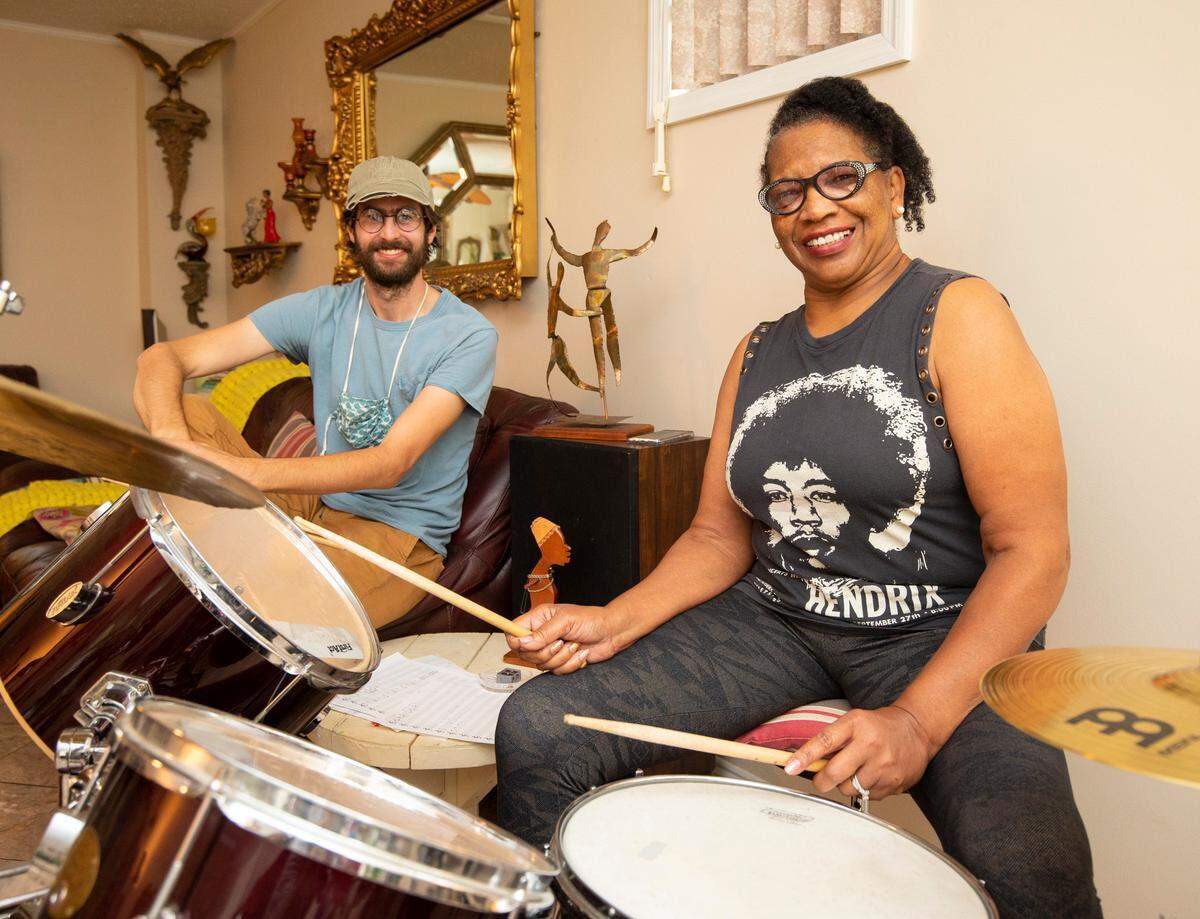
When Alvesta Cody started drum lessons at the age of 70, her family and friends weren’t surprised. They’d always called her bold.
“I’m used to facing challenges,” Cody said. “Everyone’s always told me I have a lot of nerve to do things.”
Since retiring from United Parcel Service in 2005, she’s stayed busy with Shining Stars, a senior social group at the Albemarle Road Recreation Center through Mecklenburg County Park and Recreation. But she had too much free time once her classes were canceled due to COVID-19 regulations.
Cody remembers sitting with her husband, Derek Cody and saying, “I’ve got to fill this space. I need something to do. I’ll play the drums.” At first he gave her a funny look, but then said: “Go for it, Vet.”
She researched music lessons and found Bold Music, a business that provides private, in-home musical instruction. In June, she signed up for bi-weekly lessons with Ryan Colebeck, one of Bold Music’s instructors.
The ideal student
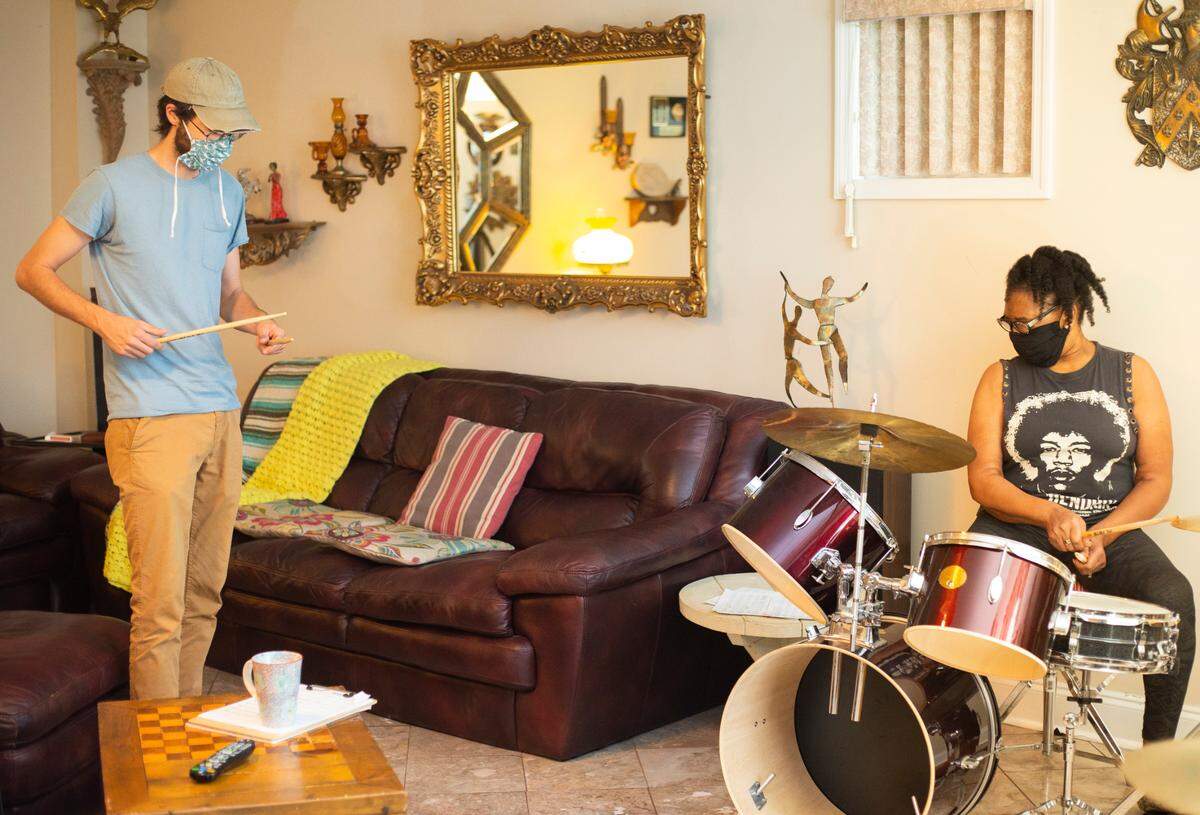
The first lesson was at Cody’s church, Zion Primitive Baptist Church. It had a drum kit Cody could use at her Hickory Grove home in Charlotte; it now sits in the corner of the den. Student and instructor wear masks and practice social distancing, part of Bold Music’s coronavirus safety protocols.
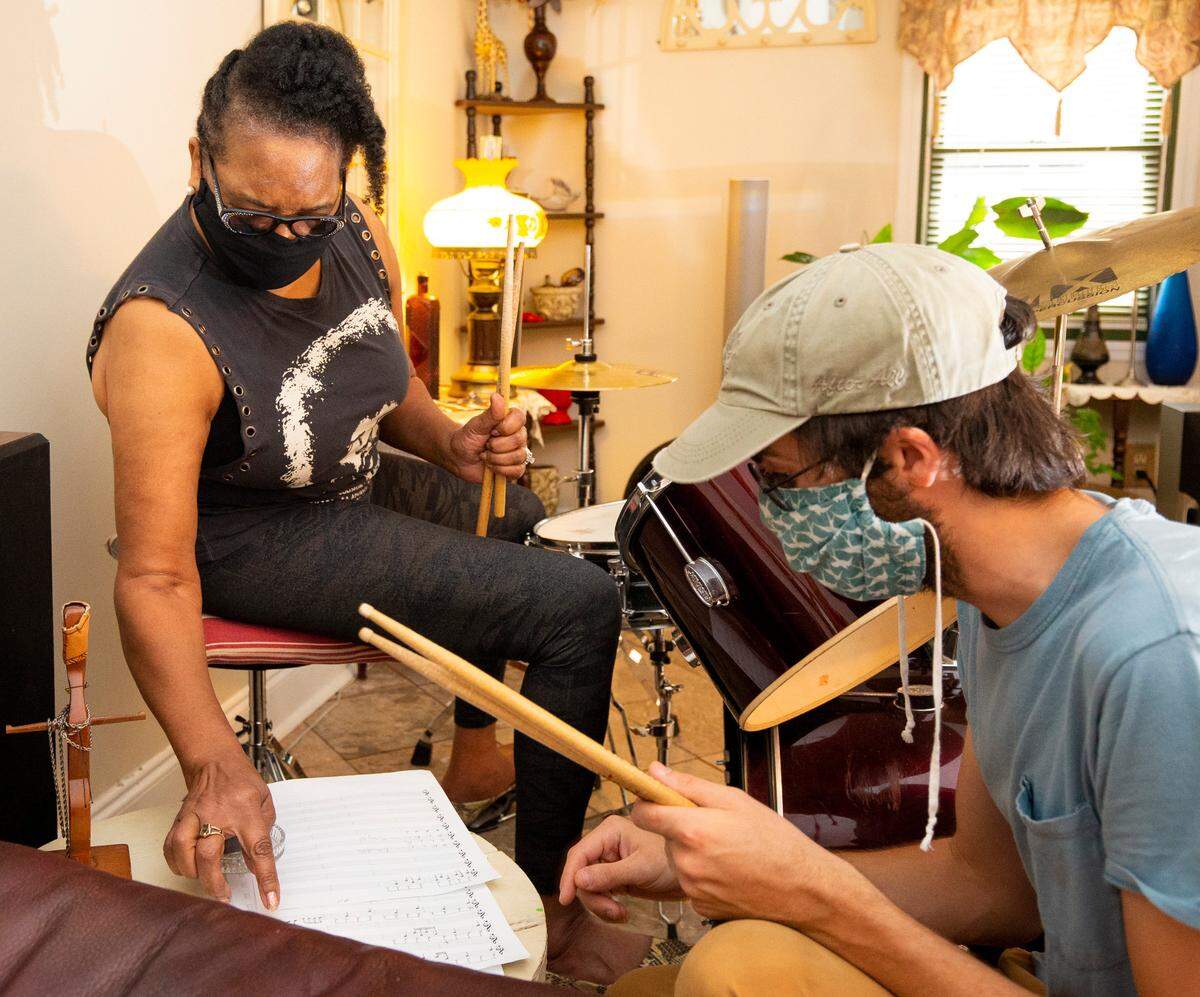
Colebeck’s been teaching drums with Bold Music since February. He started Cody on the basics: how to count, learn the rhythm, names of drums, how to set them up and tune them.
Between 8 a.m. and 8 p.m., careful not to annoy the neighbors, Cody practices twice a day for 10 to 15 minutes. In fact, she changed to weekly lessons in mid-July to give herself more time to practice in between sessions.
“She’s ready to learn every time I show up,” said Colebeck, 30. “There’s marked improvement in her as a drummer every week. I can hear her getting more confident in the drums. She looks more relaxed and more comfortable sitting behind the drum set. Honestly, she’s the ideal student.”
Over the course of weekly lessons, the teacher and student relationship has grown into a friendship. It’s not unusual for them to chat about personal issues in their lives. If lessons were to pause, Colebeck said, they’d stay in touch. He feels lucky to have met her.
Drums as therapy
Cody had an ulterior motive for choosing the drums — she saw it as an opportunity to build confidence and help with her memory and physical coordination. She’s sang alto in church and school choirs, but she’s never played an instrument or read music.
“I thought it would help me with a tremor I have in my left hand,” she said. “I wanted to challenge my memory. He’s taught me to read music from his teaching. I am able to coordinate my limbs.”
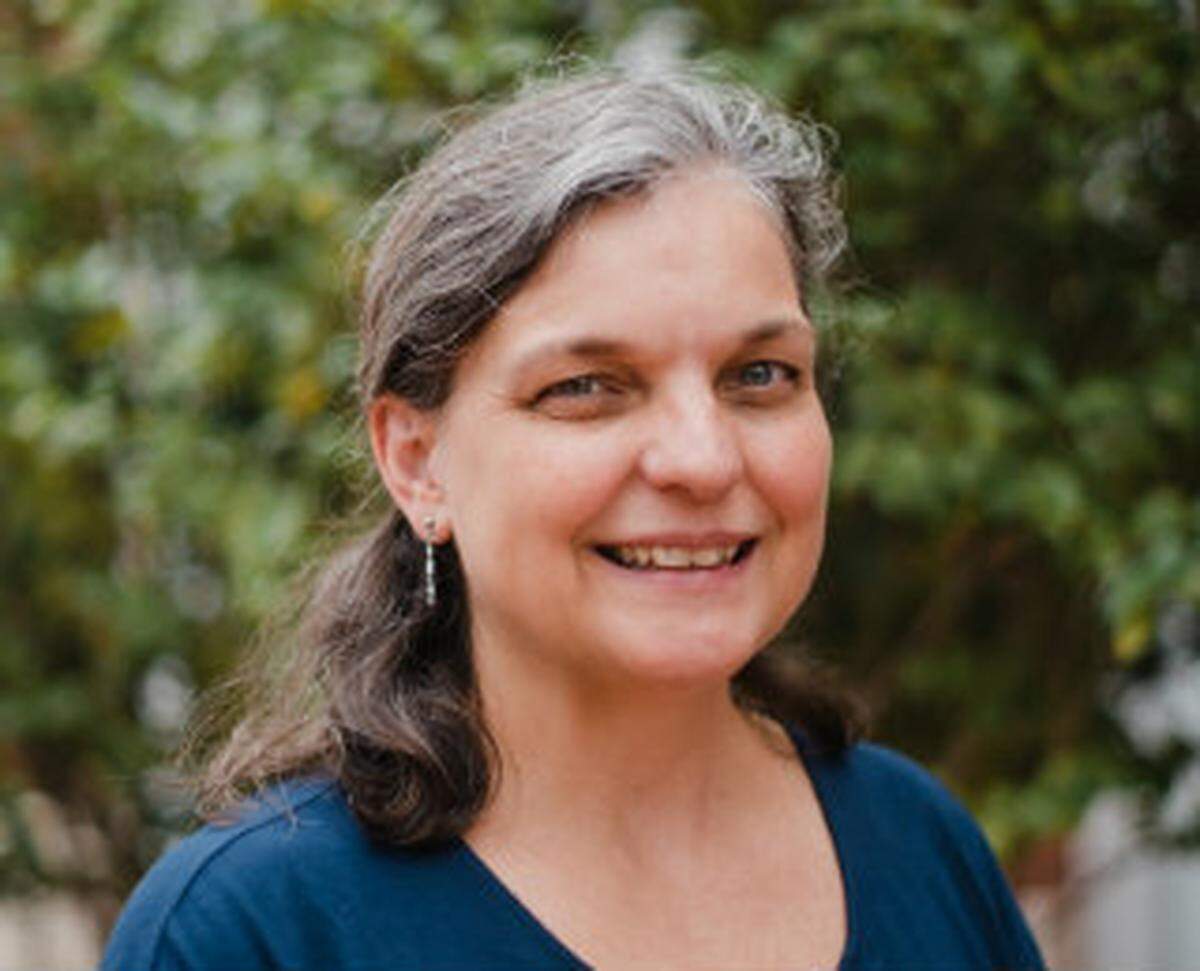
Practicing a musical instrument not only stimulates the brain, it engages different parts of the brain and incorporates the whole body, said Meg Johnson, music therapy program coordinator at Queens University of Charlotte.
“The more neurons we can activate and have firing at the same time, the better,” Johnson said. “Simultaneous firing of neurons helps the brain form new pathways and strengthen the pathways that are already there.”
Playing the drums requires the musician to operate hands and feet using both sides of the body and by reaching across the body — movements that build sustained attention and develop the brain.
“The drums are an amazing opportunity for that total body experience,” Johnson said. “It’s up to a person how they want to get that stimulation, but with music, you get so much more packed into that punch.”
And learning to read music is like learning a foreign language.
“It’s making different associations with shapes and letters and assigning different information,” Johnson explained. “It’s very similar to what we’re doing when we learn a new language.”
Laughing to the beat
Cody grew up in Kershaw, S.C.. She ran for high school queen at Hillside High School and was named Miss Hillside in 1967-68. She finished junior college and moved to Charlotte in 1970 to help her older sister with a newborn.
Cody held various jobs throughout her career in Charlotte. She worked for Greyhound as a shipping clerk and RCA in consumer electronics. Cody retired from UPS after 31 years in data input, claims and other positions.
Drumming isn’t Cody’s only talent: She’s been composing and delivering stand-up comedy at birthday and house parties, and family and school reunions since 2009.
“I’ve had the pleasure of delivering and entertaining groups averaging 75-120 people and really holding their interest for 20-25 minutes at a time,” she explained. “I’m still active. Always getting good reviews and excitement after my skits.
“I’m sure I can incorporate my new skills with the drums together with my entertainment skills.”
A beat of inspiration
One day, Cody hopes to play drums at church, even if it means filling in for another drummer.
Even though most songs in the hymn books such as “Holy, Holy, Holy” don’t require drums, she’s trying to build in a beat with Colebeck’s help. They want to find a way to add to the music, not detract from it. Keep it simple, Colebeck suggested.
“It’s a creative exercise,” he said. “The first thing she did was pretty close on the money.”
Cody began this journey wanting to improve herself but to also show other seniors they have the ability to do something new. Cody and her friends from church have a text thread going, and it’s filled with positive messages like “You Go Girl” and “I’m excited for you.” Cody wants them to also be thinking, “That could be me.”
“There’s a lot more to learn,” she said. “A big part of it is being able to use my limbs and my mind at this age and to encourage others that they can do it, too. We’re not ready to be put in a rocking chair yet.”
More arts coverage
Want to see more stories like this? You can join our Facebook group, “Inside Charlotte Arts,” at https://www.facebook.com/groups/insidecharlottearts/
You can find all of our arts season preview stories in one place: https://www.charlotteobserver.com/topics/charlotte-fall-arts-2020
This story was originally published November 9, 2020 at 11:23 AM.