
This NC artist went from a job at Food Lion to Oprah’s cable network featuring his work
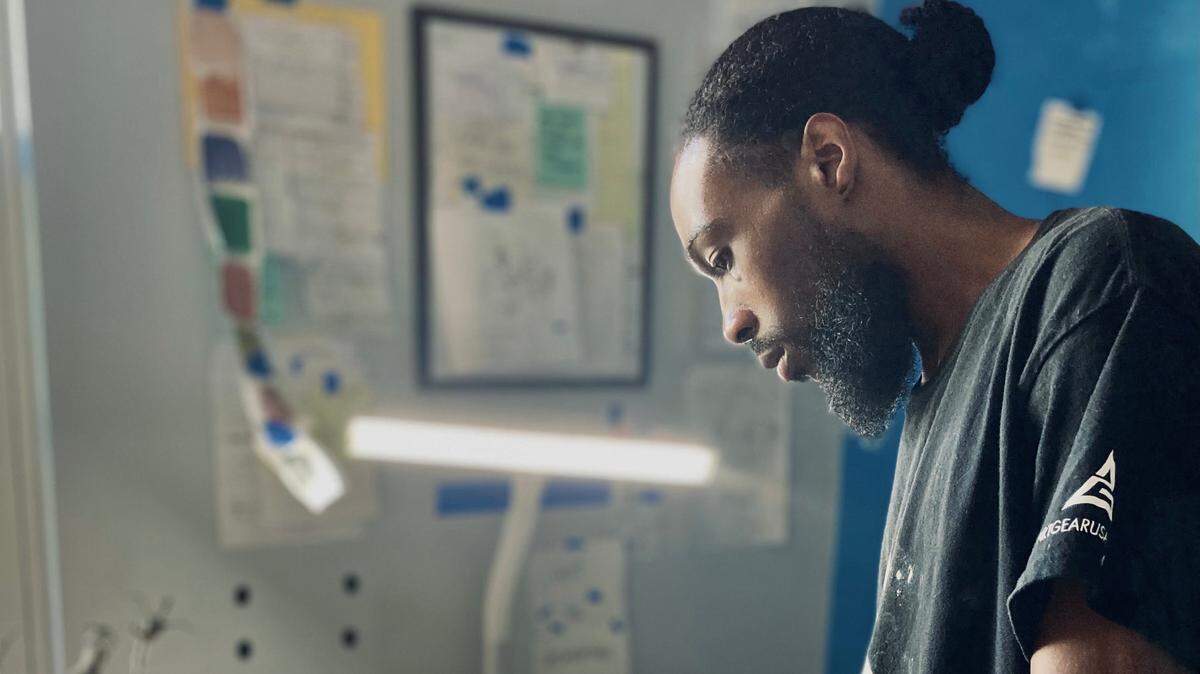
In just a few years, Gil Horne Jr. has gone from working in the produce department at Food Lion to being a full-time resident artist at a Charlotte gallery.
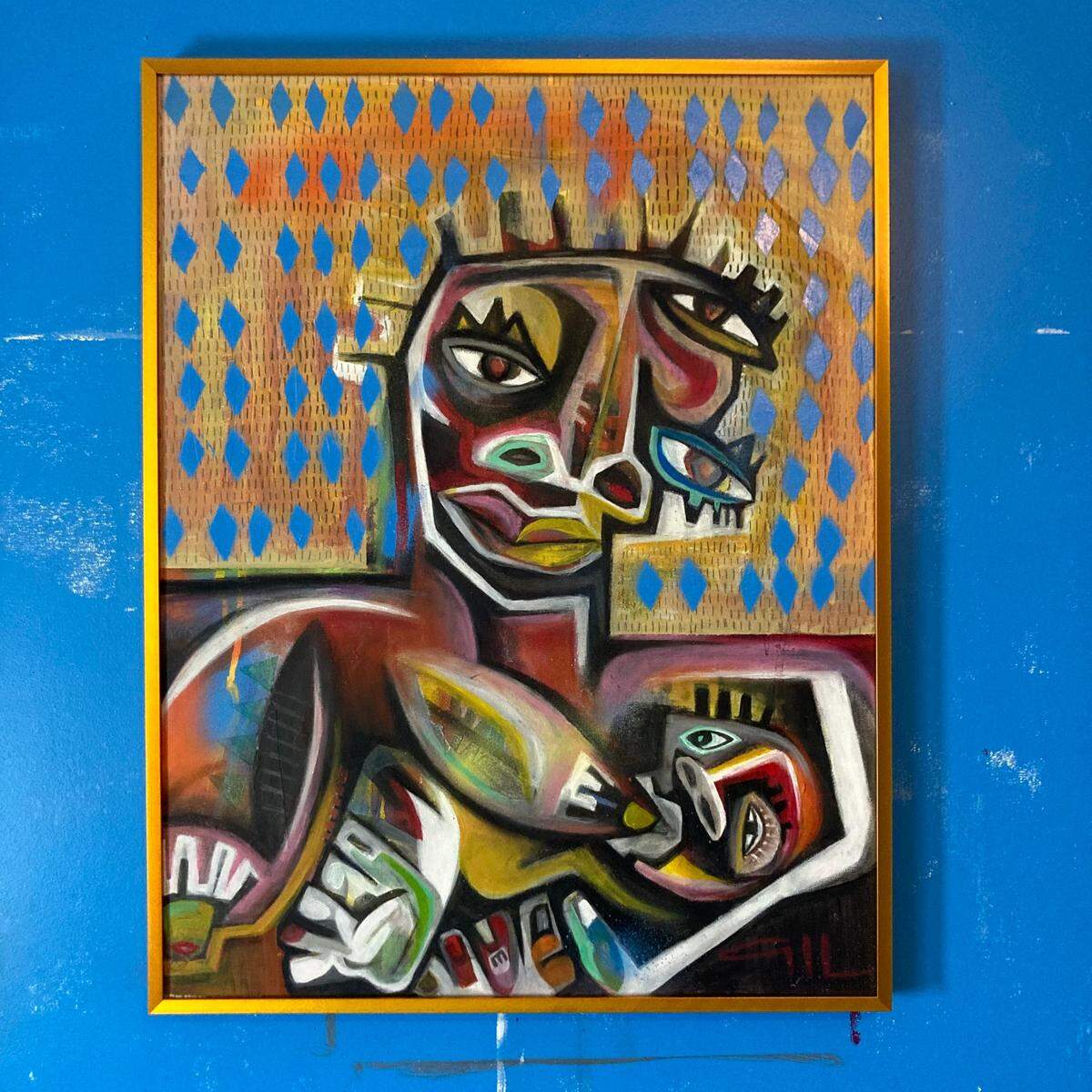
Horne seemed to catapult into the Charlotte art scene in September 2020, with his successful solo show, “BlackBoy.” Soon after, six of his mixed media pieces were featured on the Oprah Winfrey Network drama, “Delilah,” a show that’s set in Charlotte.
But Horne’s journey as an artist started long before he arrived in town, and it’s always been about more than just chasing a professional dream. For Horne, art is a means for healing himself and others too.
A challenging start
Horne fell in love with drawing as a child in Harrisburg, Pennsylvania.
His father worked for a paper company and would return home with stacks of printer paper for Horne and his older sister to doodle on. “(She) was the only person who I knew that could draw something that looked exactly like the cartoon character,” Horne said. “So it inspired me to pick up the pencil.”
But it was as a teenager in Milwaukee, where the family had relocated, that he began using art to cope with difficult realities.
His parents had split up, and his mom had remarried. Horne said there was friction at home, especially between Horne and his new stepfather. There was gang violence around him and racial profiling by police, he said.
By the time Horne was 10, he said he had already been questioned by the police. Officers would approach Horne and his friends on the city bus, for example, saying they matched the profile of someone who had just robbed a store — and asking where they had spent the last hour.
In the moment, you comply, he said.
“But overall, you don’t understand the emotional or the mental effect that has on you as you start to become an adult… or when you see the George Floyd thing, where you have a police officer that’s just sitting on this guy’s neck and you’re like, ‘That could’ve been me,’ ” Horne said.
All of these experiences would help shape his art in years to come.
Art as a pillar
At age 13, Horne left his mom’s house.
“I didn’t know where my life was going, and being 13 in Milwaukee was like being 18,” Horne said. “It wasn’t any different because most of the time we (weren’t) given the lifespan of becoming 18...”
Horne moved from house to house, staying with friends and family, and even relocated to Missouri for a time to live with his grandmother and “aunties” before returning to Milwaukee in high school.
“That was literally my life up until I was 22. I was moving around,” he said.
But art was something solid Horne could hold on to. “Art became that pillar,” he said. It helped him to process everything happening around him.
Later, while living in Grand Rapids, Michigan, Horne started developing a clearer direction for his artwork. He got involved with Heartside Art Studio and Gallery, part of a ministry that provided marginalized artists — including people who were homeless, disabled or dealing with addiction — a place to work and the materials to create art, which they could then sell through the gallery.
“The first day I got there, I just fell in love with it because it was so genuine,” Horne said.
Seeing the creativity and the ways art could become therapeutic inspired Horne’s vision for what he could do as an artist: exploring his own experiences growing up as a Black male and spurring conversation on topics that often go unspoken.
Moving to Charlotte
In 2016, Horne moved to Charlotte with his wife, fiber artist Temia Horne. They had recently become parents, and part of Horne’s goal was to reconnect with his own father, who had moved to the area.
Horne met Joanne Rogers by chance one day while working at the local Food Lion. She had just launched The Palette Table, a group focused on providing a supportive network for emerging local artists of color.
When she learned he was an artist, she encouraged him to attend a meeting.
Horne’s plan had been to scale up slowly, working out of his dad’s garage to develop his portfolio, but Rogers helped accelerate that process.
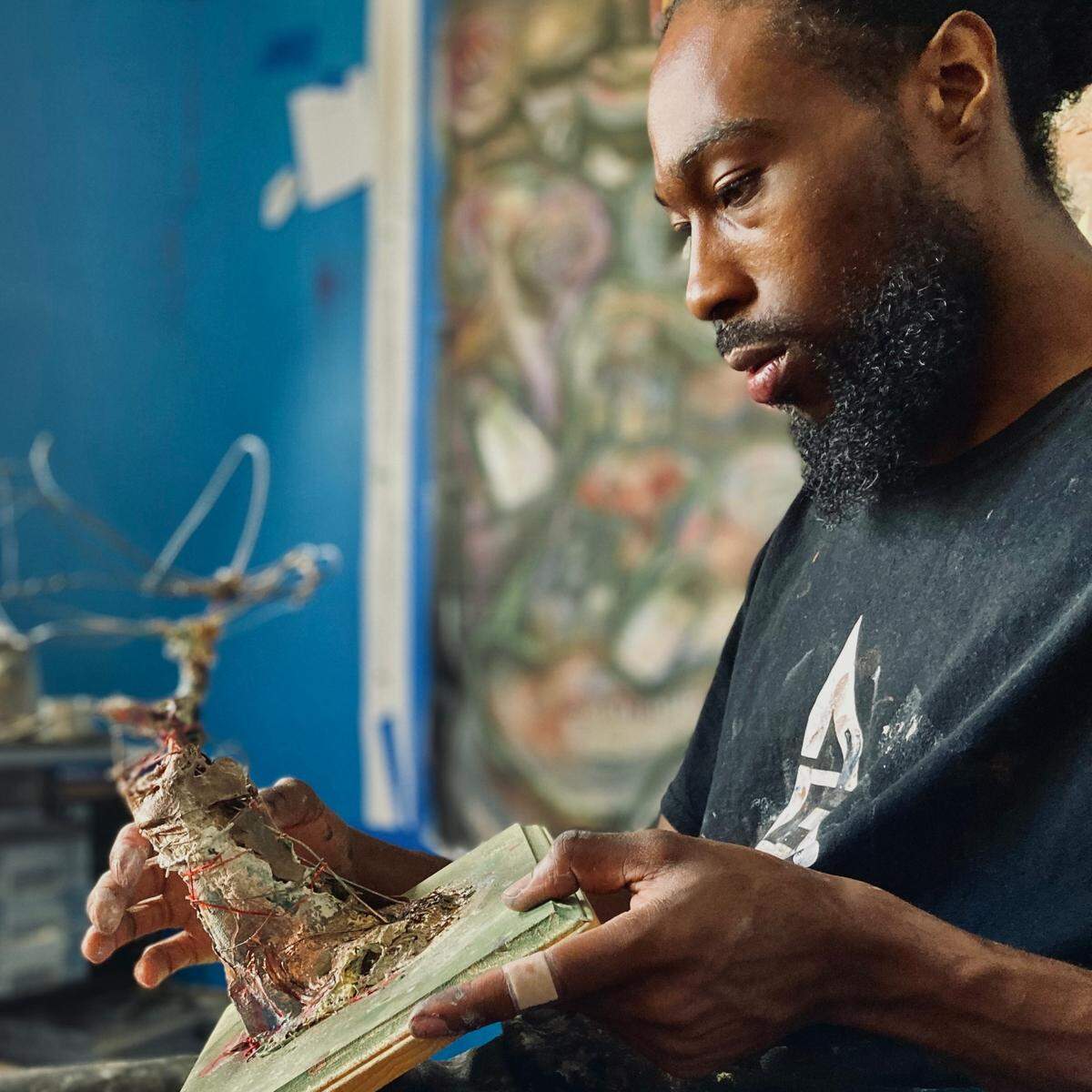
When she saw his art, “it was a funny response because she was like, ‘Gil, what are you doing?’ ” he said. He realized he needed to prioritize making art.
So in March 2020, he joined the new 9-18-9 Studio Gallery, an outgrowth of Rogers’ original concept for The Palette Table, as a resident artist. That September, the gallery hosted his exhibition, “BlackBoy,” the culmination of work he had begun while living in Grand Rapids.
He sold or rented nearly all 100 pieces immediately following the exhibition, including six pieces that went to the set of “Delilah.”
Horne said it was amazing to see his artwork, along with other creations by members of The Palette Table on national TV and to share that with his parents (with whom he’s now on good terms) and friends across the country.
The exhibition posed a question that he continues to ask: What does it mean to be a Black boy in America?
He hopes his art generates responses that are raw, vulnerable and varied. “I want them to be good and bad, or whatever people perceive that to be, because I personally feel like that’s what the Black boy experience is… It’s all of that.”
Horne is also delving into more multimedia and 3-D projects, as well as pursuing collaborations in fashion with his wife.
“It’s not just me talking about trauma all the time,” he said. “It’s also about having joy, succeeding, doing what I love to do. That’s the end of the story.”
More arts coverage
Want to see more stories like this? Sign up for the free “Inside Charlotte Arts” newsletter at charlotteobserver.com/newsletters. You can also join our Facebook group, “Inside Charlotte Arts,” at facebook.com/groups/insidecharlottearts.
And you can find all of our Fall Arts coverage in one place: charlotteobserver.com/topics/charlotte-fall-arts-2021.