
Mary Tribble, ‘spiritual seeker,’ finds kinship with fourth great-grandmother
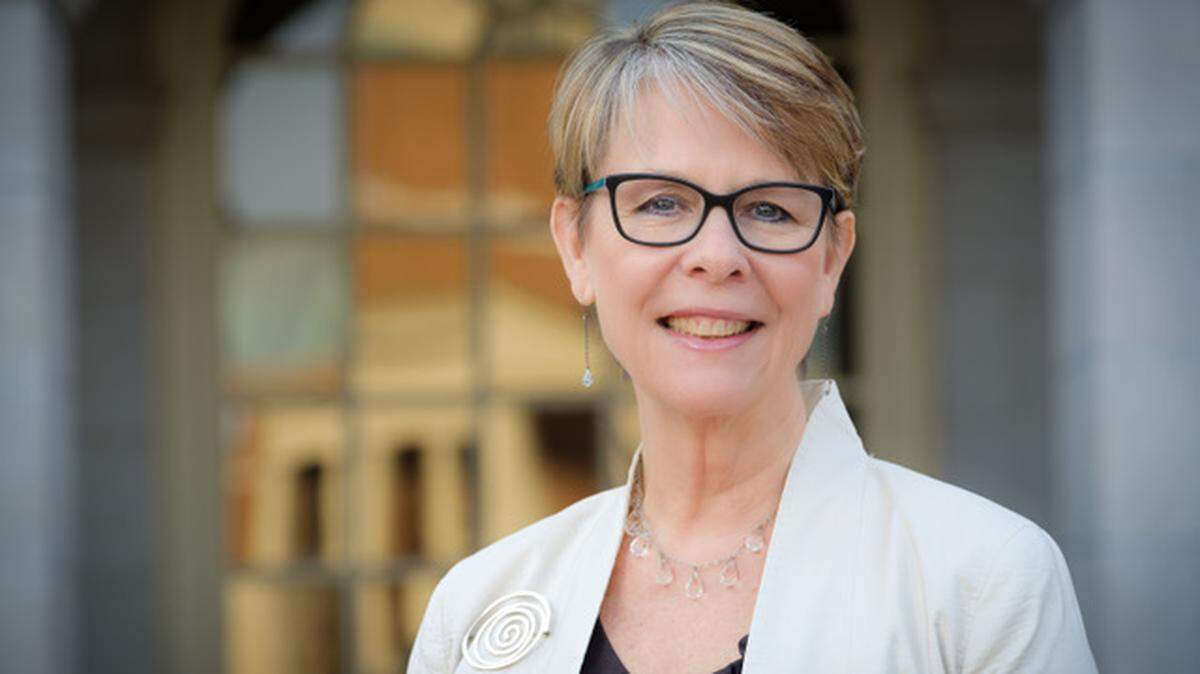
Vermont native Sally Merriam Wait, wife of Wake Forest University founder Samuel Wait and the fourth great-grandmother of author and former Charlotte events planner Mary Tribble, was 19 in 1812 when typhoid and spotted fever swept the country.
No one knew when they woke if they’d be alive by evening. Sally’s personal life was also tumultuous — from her religious conversion in her late teens, to her yearning to save souls in an “untamed wilderness,” to her marriage to a Baptist minister.
And not just any minister, but one who traveled North Carolina’s back roads in a wagon, raising money and saving souls while she buried one child and longed for a home.
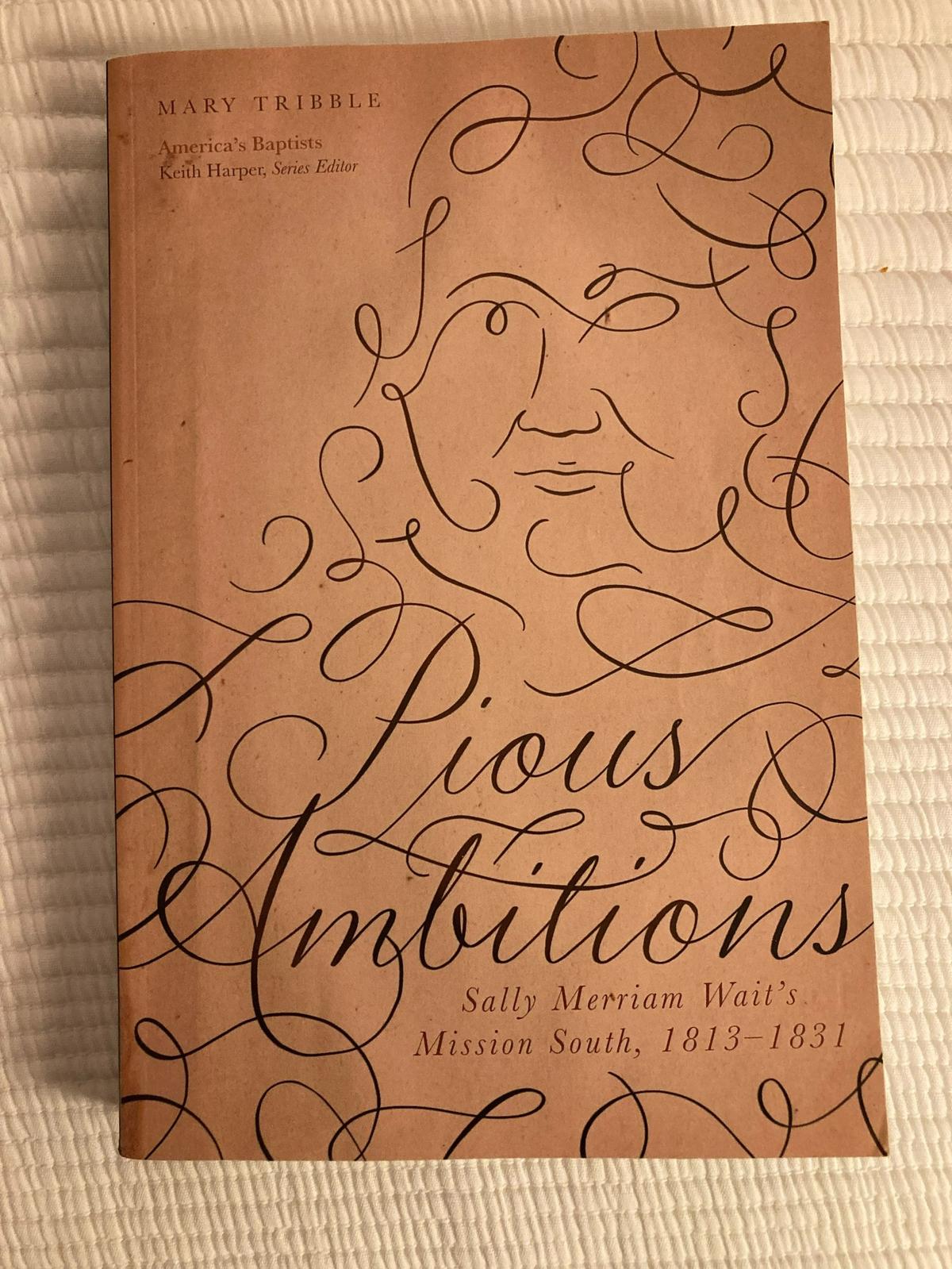
Tribble’s biography of her ancestor, “Pious Ambitions: Sally Merriam Wait’s Mission South 1813-1831,” reads like a novel. Her hero treads its pages with wisdom, a fiery spirit, patience and a “no pout” sense of duty.
Q. For many years, Charlotte laid claim to you. At 24, you started the event planning company Tribble Creative Group here, and you staged huge galas — from the 1991 NBA All-Star weekend to 1994’s NCAA Final Four basketball tournament — even the 2012 Democratic National Convention. Then in 2015 you took off for Winston-Salem to become senior adviser for engagement strategies at Wake Forest. Were you searching for deeper meaning or a different direction?
A. Both, I think. Charlotte embraced and encouraged my entrepreneurial ambitions during my 25-plus-year run here. It was an exciting and satisfying time for me. Yet I always knew I’d want to try something else at some point in my life. After the DNC and a six-month retreat in Costa Rica, Wake Forest recruited me to lead their alumni engagement efforts.
Ultimately, my return to my alma mater reignited my love for learning, leading me to pursue my master’s degree and begin researching Sally Wait. Researching and writing a book can be endlessly lonely work, and it doesn’t have the immediate payoff that putting on a major event provides. The process was satisfying to me in a different way.
The rigor of academic research and argument lit up parts of my brain that had been dormant. I like to say that being back at Wake Forest helped reconnect me to my inner history nerd.
Q. Your Acknowledgments mentions that it was your mother, Byrd Barnette Tribble, who reconnected you to Wake Forest’s past.
A. About 25 years ago, another Wait descendant donated a barrel full of 19th century documents that had been sitting in a barn. Sadly, he reported throwing out another barrel that had gotten wet — a dagger to a researcher’s heart!
When my mother learned about the archives, she began transcribing hundreds of letters and journals, hoping to someday publish a collection of Samuel and Sally Wait’s letters. She tried for years to get me interested in her work, but I was busy running my business.
When I returned to work at Wake Forest, I began to appreciate the full weight of my family’s legacy to the state and this institution. Once I started to get to know Sally, she inspired me to bring her voice to the North Carolina historical narrative.
Q. Return in your mind to a day searching through materials in the archives at Wake Forest. What was it like? The ups and the downs? The ecstasies and the fatigues.
A. If I close my eyes, I can still conjure up the smell of the special collections room — the musty hint of yellowed paper mixed with a tinge of varnished wood. I loved my time in the archives. The tedium of transcription alternated with a quickening heartbeat that came with a new discovery.
This is not an impatient person’s sport. Sometimes it takes hours to navigate a single letter, especially when it’s written by an unfamiliar hand. It’s difficult to describe the thrill that comes when a random sentence solves a minor mystery. It might take hours and hours of reading mundane news and observations to get there, and you’ll never know where a discovery will emerge.
Q. And, specifically, tell us what it was like for you to hold in your hands your fourth great-grandmother’s very own journal.
A. It was transformational. When I started reading Sally’s journal, I read the transcription that my mother had written so many years ago. I had probably read that transcription 20 or 30 times before I finally asked to see the journal stored in the special collections.
Holding the actual object, I realized Sally’s journal had a story arc. She had carefully fashioned a story for an imagined reader, starting with her first meeting with Samuel, arcing at his proposal and finishing with the conclusion of a church scandal she was tasked with investigating. She was creating a piece of conduct literature for how a pious young woman should navigate an evangelical courtship.
Sally wrote with intention and purpose, and she sewed it together with a decorative cover, hoping that her daughter, and daughter’s daughter and daughter’s daughter’s daughter, all down the line, would someday read it. It passed through seven matriarchal descendants before it came my way. This feels like a tiny miracle to me.
Q. I am particularly interested in how you felt when you found records revealing that Sally and Sam Wait — both (I’m assuming) adamantly opposed to slavery — actually owned slaves in North Carolina. You must’ve fallen out of your chair.
A. We don’t know what Samuel and Sally believed about slavery. Many evangelical leaders cautioned missionaries and ministers to stay out of politics, so Samuel never went on record. While Sally wrote about her hesitance moving to a slaveholding state, she never explicitly condemned the institution of slavery in her writings.
Trust me, I scoured the archives hoping to find a conclusive denouncement. Her Vermont family, however, was quite vocal in their anti-slavery stance, begging the couple not to settle in the South. When I started my research, I was naïve enough to think that poor Baptist ministers couldn’t have owned slaves. When a fellow researcher showed me the bill of sale for two enslaved women purchased by the Waits, that hopeful credulity unraveled for me. I am still trying to get my arms around this reality.
Q. Your book shows the deep roots of Northern prejudices against the South — from the weather (“so often fatal to northern constitutions”) to the intellectual atmosphere, which Sally describes as being filled with “much ignorance and bigotry.” I’m sure there was basis for this disdain, but has it, in your opinion, outlasted its truth?
A. Reading about the prejudices from that era, which heightened as civil war loomed, made me realize just how fundamental those feelings are to our country’s ethos. Reading Sally’s comment on “Yankee ingenuity” juxtaposed against Southern “ignorance” illustrates how deeply-seated that prejudice was in the early republic.
That tension was baked in before the U.S. Constitution was drafted. If you track post-reconstruction America, when organizations like the Daughters of the Confederacy set out to rehabilitate the South’s reputation with Lost Cause narratives about Southern honor and states’ rights, you can see how this tension still plays out today. Clashes about Civil War monuments and Confederate battle flags reinforce this history in real time.
Has this disdain outlasted its truth? The New South cheerleader in me wants to say yes. The historian in me isn’t so sure.
Q. You describe yourself as “truth teller,” “Yogi,” “imperfect human,” “trying to do better.” These tags sound so normal and so emotionally healthy. What do you make of Sally Wait’s view that she was constantly falling short of her promise to God?
A. Other than “yogi,” I think all those phrases are things Sally would say about herself. For her, her evangelical message was the truth about salvation. Her writings are filled with her imperfections and her efforts to better herself. Throughout her journal, she careens from hope to despair, to resolve and back again to hope. As do I. My journey to wholeness takes a different form than Sally’s did, but in the end, we share the same human recursive experience of shaken faith alternating with a reconviction to self-improvement.
Q. A deep part of Sally Merriman, before her marriage, dreamed of becoming a foreign missionary, traveling to an untamed wilderness like Burma, though she would have needed a husband to make this possible. She said: “Sometimes I felt all the zeal of the pious devoted missionary and was ready to sacrifice every enjoyment however endearing to promote the cause of Immanuel.” Have you ever recognized in yourself such dreams of an untamed wilderness?
A. In many ways, I am the same spiritual seeker that my fourth-great-grandmother was. Over the years I’ve studied with indigenous wisdom keepers in Peru, Tibetan lamas in Tibet, the Kalahari Bushmen in Botswana, and the Achuar in the Ecuadorian rainforest. But my purpose has been the opposite of Sally’s: rather than evangelizing to others, I’ve been seeking the wisdom of other faith traditions. My travel is usually rooted in self-reflection and understanding, and my mission is my own.
Meet the author
Mary Tribble will be signing copies of her book at Park Road Books in Charlotte on Jan. 12 from 5 to 7 p.m.
More arts coverage
Want to see more stories like this? Sign up for the free “Inside Charlotte Arts” newsletter at charlotteobserver.com/newsletters. And you can join our Facebook group, “Inside Charlotte Arts,” at facebook.com/groups/insidecharlottearts.