New theater partnership brings NC colleges together to explore race, class and unity
_3.jpg "Common Thread members perform “Violet.” Davidson College and NC A&T educators launched the group to bring students from different backgrounds together to examine societal issues through theater.")
About four years ago, Karli Henderson had the idea to put a professional theater company on Davidson College’s campus.
Henderson, a theater producer and lecturer at Davidson, knew it wasn’t something she could do right away; she first needed to build a leadership team, recruit actors and, most importantly, develop the company’s mission.
Henderson’s idea became clearer in 2020, after the murder of George Floyd and subsequent Black Lives Matter protests. That year, people of color in the theater industry published a document called We See You, White American Theater, which laid out steps for establishing anti-racist practices in the industry.
The mission of her company, Henderson decided, would be to help bridge the racial gap in theater by bringing people from a range of backgrounds together on stage. Henderson felt the best way to do that was to partner with another institution.
And that’s how she came to North Carolina A&T State University.
Davidson is a small, predominantly white liberal arts college. NC A&T is the largest historically Black university in the United States, with a theater program ranked among the best in the country for HBCUs.
Together, they’ve formed Common Thread Theatre Collective, a professional theater company that launched this summer with two plays and an ambitious goal: exploring racial tensions and building unity through their performances.
“It’s a cultural research project,” said Donna Bradby, a theater professor at NC A&T, who is part of Common Thread.
“People being uncomfortable with people of other races, other cultures, other genders, is a part of the history of America,” Bradby said. “We wanted to make sure we were not ignoring that the world is in a racial upheaval. It’s happened before, and what we always find is that arts and culture is at the heart of it.”
Leading together
Common Thread was designed not only to explore unity on stage, but also to embody it behind the scenes.
The program operates under a leaderless model, with no one person in charge. Instead, four professors — two from Davidson and two from NC A&T — make decisions together.
They work with eight student interns, four from each school, as well as local professional actors. In total, about 30 people are part of the company.
“Everyone’s on the same playing field,” said Jade Parker, one of the interns from NC A&T. “Everyone gets to see the spotlight, everyone gets to work in every capacity, and that’s really amazing.”
But while collaboration between the two schools is what holds Common Thread together, it’s not an institutional partnership — at least not yet. For now it’s a partnership between faculty members, Henderson said, though they hope to formalize it if it continues past this year.
This summer has been a test to see if the program would work, Henderson said. She and other members say that so far, it’s working quite well.
On the stage
Common Thread is performing two main shows on Davidson’s campus this summer.
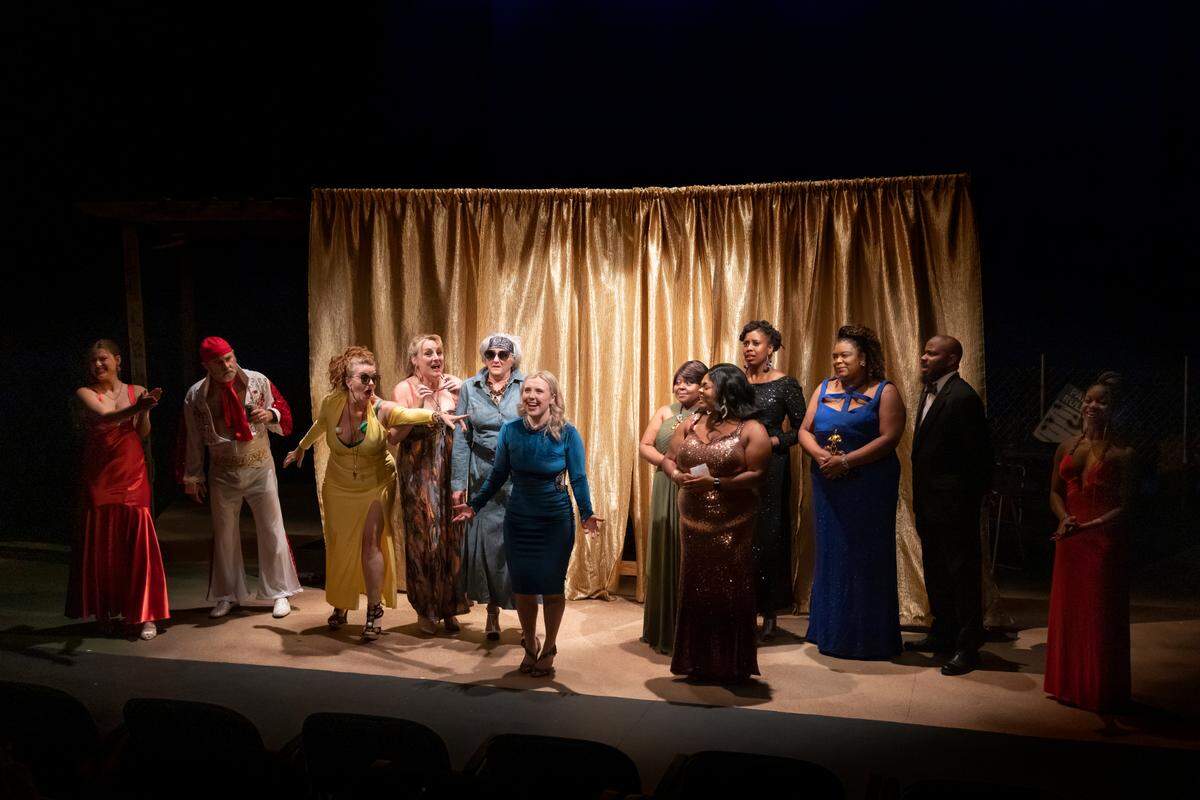
“Violet,” which finished its run earlier this month, is a Southern Gothic tale of a young woman on a quest to heal a scar on her face.
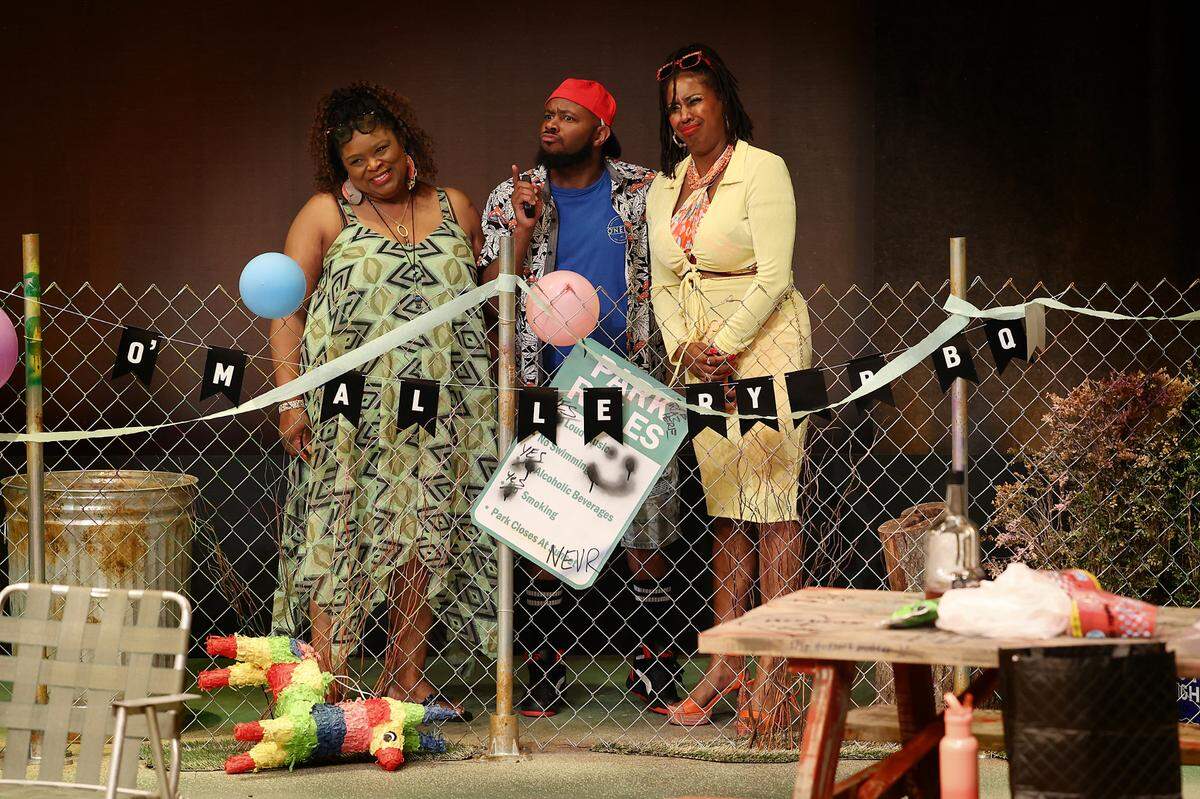
“Barbecue,” which runs through July 31, explores how two families — one Black and one white — deal with addiction. It’s a comedy, but with darker elements.
“We knew that we wanted to think about shows that would have specific messaging,” Henderson said. “Part of the reason for creating this company is being able to tell stories that are by or about traditionally underrepresented communities.
“While theater is entertaining and wonderful to go to, it also has the ability to have people sit in a room together where they might see alternate perspectives, something they haven’t thought about before, something they haven’t experienced before.”
‘Duck Duck Goose’
The interns also spent part of the summer creating their own play, a children’s show called “Duck Duck Goose” based on the fairy tale “The Ugly Duckling.”
The play tells the story of the duckling joining a support group of other alienated fairy tale characters, including the big bad wolf, Dumbo, Shrek and Rudolph the red-nosed reindeer.
Parker, the intern from NC A&T, plays the support group’s therapist.
Working on the play, she said, allowed her and the other interns to reflect on their own childhood.
“We were like, ‘What stories did we gravitate to when we were kids and what messages do we wish we would’ve had as kids?’” Parker said. “We let that be our guiding force, and it was a great collaborative effort.”
Where to next?
The work that Common Thread is doing has already attracted attention in the wider theater industry world, including a write-up on American Theatre’s website.
While the consensus among Common Thread’s members is that the program should continue to grow, it’s not clear what the future holds.
Henderson plans to use feedback from this summer to expand the program if possible, and hopes it can transition into a longer-term partnership between the two schools.
Henderson suggested the possibility of future shows in Greensboro, where NC A&T is, and Bradby said another idea might be to court corporate support.
“We have to build an audience who really understands this kind of work and wants to be there to see it,” Henderson said. “We would love to continue.”
More arts coverage
Want to see more stories like this? Sign up here for our free “Inside Charlotte Arts” newsletter: charlotteobserver.com/newsletters. You can also join our Facebook group, “Inside Charlotte Arts,” by going here: facebook.com/groups/insidecharlottearts.
This story was originally published July 26, 2022 at 5:50 AM.