
New ‘Dark & Divine’ art exhibit in Charlotte celebrates Black beauty in all its forms
In the past year, Dasia Hood has been making an indelible mark for herself on the local art scene.
As part of that journey, she curated a multi-part exhibition focusing on Black figurative art, depictions of the human form inspired by Black bodies called “Dark & Divine,” in collaboration with two of Charlotte’s major arts institutions.
The first installment premiered last summer at The Harvey B. Gantt Center for African-American Arts + Culture, with community workshops and a pop-up show. Now, the project continues at the McColl Center from March 6 to May 24.
The exhibition is intended to both open doors and knock down taboos. It includes creative writing, community engagement workshops and visual art in multiple mediums.
Hood described the experiences that took place at the Gantt as “PG-13” and more family oriented. The upcoming McColl exhibition focuses on nude works created by seven local artists in conjunction with artist/curator Hood.
On its website, the McColl described the exhibit as a “reawakening of the Black artist’s connection to nudity, exploring its cultural and spiritual significance across the African-American Diaspora.. Through collaborative artist-model portraits, mixed media works, and personal storytelling, the featured artists reclaim Black bodies as sacred, powerful and deserving of reverence.”
For Hood, an event planner and poet who started modeling after she moved to Charlotte in 2021, her goal is to reframe the way people think of the human body.
In her experience, nudity and sexuality are not topics discussed outside of close relationships in the Black community. “And if it’s not brushed under the table within our families and communities, it’s kind of exploited a little bit in the media, kind of hypersexualized,” Hood said.
For Hood, art and spirituality are intertwined.
She hopes that by experiencing figurative art, people will gain a deeper appreciation and reverence for the human form that will carry over into their intimate relationships, self-image and art, as well as in conversations with their children about their bodies.
“I’m very enamored with (the) human body … And I really do, from my own spiritual lens, feel like Black bodies, especially with the history that we have come from, are so powerful and deserving of being seen (in) every element, (in) every way whether its media or our own personal eyes as … divine bodies that carry stories and carry healing and are connections to a higher source.”
Moving from stripping to the art world
The 31-year-old Hood’s professional background includes more than a dozen years working in the events and hospitality field. She now operates her own communications agency, DH MEC LLC. Her clients include arts organizations like Boom Charlotte and A Sign of the Times of the Carolinas.
But Hood also spent about four years as an exotic dancer in her home state of Ohio.
It was a line of work she got into shortly after becoming a single mom at age 19. Working as a stripper helped her pay for her college education. Although it’s not a job she wants to return to, she doesn’t think anyone should feel shame for choosing that path.
“Because of the relationships I built with a lot of women and men in that space, I have (an) understanding of that work and community that I don’t think other people may have unless they’ve done it.”
She understands, for example, that some people simply have a higher degree of comfort with nudity and sexuality. Working as an exotic dancer can also enable someone to make good money with limited time and provide the flexibility to pursue other ambitions or goals.
But some settings can be exploitative and unsafe, she added.
One of her goals with “Dark & Divine” is to bring pole artists and exotic dancers into other creative spaces to share their art. That’s something she did on Valentine’s Day with “[red]: Rated R,” a pop up show at Lorem Ipsum, a bar on Central Avenue, that included erotic film and art.
Through modeling, Hood said she has found a way to recapture some of the aspects that intrigued her as an exotic dancer.
“I’ve never really had (an) issue with some of the more erotic sides of life, I suppose. And I think that I wanted to get back into touch with some of the things that I enjoyed, some of the themes in that, but I didn’t have time to explore because I was working from a place of survival” being a young, single mom.
“But in the art community I felt like I was thriving in a different way and so the narrative around it was more empowering and also just more beautiful to me.”
Finding her calling as an artist
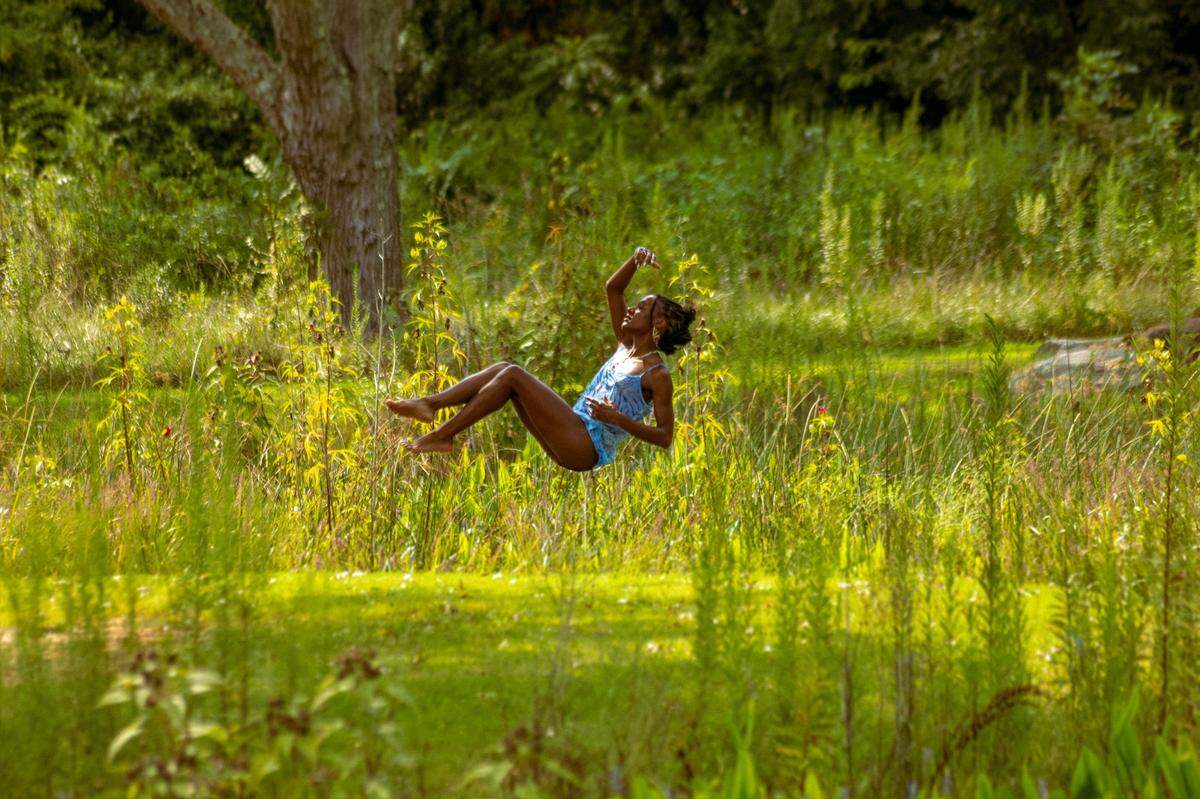
When Hood moved to Charlotte in 2021 from Ohio, she started volunteering at the front desk of the newly opened Visual and Performing Arts Center (VAPA). There, Hood found others who wanted to explore the human form through art.
Before long, she began modeling for photographers, portrait artists, classes and workshops. It was something she’d always dreamed of doing.
What she didn’t expect was that through modeling, she would also find a calling as an artist and curator. “They kind of… made me an artist, I think, and encouraged me,” she said.
It led her to be more public in sharing her artistic side in other ways, too.
A lifelong poet, she used to keep those to herself in a journal. She recently self-published her first poetry collection, “Lovings You: Short Poems” (available on Amazon). She also frequently performs spoken word poetry at local events.
And in the realm of figurative art, she found others who shared her interests and agreed a notable void existed in the field. In Charlotte, figure drawing was heavily skewed toward white models and artists.
“For Black people, representation is so important to the effectiveness of whatever you’re trying to do,” Hood said.
Through “Dark & Divine,” Hood said she has aimed to create a comfortable space for the Black community to make connections with others who also are interested in exploring figurative art.
It’s not only a question of race, Hood said. It’s also a matter of technique. In terms of presentation and proportion, drawing a Black body is different from what is generally taught in art courses, she said.
“That was the reason why creating this space for the Black artists and models was so transformative for them… And on the side of that for the white artists, they appreciated us bringing this up because they want to become better artists.”
At the McColl Center
For much of the artwork in the show, Hood collaborated with individual artists to develop a concept.
They explored themes that included food and body purity, experiencing a fall from grace while trying to survive, feminine vs. masculine self-image, body autonomy as it relates to submission or non-submission, beauty and divinity, how hairstyles can affect how people feel or act, and relationships with modesty.
Some of the artwork includes a progression of images to tell a story, Hood said, so the 26 titled works actually include about 40 individual pieces.
They range from photography and mixed media to tapestries, wood and stone sculptures. The show also includes an interactive poetry experience and a curated music playlist created by Hood’s co-curator, Darian Parham.
Hood said the multi-faceted exhibitions have been a community effort. She first met with the Gantt Museum in November 2023 and began working with the McColl Center in early 2024.
Lacking her own project funding, she is grateful that her museum partners were able to pay every artist and teaching artist a stipend. Other community groups provided art materials, in-kind support and donations to support the workshops.
“I’m just very grateful for people being so open to it and for the amazing feedback and response, for the recognition,” said Hood, who was named the 2024 Critics’ Pick for “Best Creative” in Queen City Nerve’s Best in the Nest selections.
She credits the project’s success to the way it has both empowered and engaged people. She also hopes that the project could expand to other markets.
Right now, she’s starting work on a follow-up exhibition and film project that delves into the darker side of the chocolate industry. Slated for fall 2027, “Dark & Divine: Eat My Flesh” will examine exploitative labor practices on West African cocoa farms. She said she has partners lined up in Charlotte, Washington, D.C. and Ghana (“depending on the political climate”) but cannot yet announce the partners’ names.
As for the current exhibition, Hood hopes people will gain a deeper awareness of figurative art and enjoy experiencing the artwork through the free exhibitions and community workshops.
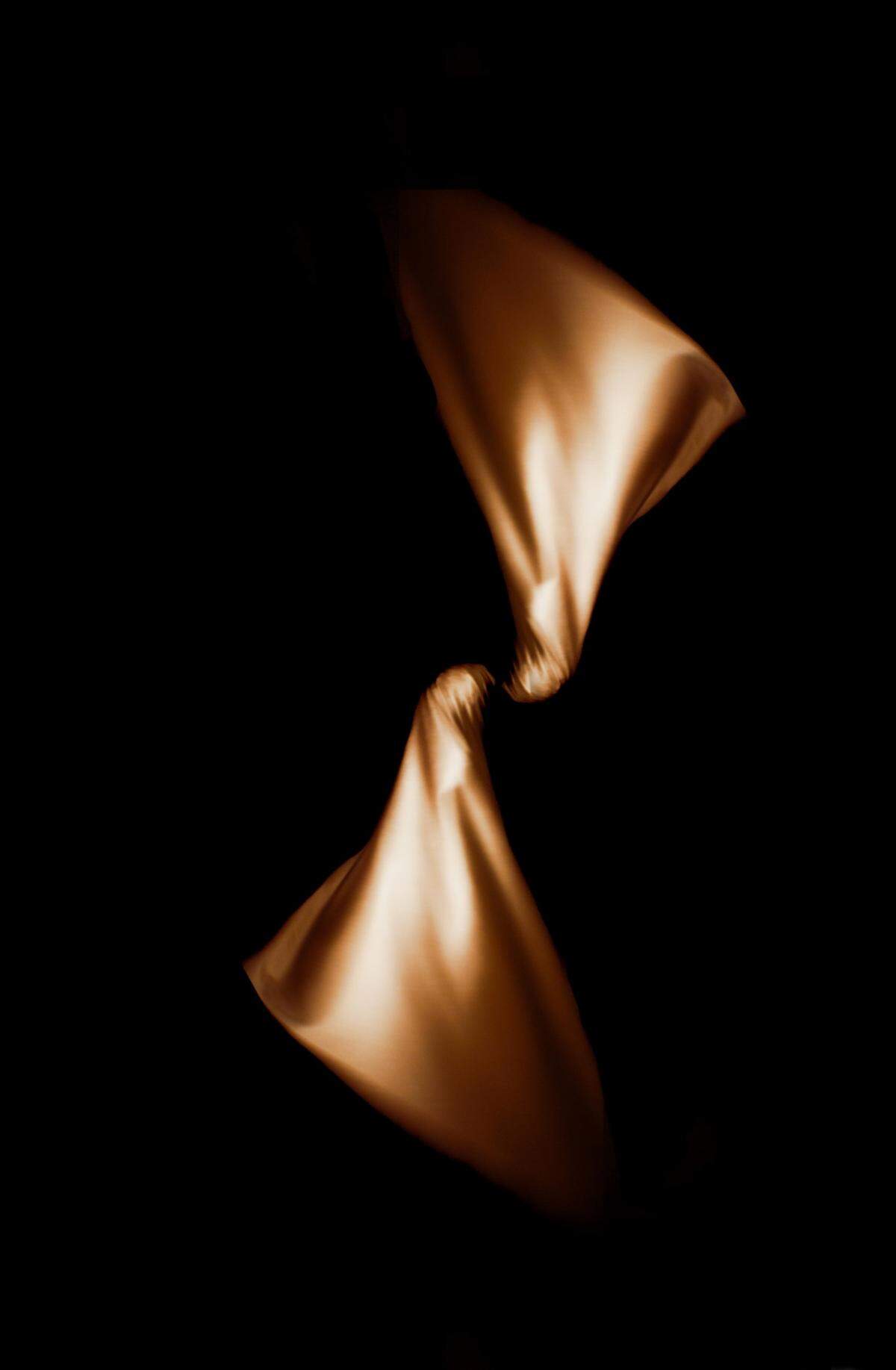
“I really want people to see themselves as a work of art,” Hood said. “…. When you’re putting clothes on or taking them off, to know that your body is like a soul that people are inspired by.’
It’s especially important in the Black community to have that narrative, she added.
Hood wants the exhibitions and related artist talks to change the way people see themselves and others, and treat one another. She also hopes the experiences help people develop self-esteem, build healthier connections, release notions of shame that have been imposed on them and encourage people to explore more art.
Your body’s not just sexy, she said. “It really is art. It was made by the greatest creator.”
Want to go?
“Dark & Divine” runs March 6 to May 24 at the McColl Center, 721 N. Tryon St., Charlotte.
Admission is free; a $10 donation is suggested.
More arts coverage
Want to see more stories like this? Sign up here for our free, award-winning “Inside Charlotte Arts” newsletter: charlotteobserver.com/newsletters. And you can join our Facebook group, “Inside Charlotte Arts,” by going here: facebook.com/groups/insidecharlottearts.
This story was originally published February 19, 2025 at 5:48 AM.