Want to make the most out of going to a concert in Charlotte? These are our top tips.
READ MORE
Back in the Groove
The Observer’s spring 2022 concert preview has everything you need to enjoy live music again. From 22 cant-miss concerts to some tips to make the most out of your experience, check out our guide for the return of live performances.
Expand All

Live music is back — big-time. 22 can’t-miss concerts around Charlotte to enjoy this spring
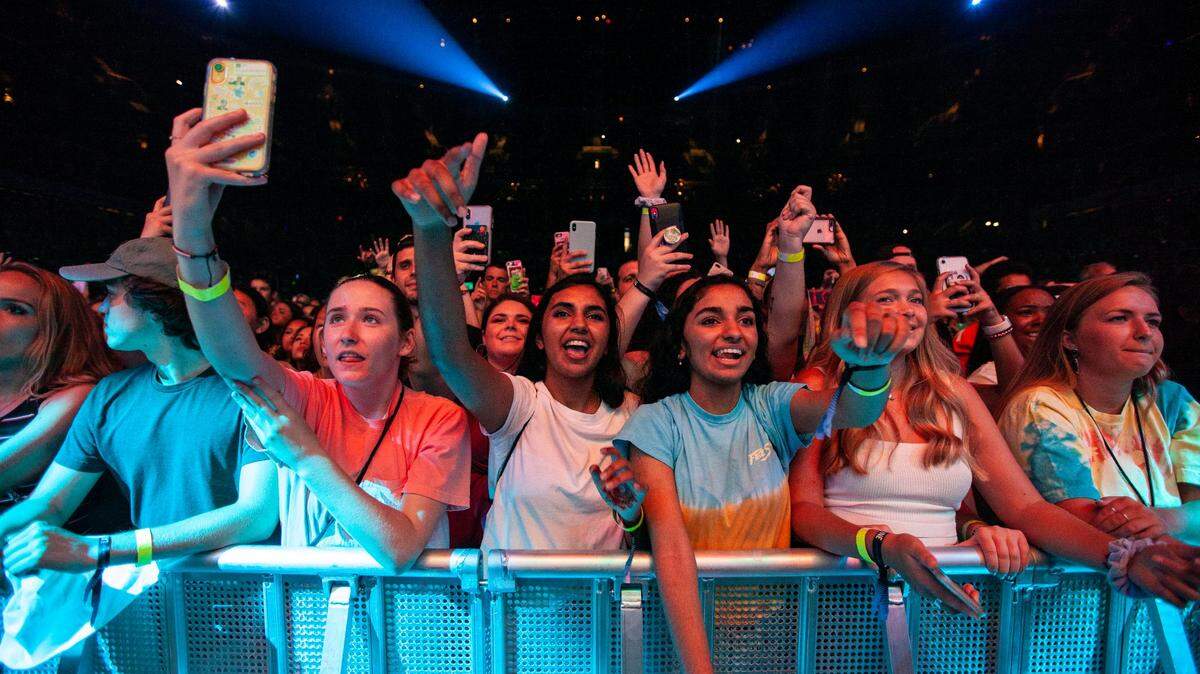
Want to make the most out of going to a concert in Charlotte? These are our top tips.
Looking for a concert more off the beaten path? Try one of these 7 smaller local venues.

Live music is back (we hope). What have you missed most and who do you want to see in ’22?
It’s possible, perhaps even probable, that you haven’t attended a big concert in Charlotte in more than two years.
And if this is the case, then you’re almost certainly out of practice. But even if you have had the chance to finally return to getting your live-music fix — perhaps at last month’s bangin’ Billie Eilish concert, or back in September at the rockin’ Rolling Stones show — you can always stand to improve your concert-going game, can’t you?
Here, then, are my suggestions for making the most of a night at a show in a major venue. Hopefully you’ll appreciate that they have nothing to do with COVID protocols, and everything to do with keeping you as happy, as comfortable, and as sane as possible.
It is ALWAYS worth stretching your budget.
Well, almost always. I mean, I realize the price of everything has gone up lately, and I would never recommend anyone in deep debt to go into even deeper debt just to see, say, New Kids On the Block. But for the purposes of this exercise, let’s just assume that your problems are generally first-world problems — that you have disposable income and an interest in having a good time.
Using the New Kids example (the group is at Spectrum Center on July 12), I recently found an upper-level seat on Ticketmaster for $84.09, and then found a lower-level seat at least 50 feet closer to the stage for $128.65.
Like most of you, I’ve been in cheap upper-level seats at big arenas. I know: Up there, you spend most of the time watching the action on a screen. The closer you get, though, the more attention you can focus on taking in the whole spectacle, as opposed to just the camera angles the tour’s video director thinks you should see.
Now, I realize that in certain circumstances it’s a thing to “just be in the building,” like for a tough ticket to a sold-out show. However, when there are better seats to be had, I say you should always get the best ones you can afford. Even if it takes you beyond what you wanted to spend.
I’ve heard plenty of concertgoers complain about high ticket prices and ridiculous service fees. I’ve never heard anyone say “I wish I’d bought a less-expensive ticket and been farther away.”
When choosing seats, consider what type of person you are.
Oftentimes you’re forced to rush your decision and just take what you can get — for instance, when you’re scrambling to buy Garth Brooks or Rolling Stones tickets as soon as they go on sale because you know they’ll sell out fast.
But when you have the luxury of taking a little time, it’s good to plan ahead. A couple examples:
- If you like to drink a lot of beer, or if you just don’t like the thought of possibly inconveniencing strangers, pick seats very close to or right on the aisle. That way you’re more free to come and go as you please without having to squeeze past 20 people every time you want to hit the concession stand or the restroom.
- If you’re short, like I am, it’s probably a bad idea to buy floor seats unless you are going to be really close to the stage. Better to spend money for great lower-level seats so you have a little bit of elevation between rows to get your head above the folks directly in front of you.
Do your homework.
This one is especially important for people who have tickets but are only casual fans of the artist, or who maybe even got roped into going by a friend, a family member, or a co-worker.
It’s simple: Search the artist on Setlist.fm to find mostly/usually accurate setlists from recent shows; then, assuming the artist’s catalog is available on the streaming service you prefer, build a playlist containing those songs; then, listen to it as much as possible in the days and weeks leading up to the show.
It also wouldn’t be a bad idea to learn the (correct) words to at least a few of the songs. To do this, I use Spotify, which has a “lyrics” pop-up feature that makes it super-easy to follow along as the artist sings.
Sound like a lot of work? Yeah, it is. But it’ll be worth it when you realize you know some songs, and aren’t the only one who doesn’t seem to know any of the words. And if you start to do this particular type of prep but realize you aren’t enjoying the music, at all — well, maybe you should unload the tickets and buy some for a show you can get excited about.
(Quick Caveat No. 1: The setlist check doesn’t always work. Some artists — Dave Matthews Band, for instance — do an entirely different set at every show. That’s the exception not the rule, but just FWIW.)
(Quick Caveat No. 2: If you really like surprises, and really don’t want to know what’s coming, just disregard this entire tip. :)
Protect your hearing.
Here’s what the CDC’s website says about the importance of protecting your hearing: “Inside your ear, there are lots of tiny fibers that help you hear. Over time, loud noise can damage these fibers — and once they’re damaged, they can’t ever be fixed.” I second that warning.
See, I suffer from tinnitus — a persistent ringing in the ears — I’m sure in large part because of all the concerts I’ve attended in my lifetime, and probably should have taken advice like this more seriously a hundred shows ago.
But it’s not too late, I don’t think. Just this year, I started bringing Loop Earplugs with me on concert nights. It’s been an adjustment, but I’ve decided I’d rather get used to wearing earplugs than get used to being deaf.
Charge up — or bring some reserve power.
This is simply to say, make sure your phone’s waning battery life isn’t going to stress you out.
Obviously, concerts generally happen at night, and if you haven’t charged up your phone since taking it off the charger in the morning when you woke up, you’re probably going to be worried about having enough juice to take all the videos and photos you want; to stay on top of social media; and to keep your cellphone flashlight on through those ballads.
So, set an alarm for mid-afternoon to remind you to start re-charging your phone’s battery.
Or, to play it even safer, bring a portable charger. If you’re thinking, I don’t want to carry all this junk in with me! — I get it. But if you haven’t shopped for them in awhile, you may not realize that portable chargers have gotten really tiny.
I do have one other thought: You could always keep your phone off entirely and just enjoy the show ...
Don’t try to park as close as possible.
This mostly applies to Spectrum Center. I find that opting for a surface lot at least three or four blocks away is far less stressful (and often less expensive) than trying to get close just so you don’t have to walk very far.
Personally, I almost always use the surface lot at South Caldwell and Third streets. Depending on the show, the rate is generally $12 to $20, which covers you for 12 hours — so you can go out and grab a drink after without worrying, if you want. It’s less than three blocks away from the nearest entrance to the arena, so maybe a seven-minute walk?
And when the show’s over, you can look forward to basically zero traffic once you get back to your car, with easy/quick access to I-277 via Third Street.
As for other venues, it can be trickier. PNC Music Pavilion’s staff usually is there to guide you into spaces, but I always try to push for a spot that won’t require you to back out; and if the parking attendant is looking the other way, I play dumb and peel away to get a spot closer to the exit as opposed to the one they would prefer you to take.
I do something similar at the BOplex, where Bojangles Coliseum and Ovens Auditorium are — that is, I park at the top of the lot, closest to Paul Buck Boulevard. Access to Paul Buck is roped off before shows, but afterward, the ropes are gone, meaning from there you can make a very speedy escape back out toward Independence Boulevard.
Get to know your neighbors.
You don’t have to become best friends with the strangers situated next to you, but if you’re going to have to literally rub shoulders with them for the next two to three hours, might as well be friendly.
Or, you can do what the guys at the Eric Church show last month did for the buddy I was with: Because they kept coming and going so much — to get more beers, to use the facilities — they started bringing beers back with them for him, gratis. Not saying you need to go that far, but it was the type of gesture that makes you remember the fun you had with the people around you as much as you remember the fun you had watching the performance.
Know how to time your breaks.
If you want to grab another drink or hit the restroom one more time before the headliner comes out, that’s fine. But just be aware that that’s when everyone else will be trying to do the same thing.
Incidentally, if you’ve heeded my earlier advice, you have a good idea of what the setlist is going to look like, and know the songs well enough to have ones you love and ones you like and ones you’re just kinda meh about. So, armed with this knowledge, simply wait for the show to start and duck out as soon as the artist starts a song you don’t care for as much. The lines will be way shorter than they are prior to showtime, and if you double-time it, you can get back before the song even ends.
Know how to time your exit.
Not in a hurry to get home? Linger in your seat till the applause has finally died down and the lights come back on.
But if you’ve got a babysitter to relieve, or just don’t want to have to wait patiently for each row between you and the exit to clear before you can start moving toward it yourself — well, you could leave before the encore is over. But they almost always play one of the songs you want to hear most last, so try this:
Stay in your seat for what you anticipate is the final song, until they start to repeat the chorus after the bridge. Then start slowly making your way to the exit as they wind it down. Typically, when you get close to the exit, you’ll see some empty seats since others will have left by this point. Just slip into them, and stand there as you watch the final 30 seconds of the show.
Then you can make a run for it.
Seek a professional opinion.
Concert reviews are a great way to re-live a show, even if it’s a review of a performance given in another city. (There will, of course, typically be many, many similarities between shows.)
I, myself, am planning to review dozens of concerts this year. If you want to suggest one to me — or if you have feedback about anything I’ve written above — send me an email or give me a call.
Meanwhile: Have a great, safe time at your next show.
Here’s hoping live music is back for good.
This story was originally published March 25, 2022 at 6:00 AM.