
Bill could make rooftop solar more affordable. Key NC senator calls it socialism.
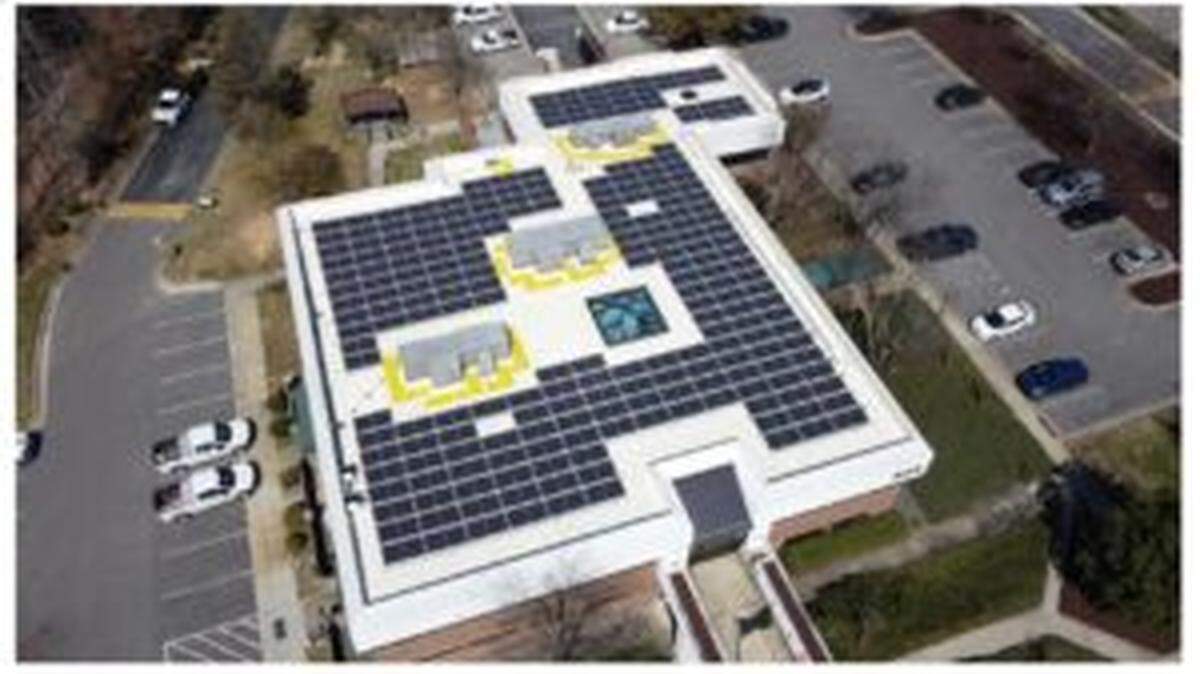
A bill being considered by the N.C. General Assembly would increase the state’s cap on leases for rooftop solar, a move supporters say could boost a market that has received limited interest from rooftop solar companies so far.
Senate Bill 678 would boost the cap on rooftop solar leasing from 1% of the average amount of solar installations over the last five years to 10%.
In states like California, rooftop leasing has become a common part of the market, providing a way for people or businesses that cannot afford the full price of a solar array upfront to instead pay a monthly fee to the provider while benefiting from the lower energy costs that solar provides.
North Carolina’s solar leasing program was introduced in 2017’s House Bill 589 but is still fairly limited. Industry officials say that’s in part because the cap has prevented many installers from setting up leasing programs in the state. One company, Eagle Solar and Light, has found a niche by leasing systems to nonprofits.
Energy advocates believe that lifting the cap to 10% could be enough to bring installers who offer residential leasing programs to North Carolina or see existing installers start to offer a leasing program.
“That changes the game. It really does create an opening for installers across the state to make the case to invest more in this space as an option for customers because it is something they can scale upon,” Matt Abele, the interim executive director of the N.C. Sustainable Energy Association, told The News & Observer.
Opposition in the Senate
The solar provision was inserted into SB 678 as it made its way through House committees, but it may meet a challenge in the Senate.
Sen. Paul Newton, the Cabarrus County Republican and former Duke Energy state president who introduced the original legislation, told The News & Observer he would oppose lifting the solar lease cap during the conference committee process where legislators from the House and Senate try to settle any lingering differences.
SB 678 also includes a provision changing North Carolina’s renewable energy portfolio standard into a “clean energy portfolio standard” and inserting nuclear into the generation sources that can be used to meet those targets — a provision that would benefit Duke Energy.
Newton said he doesn’t believe the cap on rooftop solar leases should be lifted as long as there’s significant room under the existing limit, but he is also philosophically opposed to a program he called “a socialization of costs.”
“They’re not even close to filling the 1% that’s in the program today so they should at least park this until the 1% has been exceeded or is filled and then maybe we have a conversation,” Newton said. “But I don’t like the predicate, which is socializing the cost against other customers.”
Leasing to finance solar
Supporters of solar leasing argue that it’s simply a financing mechanism that allows people and organizations to put panels on their roofs when it would have otherwise remained too expensive.
In addition to spreading payments for the system out over years instead buying a system all at once, a lease comes with built-in maintenance and performance monitoring for the system. The installer will also remove the solar panels when the lease expires, typically after 20 or 25 years.
“The whole idea is, don’t pay a lot of money up front and save money over the long term,” Scott Alexander, Eagle Solar and Light’s vice president of sales, told The News & Observer.
Eagle Solar and Light is one of 12 companies registered to lease solar systems in North Carolina. It is frequently cited as the most prolific lessor in the state, with somewhere between 40 and 50 projects leased, typically to nonprofits.
Those projects include three Orange County Water and Sewer Authority solar arrays, as well as systems leased by nonprofits and churches. Eagle’s projects were often made possible by the leasing program enacted in House Bill 589 combined with a since-expired solar rebate offered by Duke Energy.
That rebate was often enough to cover the down payment the customer needs to make on the solar array, said Laura Combs, an Eagle Solar and Light senior sales associate. With the down payment covered, customers could start saving on energy costs as soon as the system was turned on.
Nonprofits were particularly interested in the program because rising energy rates can pose a challenge to their budgets, Combs said. At the same time, those budgets can make it difficult to afford the entire cost of solar panels.
“That rising utility rate is a big concern for nonprofits because they’re operating on a fixed budget or at times a challenged budget. If you look down the road at what the Utilities Commission Public Staff had projected, which was almost a doubling of rates in the next six years, getting solar on the rooftop is important,” Combs said.
Alexander anticipates that raising the cap would lead to more leasing for residential customers, with larger companies coming to North Carolina.
“You’re not going to go in and start offering leases if you know you’re going to have to quit in a year and a half based on your current growth,” Alexander said, referencing how the current lease cap could be deterring companies from entering the market.
Residential leasing is fairly common elsewhere and happens on a much broader scale than it does here. Eagle supports raising the cap and increasing competition on the residential side, Alexander added, because that would likely result in lower prices for customers.
For homeowners, Abele said, leasing can be an important tool to provide access to solar for people who earn middle and lower incomes. When those people cannot afford the cost of buying a full solar array or have the credit to finance one, leasing offers an option to save on energy costs.
“What this will do is open up the market and open up the potential benefits that clean energy and solar bring to homeowners who potentially stand to benefit the most from installing solar,” Abele said.
This story was produced with financial support from the Hartfield Foundation and the 1Earth Fund, in partnership with Journalism Funding Partners, as part of an independent journalism fellowship program. The N&O maintains full editorial control of the work.
This story was originally published September 5, 2023 at 6:00 AM with the headline "Bill could make rooftop solar more affordable. Key NC senator calls it socialism.."