It’s time to do what it takes to fix court-storms — because the alternative is worse
READ MORE
Filipowski injury heightens concerns over court storming
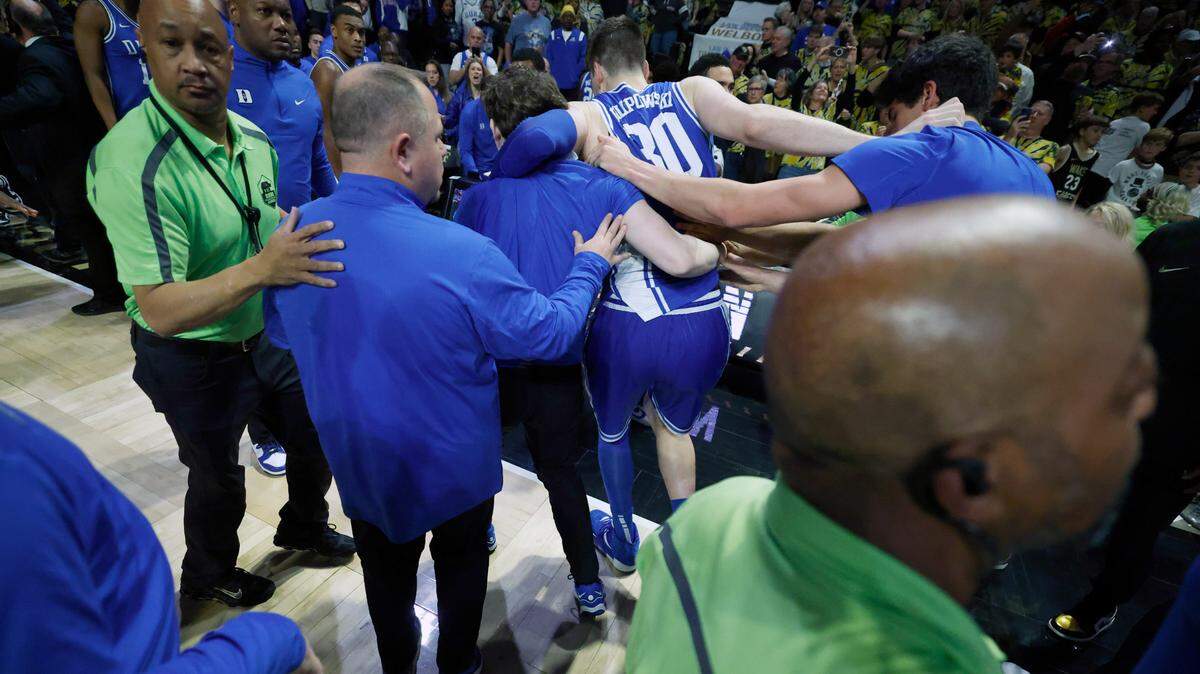
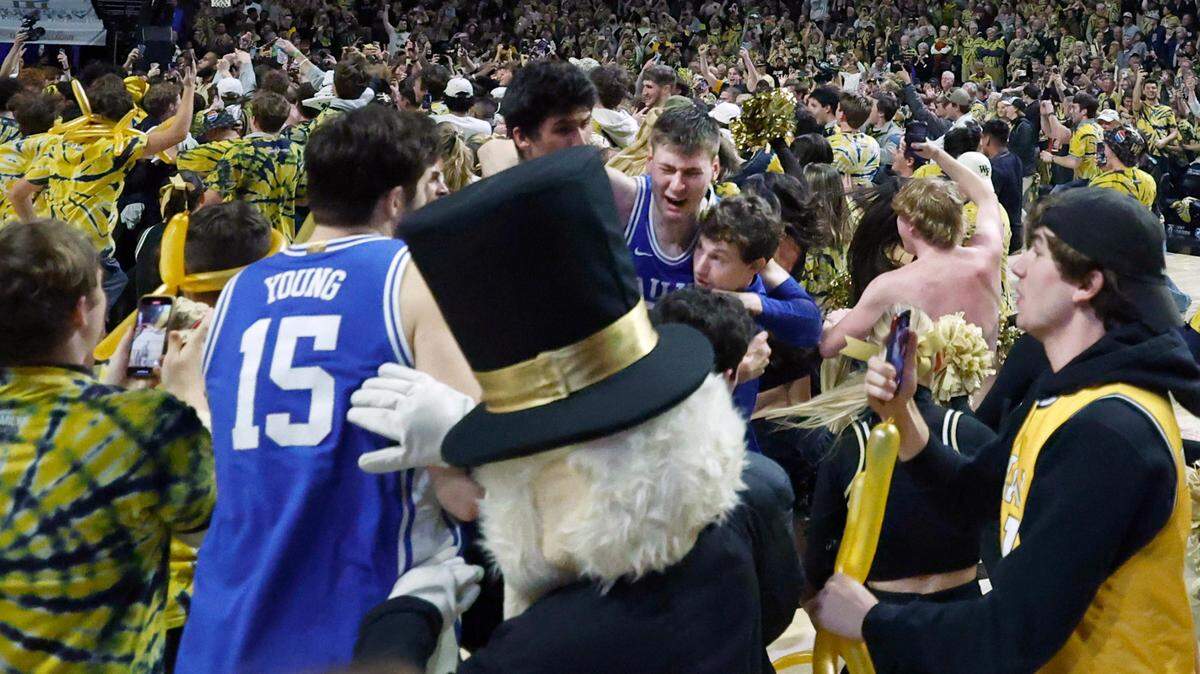
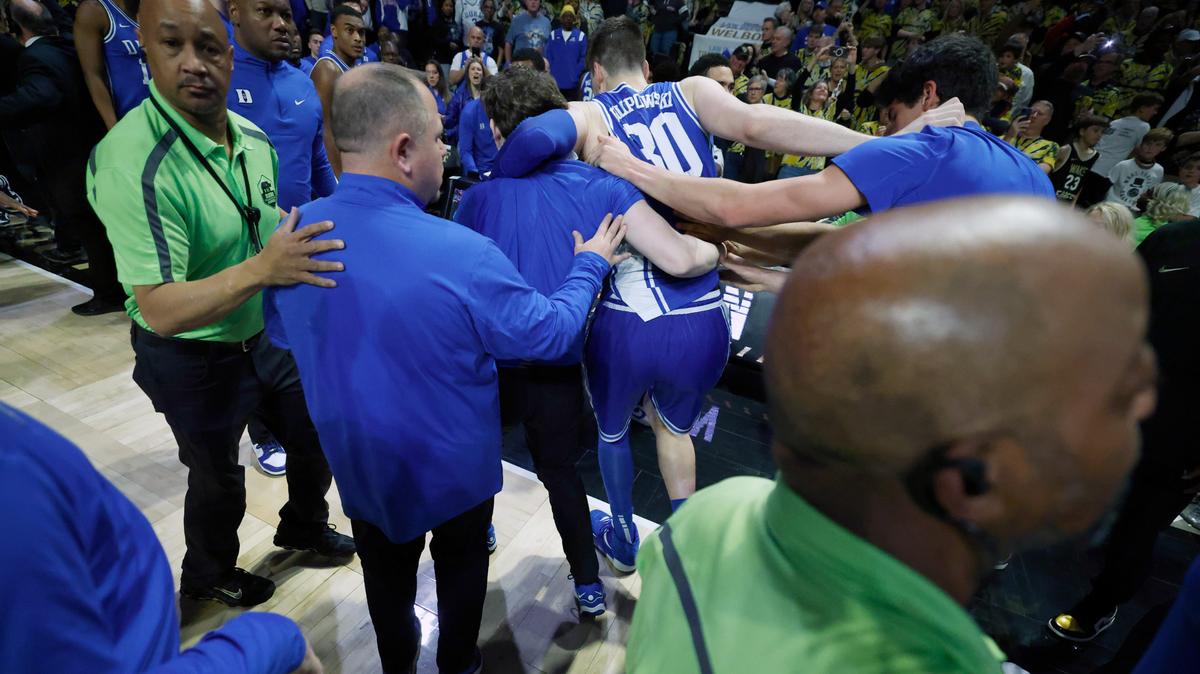
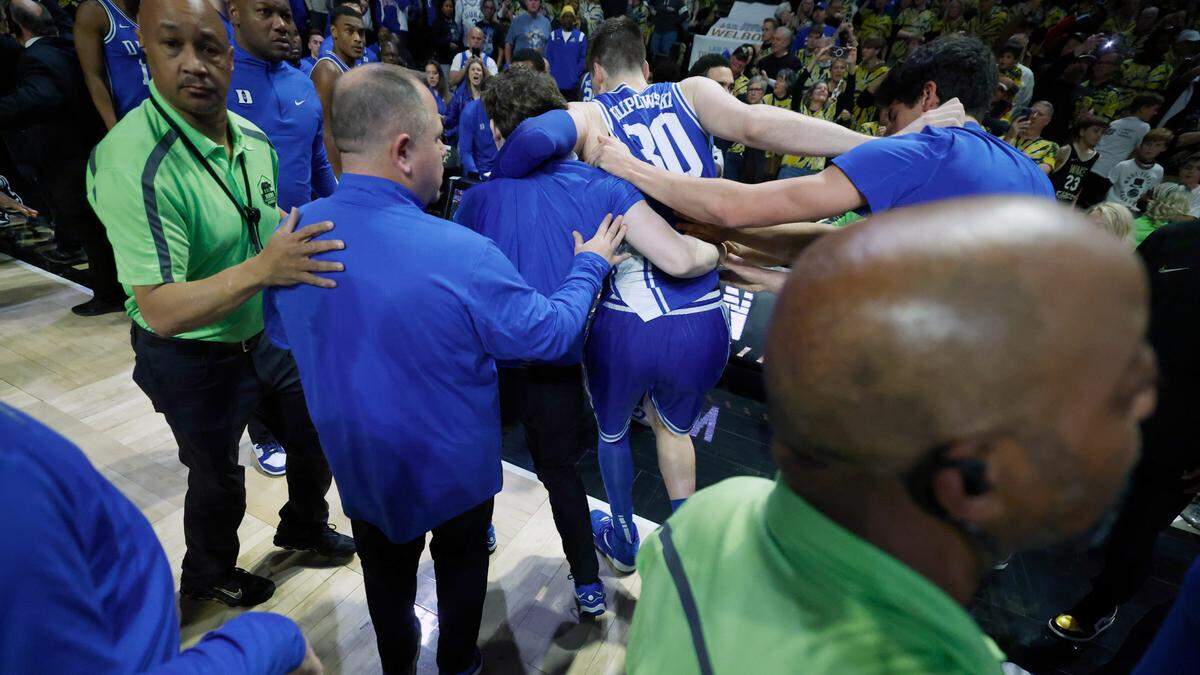
Blue Devils star forward Kyle Filipowski’s was injured Feb. 24, after Wake Forest students ran into him following the Demon Deacons’ 83-79 win over No. 8 Duke. The incident has heightened concerns over court storming in college basketball. Here is The News & Observer’s latest coverage.
Expand All
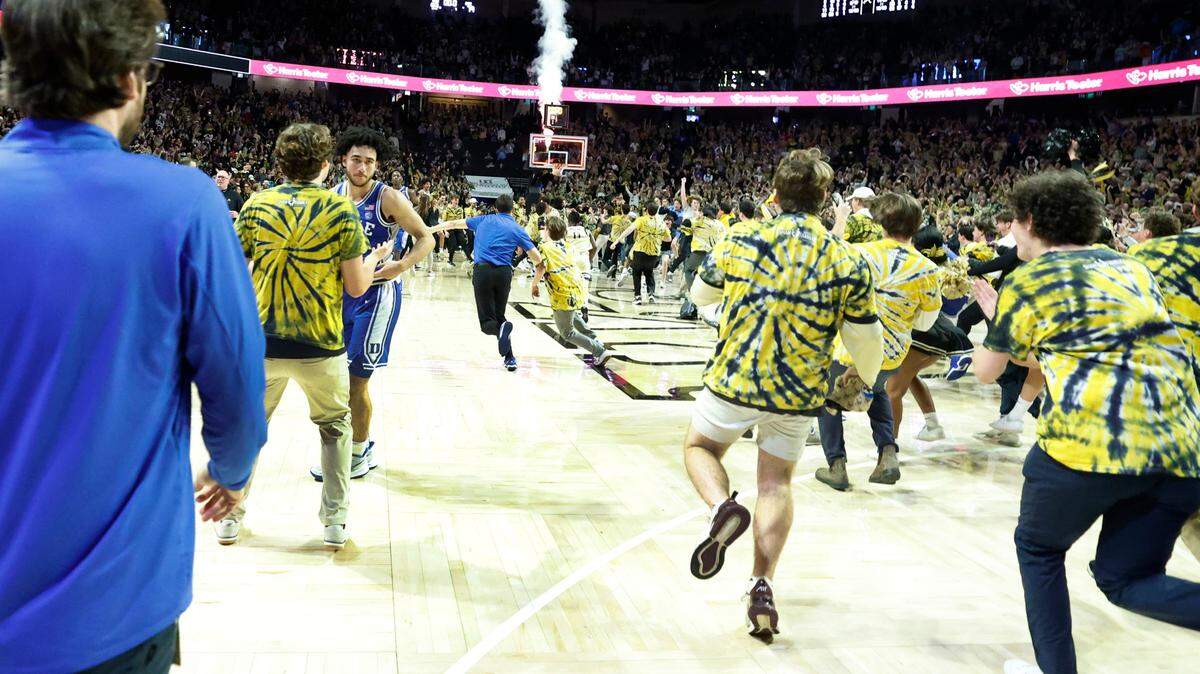
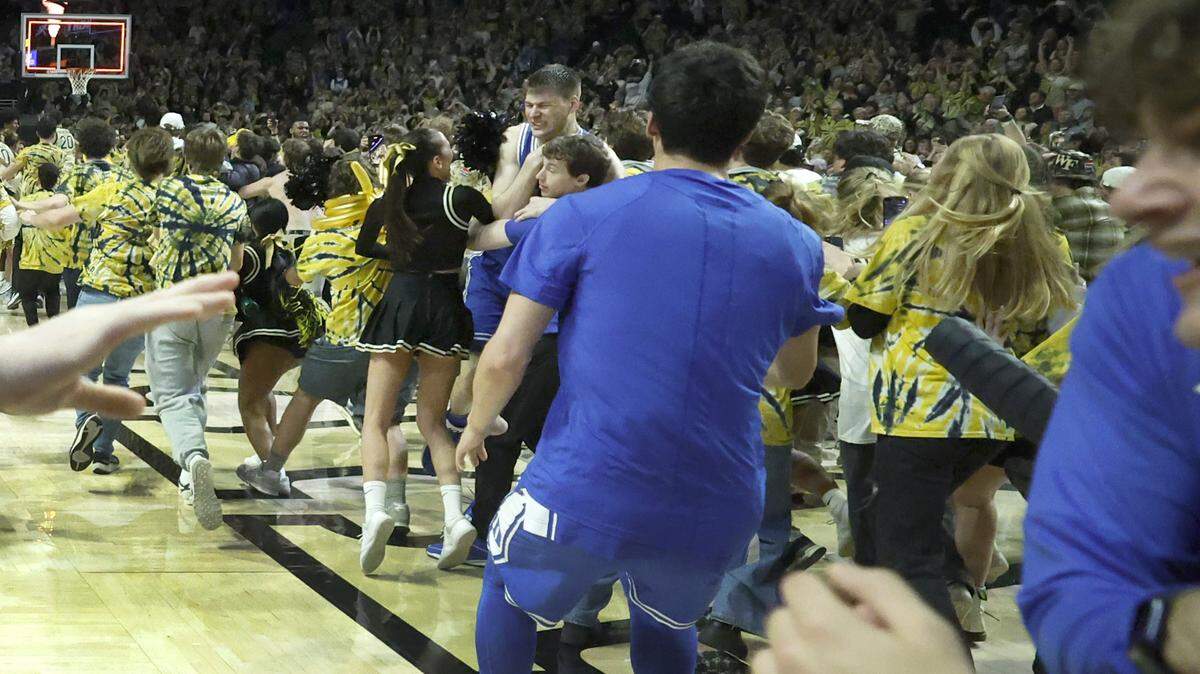
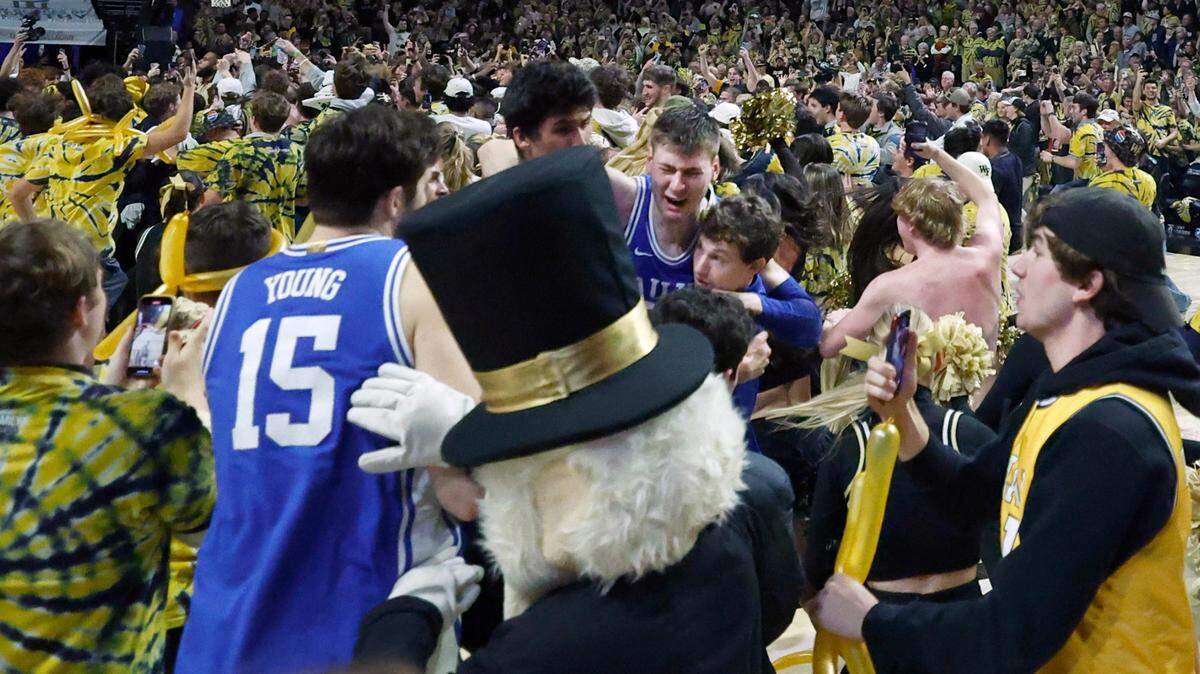
What happened at Wake Forest on Saturday, when Duke’s players were swarmed over by a hyper mob of elated, tie-dyed students and Kyle Filipowski was injured, can’t happen again. That’s the one part of this everybody can agree upon.
Where the debate lies is in the court-storm itself: Is this something worth allowing to continue? Can it be done safely? Or should it be forbidden, as it is in just about every other sport?
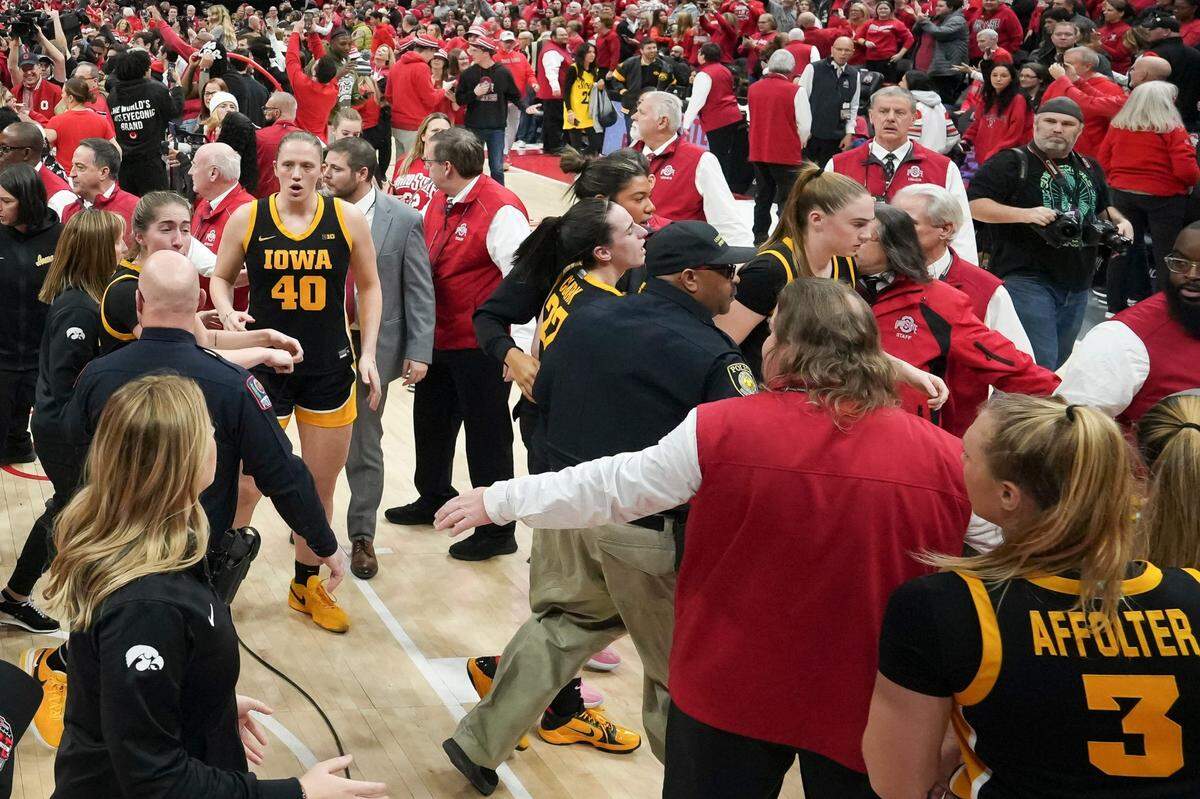
Flipowski’s injury was the latest moment arguing for the latter in a season that’s had a few of them, most notably Caitlin Clark — the biggest star in college basketball, period — being trampled after Iowa lost at Ohio State.
Clark escaped without injury. Filipowski wasn’t as fortunate.
“The ACC needs to do something,” Duke coach Jon Scheyer said Monday. “There has to be something done to protect our guys. To protect not just our guys but any team in that situation. ... We shouldn’t wait until next year. Something should be done right now.”
It certainly seems like college basketball is playing with fire. Players getting hurt. Players lashing out at berserk fans, who are often brandishing their cell phones as cameras, in self-defense. Even the fans are at risk: When Syracuse beat North Carolina, hundreds of Orange-clad students were packed around the court for 10 minutes as the final seconds of the game were painstakingly adjudicated, a dangerous crush hazard, after several already risked serious injury leaping the 10 feet from the front row of the football stands to the floor.
Is any of this really worth the risk?
“We all love the court-storming because of the experience for the college kids, the players to be with their students, the students to be with their players,” Clemson coach Brad Brownell said. “Obviously we can’t have players getting hurt. My concern is we’re going to have a situation where a player in fear of safety, somebody’s going to push him or get up in their face, a player’s going to do something to a fan too. I think we have to do something. I don’t think there’s a great answer.”
There’s an argument to be made that a jubilant student body celebrating with victorious players after a big win is one of the things that distinguishes college basketball, elevates it even. Consider the plight of Boston College coach Earl Grant, for whom a court-stormable win might be a program-changing moment.
“The students and the players at certain teams when they have big wins, they want to celebrate,” Grant said. “We have to maybe plan better for it and have an exit plan for the opposing team so they can get out of there safely, but I think the students at certain programs that have been wanting to win and wanting big success and they watch their team find a way to triumph, I do think it’s something for the students where it’s a good experience.”
But it absolutely cannot happen if the safety of visiting players and staff cannot be assured, and there’s no policy currently in place within the ACC to ensure that’s the case.
“Bottom line, however people feel, that can’t happen,” Scheyer said.
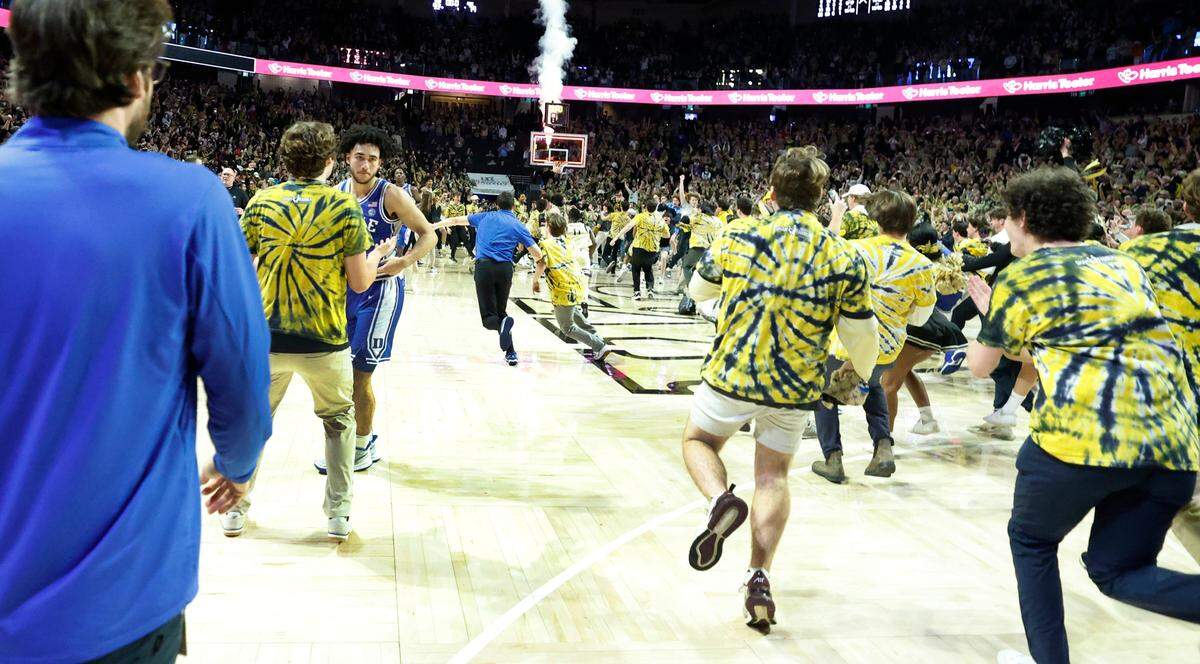
In the absence of any leaguewide standards or guidelines, you get a mess like what happened in Winston-Salem, when Wake Forest’s security contractor was laughably ill-prepared for the wave of students that rushed the floor, leaving Duke’s players and coaches to fend for themselves. Wake Forest athletic director John Currie admitted as much afterward.
“Although our event management staff and security had rehearsed postgame procedures to protect the visiting team and officials, we clearly must do better,” Currie said in a statement.
Scheyer noted that when Duke lost at Arkansas earlier this season, security separated his team from fans as they poured onto the court. That’s how it’s supposed to work. At PNC Arena, which has a core group of full-time security professionals supplemented by a regular group of part-time employees, there’s an established procedure in place. Students are funneled to specific entry points to the floor, allowing other guards to shepherd the visiting team off the floor.
But that takes training and practice, which the guards at Wake Forest clearly lacked, and that means hiring more guards, and that means spending more money. Which some ACC schools are only going to do if someone at the ACC makes them. Other conferences, like the SEC, issue hefty fines when students storm the court, which may not prevent it but certainly encourages venues to take appropriate precautions.
“You would hope, especially when you’re playing certain teams, when you’re playing Duke, when you’re playing North Carolina, when you’re playing Kentucky, Kansas, those schools like that, I think you have to anticipate when you have them on your home court, that if your team wins, there could possibly be a court-storming,” Pittsburgh coach Jeff Capel said.
“I know when I worked at Duke, I think every time we lost on the road except for at North Carolina, and I think we lost once here, at Pitt, every time we lost there was a court-storming. Normally those places had security and a plan in effect to protect the players. That should be the thing. I‘m not saying that I’m against court-storming totally, but when you have situations like just happened at Wake Forest, you saw the situation that happened earlier in the year with Caitlin Clark, it makes me lean toward that if you can’t have it under control.”
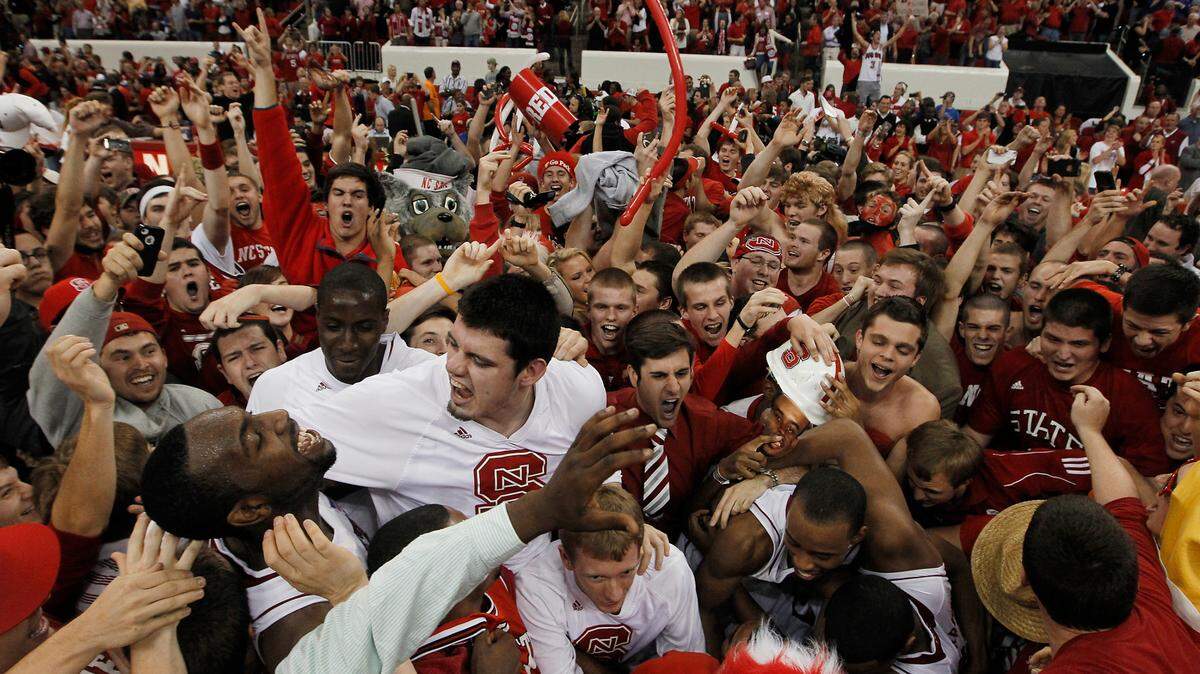
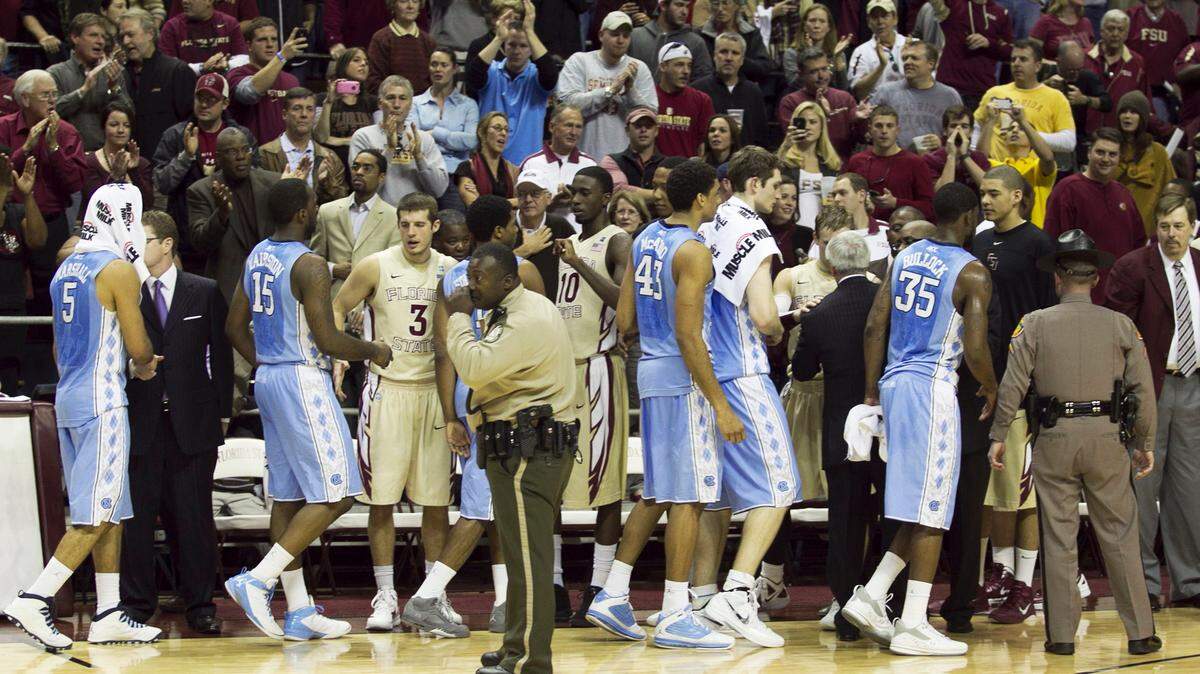
This is an old debate. It’s hard to believe it’s been 12 years since Roy Williams left five walk-ons on the floor in Tallahassee to face the Florida State fans while the rest of the team left early for the dressing room and a UNC manager was knocked over earlier that year amid a court-storming at UNLV. And it’s been 11 years since C.J. Leslie rescued N.C. State student Will Privette after he was knocked from his wheelchair while rolling onto the court to celebrate a win over Duke.

Court-storming became a flashpoint then, as it does does every so often, but seeing stars like Clark and Filipowski in such danger certainly refocuses the discussion. Throw in cell phones and more readily available alcohol inside arenas, and the situation has never been more combustible. But it’s also impossible to stop fans from getting on the court if they really want to — and potentially unsafe, when there’s a wall of students coming out of the stands as there was at Wake Forest — which means the participants must be adequately protected.
This feels like a tipping point. College basketball has to get its arms around this now, because what happens next could be worse.
If court-storming can’t be done safely, with all the staff and training that requires, then it shouldn’t be allowed at all. It’s up to the ACC to figure out how to navigate that middle ground — and maybe even lead the way toward a happy medium for college basketball.
Never miss a Luke DeCock column. Sign up at tinyurl.com/lukeslatest to have them delivered directly to your email inbox as soon as they post.
Luke DeCock’s Latest: Never miss a column on the Canes, ACC or other Triangle sports
This story was originally published February 26, 2024 at 12:07 PM with the headline "It’s time to do what it takes to fix court-storms — because the alternative is worse."