
Summer Heat Is Changing. Here’s Why Experts Are Paying More Attention to the Summer Nights.
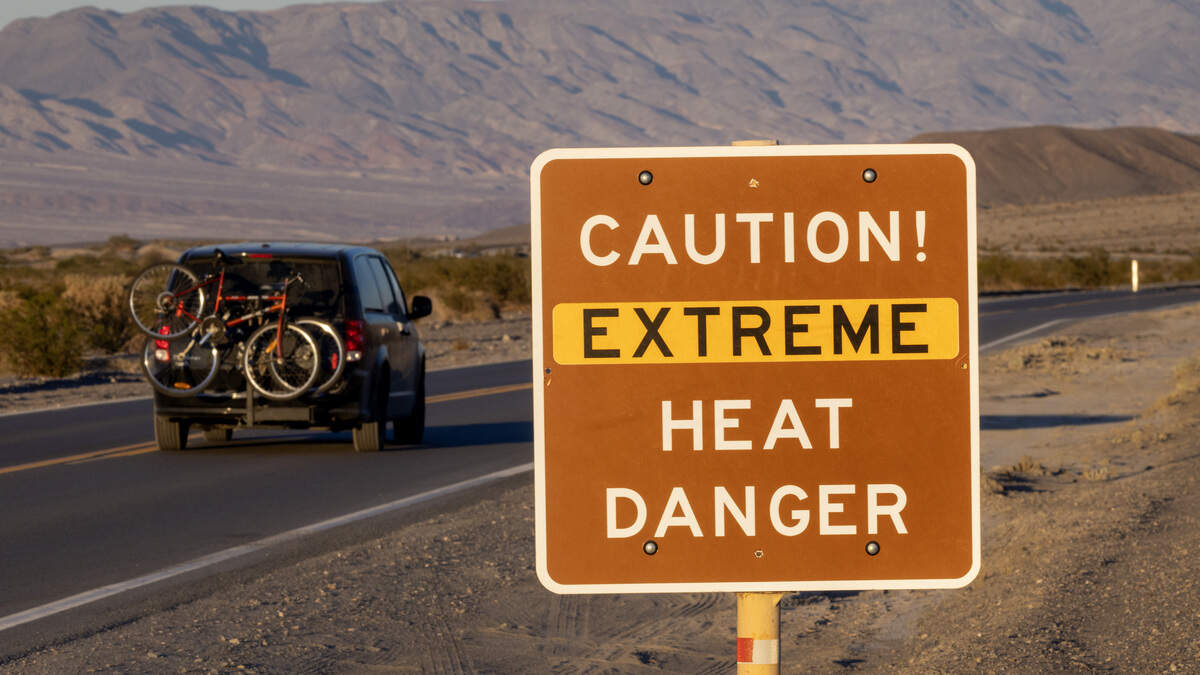
Heat wave coverage usually zooms in on daytime highs, but nighttime heat is where public health experts are sounding the loudest alarm. With more than 180 million people across the eastern US now under elevated heat risk, understanding why warm overnight lows are so deadly matters right now.
Why is nighttime heat more dangerous than daytime heat?
Nighttime heat prevents the body from recovering from daytime heat, especially when overnight lows stay at 80 degrees or above, according to The Weather Channel. Without cooler overnight temperatures, heat stress keeps building and raises the risk of heat illness and death.
That vast eastern US population is facing Level 3 or Level 4 heat risk, according to the National Weather Service, while the Southwest is already topping 100 degrees. Emergency room visits for heat-related illness surge on major and extreme risk days.
“What’s making the news is the highs, but nighttime minimums have an impact on mortality,” Lara Cushing, an environmental health scientist at UCLA Fielding School of Public Health, told the New York Times.
How does humidity make nighttime heat worse?
The combination of warm overnight lows and high humidity turns nighttime into a health hazard because the body loses its main cooling tool. When perspiration cannot evaporate in humid air, moisture clings to the skin and body temperature climbs rapidly, according to the Mayo Clinic.
Humidity usually rises overnight as temperatures fall, which is why nights feel damp and dew forms by early morning. When high temperatures and high dew points hang on through the night, the body keeps trying to sweat without any cooling benefit. That process can lead to heat exhaustion or heat stroke, and the mix of extreme heat, high humidity and low fluid intake can trigger organ failure in as little as an hour, according to the Mayo Clinic.
What is the urban heat island effect during a heat wave?
City residents face a bigger nighttime heat risk than people in rural areas because concrete and asphalt soak up heat all day and release it slowly after sunset, according to The Weather Channel. Urban neighborhoods can run up to 10 degrees hotter overnight than nearby rural areas.
The problem worsens when residents keep windows closed at night for safety, effectively turning homes into ovens. Hot overnight temperatures are also rising faster than daytime temperatures across much of the world.
“Most people don’t realize that hot nighttime temperatures have been outpacing daytime temperature increases across most populated regions worldwide in recent decades,” Kelton Minor, a postdoctoral research scientist at Columbia University Data Science Institute, told CNN.
Who is most at risk from warm overnight temperatures?
Older adults, children under 4, people without air conditioning and those with chronic diseases face the highest risk from warm overnight lows. Without a cool break at night, their bodies have no chance to reset from the day’s heat stress.
Heat kills more people than any other weather hazard in a typical year, according to NOAA, which reports an average of 238 heat deaths annually based on a 10-year preliminary average from 2015 through 2024. Many of those deaths occur during multi-day heat waves when overnight lows fail to drop.
“We think it’s because as the days grow warmer, there is more moisture in the air that traps the heat. During the day, that moisture reflects the heat, but at night, it traps the heat in,” Lisa Patel, executive director of the Medical Society Consortium on Climate and Health, told CNN.
How is climate change making nighttime heat worse?
Warmer overnight temperatures tied to climate change could push heat-related deaths up sixfold by the end of the century unless planet-warming pollution is sharply curbed, according to a 2022 study in Lancet Planetary Health. Nights are supposed to be when the body recovers from heat, and that window is shrinking.
Minimum overnight temperatures are also warming faster than daytime maximums in the US. For every one-degree rise in global average temperature, extreme highs and lows can rise by up to twice as much, according to Claudia Tebaldi, an earth scientist and climate modeler at Pacific Northwest National Laboratory.
“It’s one of those things that unfortunately is known to be a fact. There is not much uncertainty about the fact that warming is going to make these extremes much more severe,” Tebaldi told the New York Times.
This article was created by content specialists using various tools, including AI.
.jpeg)