What makes this NC man’s new heart melt? His baby girl — born just days after his transplant
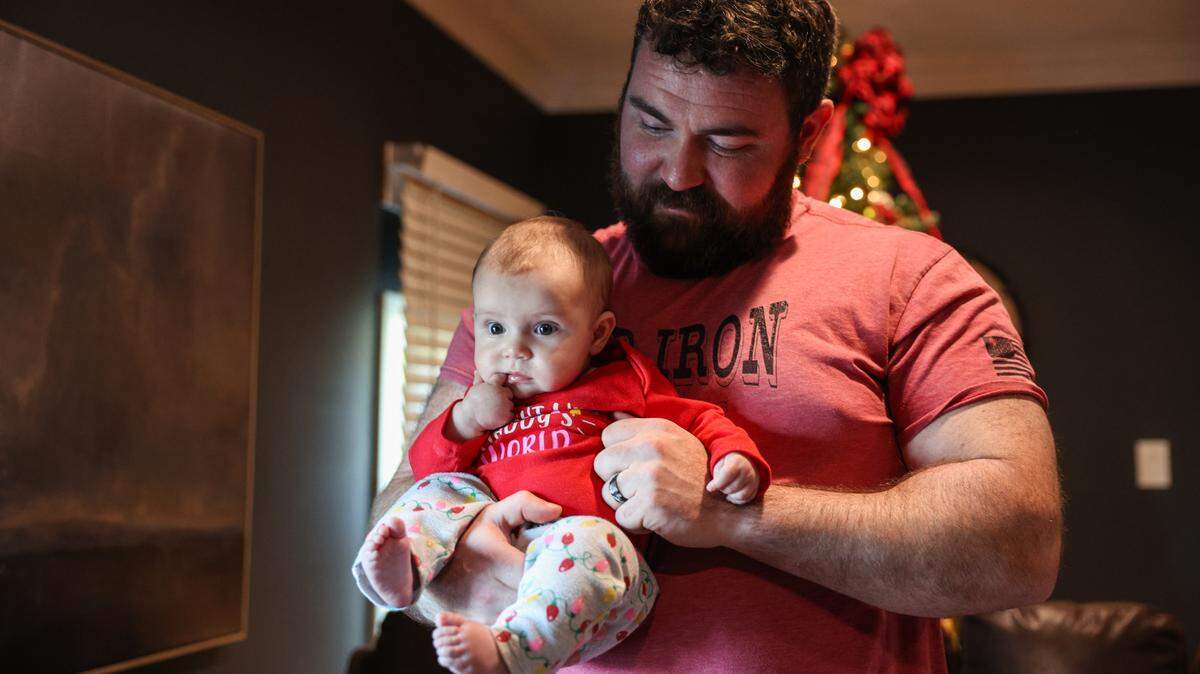
Not long after Dillon Sutton found out he and his wife Casey were having a baby girl, via a pink banner unfurled behind a plane over Lincoln County, the 31-year-old Crouse native started to cough.
At first, he thought he just had a cold. But as December 2023 turned into January 2024, then into February, he kept coughing.
“When it first started, it was here and there — it wasn’t constantly all day long,” Casey says. So like some men tend to do, her husband just ignored it for a while. He didn’t feel like going to see a doctor. “But by March, I mean, if he would stand up and walk from the living room to the kitchen, he would start coughing, and he would have coughing attacks where he would cough for probably five to 10 minutes before he could catch his breath.”
Finally, Dillon had had enough. He was ready to find out what was wrong with his lungs. The answer doctors came up with: not much. There was a build-up of fluid in them, which is what had led to all his coughing and wheezing, but that build-up was a direct result of the failure of a different organ.
And by July, weeks before his first child’s expected arrival, Dillon was considering an array of places he might find himself whenever Casey ended up giving birth.
In the best-case scenario, of course, they’d be together in the delivery room — marveling and cooing at their new baby girl, at Casey’s preferred hospital in Hickory.
The other potential situations, meanwhile, seemed just as realistic. But they were awful to even think about. In one, Dillon would be stuck in a hospital bed in Charlotte, too fragile and in too tenuous of a medical condition to be with Casey as she gave birth to their new daughter; in the most sobering, he would not survive to see the day at all.
It would come down to the matter of a heart. That is, Dillon needed a new one, and he needed it soon.
For months prior, the former high school sweethearts had been talking excitedly about adding a new life to their family. Now, suddenly, they found themselves talking frankly about the darkest of the contingency plans — the possibility of his death — although not at much length.
Because “honestly,” Casey says, “it all just happened so fast.”
He knew he needed to get back to a hospital
Dillon and Casey met at West Lincoln High School, where he was her senior by three grades and almost exactly two years.
He graduated in Spring 2011 and went off to Western Carolina, but didn’t click with the university, coming home after just one semester. They went on their first date almost immediately, right before Christmas break of her sophomore year.
After a long courtship — almost exactly 10 years later, on Dec. 12 — Dillon proposed.
Around the same time, however, Dillon had his first major health scare: an irregular heartbeat that made it feel to him like his heart was racing and led to a diagnosis of atrial fibrillation, commonly known as AFib.
To help restore a normal heart rhythm, Dillon’s doctor eventually performed an ablation, designed to stop faulty electrical signals by “burning” tiny sections of heart tissue. It seemed to do the trick. An avid weightlifter for much of his 20s, he returned to his almost-daily workout regimen and to his job as an apparatus technician at Pike Corporation.
Then he mostly forgot about it as his life with Casey took shape.
They started trying to have a baby in late 2021. She got hired as an intellectual and developmental disabilities care manager in Statesville in August 2022. They married that Dec. 18. He switched jobs to become a battery technician at Duke Energy in early 2023. The couple struggled to conceive for two years, but shortly before an initial appointment they’d scheduled at a Charlotte infertility clinic in November 2023, Casey learned she was pregnant. She prayed for a girl, and she found out she would get her wish when she saw the pink banner behind the plane that had been hired for their gender reveal.
The cough Dillon developed — he thought, at least — was just a mild inconvenience. Even the eventual news in April that his cough was being caused by another significant heart issue, albeit concerning, seemed overcome-able. There was no evidence his AFib had returned. He had his youth and his physical fitness in his favor.
After doctors treated him and drained the build-up of fluid, he was released. He was prescribed new maintenance medications that seemed to work; he felt better for a month or so.
But in May, Dillon started feeling badly again, then much worse still. He couldn’t eat much, because his stomach often either felt full or nauseated. His skin was cold to Casey’s touch (which they’d later learn was a result of low blood pressure). During a family trip to Charleston at the end of the month, he felt out of breath while they walked the city. He and Casey also had just bought a new house in the tiny Lincoln County community of Crouse, but he could barely lift moving boxes without having to sit down.
He knew he needed to get back to a hospital.
This time, they went to Atrium Health Sanger Heart & Vascular Institute an hour away in Charlotte, hoping for the best care possible. And this time, doctors saw a clear problem: His heart was in such bad shape that it was causing his other organs to start to fail.
‘What if they don’t find him a new heart in time?’
It was a difficult thing to process.
“I was thinking,” says Casey, “Well, maybe — you know, Charlotte, they’re known for heart doctors — maybe we’ll go in there today and they’ll be like, ‘Oh, something’s wrong with your chamber.’ Not, like, ‘Your whole heart is failing, and you’re gonna need a heart transplant.’ That caught me way off-guard.”
Dillon needed it soon, too. Joseph Mishkin, an advanced heart failure and transplantation cardiologist at Sanger, says Dillon was placed at the highest priority level on the transplant waiting list “because of how sick he was and what was required to stabilize him.”
Mishkin’s assessment was that absent a heart transplant, “the likelihood that he would be alive — or certainly alive with any type of quality of life — in a year would be less than 50%.”
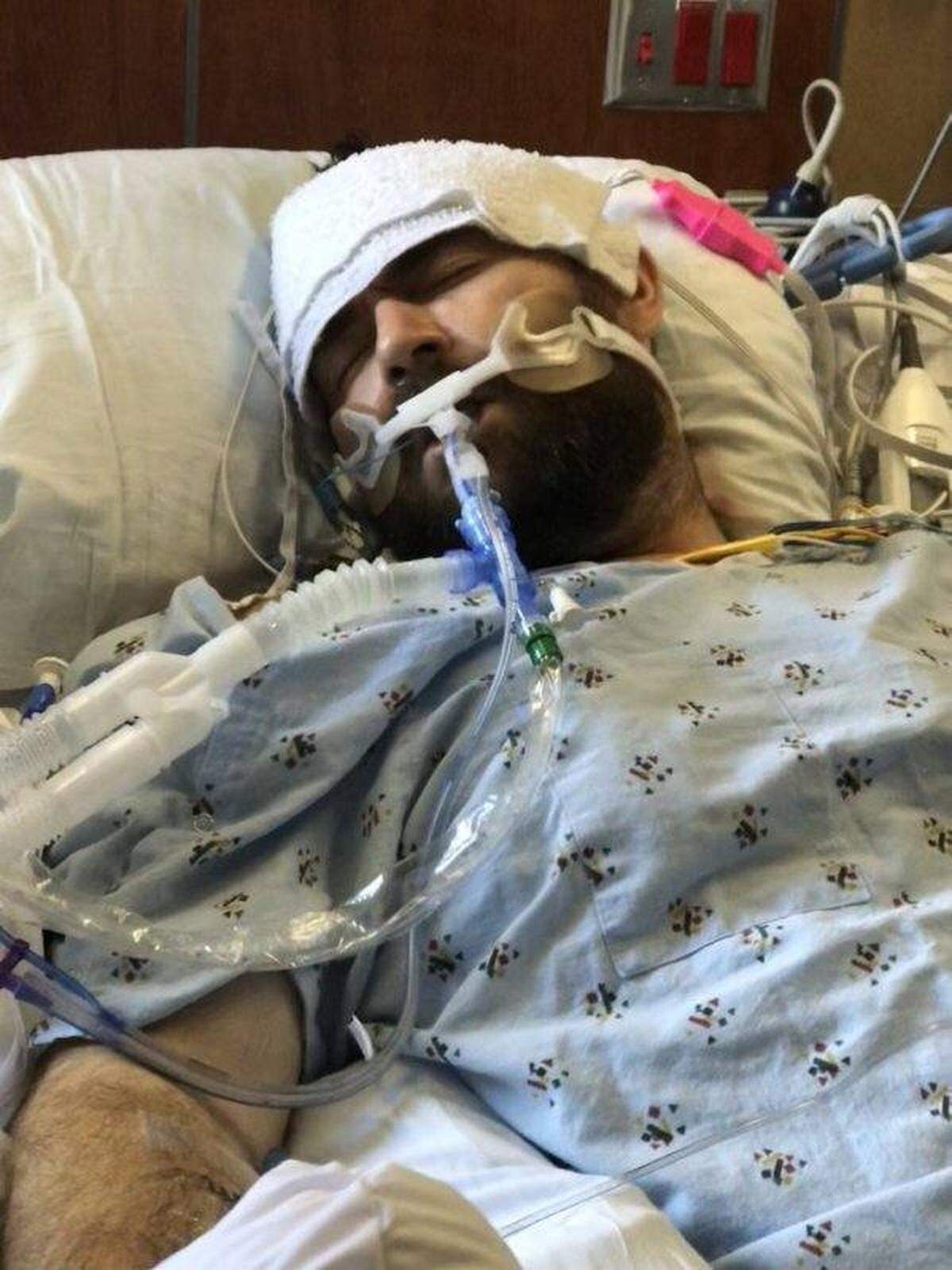
At this point, Casey was eight months pregnant. Her mind was racing faster than Dillon’s heart had raced when he was in AFib.
What if they don’t find him a new heart in time? What if he passes away during the surgery? If he does get a new heart in time, and if he does survive the transplant surgery, will he be recovered in enough time to be with me when she’s born? If he dies, how am I going to pay for our new house? How will I raise our child on my own? And by the way, is all of this stress going to create problems with my pregnancy?
Proactively, Casey made arrangements to deliver in Charlotte instead of at Catawba Valley Medical Center in Hickory as originally planned, in case he was still under doctors’ care, just so they could at least be close.
Then she prayed again, many times more intensely than she had prayed for her baby to be a girl.
A number of different variables determine wait times for a heart transplant (severity of illness, age, blood type, body type, etc.), and therefore those wait times can vary widely. Some stretch out months, sometimes years. Dillon’s case was unique, too: At 6 feet tall and 240 pounds, he was going to need a big, strong heart.
Much to the couple’s surprise and relief, it took just seven days.
But their most nerve-racking moments were yet to come. On July 3, in the moments before he was put to sleep for the transplant, Dillon grappled — quietly, internally — with the possibility that he might never wake up.
Keeping his feelings close to the vest
Dillon Sutton can be fairly stoic. He can intelligently describe a sequence of events, or produce facts, but he tends to steer towards those and to avoid expressions of feelings.
Quite literally, a heart transplant is something that doesn’t happen every day at Sanger. Mishkin says the Atrium clinic will have performed about 70 for the year by Dec. 31. It’s almost certain that Dillon was the only recipient of a new heart at Sanger this year who was just weeks out from having their first child.
Asked what was going through his mind as he was being prepped for the transplant, he says, “Definitely the thought of, if I’m gonna make it out or not” — without any further elaboration.
Asked how he felt after waking up post-surgery, once the anesthesia started wearing off: “Other than the soreness, I felt better already.”
Within just a day or two, they both were optimistic about him being out in time for their birth of their daughter, who was due on July 21. He knew at minimum he was going to need to recover from the major procedure for a week, and that if Casey were to wind up going into labor early, they might be cutting it pretty close. But ultimately, he was discharged from the hospital nine days after his transplant, on July 12.
Six days later, Casey woke up shortly before sunrise and told Dillon she thought she was having contractions. They had to call her parents and ask her dad to come over to shuttle them all up to Catawba Valley hospital, because Dillon hadn’t yet been cleared to drive.
Zoie Annette Sutton — 8 pounds, 9 ounces — was delivered via C-section that afternoon.
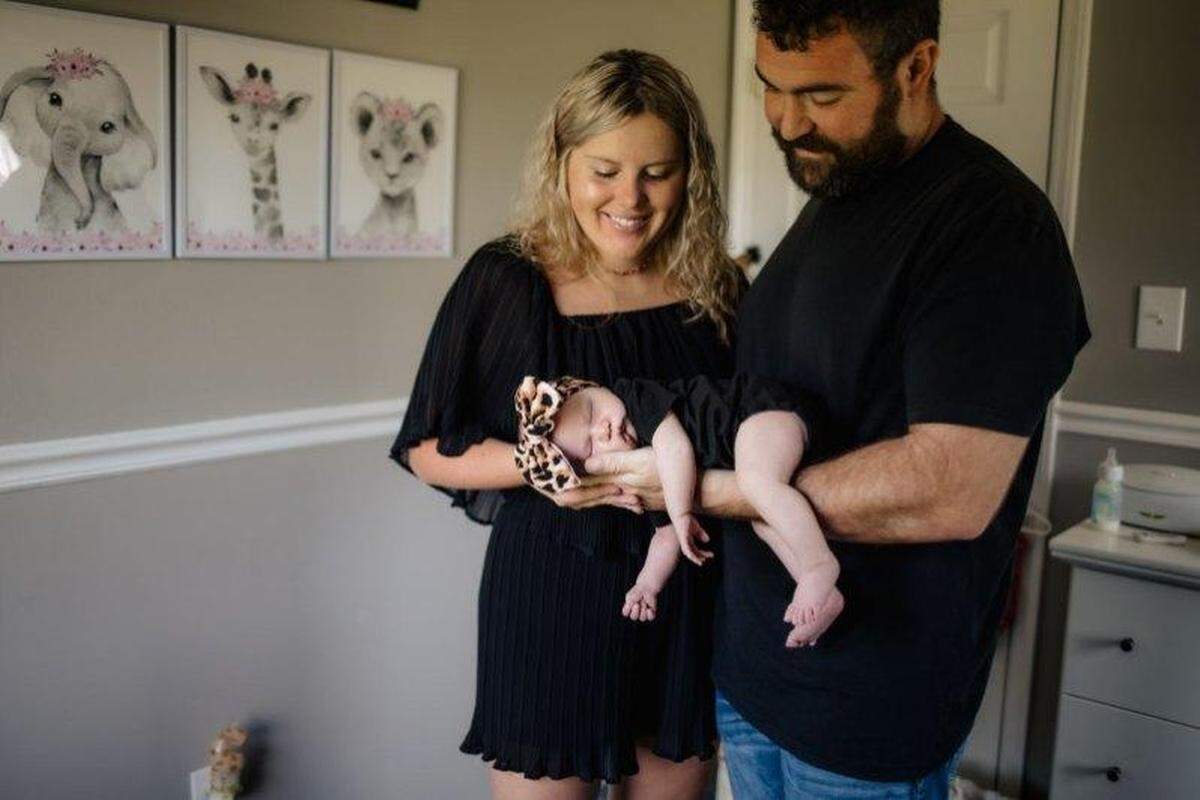
Dillon comes across as earnest when he answers a question about being able to be there after so much uncertainty by saying, “It was a big surprise.” But he also seems guarded. He almost immediately veers off into an explanation of the chain of events that unfolded on the day of Zoie’s arrival.
It’s no big surprise at all to Casey that her husband would respond this way. She knows how hard it can be to get him to open up. She, on the other hand, is the opposite. She’s a fountain of emotion.
‘I think he realized: Time is not promised tomorrow’
Whereas Dillon dodged a question about whether he felt like he had a new lease on life — instead marveling at the unsolved mystery of how he developed heart disease in the first place — Casey is all over it.
“Before Zoie came, I’m not gonna say Dillon was all about himself, but he was pretty selfish with his time. He went to the gym six days a week. He was very dedicated to things like that. But since he had his heart transplant, I can see a big change in him, in a good way. Spending more time with family. Not just me, but family in general.
“Then, of course, Zoie’s spoiled by him. I wasn’t sure how he was gonna deal with a kid, because like I said, Dillon could be very selfish with his time. But honestly, going through all that, I think he realized: Time is not promised tomorrow.”
Her voice starts to shake. She is aware — as Mishkin explains — that “the biggest risk of something bad happening after heart transplantation occurs within the first year,” and that the median survival rate suggests “a little more than half of people are alive 13 years after a heart transplant.”
Casey pauses, then continues, softly. “I’m just thankful that Zoie does get time with her dad. That he actually got to meet her. I think we’ve both become just much more thankful for the time that we do have.”
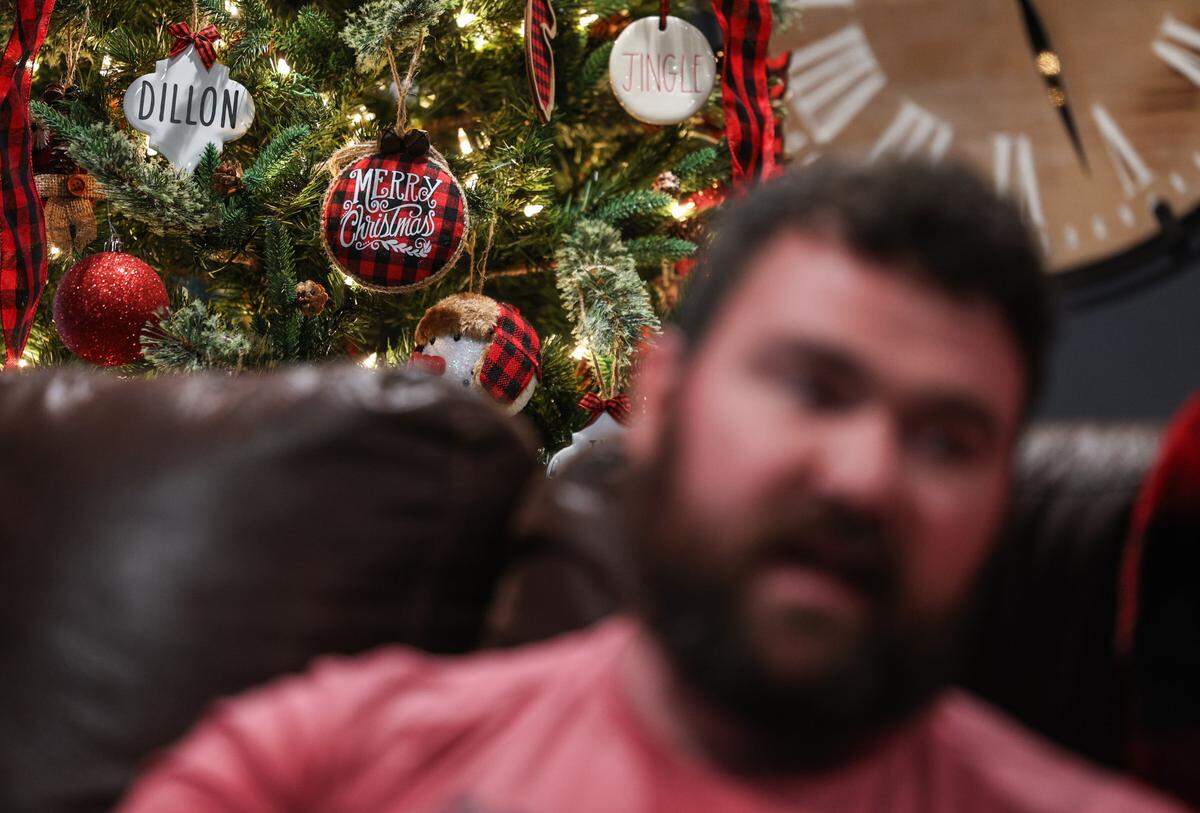
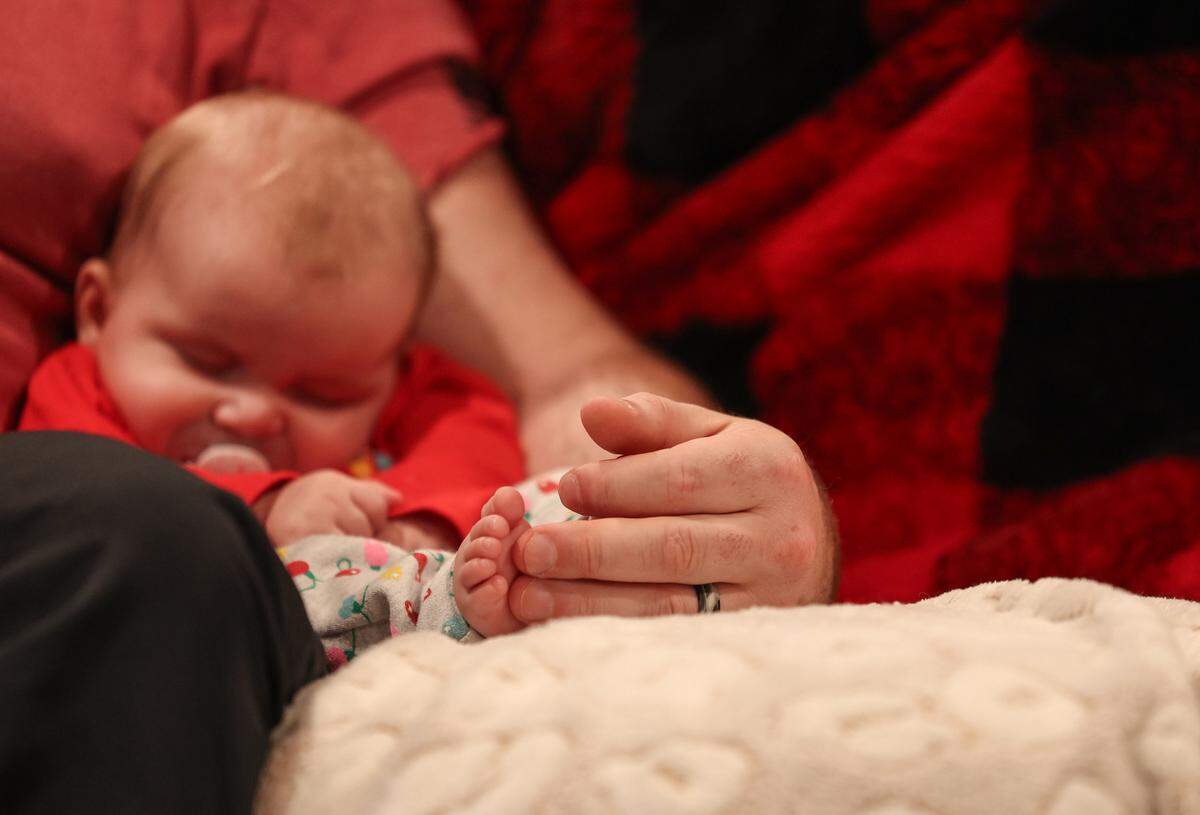
During a separate conversation at their home, while Casey is at work, Dillon mostly keeps that guard up. For more than an hour, as he recounts his roller coaster of a year while sitting on their living-room sofa next to now-5-month-old Zoie, he doesn’t show fear, or sadness, or anxiety, or excitement.
But he’s finally about to break.
When asked how it feels to know he’s got a heart that used to belong to someone else beating inside of him, he replies, “It’s still weird. I think about it every time I see that scar in the mirror, really.”
It’s not that. Dillon gives the response as stoically as possible.
“I’m just glad to be here, though,” he continues. “Better to have a scar than not be here.” It’s not that, either.
It’s a second later, when he looks down at Zoie and says to her, “Ain’t that right?” At that, he chuckles, and smiles the smile of a man whose heart — you can just tell, at that moment — is full.
This story was originally published December 30, 2024 at 6:00 AM.