We ran 3.51 miles with Charlotte Symphony’s resident conductor. Here’s how it went
If you know me at all, you know this: I like to run. A lot. Since first resolving to get myself off of the couch back in 2008, I’ve completed more than 30 marathons, including Boston three times and New York City twice.
You might also know this about me: I love to ask people questions.
So, today, I’m continuing the marriage of those two passions with Part 2 of my series of interviews with often-influential, always-intriguing people who live and work in the Charlotte area — conducted while we run a handful of miles together. The hope is that the release of endorphins and dopamine will trigger responses that are less canned, less inhibited, more thoughtful, and more focused.
Here we go again...
This week’s interviewee: Christopher James Lees, 44, who has served as resident conductor for the Charlotte Symphony Orchestra since 2018 — initially under then-music director Christopher Warren-Green and for the past two seasons in support of Kwamé Ryan*. Lees also is music director of the Rock Hill Symphony Orchestra.
(*In case you’re wondering who does what: In a nutshell, as music director, Ryan conducts the majority of the concerts in the CSO’s “Classical Series” — its core subscription series — and sets the artistic vision and direction for the entire organization; as resident conductor, Lees conducts a wide range of concerts — including “Pops,” “Family” and Movie” series performances — and leads community engagement.)
Recent running résumé: 3:24:50 at the New York City Marathon in November; 2:58:02 at the Chicago Marathon in 2024; 3:08:23 at the Boston Marathon in 2024; 18:19.8 at the NoDa 5K in 2024.
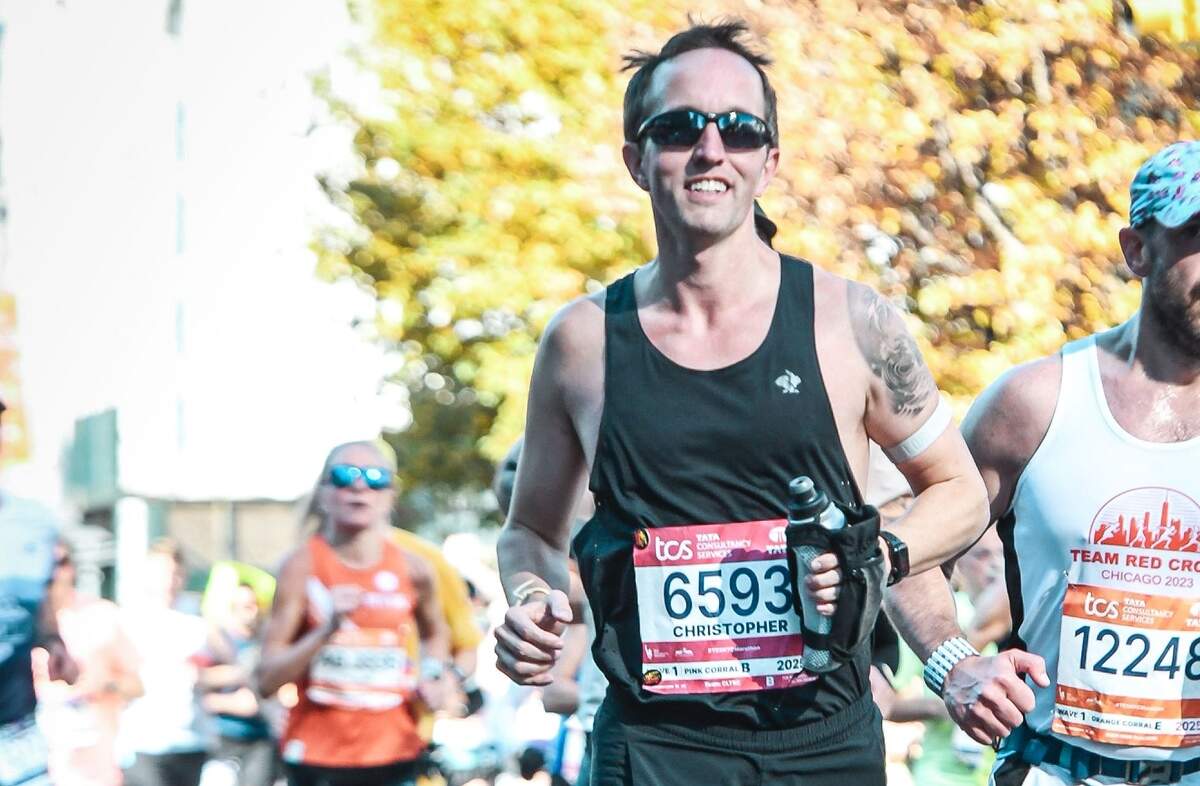
Where we ran for this interview: Freedom Park.
What we covered: How music from “KPop Demon Hunters” wound up topping his Apple Music recap, what he’s "really doing up there” when he’s conducting, and 3.51 miles at an average pace of 8:42.
The conversation is lightly edited for clarity and brevity.
-
Q. Do you normally run with other people?
I do a nice mix of things. The running club community in Charlotte is so active and alive. I have so many friends in that community. And then, because I work nights and weekends, it’s a different sort of planning for getting the miles in to actually do the proper training for my races. So sometimes it’s me and my podcasts, and sometimes it’s me and my friends.
Q. Do you listen to music?
I do. Depends on what we’re doing. If it’s a long run, I might put on some classical music that I’m working on, just to get more and more familiar with it. And then if it’s speedwork, I might put on a BPM (Beats Per Minute) playlist and listen to some driving techno to kick up the pace a little bit.
Q. If you listen to classical music, is it usually work-related?
Yeah. There are some really epic, wonderful pieces that I just like listening to. Sometimes, if I want to just steep in a Mahler symphony — you know, those pieces are also so big, you could do a full six or seven miles on one single piece of music. And the library of classical recordings — because of Apple Music Classical, specifically — is so vast, you really get an entire array of different performances and different ways of interpreting the same piece of music, and it’s just never been bigger. There’s never been more access to more interesting recordings across the decades.
Q. Go back to the other music now — the speedwork music.
Yeah, well, I have a 172 BPM playlist that — if I’m doing speed miles, or interval training or anything like that — it helps keep the cadence pretty quick. There’s something motivating about having this low, electronic drumbeat pushing you along, trying to go faster and faster and faster.
Q. So you’re an Apple Music guy. Do they have year-end stats that tell you your top songs and stuff like that?
Yeah. It’s funny because my son listens to music on the same account. My son is 10, and he is just the light of my life, and this wonderful little dude, and looking at my Apple Music recap, you would be convinced that I am a K-Pop fanatic. I’ve learned so much about K-Pop from my 10-year-old. “KPop Demon Hunters” is just one example.
And then beyond that, in terms of my own stuff, there’s some Jacob Collier on there and some Snarky Puppy. There’s some upbeat pop music, like Andy Grammar. Then, again, for the speedwork, it’s pretty edgy EDM, electronica.
Q. Is your son into classical music at all?
His artistic expression is in the theater. He loves theater and musical theater. He was Tiny Tim in “A Christmas Carol” at Theatre Charlotte, which was a joy to watch. But he’s a thespian first, and a musician second.
Q. Did you do any theater when you were a kid?
Yeah, I was on the stage a little bit. I was in “The Fantasticks,” “You’re a Good Man, Charlie Brown.” That’s about as far as it went. And then I played keys — played piano — for high school theater programs, and I found that was a little bit more my lane. It was on the instrumental side. But I loved being on stage. And I love large groups of people, large crowds. And now I’m so lucky because I get to perform for tens of thousands of Charlotteans every year.
Q. So what do you like most about the job?
Oh, my gosh. I mean, the Charlotte Symphony, the musicians really are my musical family, because we’ve done hundreds of concerts together at this point. I know their kids, I know their parents. We’ve been through it. We’ve seen a lot of life together. We went through covid together, and we’re still coming up with new and different ideas of how to get musical experiences to all parts of our city.
.jpg "CJL CSO (1).jpg")
Artistic engagement, it’s always on our mind. It’s at the forefront of our mission, just coming up with new and interesting ways of presenting this great music — which has survived for hundreds of years — that many people in 21st-century life don’t know that they have a connection to. So our job is to play different music that people will relate to, but then also just continue to make the case that it’s accessible to all folks all over the place. And that sort of energy and enthusiasm for talking to people about that is limitless.
Music has been so important to me in my life. I see it in the kids that we educate, and the ways that it can affect young people and old people alike. It’s a really cool way to add a quality of life in this city that I think people are discovering more and more.
Q. Is it common knowledge among people in your work life that you are an avid runner, and is it common knowledge among people you run with that you’re a classical-music conductor?
Well, I’m lucky that my job is very public, so I’m easily Google-able. If anybody needs to find me, it’s very easy in the digital world. But yes, to answer your question, my musician friends know that I’m a runner. Some of them think I’m crazy for running marathons. And then in the running community, there aren’t many orchestra conductors. There aren’t many orchestra conductors in Charlotte generally. But then those that are also getting on the track at 5:30 in the morning on a Tuesday — that’s a very narrow niche.
Q. How long have you personally been serious about running, and training for races?
I’ve only started racing really in the last four years or so. I think it was a covid thing. We had all this time. I live on the north side of Charlotte, about 10 minutes from the Latta Nature Preserve. On those trails, you can stack as many miles as you want. And during covid, the more time you could spend away from folks and outdoors the better.
I did a year of cross-country in high school. Played Ultimate Frisbee at college. My first 5k since high school was 2021. And then my first marathon was Memorial Day 2023, and that was only because it was a day I didn’t have a concert and I didn’t have my son with me that day. And it was like, OK, this is a day I can race.
Then after that, I guess I’ve fallen more and more in love with it.
Q. Did you have any idea before you started racing that you would be as fast as you are? (At the 2024 Bank of America Chicago Marathon, Lees ran a personal-best 2:58:02, averaging a pace of 6:56 per mile.)
No, I didn’t. Didn’t know what the baseline was. So that NoDa 5K I think was in 21 minutes, and then the Around the Crown 10k was at 6:48 average pace. Then my first half was the Craft Beer Half Marathon, when it was still on the north side of town, and that was close to about 90 minutes.
Q. When you think of the classical-music world, you don’t immediately think of athletes, of athleticism. It’s probably not the most incongruous kind of situation you can be in, but to be someone who’s as advanced a distance runner as you are — does that surprise the people who just know you in your work world?
I think the perceptions around classical music are shifting, in the sense that if you look nationally or globally, the old way of looking at a conductor — like this mostly European autocrat who’s very buttoned-up and inaccessible — is merging with the 21st-century social-media world, where people post all parts of their life out there. So I think it is definitely unique to see a conductor who’s also a marathon runner. But there are a few folks in Charlotte who are professional musicians and also athletes. One guy I train with, I don’t think he’s 30 yet, and he’s a great violinist, orchestra director, and once you share enough miles with somebody you get a sense of how it all is able to peacefully coexist.
But the comparison I make to the musicians is that while running is very much macro muscles — you’re using these very large muscle groups on the body — well, if you sit with a violinist, you realize that what they’re doing between their left and right hands is equally acrobatic, equally athletic and virtuosic, but they’re measuring in knuckles instead of hamstrings. They’re measuring millimeters instead of miles. And the difference between absolutely nailing a passage and creating a feeling of transcendent gloriousness in the concert hall and abject failure is usually about a millimeter.
So the scientific rigor, along with the ability to perform, is astounding to folks. Because we typically group artists and athletes into two different categories — you’re either an artist or you’re an athlete. But I love that notion of, if you have a body, you’re an athlete; if you have a heart, you’re an artist. If you can tap into the soul of expression, you have an outlet for your artistic side; if you can enjoy endorphins with friends, you can tap into the athletic side. I mean, I live by it.
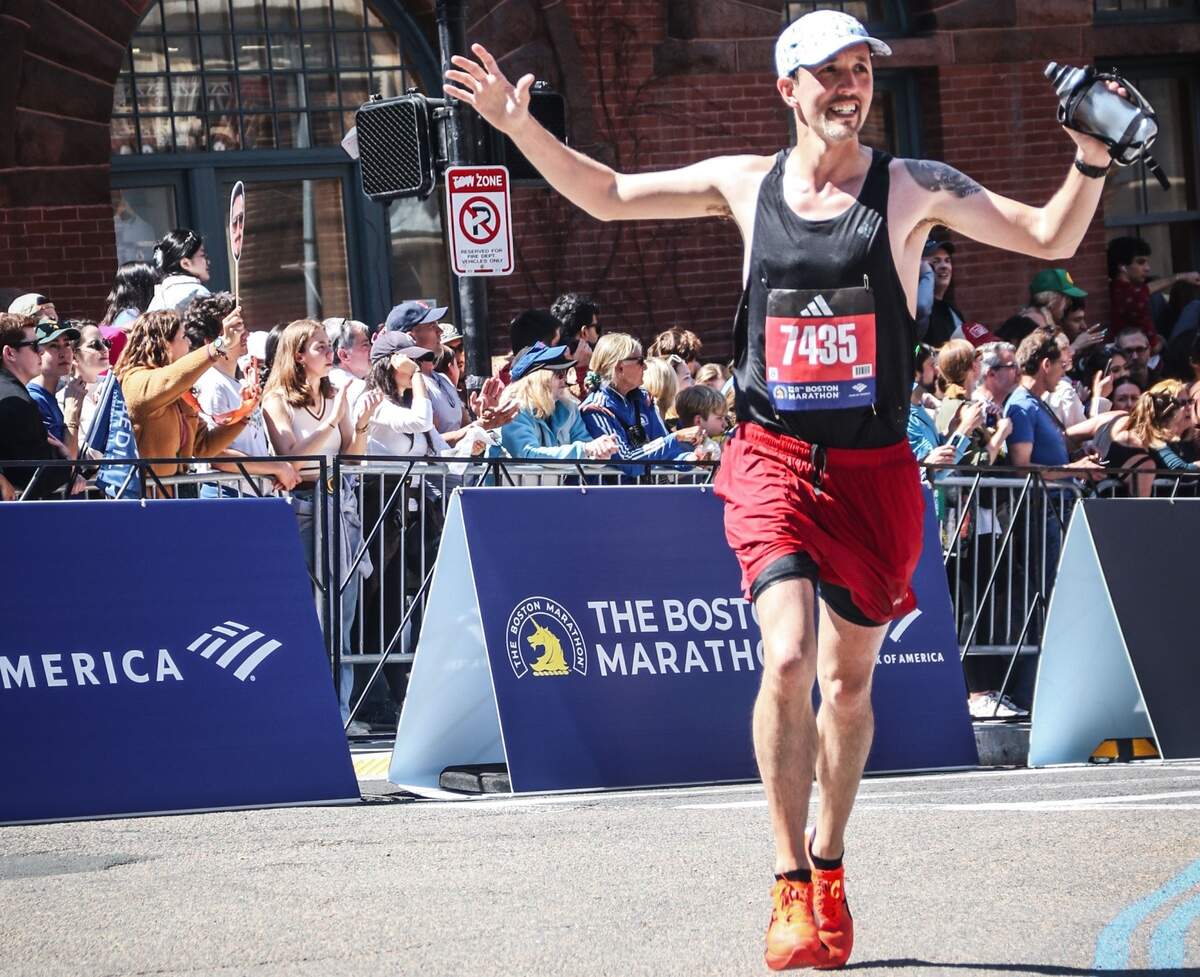
The only other thing on that topic that I’d say is, the athletic training and the “pain cave” and the rigor that goes into it is not dissimilar from what we call wood-shedding, when you have to just show up and practice the passage until you can’t get it wrong. It’s that notion of forward progress through time, where you hit some wins and then you hit some losses. Three steps forward, two steps back. And you have to move through that process of incremental growth, in a way that continues to move forward, knowing you’re not gonna take a giant step and then stay there, but that it’s this continuous practice and continuous process that makes the journey that much more fulfilling.
That’s one of the reasons I love running. It’s one of the reasons I never get bored with music. The artistic vision I want to put forth with the symphony is, I think, just like training for race day: You hope you do all the right preparation, and then the day-of? You go out there and you give it all you got, and you wake up the next morning and climb the next mountain.
Q. Then how would you say the feeling that you got from running that personal-best marathon in Chicago compares to the feeling of completing a concert where you’ve lifted your orchestra up to the highest heights in front of a huge crowd?
Oh, my God, they’re actually strikingly similar. I don’t know if I could say why exactly. But I can compare those two feelings really vividly, and it’s this feeling of — what? — collective accomplishment?
Yes, I’m the conductor; and yes, I’m the runner. But when you cross the finish line, you bring your coach with you, you bring your kid with you, you bring all the people that helped get through the training block with you; and it really does feel like the combined spirits of all of those folks run with you, especially in that last 10k from Mile 20. That’s when you need the most encouragement from all those folks. And then when you finish a concert, you’ve got all the folks on stage, we’ve all done it together it really is a communal, collective effort. Then when the audience applauds, they become “the 12th person” on the field. It co-arises into something greater, that other people get to enjoy, be moved by, and then take with them into their next week, or their next month, or their next chapter of life. So it’s never just the one; it’s always the accumulated effort of everybody — which is cool.
Q. So what’s the most common question you get from running friends who find out you do what you do?
I think the most common question is just, “What are you really doing up there?” “How do you know if a conductor is doing a good job?” Or, “Are you making a real impact?” And it’s a curious profession, because on a stage with 80 musicians, I’m the only guy up there not making any noise — ideally. They make the sound, and I’m a collaborator with them, and we work together to create moments of magic. I think it’s a unique position to be in, in the city, and I feel grateful for it.
Q. When you get asked “What are you really doing up there?,” how do you answer?
Our job is to help everybody do their best. It’s like any leadership position, in that if the team is doing their absolute best, then the aggregate experience for the culture at large is greater than the sum of its parts. What’s different in my world is that you can hear a difference. You’re evaluated based on how you listen, and so if you’re hearing something that’s really exquisite, you’re like, Oh, everyone’s really cooking, up to 11.
There’s also a joke in my world that the first rule of being a conductor is identical to that of being a physician, which is the Hippocratic Oath: “First, do no harm.” Then help. The musicians of the Charlotte Symphony are so great. They are professionals. They’ve been doing this for decades, and they’re just some of the most gifted musicians in the country who have chosen to live and work here. But at the same time, I’m the only one seeing how all of those parts go together, and because of that, I can help indicate for them, “Hey, from this moment, this person has the melody,” or, “We can’t play too loud ’cause then nobody can hear Tim. Tim’s gotta shine. Then Taylor takes a turn, and then the brass takes over. Then we all have to get down, because Calin, our concert master, has a solo.”

We help balance things so that it’s not just this wall of sound, but it really is a nuanced journey through time that makes for a beautiful memory.
Q. How much are they actually looking at you?
They look more if there’s something to look at. Yeah, that asks the question about, like, “When is it time to play?” But then the other interesting part is that my hands, nonverbally, are also expressing, “How are we going to play it?” It’s both: “When is ‘now’?”; and, “How does ‘now’ happen?” This is the great thing about working with the same group of musicians for 10 years, is we have a mutual trust between us. They know I trust them, and I’m going to help them get through the music and the concerts, and we’ll really go after something elevated together. But then they also trust me, so if I show something with my hands — “why don’t we get softer here,” or “faster here,” or “play longer here,” or “louder here,” all of which I can do gesturally — they’ll make an adjustment and be able to make those spontaneous collective decisions on the fly, which is really exciting.
It’s a very dynamic environment, and it really is subtle enough that if I just move my hand slightly, they make a response. I mean, it feels like Harry Potter. It feels like magic. You wave your hand, and you get a result, and the fact that that can be communicated out to the rest of the audience is the reason we do it.
-
Coming next Tuesday (Jan. 20): Théoden runs with Shannon Spake, reporter and host for the Charlotte Hornets on FanDuel Sports Network Southeast and NASCAR on TNT — as well as a veteran of several marathons and long-distance triathlons.
Do you know of an influential Charlottean who runs — whether for fun, for fitness, or to feed a serious addiction — and who might be willing to be interviewed by Théoden while they log a few miles together? Send an email with your suggestion(s) to tjanes@charlotteobserver.com.
This story was originally published January 12, 2026 at 5:01 AM.