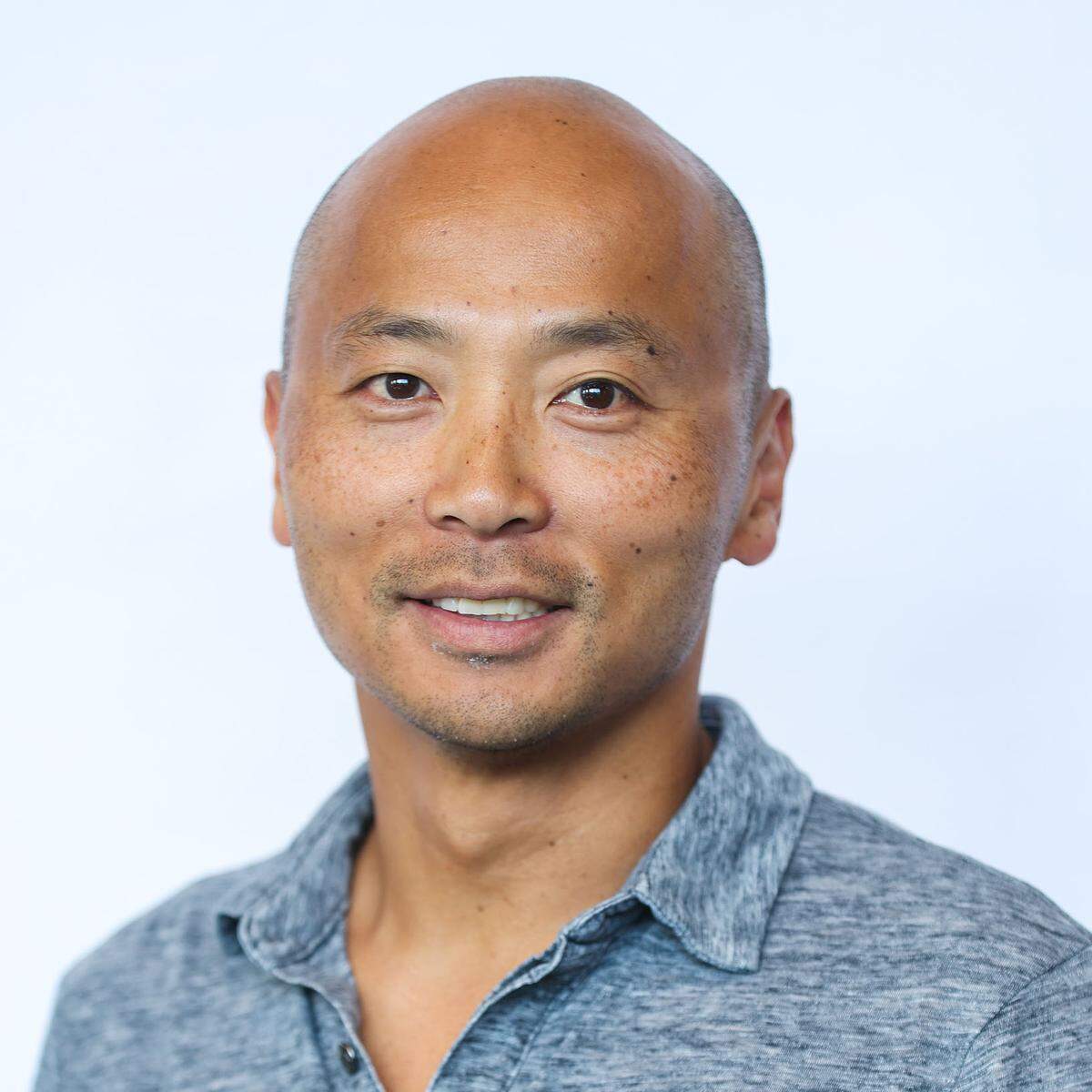
We ran 3.48 miles with the YMCA of Greater Charlotte’s CEO. Here’s how it went.
If you know me at all, you know this: I like to run. A lot. Since first resolving to get myself off of the couch back in 2008, I’ve completed more than 30 marathons, including Boston three times and New York City twice.
You might also know this about me: I love to ask people questions.
So, starting today, I’m blending those two passions by launching a series of interviews conducted while running a handful of miles with often-influential, always-intriguing people who live and work in the Charlotte area. The hope is that the release of endorphins and dopamine will trigger responses that are less canned, less inhibited, more thoughtful, and more focused.
And we’re off...
First up: Suehila (Sue) Glass, 53, president and CEO of the YMCA of Greater Charlotte, which had never been led by a woman prior to Glass’s move into the role in 2024. She previously held the same job at the YMCA of Metropolitan Denver. Glass celebrates two years with the YMCA of Greater Charlotte on Jan. 15.
Recent running résumé: 28:13 at the YMCA Krueger Reindeer Romp 5K last month; 45:55 at the Run! Ballantyne 8K last April; 2:06:30 at the YMCA Corporate Cup Half Marathon last March.
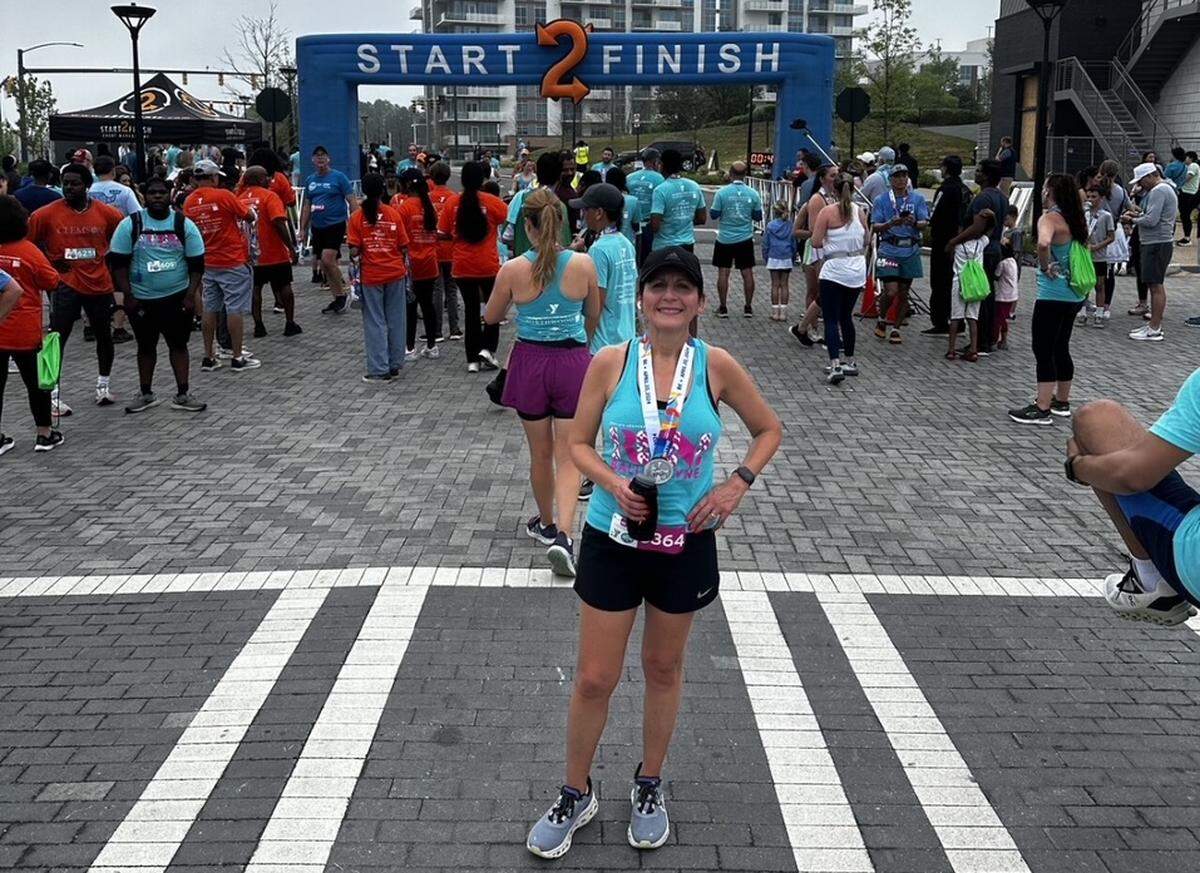
Where we ran for this interview: Freedom Park.
What we covered: Lessons learned from a failed Ironman attempt, the YMCA’s embrace of new smart technologies, and 3.48 miles at an average pace of 11:07.
The conversation is lightly edited for clarity and brevity.
-
Q. I hear we have something in common — you hate the humidity here in Charlotte.
I mean, maybe a little bit. But I spent a part of my childhood in Florida. So actually, it isn’t as bad as I thought it would be. What I really don’t like — although I think Charlotte is improving on it — is feeling it’s not safe enough to cycle on the open roads.
Q. Yeah, we’re not known as a bike-friendly city, like Denver is. But speaking of biking, I also heard that you maybe have experimented with triathlon?
Yes. Every time I turn a new decade, I try to push myself. So for my 50th, I decided I was going to do an Ironman. I signed up for the one in Waco, Texas, in 2022. But I am not a swimmer, and that was one of the reasons why I’d never done one before. I’ve cycled, I’ve done several of those century (100-mile) rides, several marathons, but never an Ironman. So I decided that I just needed to overcome my fear of the water and that particular sport. And so I got a swim coach. But what I didn’t appreciate is how technical swimming is, especially with the breathing. As you can tell, my breathing — I still need to work on it.
But I persevered. I trained. I was excited. I got my pool time to where I thought I would be able to make it. And even though you have 17 hours to complete the Ironman, each segment is also timed. So I missed the swimming (cutoff). (In an Ironman, the swim is the first leg of the race, and athletes must complete that leg in 2 hours and 20 minutes to be permitted to continue on to the bike portion.) And I missed the swimming cutoff by a few feet. That was devastating. But it was a lesson — a lesson in leadership, a lesson in perseverance, a lesson in “you can’t always push through things; you really have to have the technicality and the practice.” So my error was I didn’t spend enough time swimming in open water. And it ended up costing me the ability to complete it.
Now my sights are maybe on a half Ironman for my first, instead of a full. Maybe when I’m 55. That’s not too far away, by the way. I’ll turn 54 in April.
Q. You’ve had so much success in your career. What’s interesting to me about endurance sports is that it can be humbling. When you didn’t make the cutoff, what was that like for you? I mean, how do you deal with failure?
After getting really upset over the fact that I didn’t make it, and then I felt like I just spent a whole year of training for nothing, it really allowed me time to reflect and say, OK, how is this going to shape my experience and me as an individual moving forward? And how do I approach failures or opportunities? How can I continue to persevere and not allow this to dissuade me from trying to do it again?
There’s a lot of parallels, as you said, with endurance sports and leadership. And for me, it’s about mindset. It’s about accepting failures and using them as stepping stones for the next (challenge), and it’s about giving yourself grace as you go through this process and learn. That’s how I approached it.
I still have some PTSD with swimming. But I will overcome it.
Q. In terms of your job leading the YMCA here, what is maybe a big challenge that you faced coming into Charlotte and how has tackling it gone so far?
As with any organization that’s 150 years old, there’s a lot of legacy, there’s a lot of history, and there’s a lot of pride. The challenging part is, How do you balance that legacy and past success to really catapult us into the future? And it might mean we have to do business a little bit differently.
With that, there’s discomfort. There’s getting out of our comfort zone, getting out of the familiar, making some courageous decisions that maybe at first appear to not be working, or maybe they’re not yielding as quickly as we’d like. But staying true and very focused on the vision is going to be critical. So those are some of the things over the last two years that we’ve been working through. And frankly, I really reserved my first year to listen, hear, understand context, dig into the data.
So while I’ve been here two years, really the change has just begun.
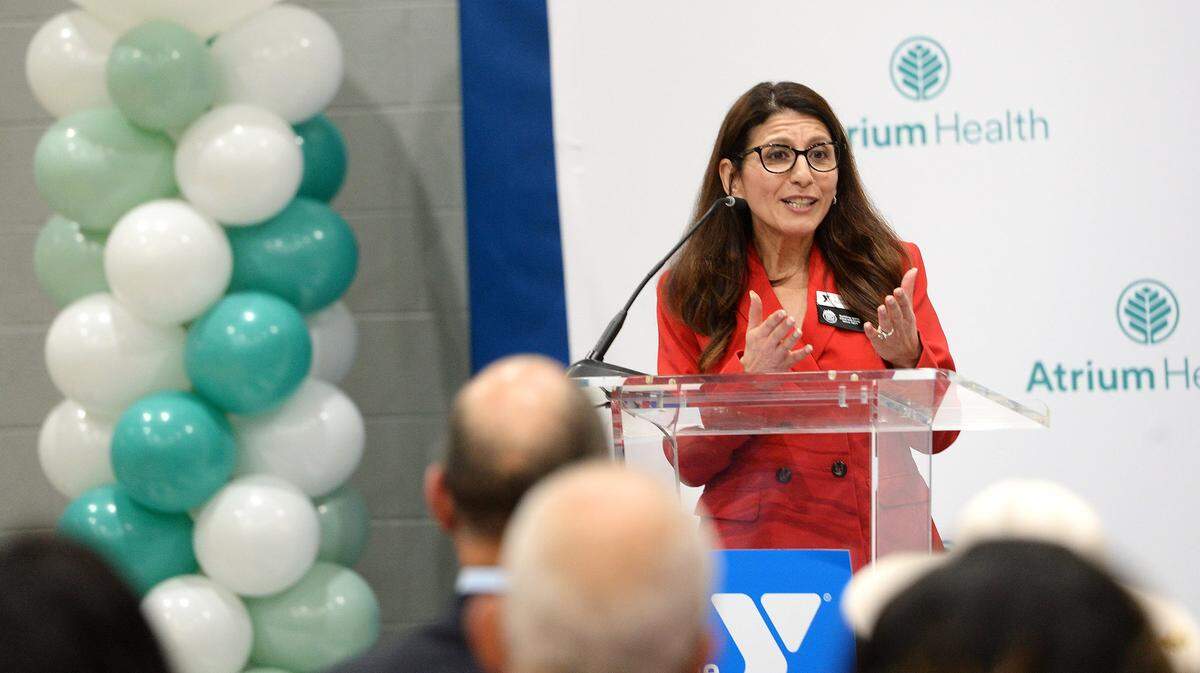
Q. Is there a branch that you’ve identified as the one most in need of improvement?
Unfortunately, it’s not just one single location. We need it across the Y ecosystem. It’s a known fact that covid was not kind to the Y. And when you have almost 80% of your revenue derived from membership, and overnight lose over 60%, it’s hard to recover.
Q. What does membership look like today as compared to, say, February 2020, pre-covid?
We’re still not where we were pre-covid. But we’re coming back. And a lot of the adjustments that we’re making are really in service to increase our impact, but also to ensure our sustainability as an organization. During covid, the Y was not able to invest in a lot of upgrades and advances, and so we know it’s an imperative for us — if we’re going to build sustainability, we have to invest. We made some tough choices as an organization, as a board, to say, We’re going to invest to ensure the Y’s sustainability, even though that might appear to be counterintuitive from a balance-sheet standpoint.
Q. Well, covid was — hopefully — an incredibly rare anomaly. But New Year’s is a perennial problem for any organization that is fitness-focused. Can you talk about that a little bit — the “resolution-er” phenomenon — how the YMCA in particular deals with that?
When you think about the YMCA, and when we were founded in 1844 in London, it was for the sole purpose of connecting young men with themselves, others, and their Creator. And I think that’s our ethos still today. How we do it has evolved during every century, every era, if you will. And early in its evolution, the Y was a place where young men came, again, through Bible studies and prayer meetings and things of that nature. But it was unique for its time, because it was the first organization to bring young men from different denominations collectively together. But then it morphed into where they built libraries, universities, because it was really about spirit, mind and body.
And in some respects, when you think about the YMCA of Greater Charlotte over the last, I would say, 25 years, 30 years, we’ve really evolved into more fitness. And so as we look to the future, it’s recentering us, because we are not a fitness center. It’s a means to which we achieve part of our mission. Our vision is, How does the YMCA of Greater Charlotte become the social hub for the greater Charlotte area? We want people to find connections. We want them to build relationships, improve their health and well-being, and hopefully, experience transformation. For us, it’s, How are we building that plan for engagement beyond just showing up? We’re not transactional. We’re about relationships.
So we’ve introduced some new equipment — smart technology — that helps people gamify their progress, see their bio age improve over time. It’s called EGYM. So we have them at four locations currently (Dowd, Harris, Brace and Stratford Richardson). By the end of 2028, we want to have them in all of our locations. We’re introducing a new format for Group X (which is what the YMCA calls its collection of group-exercise classes), because we know Group X is the number-one way people make connections. It’s called Les Mills; they’re gonna be higher-intensity, for people of all ages.
We’re doing these kinds of improvements in the experiences — and in our communications — to keep people engaged, so they don’t just come in the first month of (the year) and then disappear. We want them to see how they’re achieving their goals, little by little, and we know that helps people stay on the path of transformation.
Q. So — shifting back to your own fitness journey — have you run all of your adult life?
Yeah, so my own health journey. So this is why the Y is so special to me. I didn’t grow up in the Y through youth programs. I came in a little bit later, when I was in my teens. My dad and my stepmother, they leaned in on the Y, because we were not financially capable of paying for a membership. So we had a scholarship, and that was my first introduction to the Y. I began going there just as someone who wanted to improve her health. I was overweight as a child, I didn’t fit in, and really started my health journey — and my overall transformation, frankly — at the Y. That’s why the power of what we do is so profound.
Q. What do you mean you didn’t fit in?
My parents got divorced when I was 4. My dad sent me to Damascus, Syria, to live with my grandmother. I was estranged from my parents for seven years, and when I came back to the U.S., I had to learn the language again. My sense of confidence and my sense of ability lacked, and then compound that with being a teenager. So my self-esteem was very low. And it was at that point that I began to really look at health.
So I began to transform physically, which allowed me to begin the healing process, emotionally, mentally. And really, when I — as an adult — ran my first marathon, I think that was my first breakthrough, that I could do anything. It was at that point that my career started to see a different trajectory than maybe before. That’s why I so believe in who we are as an organization, and the power to be a catalyst to introduce people to something greater, but also to help them transform.
Q. How old were you when you did your first marathon?
I was 26. And I went from not doing anything — no 5Ks — to just doing a marathon. So that’s why I used that same logic with triathlon. “I don’t know, maybe I’ll try it. Let me do an Ironman!” But it didn’t work.
Q. Well, they say that marathons can change people’s lives. And in your case, it did, in the sense that it showed you that you can accomplish things you never thought you’d be able to accomplish.
Absolutely. I think my childhood and the adversity I had to overcome, combined with that experience, really created a very resilient mindset in me that “I can do,” and “I can push through anything, because I know what’s on the other side.” And I think that’s a gift. It’s really shaped me into the person I am today. If I hadn’t gone through that, I might not be where I am.
A lot of it also has to do with my personal faith and journey. I think that’s the secret sauce. Looking at all the factors that shaped me, it was truly my faith.
Q. Well, if not a half Ironman in 2026, what are maybe a couple of resolutions you’re thinking about making for the New Year?
I don’t believe in New Year’s resolutions. I encourage our staff to focus on goals. Vision, not resolution, because resolutions tend to be temporary. In fact, at the beginning of the year, my “CEO cabinet” of senior leaders will be going through an exercise at the visioning board of what we want to see for 2026 both personally and professionally, and we always choose a word for the New Year. But me, I can’t just choose a word. So for me, it’s two: focus, and simplicity. We need our organization to focus on what matters and forget all the distractions, and we need to go back to basics and simplicity. The simpler it is, the easier to execute on it. We’ve had a year of transformation. There’s been ambiguity. There’s been some challenges. So for me, as the leader, how do I set the tone for simplicity and focus?
The same goes for me, personally, in my family. Even though I moved here two years ago, my family just moved out here, because my daughter was finishing up high school in Denver. She graduated in May, we sold our house in June, and they moved out here. She now is off at college, and my husband and I are trying to put roots down. Currently, we actually don’t even have a house. We’re still in an apartment. For me personally, it’s been a year of extreme change as well. So I’m looking forward to 2026 being a year of simplicity and focus.
Q. Do you like your job?
I do. I love it. And I was not looking for this job. I got an inquiry from someone asking if I would even be remotely interested in having a conversation. I didn’t even know the job was posted. So how everything came about, I think it’s a divine appointment. That’s how I see it. I’m doing what I’m supposed to be doing.
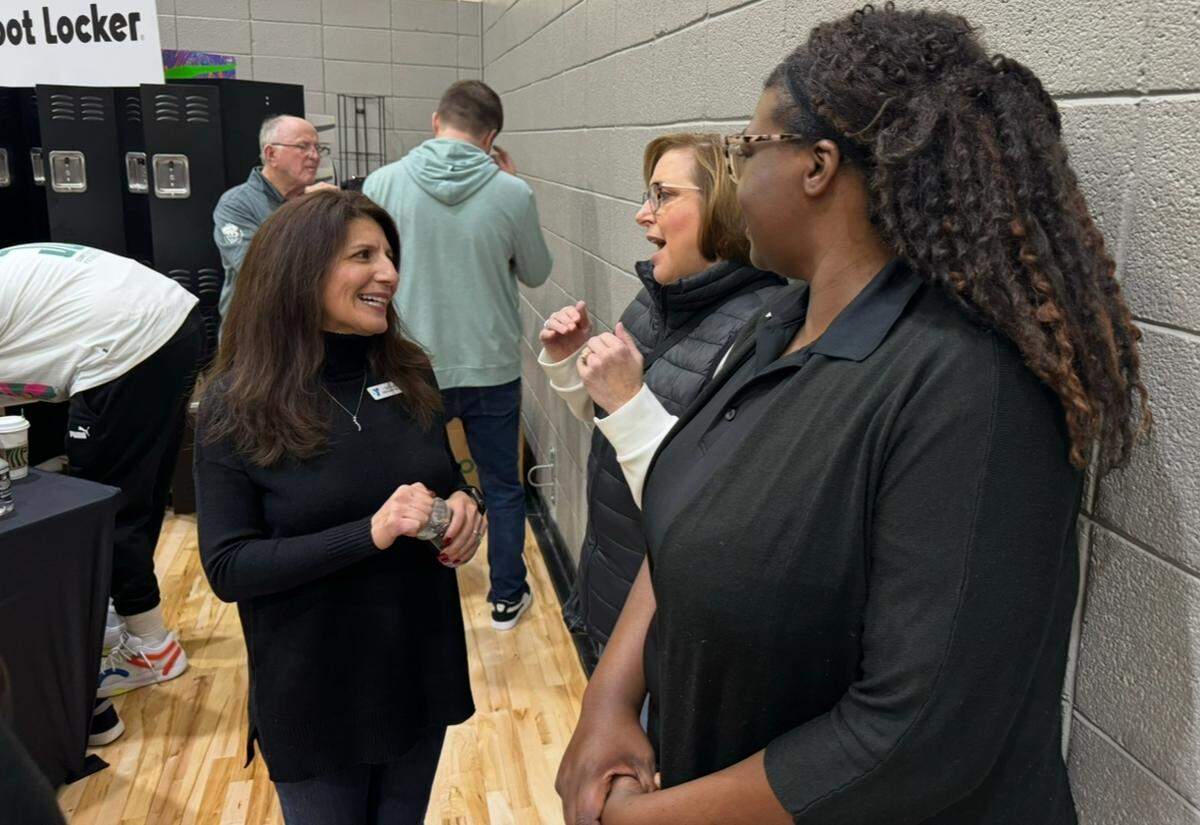
It was the same with the Denver job. I was senior vice president at the American Diabetes Association, and I reached out to someone I knew who was on the board at the Denver Y, because there was a role, actually, somewhere else in the U.S. I said, “Hey, I know you’re on the board. I would just love to learn about the Y, its culture.” He’s like, “Sure, let’s have coffee.” So we did, and he goes, “You know, our CEO is retiring this year, and we’re doing a search for the next CEO, and I think you’d be great. Put your name in.” And that’s all she wrote. Which was very unusual at that time. Most Y CEOs really are developed within the organization. So it was somewhat unprecedented, to be not only from outside the Y, but also to be the first female. It’s not something I take lightly, to be the first female CEO at both organizations.
But yes, to answer the original question, I love it. There’s definitely never a dull moment at the Y. That’s what I love about it — the variability.
Q. It’s gotta be hard, though, too. Because the YMCA is a big ship. Change takes time — and requires patience.
True. The nonprofit world is generally slow-paced. In Denver, coming in, not recognizing that, and not appreciating that, I went a little bit too fast. I learned from that. And so coming here, I slowed it quite down. But everybody still thinks I’m going fast! I’m like, “People, I slowed down a whole year! I’m a year behind my timeframe!” But you’re right — it’s a big ship. So I’m trying to be patient.
-
Coming next Monday (Jan. 12): Théoden runs with Christopher James Lees, resident conductor for the Charlotte Symphony Orchestra and an accomplished marathoner.
Do you know of an influential Charlottean who runs — whether for fun, for fitness, or to feed a serious addiction — and who might be willing to be interviewed by Théoden while they log a few miles together? Send an email with your suggestion(s) to tjanes@charlotteobserver.com.
This story was originally published January 5, 2026 at 5:00 AM.