She saw HBCU president’s plea for new kidney on Instagram and thought: Why not?
Five feet inside the hospital entrance in Winston-Salem, Heather Patrek saw the man she had been thinking about for more than five months — a man who had no idea she even existed — and she panicked.
“Oh, s---,” whispered Patrek, a 35-year-old Belmont resident and private wealth planner for U.S. Bank in Charlotte, leaning toward her husband, Nick.
Then she said it again.
“Oh, s---. That’s him.”
She knew because she had seen his face in photos. But also because of the jacket: black and blue, with “President 13” stitched across the back. It could only belong to Dr. Anthony J. Davis, the president of Livingstone College, the historically Black college in Salisbury, about 40 minutes northeast of Charlotte.
It could only belong to the man she was about to give one of her kidneys.
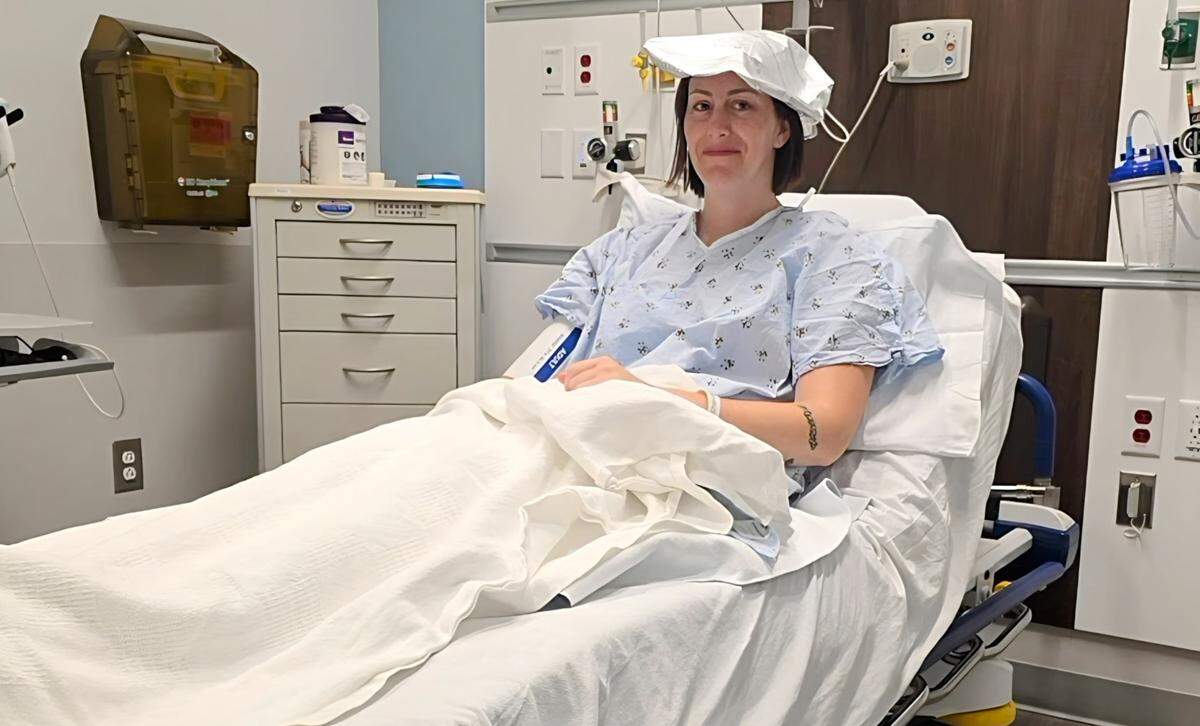
Until that moment, at 5 a.m. this past Nov. 13, she hadn’t been nervous. Not about the anesthesia. Not about the robotic surgery. Not about permanently parting with an organ. Nick remembers her being “cool as a cucumber all morning.” But when she saw Davis, he says, “she literally started shaking.”
Heather turned and headed back outside immediately. “I can’t see him right now,” she said. “This is not the way I want to meet him.”
She and her husband then went clear around to a different entrance, only to eventually still find themselves seated in the same waiting room — so they carefully positioned themselves with their backs to him and his family. Even when her name was called, and she walked briskly toward the intake door, she worried he might somehow recognize her.
He didn’t. He didn’t know anything about her. Yet.
But the woman avoiding his gaze was about to save his life.
‘It went viral all over the country’
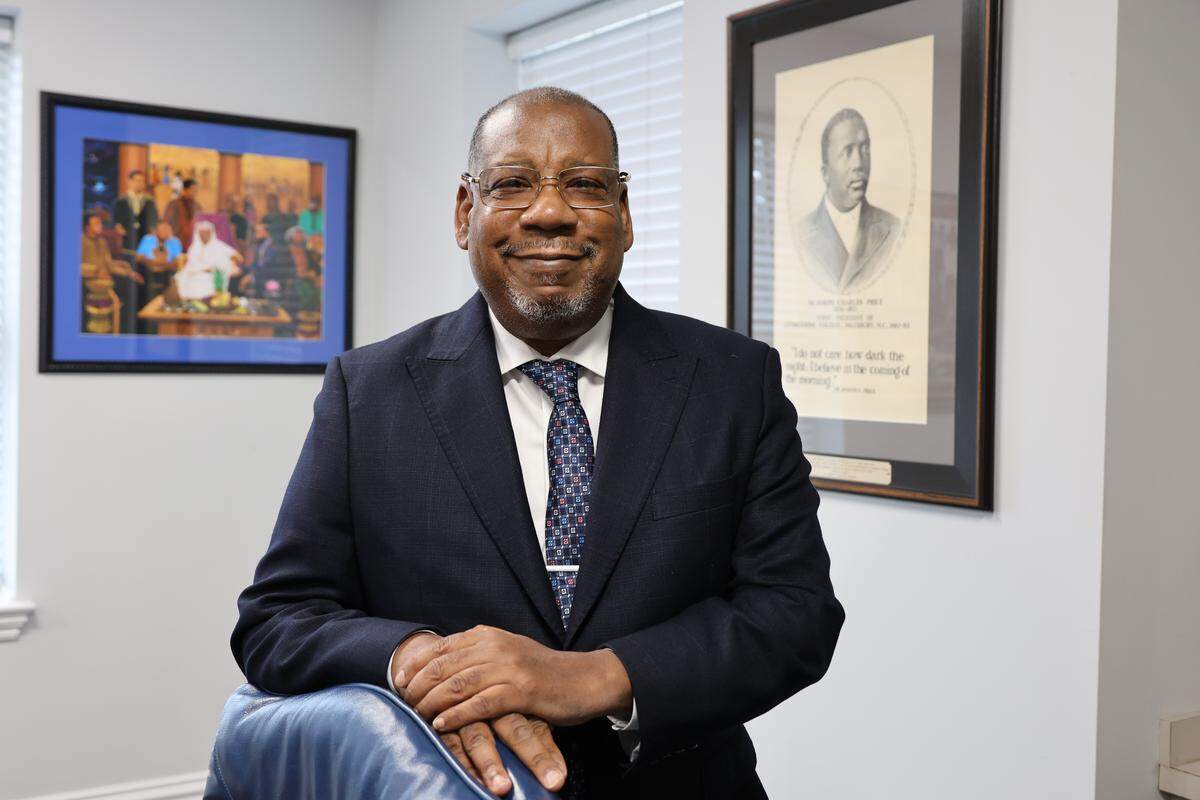
By the spring of 2025, Davis knew his body was failing him.
For 18 months, he had endured nightly dialysis treatments that stretched as long as 9-1/2 hours, hooked to a machine that filtered toxins his kidneys no longer could. His lab results were worsening. His kidney function had fallen below 5 percent. Fluid accumulated in his body, pushing his weight close to 240 pounds and leaving him exhausted and swollen.
He moved more slowly across campus. He slept poorly. A former medical technologist, he knew how to read the numbers — and the numbers told a story he could not ignore. “That was a dark time for me,” Davis said recently. “A very dark time.”
Without a transplant, dialysis would only buy him time. It would not save his life.
The people around him could see it, too. So on the evening of May 4, his wife Jacqueline, colleagues and close supporters gathered him in a room on campus and confronted him with what he had been reluctant to do himself.
“You need to share your story with the world,” they told him. “Somebody will step up.”
The next day, at Livingstone’s spring commencement ceremony, Davis made his plea. Standing before graduates and their families, he told them his kidneys were failing. He told them he needed a transplant.
“When I made that announcement, it went viral all over the country,” he said. “And not everybody was happy about my announcement. There were some who criticized me for making an announcement like that at commencement. … People said things like, ‘Well, he shouldn’t have done it. It was their day. That spoiled their day.’
“But guess what? I’m glad that I did.”
Because the next night, about 50 miles down Interstate 85, a woman he had never met was scrolling through her phone.
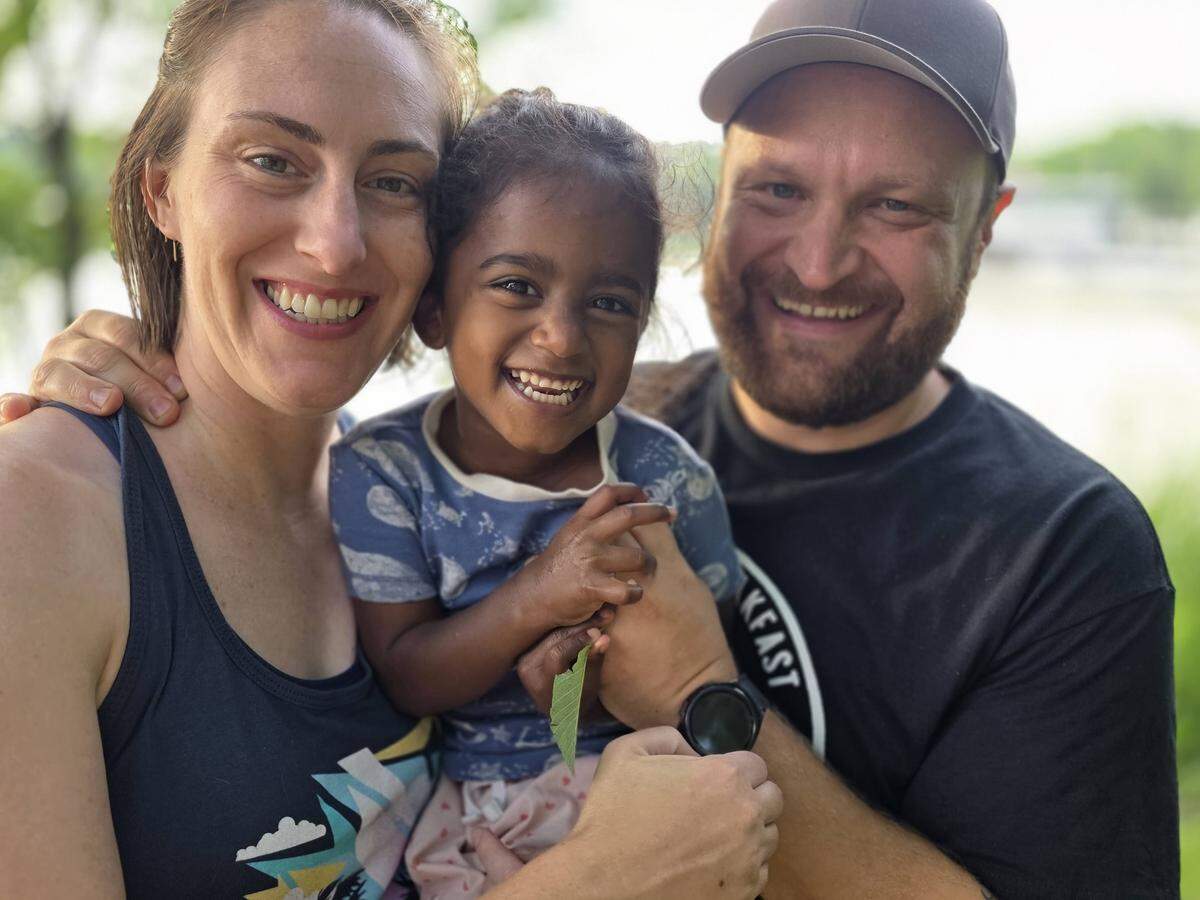
Her name was Heather Patrek — the mother of a 4-year-old girl named Eva, and an individual who was about to make a decision that would save his life.
A decision made in minutes
Patrek needed only about 20 minutes to decide to give away one of her kidneys.
One night last May, she was lying in bed, looking at Instagram, when she stopped on an intriguing post shared by an old high school friend.
The friend had linked to an article highlighting an unorthodox plea from the president of an HBCU on the opposite end of the Charlotte metro area. It said his kidneys were failing. It said he asked for a new one while speaking at his school’s graduation. And it mentioned his blood type.
O positive, the same type as Patrek’s.
That caught her attention. But so did something else — the descriptions of his work leading Livingstone College. Since becoming its 13th president in 2022, Davis had overseen a surge in growth and investment. Enrollment rose more than 43 percent. Fundraising brought in tens of millions of dollars. Residence halls were renovated. Campus facilities were modernized. Livingstone emerged as one of the fastest-growing historically Black colleges in the country.
To Patrek, Davis didn’t look like a man at the end of his work. He looked like someone in the middle of it.
She then began doing a series of Google searches, trying to understand what kidney donation would mean. What do kidneys really do? Could she live normally without two kidneys? Would donating one potentially shorten her lifespan?
The overarching answer surprised her. “You truly, honestly don’t need a second kidney,” she remembers realizing. Right there, lying in bed, she decided she was going to figure out how to start the process.
The next morning, she brought it up to her husband. Nick was understandably stunned. In hindsight, he says, he would have preferred the bombshell be that she was buying a new car. But he knew his wife. And once she made up her mind about something, there was little point trying to change it.
“This,” he realized within just a few seconds, “is happening.”
The long road to becoming a donor
Deciding to donate a kidney, it turned out, was easy. Figuring out how to actually get connected to Davis was a little more complicated.
Patrek started the process by getting onto the National Kidney Registry’s website, filling out a form, and listing Dr. Anthony J. Davis as the intended recipient. But when a transplant coordinator from Atrium Health Wake Forest Baptist in Winston-Salem called her about her application, they had questions.
First and foremost: “Who is this guy?”
“I don’t know him,” Heather Patrek replied, “but I read this article. He’s at Livingstone College.”
“Hmm,” they told her. “He’s not in our system.” Patrek shrugged, as she said into the phone, “Well, he’s somewhere. Just figure it out.”
The nurse who got assigned to her case began making calls — to Livingstone, to doctors’ offices, to anyone who might know how to connect them — and eventually, she found him. (As it turned out, Davis was initially registered at a different transplant center in North Carolina.)
From there, it was still a months-long undertaking for Patrek, full of tests, scans, evaluations ... and guilt. “I was nervous to tell some people,” she says, “because I’m not great at expressing emotions and ... I was like, Well, how do I just blurt it out?”
She did tell a select-few immediate family members, though. “Even just to be going to the testing appointments and things like that, I felt like I was hiding something.”
On top of that, Patrek, the whole time, knew exactly who her organ would be going to, if it worked out. She could read up on him anytime she wanted. She could pull off I-85 on the way back from an appointment at the hospital in Wake Forest to cruise past Livingstone’s campus, just out of curiosity.
And so she couldn’t help but feel bad that as she was doing those things, Davis was still himself living under a cloud of uncertainty.
His dream turns into reality
More than 70 people responded to Davis’s commencement-ceremony plea, initiating the process to see if they could donate to him. But as spring turned to summer and summer prepared to turn to fall, he’d been told of only one potential donor whose situation actually looked promising.
So he tried not to get his hopes up.
After all, if that route didn’t pan out, the odds were daunting: The average wait time for a deceased-donor kidney transplant in the United States is typically three to seven years — and can stretch much longer, especially for some blood types and in certain regions.
Then one afternoon in September, Davis learned that his long shot had paid off — in a way that, even now, feels surreal.
Weakened by medication and exhausted from dialysis, he had fallen into a deep sleep at home, then woke up to see he’d missed a call from Atrium Health. When he called the number back, the person who answered told him they hadn’t called him — that he had reached a general hospital line. Davis asked them if they could look up his name to see if there might be a message for him in the system. There was a long pause.
Then: “It says here that you’re scheduled for transplant on November the 13th.”
Davis actually, initially, thought he had dreamed the whole thing. Not until his wife urged him to check his call log did he realize he had, in fact, made the call.
Within the next few days, the official letter arrived confirming it: After nearly two years of overnight peritoneal dialysis, he was finally going to get some relief.
Two months later, just after 5 a.m. on Nov. 13, Davis walked into the hospital at Atrium Health Wake Forest Baptist wearing his black-and-blue Livingstone jacket — the one with “President 13” stitched across the back — smiling and ready. He had been working toward this day for more than half a year.
And just beyond his line of sight, so had she.
Coming face to face, finally
Throughout the entire process, Davis had been told that the donor didn’t want to meet him.
That this was an anonymous donation. That he should, as he remembers being advised, “Just go on and live your life as a good, productive citizen.” But this was simply protocol. The truth was Heather Patrek could hardly wait. She wanted to rid herself of the guilt she felt over the fact that she knew everything about him while he knew nothing about her — which to her just didn’t seem fair.
And about 24 hours after the transplant, it was time.
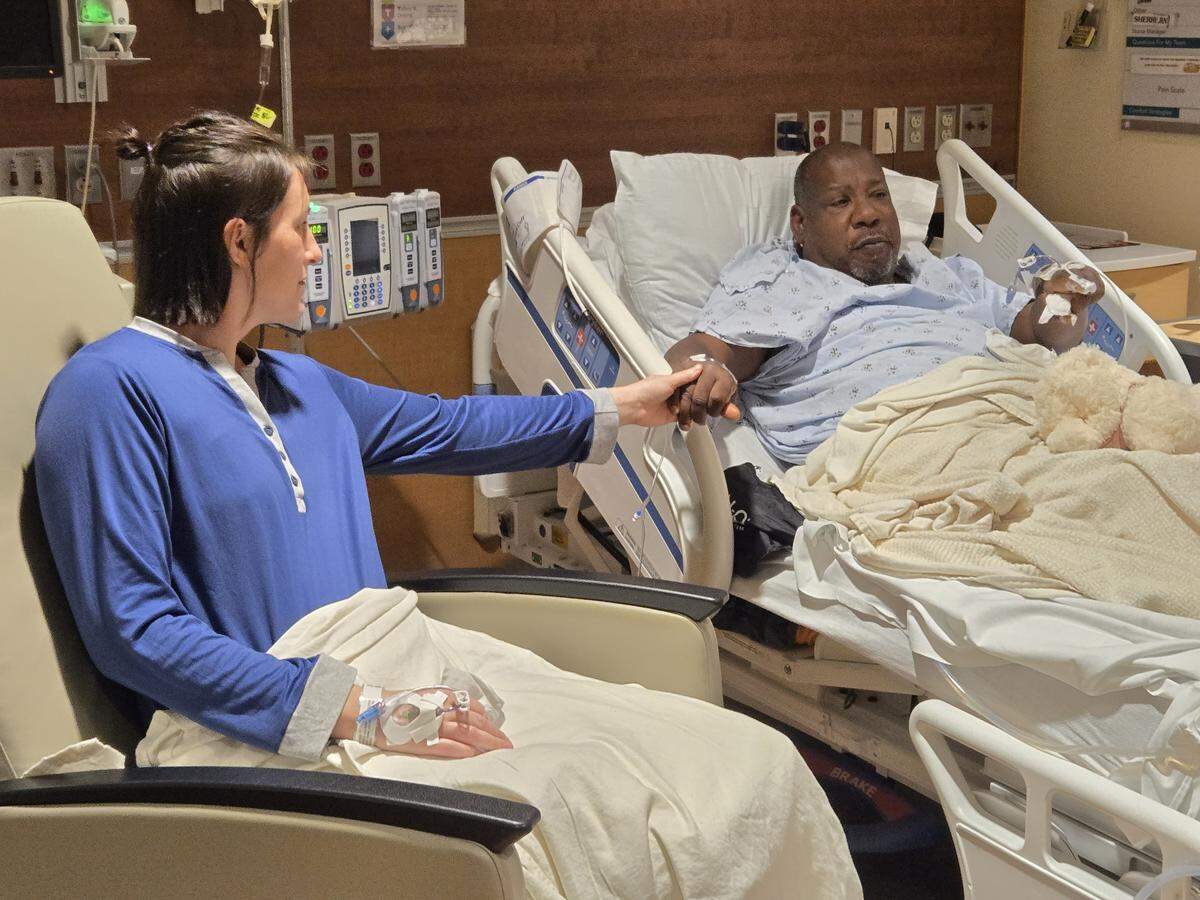
Nick wheeled Heather to Davis’s room, then she rose from the chair, ambled over to his bedside, and took his hand. She laughs when she remembers his expression. “He was like, Who is this person walking into my room?”
It’s not that he didn’t know his donor was coming to meet him. It’s just that, well, he assumed the individual was going to look more like him. He assumed, because the story had been shared predominantly within the large, national HBCU network, that he was about to meet someone who was Black.
He almost immediately began to cry. To find she was white, and in her 30s — young enough to be his daughter — boosted his already-strong faith in humanity.
More than anything, though, he wanted to know this of her: Why?
Patrek couldn’t offer anything that sounded to her like a great explanation. Instead, she simply said, “It just seemed right.” But as she settled into the moment, she explained how she was inspired by him and the work he’d done at Livingstone. That made him even more emotional.
Then came the biggest wallop of all. Right before she headed back to her room, Davis took her hand again, looked her in the eyes, and said: “Heather, you saved my life. How do you want me to refer to you from this day forward?”
Her response, he says now, “rocked me to my core.”
‘Till the day we die’
Back home in Belmont, life has largely returned to normal. Work. School drop-offs. Evenings with their 4-year-old daughter, Eva, who likes to greet visitors by pointing at her mom and declaring: “She gave a kidney to Dr. Davis!”
But the whole thing still floors Nick Patrek.
“No,” he says, when asked if he could have done what his wife did. He stammers as he continues. “If it was — I don’t know. Not in this scenario. I mean, I just … I don’t know if it’s in me.”
He also explains that Davis wasn’t the only one who had wondered why. That not only did he as Heather’s husband initially have the same question, but “honestly, a lot of people that knew us who found out had that reaction. … It comes from concern, obviously. But, yeah, absolutely. ‘Why?’”
And yet from Nick to her colleagues at U.S. Bank to Davis and his community at Livingstone, the reaction is the same. What she did was extraordinary. Says Davis: “Not feel like; I know she saved my life.”
Heather, meanwhile, still struggles to see it that way. In her view, she had something he needed, and gave it.
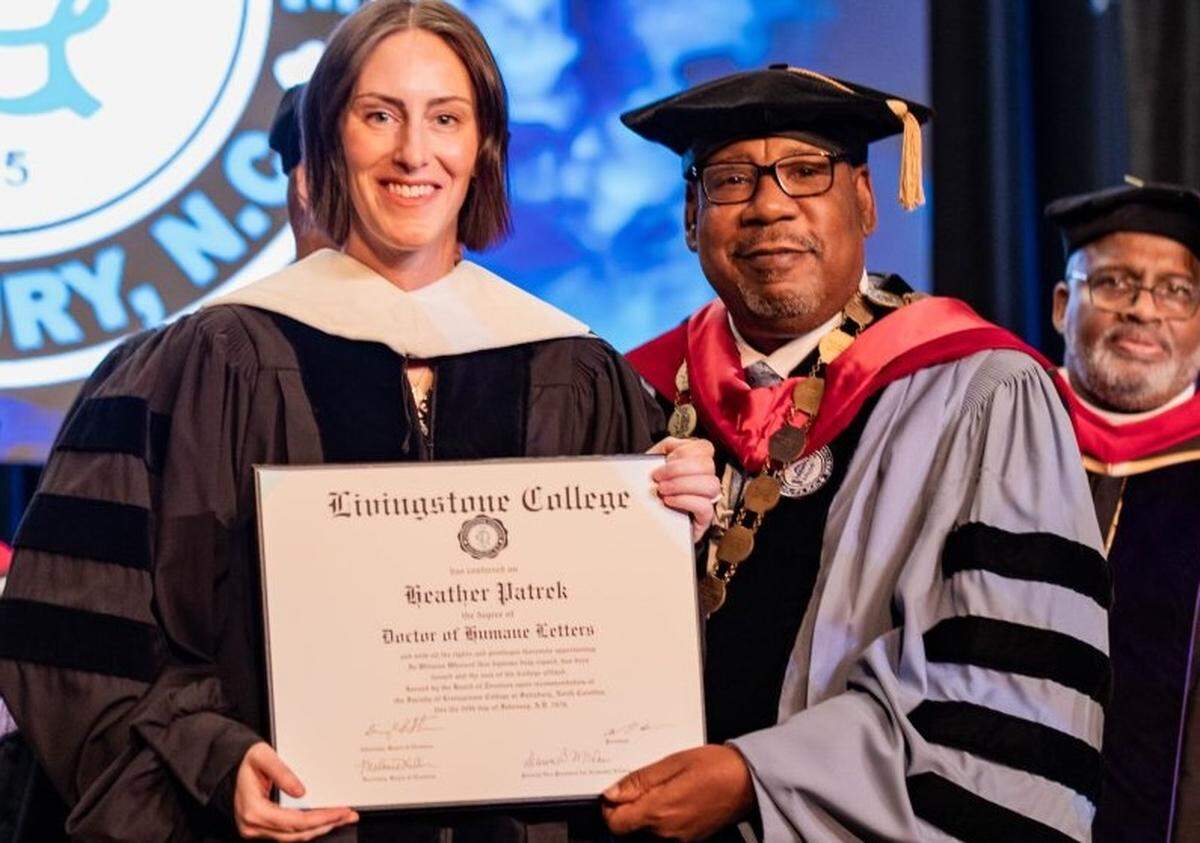
But Davis tries to remind her as often as he can what it meant to him. He tells her how well her old kidney — his kidney now — is working. How much stronger he feels. How dialysis no longer dictates his nights. How he has energy again. How he intends to honor what she gave him. “I want to live a life worthy of that donation,” says Davis, who just a few weeks ago awarded Heather with an honorary doctorate at Livingstone’s Founder’s Day.
As for the answer she gave him when he asked what they should call each other? “How about ‘brother’ and ‘sister’?” she replied. At that, he squeezed her hand, and nodded. “We’re officially brother and sister,” he told her, “till the day we die.”
Just a day earlier, they had been strangers with their backs to each other in a hospital waiting room. Now, they talk nearly every week.
Now, they are family.
This story was originally published February 26, 2026 at 5:02 AM.